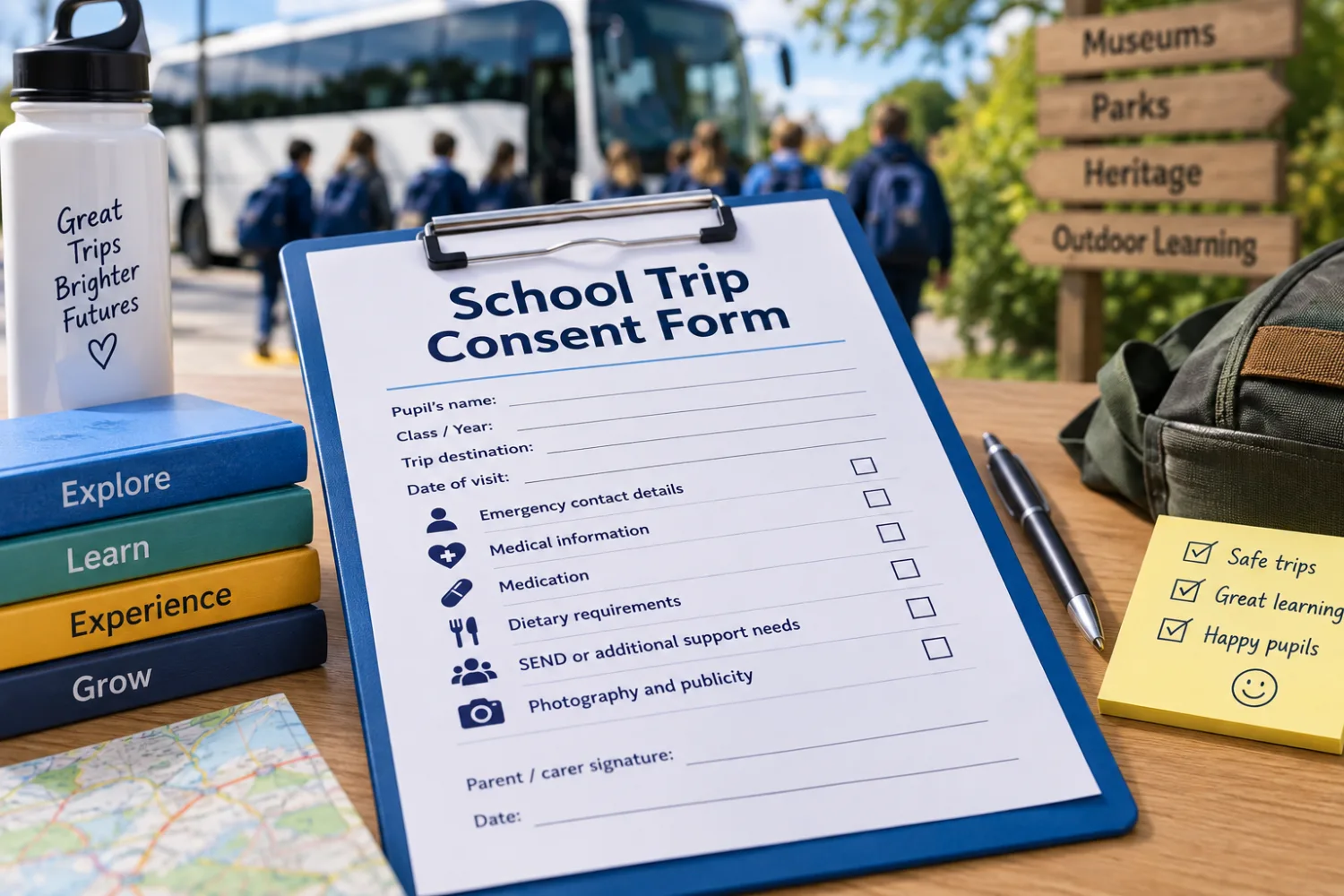
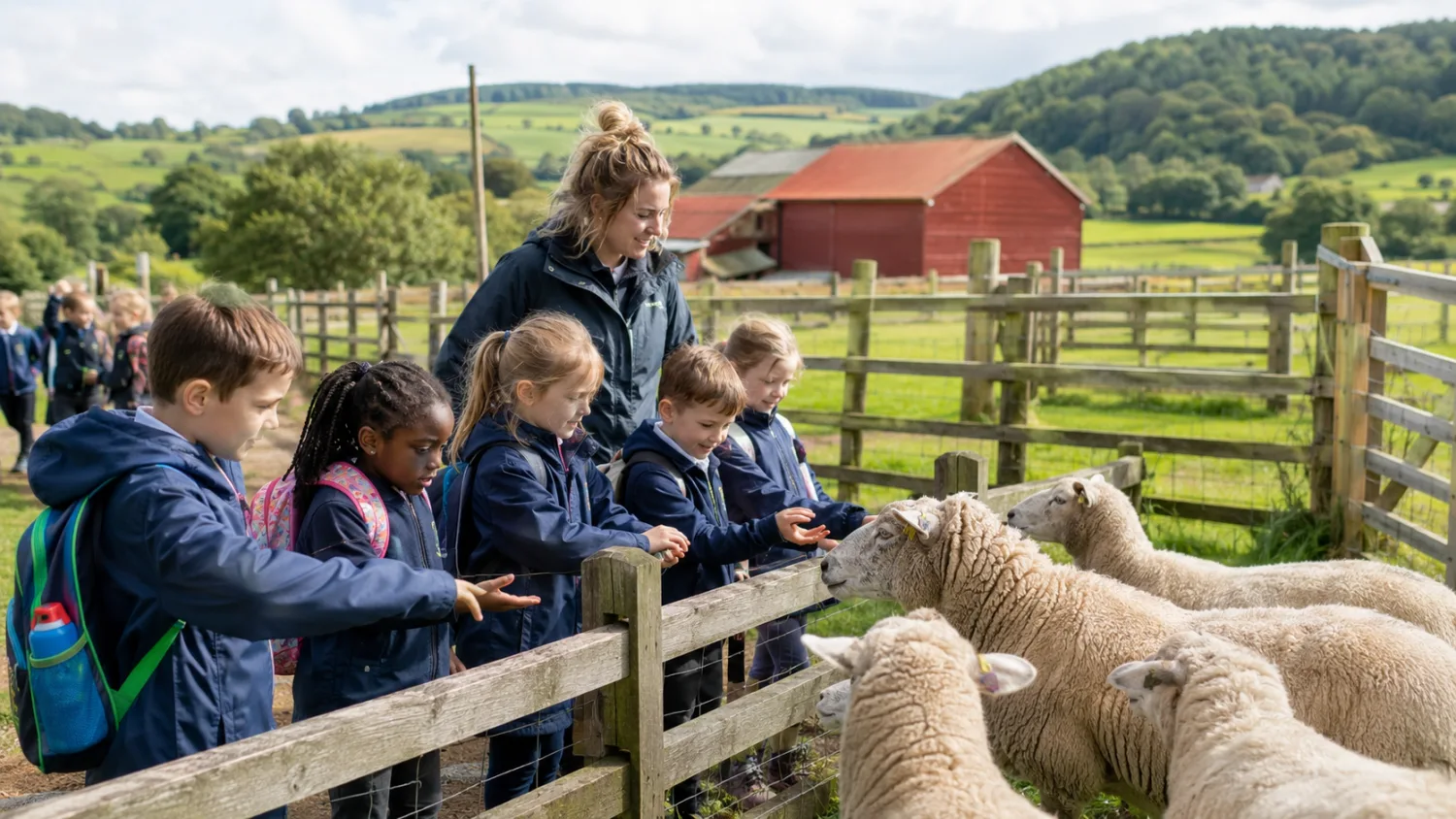
Farm school trips can be some of the most memorable educational visits pupils experience. For many children, a farm visit is the first time they properly connect food, animals, plants, weather, soil, work and the countryside. Eggs, milk, wool, wheat, vegetables, tractors, barns, lambs, orchards and muddy boots all help make learning feel real.
A good farm trip is not just a pleasant day out. It can support science, geography, PSHE, English, food education, environmental learning, careers, outdoor learning and personal development. Pupils can see where food comes from, how animals are cared for, how crops grow, how seasons affect work, and how rural businesses operate.
For schools, the challenge is choosing a venue that is educational, safe, well organised and suitable for the age and needs of the pupils. For farm parks, rural education centres, city farms, countryside learning providers and working farms, the opportunity is clear: schools are actively looking for practical, curriculum-linked rural visits, but teachers need clear information before they can book.
This guide looks at the best types of farm school trips and rural education centres in the UK, what teachers should ask before booking, and how venues can make their offer more school-friendly.
If you are planning a wider programme of educational visits, you may also find our guides to planning a school trip without the stress, school trips on a tight budget and questions every teacher should ask before booking a school trip venue useful.
Why farms work so well as school trip venues
Farm visits work because they make everyday things visible. Children may eat bread, drink milk, wear wool, see vegetables in a supermarket and talk about animals in class, but a farm helps them understand the living systems and human work behind those things.
For younger pupils, farms make learning concrete. They can see animal babies and adults, compare feathers and fur, watch feeding routines, notice smells and sounds, and understand that living things need food, water, shelter and care. A topic such as “animals including humans” or “plants” becomes easier to understand when pupils can see real examples.
For older pupils, farms can support deeper learning about sustainability, food miles, climate, land use, rural employment, biodiversity, soil health, animal welfare, technology and business. A farm is not just a collection of animals. It is a working environment shaped by science, economics, weather, regulation, people and place.
Farm trips also help pupils ask better questions. Where does our food come from? Why do seasons matter? How do farmers care for animals? What happens when crops fail? How does weather affect work? What choices do farms make about the environment? What jobs exist in food and farming beyond the obvious ones?
What types of farm school trips are available?
The term “farm school trip” covers a wide range of venues. Some are working farms that welcome school groups on specific days. Others are farm parks designed for visitors. Some are city farms, countryside education centres, rural skills centres, food education projects, horticulture sites, orchards, conservation farms or residential farm-based programmes.
Each type of venue can be valuable, but they are not all the same. A school should choose based on the age of pupils, the learning purpose, the journey time, the facilities and the level of support needed.
Working farms
Working farms can offer pupils an honest look at food production and rural life. They may include livestock, crops, machinery, barns, fields, grazing land, milking, lambing, harvesting or seasonal work.
The strength of a working farm is authenticity. Pupils can see that farming is real work, not a staged attraction. They can learn about routines, weather, animal care, machinery, business costs and the decisions farmers make every day.
The challenge is that working farms may not have visitor facilities designed for large groups. Teachers should check toilets, handwashing, safe routes, parking, lunch arrangements, animal contact, machinery areas, staff availability and whether the farm regularly hosts schools.
Farm parks and visitor farms
Farm parks and visitor farms are often easier for schools because they are already set up for groups. They may have toilets, handwashing stations, lunch areas, education rooms, parking, trails, play areas, animal talks and structured workshops.
These venues can work particularly well for EYFS, KS1 and lower KS2 because they usually offer clear routes and child-friendly facilities. Pupils may be able to see animals safely, learn about food, take part in growing activities, follow a trail or join a guided session.
Teachers should still look for educational value. A farm park can be enjoyable, but the strongest visits include clear learning about animals, plants, food, seasons, habitats, farming or the countryside.
City farms and community farms
City farms and community farms can be excellent for schools in urban areas. They help pupils experience animals, growing, food and outdoor learning without travelling far into the countryside.
These venues often have strong community links and may support learning about sustainability, healthy eating, volunteering, local food, animal care and green spaces. They can also be more accessible for schools with limited budgets or tight timetables.
A city farm visit can be especially powerful for pupils who have little regular contact with animals or growing spaces. It shows that food and nature are not only rural topics. They are part of urban life too.
Rural education centres
Rural education centres are often designed specifically for school learning. They may offer curriculum-linked sessions on farming, food, soil, plants, animals, woodland, water, biodiversity, sustainability, rural skills or environmental science.
These venues can be very useful because they often combine countryside access with teaching experience. Staff may be used to adapting sessions for different age groups and linking activities to curriculum topics.
For teachers, a rural education centre can reduce workload because the venue may provide structured workshops, risk information, teacher notes, activity sheets, indoor backup spaces and clear timetables.
Orchards, gardens and horticulture centres
Orchards, gardens, allotments and horticulture centres are useful when the focus is plants, food, seasons, pollination, soil, habitats or sustainability.
Pupils can learn how fruit and vegetables grow, what plants need, why pollinators matter, how compost works, how seasons affect growing, and how people manage land for food and wildlife.
These visits can be particularly good for schools that want a calmer alternative to a large animal venue. They can support science, geography, art, English and wellbeing, especially when pupils are given hands-on tasks such as planting, harvesting, tasting, sketching or observing.
Farm-based residential and nurture programmes
Some farms and rural centres offer longer programmes or residential experiences. These may focus on confidence, responsibility, behaviour, attendance, wellbeing, teamwork or personal development.
Pupils may take part in real farm tasks, care for animals, cook meals, work outdoors, reflect on behaviour, build relationships and experience a different pace of life. These programmes can be particularly powerful for pupils who benefit from practical responsibility and meaningful work.
Schools should ask detailed questions about safeguarding, accommodation, supervision, staff training, medical needs, food, behaviour support, SEND, parent communication and how outcomes are measured.
Curriculum links for farm and rural education visits
Farm trips are naturally cross-curricular. They can support many subjects, but they work best when the learning purpose is chosen before the visit.
In science, pupils can explore animals, plants, habitats, lifecycles, food chains, seasonal change, materials, soils, rocks, weather and working scientifically. Younger pupils might compare animals and their needs. Older pupils might investigate biodiversity, plant growth, food production or environmental impact.
In geography, farms support learning about land use, rural areas, settlement, weather, climate, natural resources, food miles, sustainability, water, soil and the relationship between people and place.
In PSHE and citizenship, pupils can discuss responsibility, care for living things, healthy eating, community, work, ethical choices, animal welfare and environmental responsibility.
In English, farm visits can lead to recounts, descriptive writing, information texts, persuasive writing, instructions, poetry, interviews and reports. Pupils might write about animal care, explain how bread is made, create a farm guide or persuade people to reduce food waste.
In maths, pupils can count animals, measure plants, compare weights, read simple data, estimate distances, calculate areas, look at pricing, discuss quantities and explore real-world problem solving.
In design and technology, farms can support food technology, cooking, product design, packaging, farming tools, machinery, irrigation and sustainable design.
A good farm venue should help teachers make these links clear. Schools do not need a long list of vague curriculum claims. They need to know what pupils will actually do and what they will learn from doing it.
Farm trips for different age groups
Farm visits can work from early years through to secondary school, but the same visit should not be delivered in the same way for every age group.
For EYFS and KS1, farm trips should be simple, sensory and concrete. Pupils may learn animal names, compare babies and adults, touch safe natural materials, see where food comes from, listen to animal sounds, notice smells, follow a short trail or plant seeds. Sessions should be short, clear and practical, with regular toilet access and minimal waiting.
For KS2, farms can support more structured science and geography learning. Pupils can investigate lifecycles, food chains, habitats, plant growth, land use, sustainability and the journey from farm to fork. They can ask more detailed questions and record observations more independently.
For secondary pupils, farm visits should have more depth. Suitable angles include geography fieldwork, environmental science, food production, climate change, rural business, careers, animal welfare, land management, biodiversity, technology and supply chains.
A farm venue that wants to attract schools should make age suitability clear. A Year 1 animal encounter, a Year 5 food production workshop and a Year 10 sustainability visit require different language, pace and outcomes.
For more age-specific planning ideas, see our guides to the best school trip ideas for KS1, KS2 curriculum-linked school trip venues and school trip venues for secondary schools.
Food, farming and sustainability
One of the strongest reasons to visit a farm is to help pupils understand food. Many children know food as something bought from a shop, ordered online or served at home. A farm visit helps them see that food has a history before it reaches the plate.
Pupils can learn how wheat becomes bread, how milk is produced, how fruit grows, how vegetables are harvested, how animals are cared for, how weather affects farming and how much work is involved in feeding people.
This can lead naturally into discussions about healthy eating, food waste, seasonality, local food, packaging, transport, climate, water use, soil health and sustainable choices.
The best farm visits avoid oversimplifying the topic. Farming involves real tensions and decisions. Pupils can begin to understand that food production involves people, animals, land, technology, money, weather and environmental impact.
For older pupils, this can become a serious enquiry. How can farms produce enough food while protecting nature? What does sustainable farming mean in practice? How do consumer choices affect farmers? What jobs exist in food, agriculture and environmental management?
Animal contact, hygiene and safety
Farm visits need careful hygiene planning because animals can carry germs that may make people ill. This does not mean schools should avoid farms. It means handwashing, supervision and sensible rules must be taken seriously.
Teachers should ask where pupils will wash their hands, whether warm water and soap are available, when handwashing will happen, whether handwashing is supervised, and how eating areas are separated from animal contact areas.
Pupils should understand simple rules before the visit. They should not eat or drink while touching animals or walking through animal areas. They should not put fingers in mouths after touching animals, fences, gates, bedding or surfaces. They should wash hands properly with soap and water after animal contact and before eating. Hand gels and wipes should not be treated as a replacement for proper handwashing after farm contact.
Schools should also ask about animal handling. Will pupils touch animals? Can pupils opt out? Are there allergy considerations? How close will pupils get to animals? How are nervous pupils supported? What happens if animals are unavailable on the day?
Farm safety is not only about animals. Teachers should also consider uneven ground, mud, machinery, gates, electric fences, water, weather, vehicles, public visitors, play areas and pupils becoming separated from the group.
A good farm venue should be able to explain hygiene and safety arrangements clearly. That clarity helps teachers, reassures parents and protects the venue’s reputation.
SEND, accessibility and inclusion on farm trips
Farm visits can be highly inclusive, but they should not be assumed to work automatically for every pupil. Some pupils thrive because the visit is practical, sensory and visual. Others may find farms challenging because of smells, noise, mud, uneven ground, animals, crowds, handwashing routines, unfamiliar toilets or changes to routine.
Schools should ask about accessible routes, step-free access, seating, toilets, quiet spaces, sensory demands, walking distances, animal smells, loud noises, indoor backup areas and whether activities can be adapted.
Some pupils may need photos of the venue in advance, a visual timetable, a social story, a named adult, ear defenders, a quieter lunch area, a shorter route, an opt-out from animal handling or extra preparation around mud and smells.
For pupils with mobility needs, teachers should check whether paths are suitable in wet weather, whether wheelchairs or mobility aids can access animal areas, and whether the coach drop-off point is close enough to the entrance.
For pupils with sensory sensitivities, it is useful to know where the busiest or strongest-smelling areas are, whether there is somewhere calm to pause, and whether the class can visit at a quieter time.
Our guide to making a school trip work for pupils with SEND gives more detailed advice on accessibility, preparation, quiet spaces, staff support and reasonable adjustments.
What teachers should ask before booking a farm trip
Before booking a farm school trip, teachers should ask practical questions as well as curriculum questions. A venue may look exciting, but schools need to know whether the day will work safely and calmly for their pupils.
Useful questions include:
- Does the venue regularly work with schools?
- Which age groups are the sessions designed for?
- What curriculum links are available?
- What will pupils actually do during the visit?
- Is the visit guided, self-led or a mixture of both?
- Are toilets close to the activity areas?
- Where will pupils eat lunch?
- Are handwashing facilities available with soap and running water?
- Will pupils have direct animal contact?
- How are animal areas separated from eating areas?
- What happens in bad weather?
- Are there accessible routes and quiet spaces?
- What risk assessment information is available?
- What should pupils wear?
- Are there any allergies or medical considerations?
- Is coach parking available?
- What is included in the price?
- What is the cancellation or rearrangement policy?
The answers do not need to be complicated, but they should be clear. Teachers should feel that the venue understands school visits, not only general family visitors.
How to prepare pupils before a farm visit
Pupils get more from a farm trip when they arrive with some background knowledge and a clear purpose.
Before the visit, teachers can introduce vocabulary such as farm, field, crop, soil, harvest, pasture, livestock, dairy, poultry, wool, tractor, barn, habitat, season, seed, plant, animal care, produce and sustainability.
It is also useful to discuss behaviour and hygiene before the day. Pupils should understand that farms are working environments. They need to stay with adults, follow instructions, wash hands properly, avoid eating in animal areas, move carefully around gates and fences, and treat animals calmly and respectfully.
A simple enquiry question can help focus the visit. For example: where does our food come from? What do farm animals need to stay healthy? How do seasons affect farm work? How do farms use land? What signs of plant and animal life can we find? How can farms care for nature?
Photos of the venue, a visual timetable and clear clothing instructions can make the visit easier, especially for younger pupils and pupils with SEND.
Follow-up ideas after a farm trip
The learning should not end when the coach returns to school. Farm visits often provide rich material for follow-up work.
Pupils might write a recount of the visit, create a farm-to-fork flow chart, design a healthy meal using farm produce, compare animal needs, write instructions for handwashing, produce an information leaflet about a crop or animal, create a class display about food production, or debate how farms can protect wildlife.
Younger pupils might draw what they saw, sort animals by features, label plants, sequence how bread is made or write thank-you letters to the farm. Older pupils might investigate food miles, sustainability, rural careers, biodiversity, land use or the economics of food production.
Schools can also link the visit to longer-term projects. A farm trip might inspire a school garden, composting project, healthy eating week, science investigation, local food project, climate action group or careers session.
How farm venues can attract more school bookings
Farm parks, rural education centres, city farms and countryside learning providers that want more school bookings should make the teacher’s job easier.
A strong school visits page should explain which age groups the venue supports, what curriculum links are available, what sessions include, how long visits last, what the price includes, what facilities are available, how hygiene is managed, what risk information can be provided, and how pupils with SEND can be supported.
Practical details matter. Teachers need to know about toilets, handwashing, lunch spaces, coach parking, indoor backup areas, wet-weather plans, clothing requirements, animal contact, allergies, accessibility, quiet spaces, adult ratios, cancellation terms and who to contact.
Example timetables are especially helpful. A teacher should be able to picture the day: arrival, toilets, first activity, handwashing, lunch, second activity, final questions and departure.
Photos can also make a big difference. Images of the entrance, toilets, lunch area, handwashing stations, activity spaces, animal areas and accessible routes help teachers prepare pupils and reassure parents.
Venues do not need to be perfect for every school, but they should be honest. If some areas are not wheelchair accessible, explain that. If the site is very muddy in winter, say so. If animal handling is limited or seasonal, make that clear. Schools prefer honest information to vague reassurance.
For more guidance on what schools look for, see our article on requirements for businesses working with schools.
FAQ: farm school trips and rural education centres
Are farm school trips suitable for primary schools?
Yes. Farm trips are often excellent for primary schools because they support topics such as animals, plants, food, seasons, habitats and the local environment. The visit should be age-appropriate, practical and well structured, with clear hygiene and supervision arrangements.
Can secondary schools benefit from farm visits?
Yes. Secondary farm visits can support geography, science, food technology, environmental studies, business, careers and sustainability. Older pupils usually need more depth, such as land use, climate, food production, biodiversity, rural employment or supply chains.
What should pupils wear for a farm trip?
Pupils usually need clothing that can get muddy, such as waterproof coats, wellies or sturdy shoes, warm layers in colder months and sun hats in warmer weather. The venue should provide clear clothing advice before the visit.
Is hand gel enough after touching farm animals?
No. After animal contact or walking through animal areas, pupils should wash their hands properly with soap and running water. Hand gels and wipes should not be treated as a substitute for proper handwashing after farm visits.
What should schools ask about animal contact?
Schools should ask whether pupils will touch animals, whether handling is optional, how pupils are supervised, what hygiene arrangements are in place, whether there are allergy considerations and how animals are cared for during school visits.
Are farm trips good for pupils with SEND?
Farm trips can be very good for pupils with SEND because they are practical, visual and sensory. However, some pupils may need extra preparation around smells, noise, mud, animals, toilets, clothing or changes to routine. Schools should discuss adjustments with the venue before booking.
What curriculum topics can farm visits support?
Farm visits can support animals, plants, lifecycles, habitats, food chains, seasonal change, land use, food production, healthy eating, sustainability, rural life, weather, biodiversity, careers and environmental responsibility.
How can farms attract more school visits?
Farms can attract more school visits by providing clear school information, curriculum links, transparent pricing, example timetables, risk assessment details, hygiene arrangements, SEND access information, facility photos and a named contact for teachers.
Final thought
Farm school trips and rural education visits can help pupils understand food, animals, plants, seasons, sustainability and the countryside in a way that classroom lessons alone cannot. They turn familiar things into real experiences and help pupils see the work, care and decisions behind the food and landscapes around them.
The best farm trips are practical, safe, well organised and clearly linked to learning. They do not need to be complicated. A short, well-planned visit where pupils wash their hands properly, observe carefully, ask questions and connect what they see to classroom learning can be more valuable than a busy day with no clear purpose.
For teachers, the aim is to choose a venue that understands schools as well as farming. For venues, the opportunity is clear: schools want authentic rural experiences, but they need clear information, good facilities and confidence that the visit will work for their pupils.
If you run a farm park, working farm, rural education centre, countryside learning venue or similar school trip provider and would like your venue to be considered for future AllSchools resources or listings, contact us at info@allschools.co.uk. We are always interested in hearing about useful, school-friendly trip venues across the UK.