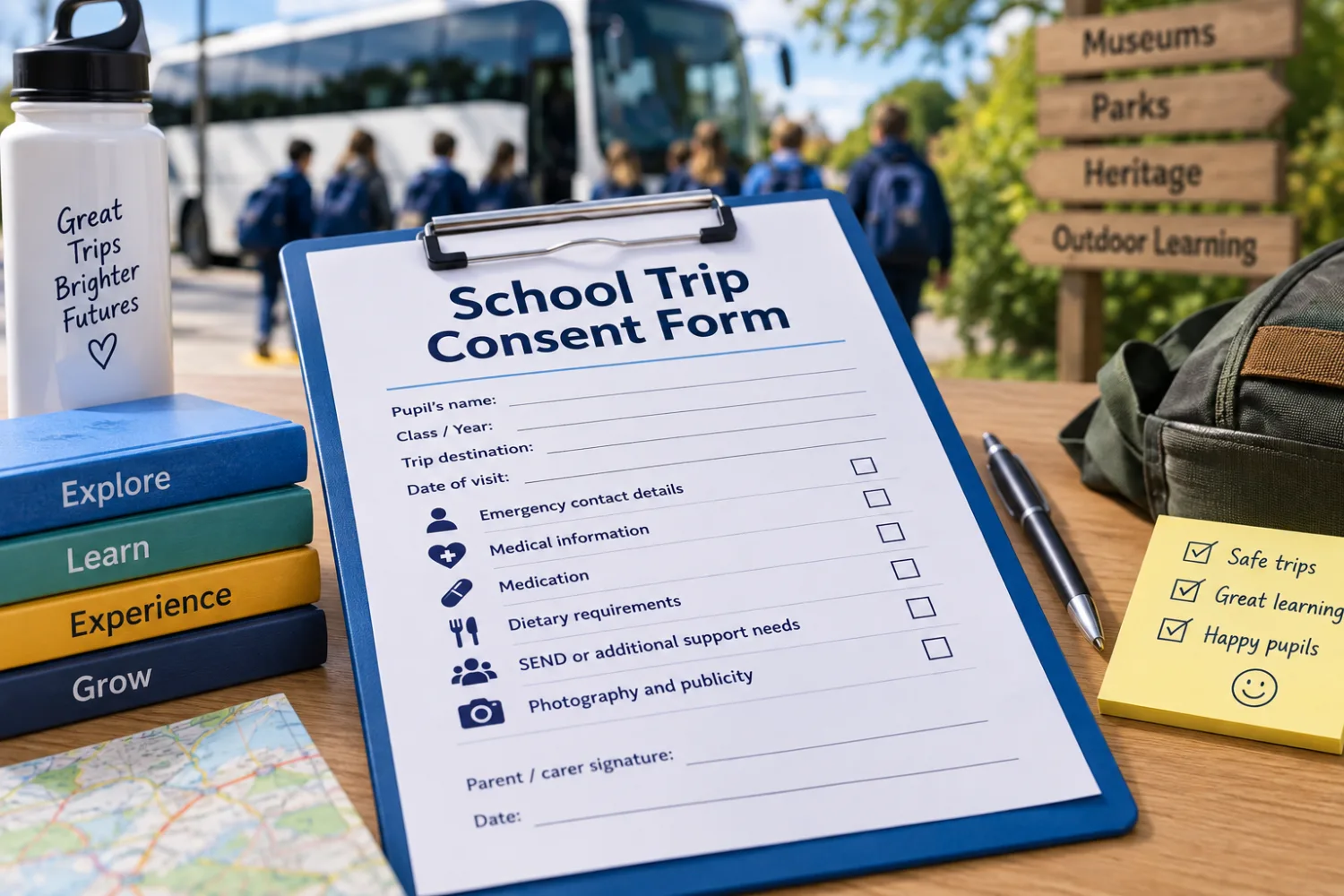

A school trip can be one of the best parts of the year. It can give pupils a real memory, a shared experience and a different way to understand the curriculum. It can bring a topic to life in a way that no worksheet, video or classroom display ever quite manages.
But for teachers, the excitement often comes with a long shadow: forms, permissions, ratios, transport, lunch arrangements, risk assessments, medical information, behaviour concerns, payment deadlines, wet-weather plans and the quiet fear that something important has been forgotten.
The good news is that school trips do not have to feel chaotic. Most of the stress comes from trying to hold too many details in your head at once. Once the visit is broken into clear stages, it becomes much easier to manage.
This guide is written as a practical teacher’s checklist, but not as a dry box-ticking exercise. It is designed to help you think through the visit in the order that usually makes sense: why you are going, who needs to approve it, what the venue must provide, how pupils will be kept safe, how families will be informed, and how the learning will continue afterwards.
If you are still choosing the destination, you may also find our guide to 10 unusual school trip ideas that pupils actually remember useful. A memorable trip does not need to be expensive or complicated, but it does need a clear purpose.
Start with the learning reason, not the venue
The easiest school trips to justify are the ones where the purpose is obvious.
That does not mean every visit has to be narrowly academic. A trip might support science, geography, history, English, art, careers education, personal development, transition, confidence, teamwork or cultural capital. The important thing is that you can explain why this visit matters for these pupils at this point in the year.
Before you look at prices or coach times, write one clear sentence:
“By the end of this visit, pupils should better understand…”
That sentence will help you choose the right venue, brief colleagues, explain the trip to parents and answer senior leaders if they ask why the visit is worth the time away from school.
For example, a farm visit is not simply “a nice day out”. It might help Year 2 pupils understand where food comes from. A museum visit might help Year 5 pupils use historical evidence. A theatre trip might help Year 9 pupils understand Shakespeare as performance rather than only text. A workplace visit might help Year 10 pupils connect curriculum learning to future careers.
If the learning aim feels vague at this stage, the trip may become harder to plan later. If the learning aim is strong, many other decisions become easier.
Check your school’s educational visits process early
Every school, trust or local authority will have its own process for approving educational visits. Some schools use an Educational Visits Coordinator. Some use an online system. Some require headteacher approval for all off-site visits, while others have different routes depending on whether the trip is local, adventurous, residential or overseas.
Before you promise anything to pupils, check what your school requires. This is not just admin. It protects you from planning a visit that later gets delayed because the approval route was not followed.
The Department for Education explains that some visits may only need a review of existing plans, while others need more detailed planning, risk assessment and approval from senior leaders or governors. The key point is that the person managing the visit should understand the activity, the risks and the school’s arrangements.
In practice, this means you should find out early who signs off the visit, how much notice is needed, what forms must be completed, whether a preliminary visit is expected, and whether there are any trust or local authority rules that apply.
If you are planning a visit with an external provider, our guide to how schools vet external providers is a useful companion. It explains the kinds of questions schools should ask before trusting an outside organisation with pupils.
Choose a venue that understands schools
A venue can look wonderful on a website and still be difficult for a school group. Teachers need more than an attractive location. They need a provider that understands timings, supervision, safeguarding, toilets, lunch space, SEND needs, coach access, payment deadlines and the reality of moving thirty children from one place to another.
A good school-trip venue should be able to answer basic questions clearly. How many school groups do they host? What age groups do they usually work with? Do they provide risk assessment information? Is there a named contact for the visit? Are sessions led by trained staff? What happens if the weather changes? Is there somewhere for pupils to eat? Can they support pupils with mobility, sensory or communication needs?
It is also worth asking whether the venue can adapt the visit to your curriculum focus. A museum, farm, theatre, zoo, heritage site or workplace may offer several possible angles. The more specific you are about your pupils and your learning aim, the more useful the visit is likely to be.
For providers, clarity matters. If a venue wants to attract schools, it should make school-specific information easy to find. Our article on requirements for businesses working with schools explains why schools look for evidence of professionalism before booking external services.
Build the budget before families hear about the trip
School trip stress often starts when costs are unclear. A visit that looks affordable at first can become difficult once transport, workshop fees, insurance, cover, resources and contingency costs are added.
Before sending letters home, work out the real cost. Include venue admission, workshops, transport, parking, driver waiting time, insurance if relevant, supply cover if needed, additional adult support, packed lunch arrangements and any payment platform fees.
Schools also need to think carefully about affordability for families. Some parents may be able to pay immediately. Others may need instalments, reminders, support or discretion. If the visit is curriculum-linked during the school day, your school may have specific rules about voluntary contributions and what happens if not enough money is collected.
The aim is to avoid surprises. A clear budget helps senior leaders approve the visit, helps office staff manage payments, and helps parents understand what they are being asked to contribute.
If budgets are tight, think creatively. A local nature reserve, community farm, local museum, library, council chamber, workplace visit or walking fieldwork activity may deliver excellent learning without a large coach bill. Our guide to creative fundraising ideas for schools may also help if your school wants to make trips more accessible.
Sort transport early, because it affects everything else
Transport is often the part of the trip that quietly controls the whole day.
A venue may offer a perfect workshop at 10am, but if the coach cannot leave until after registration or the journey takes longer than expected, the timetable falls apart. A trip may look affordable until the transport quote arrives. A venue may seem nearby until you realise coach parking is difficult or the drop-off point is a ten-minute walk from the entrance.
Once you have a likely venue and date, check the transport properly. Ask about collection time, journey length, parking, seatbelts, accessibility, the number of adults allowed, whether the driver stays on site, and what happens if the return journey is delayed.
Also think about the human side of the journey. Which pupils may feel travel sick? Who may need to sit near a particular adult? Who may struggle with noise, waiting or changes to routine? What will pupils do on a long journey? Who has emergency contact details and medical information?
A calm journey makes the rest of the day easier. A rushed, confusing or poorly explained journey can make pupils unsettled before the visit has even started.
Think about supervision as more than a ratio
Adult-to-pupil ratios matter, but supervision is not only a number. A group can technically have enough adults and still be hard to manage if staff roles are unclear.
Before the trip, decide who is responsible for each group, who carries medication, who has the emergency contacts, who deals with payments or tickets, who checks toilets, who supports pupils with additional needs, who leads the line, who stays at the back, and who contacts school if something changes.
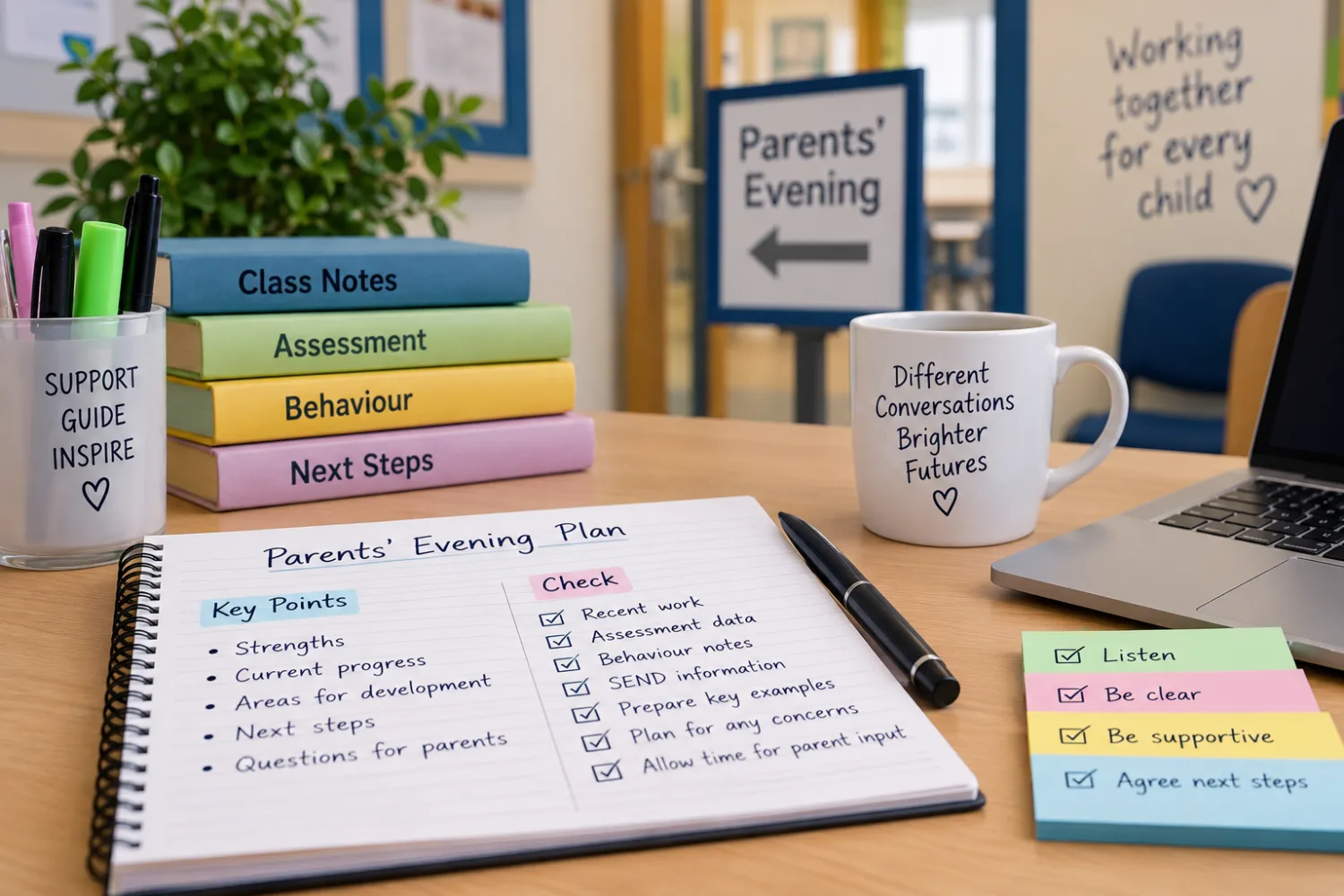
It is also important to brief adults properly, especially if some are parent volunteers or staff who do not usually work with the class. Adults need to know the purpose of the visit, the timetable, behaviour expectations, safeguarding boundaries, mobile phone expectations, photography rules and what to do if a pupil is upset, unwell or separated from the group.
Do not assume adults will know what you mean by “keep an eye on your group”. Give them names, timings, meeting points and simple instructions. The clearer the adult briefing, the calmer the visit usually feels.
Make the risk assessment useful, not decorative
Risk assessment should not be a document that is written, filed and forgotten. It should help you think through the day before it happens.
The Health and Safety Executive is clear that schools should take a proportionate approach to school trips. The aim is not to create unnecessary paperwork or remove all risk from learning. The aim is to identify the real hazards, make sensible decisions and ensure staff know what to do.
A useful risk assessment considers the actual visit: the journey, arrival, entrances, roads, water, animals, tools, heights, crowds, food, allergies, toilets, medical needs, behaviour, weather, emergency procedures and lost-child arrangements. It should also reflect the pupils you are taking, not a generic group of imaginary children.
If the venue provides risk assessment information, use it, but do not treat it as a replacement for your school’s own thinking. The venue knows its site. You know your pupils. A safe plan usually needs both perspectives.
The official DfE guidance on health and safety on educational visits and the HSE school trips guidance are helpful references when you want planning to be sensible rather than excessive.
Plan for SEND, medical needs and accessibility from the start
Inclusion should not be something added at the end once the trip is already designed. If pupils with SEND, medical needs, anxiety, sensory sensitivities, mobility needs or communication needs are attending, the visit should be planned with them in mind from the beginning.
This may mean checking accessible routes, quiet spaces, toilet facilities, visual timetables, wheelchair access, hearing support, dietary requirements, medication storage, staff support or shorter sessions. It may also mean preparing individual pupils more carefully with photos, maps, social stories or a simple explanation of what will happen during the day.
Some pupils cope well in school but find trips difficult because the usual routines disappear. Others may thrive because the visit gives them a practical, sensory or visual way into learning. The goal is not to assume either way, but to plan thoughtfully.
If the visit includes an external provider, ask how they support pupils with additional needs. A strong provider should be willing to discuss reasonable adjustments and help you avoid problems before the day.
For broader background, you may find our guides to SEN Support and EHCPs and sensory-friendly learning environments useful when thinking about how different pupils experience unfamiliar settings.
Communicate with parents clearly and early
A good parent letter does more than ask for permission and payment. It reassures families that the school has thought through the visit properly.
Parents need to know where pupils are going, why they are going, when they leave and return, what pupils should wear, whether they need a packed lunch, how much the visit costs, how payment works, what happens if a family cannot afford the full amount, who to contact with questions, and what medical or dietary information the school needs.
Be especially clear about clothing. Many trip-day problems are ordinary but disruptive: pupils arrive without coats, with unsuitable shoes, with no lunch, with money they do not need, or with a phone when phones are not allowed. A clear letter reduces these issues.
It is also worth thinking about parents who may not read long messages carefully. Keep key details visible. Use short paragraphs. Repeat the deadline. Put the date, return time and cost where they cannot be missed.
Our guide to simple ways schools can improve parent communication may help if your school wants to make trip messages clearer and reduce repeated questions.
Prepare pupils before the day
Pupils enjoy trips more when they know what to expect.
Before the visit, explain where you are going, why it matters, what the day will look like, who they will be with, what behaviour is expected, what they should bring and what they should not bring. If possible, show images of the venue, a map, the timetable or a short video from the venue’s website.
This preparation is especially helpful for younger pupils, anxious pupils and pupils who find changes to routine difficult. It also gives teachers a chance to set the tone. A trip is exciting, but it is still a school day. Pupils need to understand that their behaviour affects safety, learning and whether future trips are possible.
It can also help to give pupils a question to carry into the visit. For example:
- What surprised you today?
- What did you see that connected to our classroom learning?
- What would you like to investigate further?
- What should next year’s class know before coming here?
A simple question can make pupils more observant. It also gives you an easy follow-up task when you return to school.
Create a simple trip-day pack
On the day itself, you want fewer decisions, not more.
A trip-day pack does not need to be complicated, but it should contain the information staff may need quickly. This might include the pupil list, adult group lists, emergency contacts, medical information, medication details, the timetable, venue contact details, coach company details, copies of permissions, a map, tickets or booking confirmation, and the school emergency contact.
It is also sensible to have spare sick bags, tissues, wipes, basic stationery, a first-aid kit where appropriate, plastic bags, spare labels or wristbands if used, and printed copies of the schedule for adults.
Digital copies are useful, but do not rely only on one phone. Batteries die, signal disappears and documents can be hard to open quickly under pressure. A small printed pack can save a lot of stress.
Give adults a proper briefing
A five-minute adult briefing can prevent a dozen small problems later.
Before leaving, adults should know the purpose of the visit, the timetable, their group, behaviour expectations, toilet arrangements, lunch arrangements, medical issues relevant to their role, safeguarding expectations, emergency procedures and what to do if a pupil is missing or unwell.
If parent helpers are attending, be clear that they are there as part of the school’s supervision plan. They should not take pupils away from the group, buy pupils extra food or gifts, take photos without permission, post on social media, or make independent changes to the plan.
If adults involved in the trip may need DBS checks, this should be considered in line with your school’s safeguarding policy and the nature of their role. Our article on what a DBS check covers gives helpful background, although schools should always follow their own safeguarding procedures.
Build in calm moments
It is tempting to pack a school trip with as much as possible. After all, the school has paid for transport, staff have worked hard to organise it, and everyone wants the day to feel worthwhile.
But an overloaded timetable can create stress. Pupils need toilet breaks, snack breaks, transition time, time to line up, time to ask questions and time to simply look. Younger pupils may become tired. Older pupils may need time to process what they have seen. Staff need small gaps to check numbers, adjust plans and deal with the unexpected.
A calmer timetable is usually safer and more educational. It allows pupils to notice more and staff to manage the group without constant rushing.
If there are several possible activities at the venue, choose the ones that best match your learning aim rather than trying to do everything. A trip pupils understand is better than a trip they simply survive.
Have a realistic bad-weather and delay plan
Many school trip problems are not dramatic. They are ordinary: rain, traffic, a late coach, a closed lunch area, a pupil feeling sick, a missing water bottle, a delayed workshop, or a muddy field.
A simple backup plan can make these moments much less stressful. Know where pupils can shelter, what happens if the coach is delayed, who contacts school, whether the venue can adjust timings, where pupils will eat if it rains, and how parents will be informed if the return time changes.
It is also worth deciding in advance what would make the trip unsafe or unworkable. If the weather is poor but manageable, the trip may continue. If conditions affect travel, outdoor safety or supervision, senior leaders may need to make a different decision. Clear thinking before the day makes those decisions easier.
Use the visit afterwards, not just during the day
The learning value of a school trip often depends on what happens afterwards.
Without follow-up, even a brilliant visit can become a vague memory. With the right follow-up, it can support writing, discussion, display work, assessment, pupil voice, curriculum links and future planning.
Pupils might write a report, create a guide for next year’s class, make a presentation, produce a fieldwork summary, design an exhibition panel, write a thank-you letter, create a map, record a podcast, compare what they expected with what they saw, or explain how the visit changed their understanding.
The follow-up does not need to be heavy. Sometimes the best task is simple: “What do you know now that you did not know before?” or “What moment from the trip helped you understand the topic better?”
These reflections also help teachers. They show whether the trip achieved its purpose and what could be improved next time.
Keep notes for next year
One of the easiest ways to reduce future stress is to write notes while the visit is still fresh.
What worked well? What took longer than expected? Was the coach timing right? Were the toilets suitable? Did the venue manage the group well? Were pupils engaged? Did the adult groups work? Was the cost realistic? Were parents clear about what was needed? Would you book the same provider again?
These notes do not need to be formal, but they are extremely useful. Next year’s teacher may be you. It may be a colleague. Either way, a short honest review can save hours of repeated thinking.
If the visit involved a supplier, provider or venue that worked well, it may also help the school build a trusted list of external partners. Our guide to what schools ask before approving a new supplier explains why reliability, communication and evidence matter so much when schools decide who to work with again.
A practical school trip checklist for teachers
Every school will have its own forms and approval process, but the following checklist can help you make sure the main areas have been considered.
Before booking
- Define the learning purpose of the visit.
- Check your school, trust or local authority educational visits process.
- Confirm who needs to approve the trip.
- Check whether the visit needs additional risk assessment or specialist approval.
- Compare venues based on learning value, safety, accessibility and cost.
- Ask the venue for school-specific information and risk assessment guidance.
- Check whether the provider regularly works with schools.
- Confirm possible dates, session times and group capacity.
- Get transport quotes before finalising the cost.
- Build a full budget, including hidden or additional costs.
Before telling parents
- Confirm the date, destination, timings and cost.
- Check payment arrangements and deadlines.
- Consider affordability and support for families.
- Confirm adult supervision arrangements.
- Identify pupils with medical, SEND, dietary, mobility or anxiety-related needs.
- Check accessibility and reasonable adjustments with the venue.
- Prepare parent communication with clear practical details.
- Collect consent, medical updates and emergency information.
In the final week
- Brief pupils on the purpose, timetable and behaviour expectations.
- Confirm final numbers with the venue and transport provider.
- Prepare adult group lists.
- Prepare medical and emergency information for relevant staff.
- Print or save booking confirmations, maps and contact details.
- Check weather and clothing requirements.
- Send final reminders to parents.
- Brief all staff and volunteers.
On the day
- Take registers before leaving and at key points during the day.
- Check medication, lunches, clothing and essential equipment.
- Make sure every adult knows their group and role.
- Keep the school office informed of any major delays or changes.
- Build in toilet breaks, lunch time and calm transitions.
- Keep the learning purpose visible through questions and discussion.
- Count pupils carefully before leaving the venue and after returning to school.
After the visit
- Complete a follow-up learning activity.
- Ask pupils what they learned and what they will remember.
- Thank the venue, staff, volunteers and office team.
- Record what worked well and what should change next time.
- Keep useful documents for future planning.
Final thought
A stress-free school trip is not one where nothing unexpected happens. Something nearly always changes: the weather, the traffic, the timing, the questions pupils ask, or the small practical details nobody predicted.
A well-planned trip is one where those changes are manageable because the important thinking has already been done.
Start with the learning purpose. Choose a venue that understands schools. Ask practical questions early. Communicate clearly with parents. Prepare pupils properly. Give adults clear roles. Keep the timetable realistic. Then use the visit afterwards so the learning lasts longer than the day itself.
When school trips are planned this way, they stop feeling like a mountain of admin and start feeling like what they should be: one of the most memorable parts of school life.