School trip venues often have something valuable to offer: animals, history, science, outdoor learning, theatre, residential experiences, workshops, heritage, careers, adventure, nature or hands-on learning. But having a good experience is not always enough to win school bookings. Teachers need to see quickly that the venue understands schools.
A teacher is not simply choosing a nice place to visit. They are organising transport, parent communication, staff cover, risk assessment, safeguarding checks, curriculum links, SEND planning, payments, lunches, toilets, timings and approval from senior leaders. If a venue makes any of these things unclear, the teacher may move on to another provider.
This is why some venues with excellent activities struggle to attract schools, while more organised competitors get repeat bookings. The difference is often not the quality of the experience itself. It is how clearly the venue presents its school offer before the teacher has to ask.
This guide explains how school trip venues can attract more teacher bookings by improving their website, communication, trust signals, pricing, curriculum links, risk information and follow-up. It is written for museums, farms, outdoor learning providers, residential centres, STEM venues, theatres, wildlife parks, heritage sites, activity centres, workshops and any organisation that wants to work with UK schools.
If you are still shaping your school offer, you may also find our guides to what schools need from a school trip provider before they book, how to write a school trip risk assessment and requirements for businesses working with schools useful.
Understand what teachers are really buying
Teachers are not only buying entry tickets or a workshop. They are buying confidence.
They need confidence that the visit will be safe, age-appropriate, educational, organised, inclusive and worth the cost. They need confidence that the venue will answer questions quickly, understand school procedures and help them prepare pupils properly. They need confidence that the day will not fall apart because of unclear timings, missing toilets, poor arrival arrangements or vague staff roles.
This means your school offer is bigger than the activity itself. It includes the booking process, information pack, website page, risk details, email replies, example timetable, accessibility guidance, staff welcome, lunch arrangements, wet-weather plan and follow-up resources.
A venue may think, “We offer a brilliant animal encounter,” or “We have an amazing castle,” or “Our science workshop is exciting.” A teacher is thinking, “Can I justify this? Can I get it approved? Will my pupils be safe? Will the day run smoothly? Will parents understand the value?”
Venues that answer those hidden questions attract more bookings.
Create a dedicated school visits page
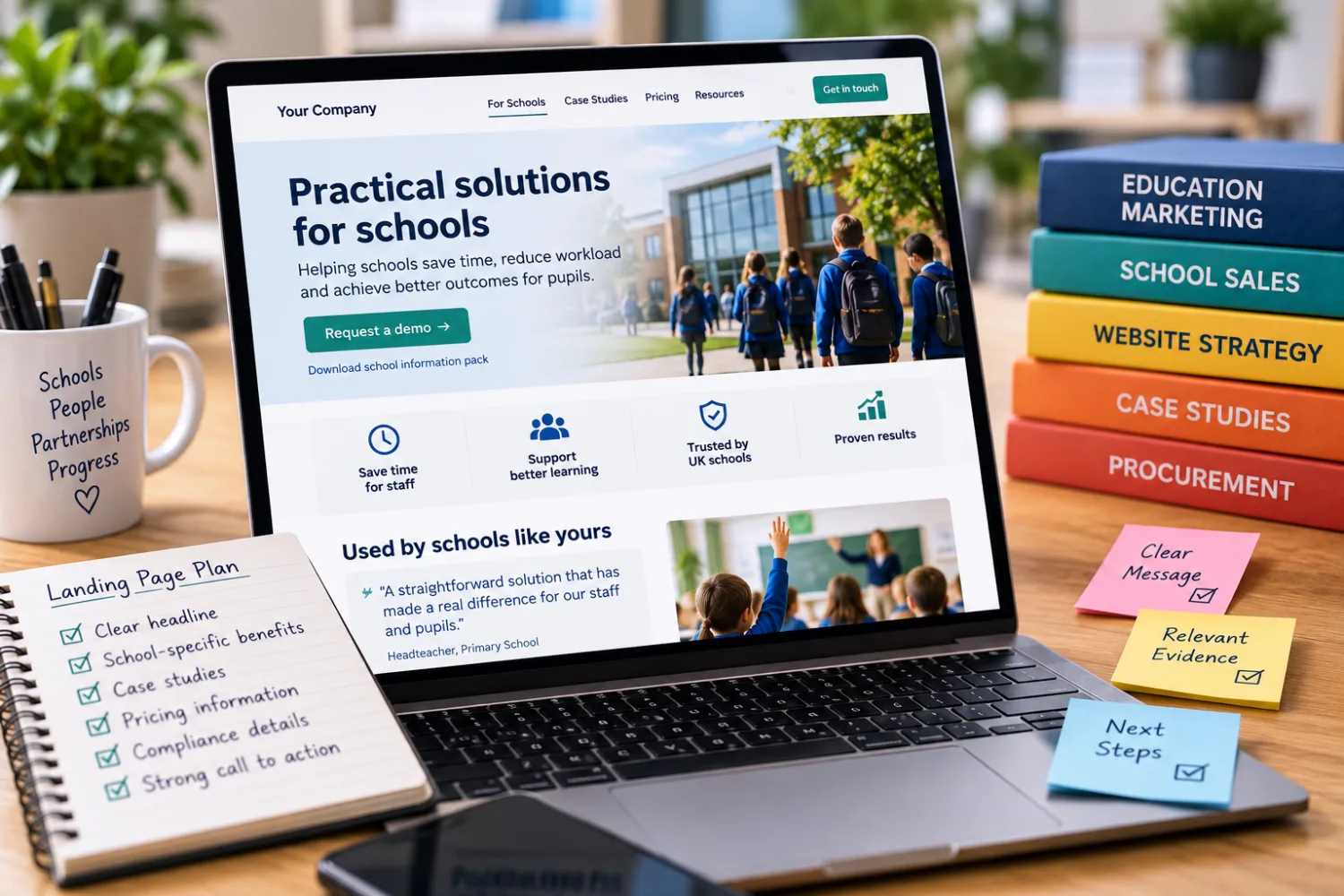
One of the simplest ways to attract more teacher bookings is to create a dedicated school visits page on your website.
Many venues make the mistake of expecting teachers to use general visitor information. This creates unnecessary friction. A family visitor wants opening hours, ticket prices and café details. A teacher needs curriculum links, group sizes, risk information, toilets, lunch spaces, SEND access, coach parking, prices, staff roles and what pupils will actually do.
Your school visits page should speak directly to schools. It should make the teacher feel that your venue is used to school groups and understands their planning workload.
At minimum, the page should include:
- Age groups and key stages you support.
- Curriculum links and learning outcomes.
- Types of sessions, workshops or visit options.
- Example timetables.
- Prices and what is included.
- Minimum and maximum group sizes.
- Toilets, lunch and bag storage information.
- Coach parking or public transport guidance.
- Risk assessment and safeguarding information.
- SEND and accessibility details.
- Teacher resources or pre-visit information.
- A named contact or clear enquiry form.
The page does not need to be complicated. It needs to be complete enough that a teacher can quickly decide whether your venue is suitable.
Make curriculum links specific
Many venues say their visits are “curriculum-linked”, but they do not explain how. This weakens the school offer.
Teachers need specific links. A farm might support animals, plants, food production, sustainability, habitats and seasons. A heritage venue might support Romans, local history, industrial change, monarchy, warfare or source analysis. A STEM provider might support forces, electricity, space, coding, engineering, medical science or careers. A theatre might support storytelling, Shakespeare, drama, live performance evaluation or speaking and listening.
The more specific you are, the easier it is for teachers to justify the visit to subject leaders, senior leaders and parents.
Avoid vague claims such as “supports learning across the curriculum” unless you explain what that means. Instead, say what pupils will do and what they will learn. For example:
- Pupils will compare animal adaptations and explain how animals are suited to their habitats.
- Pupils will handle replica artefacts and use evidence to investigate daily life in Roman Britain.
- Pupils will build and test structures, then improve their designs after failure.
- Pupils will collect fieldwork data and use it to compare two environments.
- Pupils will watch a live performance and discuss staging, character and audience response.
Specific outcomes make your venue look more educational and less like a general day out.
Show age suitability clearly
Teachers need to know whether your venue works for their pupils’ age group.
“Suitable for all ages” sounds flexible, but it is often too vague. A Year 1 class, a Year 5 class, a Year 8 group and a Year 11 GCSE group need different timing, language, supervision, independence and depth.
Create clear sections for age groups or key stages. Explain how the experience changes. A KS1 visit may be shorter, more visual and more hands-on. A KS2 visit may include enquiry questions and structured observation. A secondary visit may include deeper subject knowledge, careers links, fieldwork, debate or exam relevance.
This is especially important if your venue has traditionally served families. A family-friendly venue is not automatically school-friendly. Teachers need to see that you can manage groups of pupils and pitch learning appropriately.
If you offer different experiences for different ages, name them clearly. For example, “KS1 farm discovery visit”, “KS2 habitats workshop”, “KS3 sustainability challenge” or “GCSE geography fieldwork day”.
Use example timetables
Example timetables are one of the most persuasive tools a school trip venue can use.
Teachers need to picture the day. They want to know what happens on arrival, how long activities last, when pupils use toilets, where lunch fits in, how groups move around, when handwashing happens, when the coach leaves and what happens if the group arrives late.
A simple example timetable can reduce uncertainty immediately:
- 10:00 — Arrival, welcome and toilets.
- 10:15 — Introduction and safety briefing.
- 10:30 — First guided activity.
- 11:30 — Break, toilets or handwashing.
- 11:45 — Second activity or workshop.
- 12:30 — Packed lunch.
- 13:15 — Trail, practical task or group challenge.
- 14:15 — Final questions and review.
- 14:30 — Toilets and departure.
For residential centres, example timetables are even more important. Schools need to understand meals, evening routines, rooming, lights-out, morning activities and staff supervision.
You can still adapt the day for each school. The example simply helps teachers understand how a visit usually works.
Make pricing easy to understand
Unclear pricing can stop teachers enquiring. Schools often work with tight budgets and need to estimate cost before starting the approval process.
Your pricing should explain whether you charge per pupil, per group, per workshop, per session, per day or per residential package. It should also explain what is included.
Teachers need to know whether the price includes entry, workshop delivery, equipment, teacher resources, lunch space, adult places, parking, follow-up materials, accommodation, meals or evening activities.
If exact pricing depends on numbers, provide a guide price or “from” price. If you do not want to show exact prices, at least explain the structure. For example, “prices are based on group size and session type; most school visits are charged per pupil with free adult places according to agreed ratios.”
Also explain deposits, payment deadlines, VAT where relevant, minimum group sizes, free adult places, cancellation terms and what happens if pupil numbers change.
Pricing transparency does not mean being the cheapest. It means making the cost easy to understand.
Provide risk information before teachers ask
Risk assessment is part of school trip planning. If your venue hides risk information or only says “available on request” without context, teachers may have to do extra work before they can decide whether to enquire.
Your website should explain that school-specific risk information is available and summarise the main areas teachers may need to consider. This might include site layout, public access, toilets, lunch spaces, coach drop-off, animal contact, water, machinery, tools, fire, heights, dark spaces, stairs, uneven ground, weather, medical support and emergency procedures.
This does not mean publishing every internal document. It means showing that you understand risk management and can support schools with planning.
Teachers do not expect your venue to be risk-free. They expect you to be honest, organised and practical.
For more detail on what schools consider, see our guide to how to write a school trip risk assessment.
Take safeguarding seriously and explain adult roles
Safeguarding information matters because schools need to understand who will work with pupils and how the visit will be supervised.
Your school visits page should explain whether your staff lead sessions, whether school staff remain with pupils, whether volunteers are involved, whether any adults could be alone with pupils, how toilets are managed, whether the venue is open to the public, and who teachers should speak to if they have a concern.
Where relevant, explain DBS arrangements, staff training, safeguarding policy, photography rules, lost-child procedures and reporting routes. You do not need to publish confidential internal documents, but teachers need reassurance that safeguarding is not an afterthought.
Adult roles should be clear. For many visits, venue staff lead the educational content while school staff remain responsible for pupil supervision and behaviour. If that is how your venue works, say so clearly.
Vague safeguarding information creates hesitation. Clear safeguarding information builds trust.
Show SEND and accessibility details honestly
Schools increasingly look for clear SEND and accessibility information before booking. A venue that gives practical detail will often stand out from competitors.
Avoid simply saying “we are accessible” or “we welcome all pupils”. Teachers need specifics. Is there step-free access? Are there accessible toilets? Are routes suitable in wet weather? Are there quiet spaces? Are there loud noises, strong smells, dark areas, flashing lights, long walks, animals, crowds or uneven surfaces? Can activities be adapted? Can pupils opt out of handling, climbing or noisy demonstrations?
Be honest about limitations. If part of your site is not wheelchair accessible, explain which part and what alternatives are available. If your venue can be noisy at lunchtime, say so and suggest a quieter option. If some routes are steep or muddy, help teachers plan.
Photos are especially helpful for pupils with SEND. Images of entrances, toilets, lunch areas, learning rooms, outdoor spaces and quiet areas can help teachers prepare pupils in advance.
For schools, clear SEND information saves planning time. For venues, it shows professionalism.
Our guide to making a school trip work for pupils with SEND explains what teachers may be thinking about before they book.
Make facilities visible
Toilets, lunch spaces, storage, shelter and coach access may not feel exciting, but they often decide whether a school can book.
Teachers need to know whether toilets are close to activity areas, whether pupils can eat packed lunches, whether there is indoor space in bad weather, where coats and bags go, whether there are handwashing facilities, whether accessible toilets are available and whether adults can supervise the space easily.
Outdoor venues should be especially clear about shelter, wet-weather arrangements and clothing. Farm and animal venues should be clear about handwashing. Residential centres should show bedrooms, bathrooms, dining spaces and communal areas. Heritage venues should show routes, stairs, entrances and accessible areas.
These details do not reduce the appeal of your venue. They make it easier for teachers to say yes.
Use photos that help teachers plan
Many venues use beautiful promotional photos, but not enough practical photos.
Teachers benefit from seeing the entrance, coach drop-off area, toilets, lunch space, learning room, activity areas, outdoor routes, accessible paths, handwashing stations, quiet spaces and places where pupils will gather.
These images help teachers prepare pupils, brief staff and reassure parents. They are especially useful for younger pupils, pupils with SEND and pupils who are anxious about new places.
You can still use attractive images, but mix them with practical ones. A dramatic castle photo is useful, but a photo of the education room may be what helps the teacher imagine the day. A beautiful woodland image is appealing, but a photo of the shelter, toilets and group meeting point may answer the teacher’s real questions.
Photos should make the visit feel both inspiring and manageable.
Create teacher resources
Teacher resources can turn a venue from a place to visit into an educational partner.
Useful resources may include pre-visit vocabulary, topic links, enquiry questions, worksheets, visual guides, maps, classroom activities, risk information, parent letter wording, follow-up tasks, careers links or simple reflection prompts.
These resources do not need to be long. In fact, shorter is often better. Teachers are busy. A one-page vocabulary sheet, a simple pre-visit discussion guide or three follow-up writing tasks can be more useful than a large pack nobody has time to read.
Resources also help your SEO and website authority. A venue with useful school resources is more likely to be found, shared and trusted.
If you offer workshops, include clear learning outcomes and suggested pre-visit preparation. If you offer self-led visits, provide maps, trails or enquiry questions that help teachers use the site well.
Build trust with testimonials and case studies
Teachers trust other teachers. A short quote from a school can be more persuasive than a long promotional paragraph.
Ask schools for feedback after visits. Request permission to use short testimonials on your website. The most useful testimonials mention organisation, curriculum links, pupil engagement, staff helpfulness, SEND support, facilities or value for money.
Case studies can be even stronger. For example, you might show how a Year 4 group used your venue for habitats, how a secondary school completed geography fieldwork, how a SEND group was supported, or how a local school returns every year for a transition residential.
Keep case studies practical. Teachers want to know what the school needed, what you provided and what pupils gained.
If you do not have school testimonials yet, start collecting them now. After each visit, send a short follow-up email asking what worked well and whether the school would be happy to provide a quote.
Respond to enquiries quickly and use helpful email templates
Teachers often enquire while juggling many other tasks. A slow or vague reply can lose a booking.
Your first reply should answer the main questions clearly: availability, price, what is included, age suitability, session options, risk information, facilities, booking steps and who to contact.
It helps to have email templates ready, but they should not feel robotic. A strong reply might say:
“Thank you for your enquiry. We regularly work with Year 4 groups and can offer a habitats workshop suitable for your topic. The visit usually runs from 10:00 to 14:30, includes two guided activities, lunch space and teacher resources. I have attached our school information pack, sample timetable, prices and risk information. We can also discuss SEND adjustments if helpful.”
This kind of reply makes the teacher’s next step easier. It also shows that your venue understands schools.
For more general school outreach advice, see our guide to how to follow up schools professionally.
Think about when schools plan trips
School trip marketing works better when it matches the school calendar.
Many schools plan major trips months in advance, especially residentials, coach-heavy visits and activities requiring parent payments. Some curriculum visits are planned around topics, exam courses or seasonal opportunities. Other visits are arranged more quickly when a teacher finds a suitable local option.
Providers should promote different offers at the right time. Residential centres may need to reach schools well before the next academic year. Farm venues may promote spring lambing, harvest or food education at seasonal points. STEM providers may promote British Science Week, careers weeks or end-of-term enrichment. Heritage venues may promote topic-linked workshops before common curriculum periods.
Do not only market when you have availability to fill next week. Schools often cannot move that quickly.
For more detail on school buying patterns, see our guide to the school year calendar every supplier should plan around.
Make the offer easy to compare
Teachers often compare several venues before choosing. Make that comparison easy.
Your website should clearly show what makes your venue different. Is it more local? More hands-on? Better for SEND? Stronger for KS2 science? Ideal for secondary fieldwork? Suitable for residentials? Linked to careers? Good for low-cost self-led visits? Strong for outdoor learning? Designed for small schools?
Do not assume teachers will work this out. Say it clearly.
Comparison also means being transparent about what is not included. If transport is not included, say so. If lunch is not provided, say so. If the visit is self-led unless a workshop is booked, make that clear. If adult places are free only up to a certain ratio, explain it.
Clear comparison builds trust and reduces disappointment.
Offer teacher preview opportunities
Teacher previews can be very effective, especially for venues that require higher commitment, such as residential centres, outdoor learning sites, large museums, heritage venues, farms or activity centres.
A preview might be a free teacher visit, online briefing, short video tour, open afternoon, sample workshop, downloadable planning pack or live Q&A. The purpose is to help teachers understand the venue before bringing pupils.
Previews can also build relationships. A teacher who has met your education team, seen the lunch space, checked the toilets and understood the route is more likely to trust the visit.
This is particularly useful if your venue is unusual, new to school visits, rural, large, complex or difficult to explain through photos alone.
Use local SEO and directory listings
Teachers often search by subject, age group and location. They may search for phrases such as “farm school trip near me”, “KS2 history school trip”, “STEM workshop for schools”, “school trip venues in Yorkshire”, “forest school visits for primary schools” or “residential school trip centre UK”.
Your website should include the phrases teachers actually use, without becoming unnatural. Mention your location, region, age groups, subjects, venue type and school trip offer clearly.
Local SEO matters. Make sure your Google Business Profile is accurate, your school visits page is indexed, your location is clear, and your contact details are consistent across the web.
Relevant directory listings can also help, especially when they place your venue in front of schools already looking for trip ideas. A listing should not replace your own website, but it can support discovery and credibility.
If you want your venue or school trip service to be considered for future AllSchools resources or listings, you can contact us at info@allschools.co.uk.
Follow up after the visit
Many venues focus on getting the booking and forget what happens afterwards. Follow-up is where repeat bookings and referrals are built.
After the visit, send a short thank-you email. Ask whether the day met the school’s aims. Invite feedback. Offer follow-up resources. Ask whether the teacher would be willing to provide a short testimonial. Mention related sessions or seasonal visits that may suit the school in future.
Keep the tone helpful rather than pushy. The teacher may be tired after the trip, so make the reply easy. A simple two-question feedback form is better than a long survey.
If something went wrong, follow up professionally. A delayed start, unclear lunch space or activity issue can damage trust if ignored. It can also become a chance to show that your venue listens and improves.
Schools remember providers that make them feel looked after before, during and after the visit.
Common mistakes school trip venues make
One common mistake is aiming the website only at families. Schools have different needs. If your school information is hidden inside general visitor pages, teachers may not find it.
Another mistake is using vague educational language. Words such as “inspiring”, “immersive” and “interactive” are fine, but they need detail. Teachers need to know what pupils will actually do.
A third mistake is hiding prices. Some venues avoid showing costs because packages vary, but no pricing guidance can discourage schools before they enquire.
Other common mistakes include slow replies, unclear safeguarding information, no example timetable, weak SEND details, missing risk information, poor facility photos, no teacher resources and no follow-up after visits.
Most of these problems are fixable. Often, the venue itself is strong. The school-facing information simply needs to be clearer.
A simple action plan for venues
If you want to attract more teacher bookings, start with the basics.
- Create or improve your dedicated school visits page.
- Make age suitability and curriculum links specific.
- Add clear prices or pricing structure.
- Publish an example timetable.
- Explain risk, safeguarding, SEND and accessibility clearly.
- Add practical photos of facilities, not only promotional images.
- Create simple teacher resources.
- Respond to enquiries quickly with useful information.
- Collect testimonials and case studies from schools.
- Use local SEO and relevant school directories.
- Follow up after visits and encourage repeat bookings.
You do not need to do everything in one week. But every improvement removes a barrier for teachers.
FAQ: attracting more school trip bookings
How can a school trip venue get more bookings from teachers?
A venue can get more teacher bookings by making its school offer clear, showing curriculum links, publishing practical information, providing risk and safeguarding details, explaining prices, supporting SEND planning, responding quickly and collecting school testimonials.
Should a venue have a separate school visits page?
Yes. A separate school visits page makes it easier for teachers to find the information they need. General visitor pages are usually not detailed enough for school planning.
What information do teachers look for before booking?
Teachers usually look for age suitability, curriculum links, prices, example timetables, facilities, toilets, lunch space, coach parking, risk information, safeguarding, SEND access, staff roles, resources and contact details.
Should school trip venues show prices online?
Clear pricing is helpful. If exact prices depend on group size or session type, venues should at least explain the pricing structure, what is included, minimum group sizes and how to request a quote.
How important are curriculum links?
Curriculum links are very important because teachers often need to justify time away from lessons. The links should be specific and explain what pupils will actually learn or practise during the visit.
How can venues make their offer more inclusive?
Venues can make their offer more inclusive by providing clear accessibility details, quiet space information, sensory considerations, adapted activities, photos, visual guides and a named contact for SEND questions.
Do testimonials help school trip venues?
Yes. Teacher testimonials and short case studies help build trust because schools want evidence that other schools have had a well-organised and useful visit.
How can a small venue compete with larger attractions?
Small venues can compete by being clear, local, flexible, personal and school-friendly. Teachers often value providers that communicate well, understand schools and make planning easier.
Final thought
School trip venues attract more teacher bookings when they reduce uncertainty. Teachers need to see that the visit is educational, safe, inclusive, practical and worth the effort.
A strong venue does not only offer a memorable day. It helps teachers get that day approved, planned, explained to parents and delivered smoothly.
For venues, the opportunity is clear. Schools are looking for meaningful educational visits, but they need school-specific information before they book. The venues that provide that information clearly will always have an advantage.
If you run a school trip venue, activity centre, residential centre, farm, museum, heritage site, STEM provider, theatre, wildlife venue, outdoor learning centre or workshop provider and would like your venue to be considered for future AllSchools resources or listings, contact us at info@allschools.co.uk. We are always interested in hearing about useful, school-friendly trip providers across the UK.