A school trip can be one of the most valuable experiences of the year for pupils with SEND. It can give them a different way to learn, a chance to build confidence, a real-world context for classroom topics, and a shared memory with their peers. For some pupils, a visit to a museum, farm, woodland, theatre, zoo, workplace or outdoor centre can unlock engagement that is difficult to achieve in the classroom alone.
But school trips can also be challenging. They involve changes to routine, unfamiliar places, crowds, noise, smells, waiting, travel, toilets, lunch arrangements, different adults and new expectations. A pupil who copes well in school may find a trip overwhelming. Another pupil who struggles indoors may thrive when learning becomes practical, visual and active.
This is why planning matters. Making a school trip work for pupils with SEND is not about lowering expectations or avoiding ambitious visits. It is about thinking early, asking the right questions, preparing pupils properly and making reasonable adjustments so more children can take part safely and meaningfully.
The best inclusive school trips are not created by luck. They are created by good communication between the class teacher, SENCO, parents, support staff, senior leaders and the venue.
If you are planning an outdoor visit, our guide to the best outdoor learning and Forest School trip venues in the UK may be useful alongside this article. Outdoor learning can be highly inclusive, but only when sensory, access and supervision needs are planned from the start.
Start with the principle: include first, then plan
The starting point should usually be: “How can this pupil take part?” rather than “Can this pupil cope?”
That difference matters. If staff begin from the assumption that a pupil may be excluded because the trip looks difficult, planning can become defensive. If staff begin from the assumption that the pupil should be included wherever reasonably possible, the conversation becomes more useful. What support is needed? What adjustment would help? What are the real risks? What can the venue offer? What does the pupil already use successfully in school?
Inclusion does not mean pretending every trip is suitable for every child in exactly the same way. Some pupils may need extra preparation, a shorter route, a quieter space, a known adult, adapted transport, a different lunch arrangement, an alternative activity, or a planned way to step back if overwhelmed. Some visits may need more detailed risk assessment than others.
But pupils with SEND should not be treated as an afterthought. If the venue, timetable or activity is designed first and adjustments are considered only at the end, the trip is much more likely to become stressful.
Bring the SENCO into the planning early
A school trip may be led by a class teacher, year group lead, subject teacher or educational visits coordinator, but the SENCO should be involved early where pupils with SEND may need additional planning.
The SENCO can help identify pupils who may need reasonable adjustments, review existing support plans, advise on communication with families, suggest preparation strategies, and help staff think through supervision, sensory needs, medical needs, mobility, behaviour, anxiety and emotional regulation.
The class teacher brings detailed knowledge of the pupil in everyday lessons. The SENCO may bring a wider view of needs, provision, legal duties and patterns across school. Support staff may know the small details that make a big difference: which adult a pupil trusts, what triggers distress, how long they can tolerate noise, whether they need a visual schedule, or what helps them recover after becoming overwhelmed.
Trip planning works best when this knowledge is shared before the booking is finalised, not the day before departure.
Talk to parents and carers before assumptions are made
Parents and carers often know things that are not obvious in school.
A pupil may be fine with short car journeys but struggle badly on coaches. They may use disabled toilets when out with family. They may become anxious in queues. They may bolt in open spaces. They may refuse unfamiliar food. They may be frightened of dogs, birds, lifts, hand dryers or loud announcements. They may need a very clear explanation of what will happen if plans change.
Parents can also help staff understand what has worked on previous visits, what has gone wrong, and what preparation is likely to help.
The tone of this conversation matters. Parents should not feel that the school is looking for a reason their child cannot attend. The message should be: “We want this visit to work. What should we know so we can plan it properly?”
In some cases, parents may be anxious because previous trips have gone badly or because their child has been excluded from activities before. Clear, early communication can build trust and reduce last-minute worry.
Ask the venue specific SEND questions
“Is your venue accessible?” is not enough.
Accessibility can mean many different things. A venue may have step-free access but no quiet space. It may have accessible toilets but a very noisy lunch hall. It may offer wheelchair routes but involve long distances. It may be physically accessible but difficult for pupils with sensory processing needs. It may be calm in the morning and crowded after lunch.
Teachers should ask specific questions based on the pupils attending. Are there step-free routes? How long are the walking distances? Are there places to sit? Are accessible toilets available? Is there a quiet room or calmer area? Are hand dryers loud? Are there dark spaces, flashing lights, strong smells, animals, sudden sounds or crowded areas? Can pupils avoid certain activities? Can the timetable be adjusted? Can the venue provide photos, maps or a visual guide in advance?
The best venues will answer with practical detail. They will not simply say “we are inclusive”. They will explain what is possible, what might be difficult and how they can help.
Our wider guide to questions every teacher should ask before booking a school trip venue can help schools compare venues before committing.
Think about sensory needs before choosing the timetable
Sensory planning is one of the most important parts of making a trip work for pupils with SEND. Many trip difficulties are not caused by the main activity itself, but by everything around it: the coach noise, the echoing entrance hall, the lunch room, the toilets, the queue, the smell of animals, the sudden loud demonstration, the crowded gift shop, the public hand dryer, the bright lights or the long wait before the workshop begins.
A pupil may enjoy the museum but struggle with the journey. They may love animals but become overwhelmed by smells. They may enjoy outdoor learning but panic when clothing becomes wet or muddy. They may cope with the venue but not the unstructured lunch break.
This does not mean the trip should be cancelled. It means the timetable should be designed with sensory load in mind.
Consider arriving at a quieter time, avoiding the busiest café, using a quieter entrance, splitting the group, allowing a short sensory break before the main activity, choosing a calmer lunch area, avoiding unnecessary waiting, and giving pupils warning before transitions. Ear defenders, comfort items, visual schedules, now-and-next cards, fidget tools or agreed break cards may help some pupils.
If your school is thinking about sensory needs more broadly, our guide to creating a sensory-friendly classroom on a budget may also offer useful ideas that can be adapted for trips.
Prepare pupils with visuals, not just verbal reminders
Many pupils benefit from knowing what will happen before it happens. For pupils with autism, anxiety, communication needs, learning difficulties or sensory sensitivities, preparation can be the difference between participation and distress.
A verbal reminder in class is often not enough. Pupils may need visual, repeated and concrete information.
Useful preparation might include photos of the coach, entrance, toilets, lunch space, activity room, outdoor area or staff they will meet. A simple map can show where pupils will go. A visual timetable can explain the order of the day. A social story can describe what will happen, what may feel different and what the pupil can do if they need help.
Some pupils may need to practise parts of the visit in advance. This could mean walking to the coach area, trying on waterproof clothing, using a packed-lunch routine, practising staying with a group, or rehearsing what to do if they need a break.
Preparation should be honest. Do not promise that there will be no noise, no waiting or no changes unless that is certain. It is better to say, “There may be a queue. If we have to wait, you can use your card or stand next to your adult.”
Plan transport as part of the SEND support, not as an afterthought
For some pupils, the most difficult part of the trip is not the venue. It is the journey.
Coach travel can involve noise, close seating, movement, smells, seatbelts, excitement, anxiety, travel sickness and less control than pupils are used to. Public transport may involve crowds, announcements, changes, platforms, stairs and unpredictable delays.
Staff should think carefully about seating plans, known adults, travel sickness, medication, sensory supports, toilet breaks, journey length and what pupils will do during the journey. Some pupils may need to sit near the front, away from particular peers, next to a trusted adult, or in a place where they can use headphones or look out of the window.
If a pupil has mobility needs, check not only whether the venue is accessible but whether the transport and drop-off arrangements are suitable. A venue may be step-free once inside, but the coach may stop far from the entrance or on uneven ground.
Transport is often where a calm trip is won or lost. Planning it properly is not extra detail. It is central to inclusion.
Be realistic about staff ratios and adult roles
Adult-to-pupil ratios matter, but for pupils with SEND, the quality of adult deployment often matters just as much as the number of adults.
It is not enough to say that there will be “extra adults”. Staff need to know who is supporting whom, when that support is close and when it is discreet, who carries medication, who knows the de-escalation plan, who can take a pupil for a quiet break, and who makes decisions if the plan needs to change.
Some pupils may need one-to-one support throughout the visit. Others may need a named adult who is nearby but not constantly beside them. Some may need support during transitions but not during the main activity. Some may need help with toileting, eating, medication, mobility or emotional regulation.
Staff should also avoid creating unnecessary stigma. Where possible, support should be planned in a way that allows the pupil to remain part of the group. A good adjustment helps the pupil access the visit without making them feel singled out.
Plan quiet spaces and exit routes
Every inclusive trip should have a plan for what happens if a pupil becomes overwhelmed.
This does not have to be complicated. It might be a quiet room, a bench away from the group, an outdoor corner, a shaded area, a side room, a short walk with a known adult, or a calmer part of the venue. What matters is that staff know where it is and how it will be used.
The plan should be proactive rather than reactive. If a pupil usually needs a break after noisy activities, build that break into the timetable. If a pupil struggles after lunch, plan a calmer activity afterwards. If a pupil becomes distressed by uncertainty, explain the break plan before the trip.
Exit routes are also important. If a workshop, show, animal talk or activity becomes too much, can a pupil leave safely? Will leaving disrupt the session? Is there an adult available to go with them? Where will they rejoin the group?
A break plan does not mean expecting failure. It means giving pupils a safe way to recover so they can continue.
Make lunch and toilets part of the plan
Lunch and toilets are often the least glamorous parts of a school trip, but they can be the most important for pupils with SEND.
Ask where pupils will eat, whether the space is indoors or outdoors, how noisy it is, whether pupils sit on benches or floors, whether there are strong smells, whether packed lunches can be stored, and whether the lunch period is structured or crowded.
Some pupils may need a quieter place to eat. Some may need support opening food. Some may have restricted diets, allergies, feeding needs or anxiety around eating in public. Others may need careful planning around hydration and toilet access.
Toilets should be checked before the visit wherever possible. Are accessible toilets available? Are they shared with the public? Are hand dryers loud? Are queues likely? Will pupils need adult support? How will privacy and dignity be protected?
These details may seem small, but for some pupils they decide whether the day feels manageable.
Adapt the activity without removing the purpose
Adjustments should help pupils access the learning purpose of the trip, not simply remove them from it.
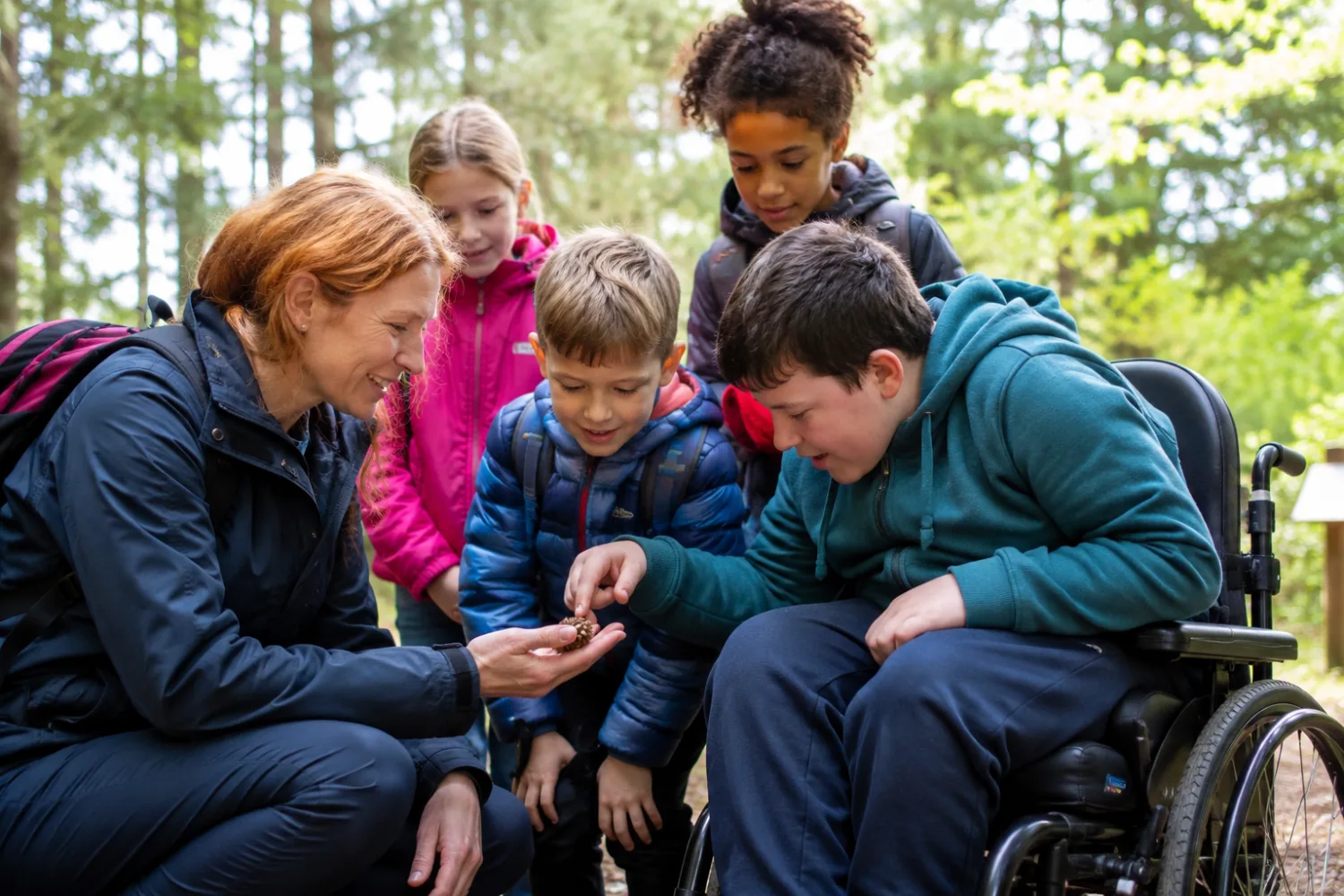
If the class is doing a woodland activity, a pupil with mobility needs might use a shorter route but still investigate habitats. If the class is visiting a museum, a pupil who struggles with writing might take photos, use symbols, record audio notes or answer questions verbally. If the class is doing a theatre workshop, a pupil with anxiety might observe first before joining in. If the class is visiting a zoo, a pupil with sensory sensitivities might avoid the busiest indoor enclosure but still take part in observation outdoors.
The goal is not always identical participation. The goal is meaningful participation.
Teachers should ask: what is the core learning? What can be adapted? What does this pupil need in order to access the experience? What would be unnecessary pressure? What would be unfair exclusion?
This kind of thinking is especially important on trips that involve physical challenge, loud performances, animal contact, practical tools, water, heights, crowds or long periods of walking.
Think carefully about behaviour and emotional regulation
Some pupils may behave differently on trips because the structure of school has changed. This is not always deliberate defiance. It may be anxiety, sensory overload, excitement, communication difficulty, tiredness or a response to uncertainty.
Before the trip, staff should identify likely triggers and successful support strategies. Does the pupil need warnings before transitions? Do they need a job to do? Do they need space at the edge of the group? Do they need movement breaks? Do they respond better to one adult than another? What language helps? What language escalates?
Behaviour expectations should still be clear. Inclusion does not mean unsafe behaviour is ignored. But support should be planned so pupils have the best chance of meeting expectations.
If a pupil has an individual behaviour plan, risk assessment, pastoral plan or positive handling plan, staff should consider how it applies off site. Staff should also be clear about when a pupil might need to leave an activity, who makes that decision, and how the pupil will be supported without shame.
Do not forget pupils with less visible needs
When schools plan SEND access for trips, they may naturally think first about pupils with visible mobility needs or pupils who already have high levels of support. But many needs are less obvious.
A pupil with ADHD may struggle with waiting, impulse control or long instructions. A pupil with autism may struggle with noise, change or uncertainty. A pupil with dyslexia may find written worksheets frustrating. A pupil with developmental language disorder may not understand fast verbal explanations. A pupil with anxiety may become physically unwell before departure. A pupil with medical needs may appear independent but require careful timing, monitoring or emergency planning.
The pupils who “usually manage” can be easy to overlook until the day becomes difficult.
A simple pre-trip review can help. Look at the class list and ask: who might find the journey difficult? Who might struggle with noise or crowds? Who might need help understanding instructions? Who might become anxious? Who might not ask for help even when they need it?
Our guide to neurodiversity in the classroom may help staff think about how different pupils experience learning environments.
Check whether the visit links to SEN Support or an EHCP
Some pupils will have support plans, individual education plans, medical plans, risk assessments or Education, Health and Care Plans. These should not be left behind when the class leaves the school site.
If a pupil has an EHCP, staff should consider whether the trip affects the provision, support or outcomes described in the plan. If a pupil receives SEN Support, staff should consider what strategies are already known to work and how those can be transferred to the visit.
This does not mean every trip needs a long formal document for every pupil. It means existing knowledge should travel with the pupil.
For background on the difference between these types of support, see our guide to SEN Support vs EHCP.
Use the venue’s expertise, but do not outsource inclusion
Many venues have excellent education teams. Some have strong SEND experience, sensory guides, relaxed sessions, visual resources, accessible routes or trained staff. This can make a major difference.
But the school still knows the pupil best.
A venue can explain its site. It can describe noise levels, routes, facilities, workshops and possible adaptations. It can provide photos, maps and risk information. But it cannot know exactly how a particular pupil responds when anxious, how they communicate distress, or which adult they trust most unless the school shares relevant information.
Good planning is a partnership. The venue provides site knowledge. The school provides pupil knowledge. Together, they build a realistic plan.
If your school is comparing providers, our article on how schools vet external providers may help you think through provider suitability before booking.
Make the risk assessment pupil-specific where needed
General risk assessments are useful, but they may not be enough for pupils with particular needs.
A venue risk assessment might mention roads, stairs, water, animals, tools, crowds or weather. The school then needs to consider those risks in relation to the pupils attending. A pond-dipping activity is different if a pupil is likely to run from adults. A crowded museum is different if a pupil freezes in noise. A woodland visit is different if a pupil has a medical condition affected by cold or fatigue.
Pupil-specific planning does not have to be negative. It is not about labelling the pupil as a problem. It is about identifying what support will make participation safer and more successful.
The most useful risk planning asks: what is the need, what is the situation, what could happen, what support reduces the risk, and who is responsible?
For wider educational visit planning, our guide to planning safe and educational school trips in the UK is a useful starting point.
Prepare the rest of the class too
Inclusive trip planning is not only about individual pupils. The whole class may need preparation so the visit works well.
Pupils should understand the timetable, behaviour expectations, safety rules, group arrangements and why some classmates may have different support. This does not mean sharing private information. It means building a culture where different needs are normal and adjustments are not treated as unfair advantages.
Teachers might say: “Different people need different things to have a good day. Some people may use ear defenders, some may have a different lunch space, some may need an adult nearby, and some may take a short break. That is part of how we make sure everyone can join in.”
This kind of explanation can reduce comments, resentment and misunderstanding. It also teaches an important lesson about inclusion.
Think about the return to school
Trips can be tiring. Pupils may manage well during the visit but become dysregulated afterwards. Some may need quiet time when they return. Others may need help processing what happened. Some may become emotional when the structure of the trip ends.
Plan the return as carefully as the departure. What happens when pupils get off the coach? Where do they put belongings? Is there a calm activity? Are parents being collected at a different time? Does a pupil need a quiet handover? Does the office know if the coach is delayed?
The day does not end when the venue visit ends. For some pupils, the transition back to school or home is one of the hardest parts.
Use the trip afterwards to build confidence
A successful trip can be a powerful confidence-builder for pupils with SEND. It can show them that they can manage something new, join in with peers, cope with a different environment or succeed in a practical task.
The follow-up should help pupils recognise that success.
This might be a class discussion, photo reflection, social story about what went well, writing task, display, certificate, pupil voice activity, thank-you letter or conversation with parents. For some pupils, it may be helpful to record the strategies that worked so they can be used again on the next trip.
Follow-up is also useful for staff. What worked? What was harder than expected? Did the venue support pupils well? Were staff roles clear? Were sensory needs planned properly? Was transport manageable? What should change next time?
Inclusive practice improves when schools keep honest notes and build on them.
What venues should provide if they want to attract schools
Venues that want more school bookings should make SEND information easy to find.
A strong school visits page should not only mention “accessibility” in one sentence. It should give practical details: step-free routes, accessible toilets, quiet spaces, sensory considerations, lunch arrangements, walking distances, seating, lifts, lighting, noise, public access, medical support, staff experience, adapted activities and who teachers can contact to discuss individual needs.
Photos are especially useful. Teachers often need to show pupils what to expect. Images of the entrance, toilets, education room, outdoor areas, lunch space and activity areas can be more helpful than long descriptions.
Venues should also be honest about limitations. If some areas are not wheelchair accessible, say so clearly. If a session includes loud noises, animal smells, dark rooms or long walks, explain that in advance. Teachers are not looking for perfection. They are looking for clarity.
Our guide to requirements for businesses working with schools may help venues understand what schools look for before approving external providers.
A practical SEND school trip planning checklist
The following checklist can help schools plan a more inclusive educational visit.
Before booking
- Identify pupils who may need additional planning or reasonable adjustments.
- Involve the SENCO early where needed.
- Review relevant support plans, EHCPs, medical plans and known strategies.
- Ask parents and carers what has helped on previous visits.
- Check whether the venue can meet access, sensory, medical and supervision needs.
- Ask for photos, maps, visual guides or accessibility information from the venue.
- Consider transport, toilets, lunch, quiet spaces and walking distances before confirming.
Before the visit
- Create visual timetables, social stories or now-and-next supports where helpful.
- Prepare pupils for the journey, venue, activities, lunch arrangements and return.
- Plan adult roles clearly, including named support where needed.
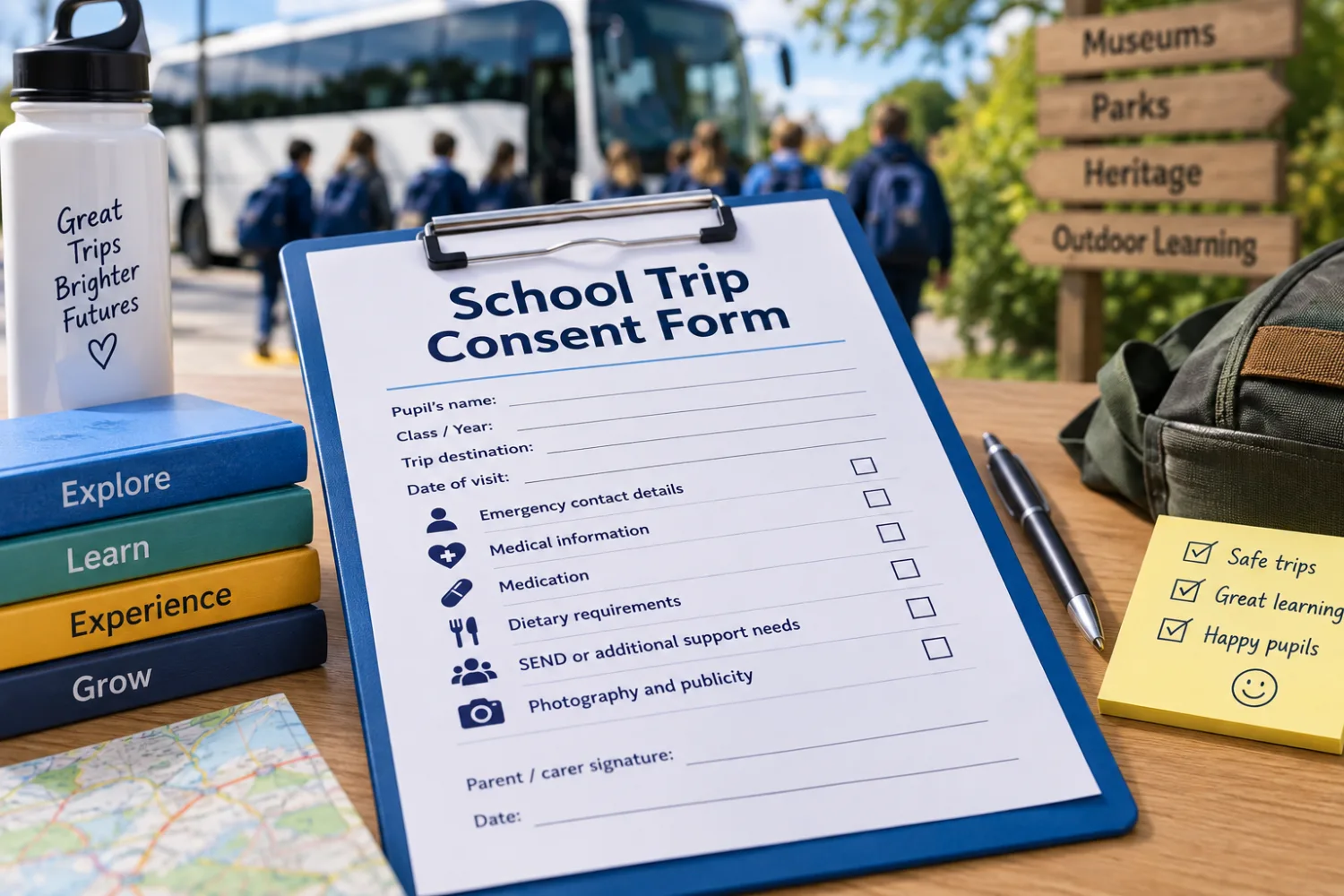
- Check medication, medical information and emergency contacts.
- Plan sensory breaks, quiet spaces and exit routes.
- Brief all staff and volunteers on relevant support strategies.
- Share clear information with parents and carers.
On the day
- Use the agreed seating, group and adult support arrangements.
- Keep transitions calm and give warnings before changes.
- Use visual supports rather than relying only on verbal instructions.
- Watch for early signs of overwhelm, fatigue, anxiety or sensory overload.
- Use planned breaks before pupils reach crisis point.
- Keep support discreet where possible, but close enough to be useful.
- Adjust the plan if needed while keeping the pupil included where possible.
After the visit
- Give pupils time to reflect on what went well.
- Share successes with parents and carers.
- Record strategies that worked for future trips.
- Review any difficulties honestly without blaming the pupil.
- Feed back to the venue if their support was especially helpful or if improvements are needed.
FAQ: school trips for pupils with SEND
Can pupils with SEND be excluded from school trips?
Schools should start from the aim of inclusion and consider reasonable adjustments so pupils with SEND can take part wherever possible. There may be rare situations where a specific activity is not suitable even with adjustments, but this should be based on careful planning and real risk, not assumptions about a pupil’s needs.
What are reasonable adjustments on a school trip?
Reasonable adjustments might include extra preparation, visual timetables, a quieter lunch space, accessible transport, adapted activities, additional adult support, shorter routes, sensory breaks, alternative recording methods, ear defenders, a known adult, or avoiding a particularly difficult part of the venue.
Should the SENCO be involved in every school trip?
Not necessarily every trip, but the SENCO should be involved where pupils with SEND may need additional planning, risk assessment, reasonable adjustments or support beyond the usual class arrangements. Early SENCO input can prevent problems later.
How can teachers prepare an autistic pupil for a school trip?
Many autistic pupils benefit from clear, visual and repeated preparation. This may include photos, maps, a visual timetable, a social story, information about noise and crowds, a named adult, a break plan and honest explanations of what may change during the day.
What should schools ask venues about SEND access?
Schools should ask about step-free access, accessible toilets, quiet spaces, sensory demands, walking distances, seating, lighting, noise, lunch arrangements, adapted activities, medical needs, staff experience and whether the venue can provide photos or visual information before the visit.
How should schools manage sensory overload on a trip?
Schools can reduce sensory overload by planning quieter routes, avoiding peak times, giving warning before transitions, using ear defenders or other supports, building in breaks, identifying quiet spaces and watching for early signs of distress before a pupil reaches crisis point.
Do pupils with SEND always need one-to-one support on trips?
No. Some pupils may need one-to-one support, but others may only need support during specific parts of the day, such as travel, transitions, lunch or busy environments. Support should be based on the pupil’s needs and the nature of the visit.
What should schools do after a trip if something went wrong?
Staff should review what happened calmly and honestly. The aim should be to understand the trigger, whether preparation was enough, whether the venue was suitable, whether adult roles were clear, and what should change next time. The pupil should not be blamed for difficulties that better planning could reduce.
Final thought
Making a school trip work for pupils with SEND is not about making every visit risk-free, silent, predictable or identical for every child. It is about thoughtful planning, reasonable adjustments and a commitment to meaningful participation.
The best inclusive trips recognise that pupils experience places differently. A busy museum, muddy woodland, noisy theatre, animal park, coach journey or outdoor centre may be exciting for one pupil and overwhelming for another. Good planning makes space for those differences.
When schools prepare pupils well, choose venues carefully, involve families, brief staff clearly and plan support without stigma, trips become more accessible and more successful.
For pupils with SEND, that can mean more than simply joining a day out. It can mean being included in a shared experience, succeeding somewhere new, and carrying that confidence back into school.