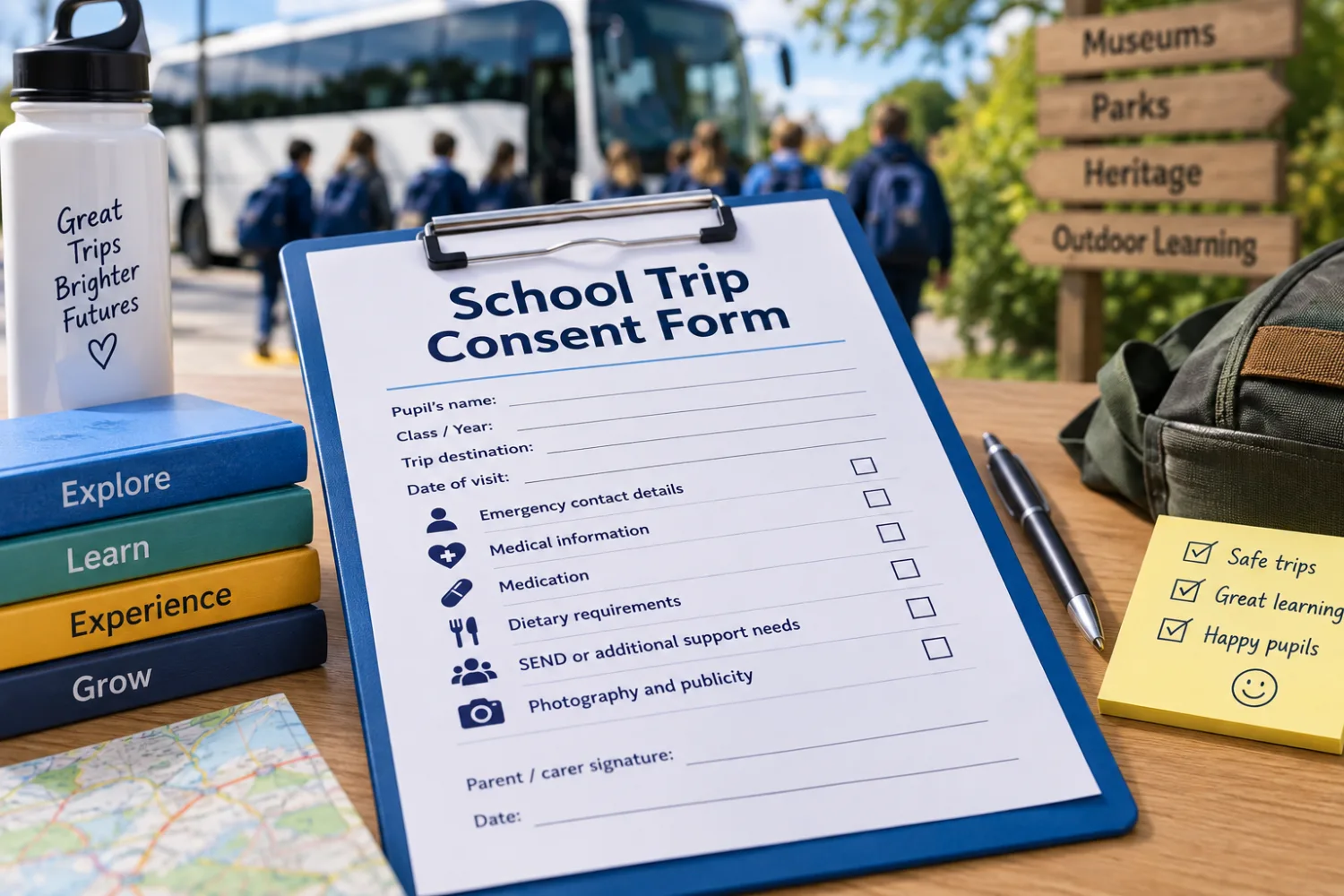
Key Stage 1 school trips need a different kind of planning from trips for older pupils. A venue might be interesting, educational and well-reviewed, but that does not automatically mean it will work well for Year 1 and Year 2. Young learners need shorter journeys, clear routines, simple instructions, regular toilet access, space to move, calm transitions and activities that feel concrete rather than abstract.
The best KS1 school trips are not necessarily the biggest, most expensive or most dramatic. They are the visits where children can see, touch, hear, ask, move and make sense of something they have been learning about in class. A farm, local museum, woodland, library, theatre, heritage building, beach, pond, zoo, fire station, garden or community venue can all work beautifully when the visit is pitched at the right level.
For teachers, the challenge is choosing venues that understand young children. KS1 pupils may be excited, nervous, tired, impulsive, curious and easily distracted all at once. They often need more adult guidance than older pupils, but they also learn brilliantly from real-world experiences when those experiences are well structured.
This guide looks at the best types of school trip venues for KS1, what makes them work for young learners, and what teachers should ask before booking. If your class includes pupils with additional needs, our guide to making a school trip work for pupils with SEND may also help you plan access, sensory needs, quiet spaces and preparation.
What makes a good KS1 school trip?
A good KS1 trip has a clear purpose, but it should not feel like a lecture. Young children learn best when they are actively involved. They need to look closely, handle objects where appropriate, move between short activities, listen to simple explanations and connect the visit to things they already understand.
At this age, the practical details are just as important as the educational content. A brilliant workshop can become stressful if the toilets are far away, lunch is rushed, the coach journey is too long, the group spends too much time waiting, or the venue expects pupils to sit still for an hour.
Teachers should look for venues that can answer simple questions clearly. How long are the sessions? Are there toilets near the activity space? Is there somewhere to eat packed lunches? Can children leave the session if they need the toilet? Are staff used to working with five, six and seven-year-olds? Is there space for coats, bags and packed lunches? What happens if it rains? How do groups move around the site?
KS1 trips work best when the venue understands children as much as it understands the topic.
1. Farms and small animal venues
Farms are among the most reliable KS1 trip choices because they turn familiar ideas into real experiences. Children can see animals, crops, tractors, barns, feeding routines, eggs, wool, soil, vegetables, seasonal change and the work involved in food production.
A farm visit can support science topics such as animals, plants, habitats, lifecycles, food, seasonal change and living things. It can also support geography through land use and rural environments, English through recounts and descriptive writing, and PSHE through responsibility and care.
For younger pupils, the strongest farm visits are usually simple and structured. A short animal talk, a guided walk, a hands-on growing activity, a chance to compare animal babies and adults, or a session on where food comes from may be more useful than trying to cover the whole farm in one day.
Teachers should check handwashing arrangements carefully, especially after animal contact and before lunch. They should also ask about allergies, uneven ground, wet-weather options, toilets, lunch spaces and whether pupils will be close to animals.
If you are considering animal-based visits more generally, our guide to school trips to private zoos, wildlife parks and animal sanctuaries explores animal venues in more depth.
2. Local museums with hands-on workshops
Museums can be excellent for KS1, but the best museum trips for young learners are not simply walk-around visits. Children at this age need objects, stories, costumes, role play, handling sessions, short trails, simple questions and time to notice details.
A local museum may support history topics such as toys, homes, schools, transport, seaside holidays, local history, famous people or changes within living memory. Museums can also support art, geography, English and speaking and listening.
The advantage of local museums is that they often make history feel close. Children may see objects used by people in their own town, compare old and new photographs, or explore how daily life has changed. This is much easier for KS1 pupils to understand than a very abstract historical topic.
Before booking, teachers should ask whether the museum has KS1-specific workshops. A session built for older pupils may include too much listening, too many dates or too much reading. A good KS1 session should be practical, visual and story-led.
3. Castles, historic houses and heritage sites
Castles, historic houses and heritage sites can be magical for young children. They offer real spaces to explore: towers, kitchens, gardens, great halls, bedrooms, courtyards, walls, gates and objects from the past.
These venues can support history, English, art and drama. Pupils can compare homes past and present, talk about rich and poor, explore materials, imagine daily life, create stories, sketch buildings and use historical vocabulary.
For KS1, the key is to avoid too much information. Young pupils do not need a long timeline or complex political history. They need simple questions: Who lived here? What did they eat? How did they keep warm? What were the rooms used for? How is this building different from our homes now?
Heritage venues should be checked carefully for stairs, uneven floors, toilets, lunch areas, wet weather spaces and group movement. A beautiful site may be difficult with young children if the route is long or the visit relies on standing still for extended periods.
4. Woodlands, forest school and outdoor learning centres
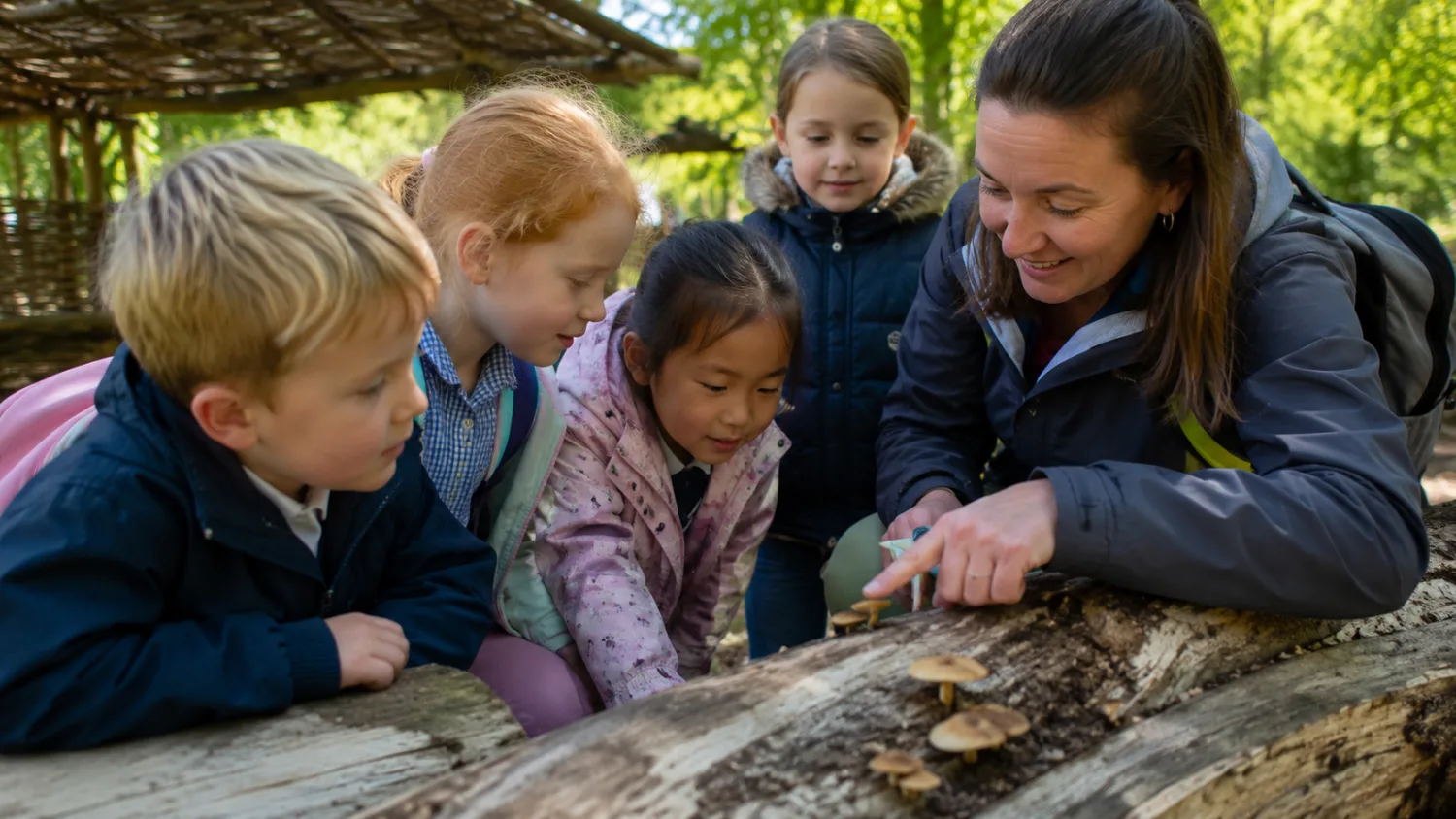
Outdoor learning can work extremely well for KS1 because it gives children space to move, explore, build, collect, observe and talk. A woodland visit can support science, geography, art, English, maths, PSHE and physical development.
Pupils might look for signs of seasonal change, compare leaves, build dens, listen for birds, investigate minibeasts, create natural art, follow a simple map, describe textures, measure sticks, observe habitats or talk about how to care for the environment.
For young learners, outdoor sessions need clear boundaries and short, purposeful tasks. Children should know where they can go, where they cannot go, what signal brings them back, and what to do if they need help. Freedom is valuable, but it should be carefully held by adult routines.
Teachers should ask about toilets, handwashing, shelter, clothing, wet-weather plans, fire or tool use, staff qualifications and how the provider supports children who are anxious, impulsive or sensory-sensitive.
Our guide to the best outdoor learning and Forest School trip venues in the UK gives more detail on woodland centres, bushcraft providers, activity farms and outdoor education venues.
5. Zoos, wildlife parks and aquariums
Animal venues are memorable for KS1 because they make living things real. Pupils can observe how animals move, eat, hide, communicate and use their bodies. They can compare sizes, coverings, habitats, diets and lifecycles.
A zoo, wildlife park or aquarium can support science topics such as animals, habitats, classification, food chains and adaptation at a simple introductory level. It can also support English through animal descriptions, information texts and recount writing.
KS1 pupils usually benefit from a focused animal visit rather than trying to see everything. A “habitats” trail, “animal babies” workshop, “who eats what?” session or “how animals move” activity may be more useful than a full-site march.
Teachers should check walking distances, toilet locations, lunch spaces, animal contact, hygiene, strong smells, loud indoor areas, gift shops and whether there are quiet places to pause. Animal venues can be exciting, but they can also be overwhelming for some young children.
6. Theatres, storytelling centres and puppet shows
Theatre visits can be wonderful for KS1, especially when the performance is designed for younger audiences. Storytelling, puppetry, music, movement and visual theatre can help children understand narrative, character, emotion and language in a vivid way.
A theatre trip can support English, speaking and listening, drama, music and PSHE. Pupils can retell the story, describe characters, discuss feelings, write reviews, create puppets, act out scenes or compare the performance with a book they know.
The best KS1 theatre visits are usually not too long and include clear information about noise, lighting, seating, toilets and arrival times. Some theatres offer relaxed performances, visual stories or pre-visit materials, which can be especially helpful for pupils who may be anxious or sensory-sensitive.
Teachers should prepare pupils for audience behaviour before the visit. Young children may need to practise sitting, listening, clapping, whispering, using toilets before the show and understanding that the lights may change.
7. Libraries and book-themed visits
Libraries are often overlooked as school trip venues, but they can work beautifully for KS1. They are local, low-cost, familiar enough to feel safe, but different enough to feel special.
A library visit can support reading for pleasure, phonics, storytelling, information books, speaking and listening, local community knowledge and confidence using public services. Pupils can learn how books are organised, listen to a story, choose a book, meet library staff and understand that reading happens beyond school.
For some schools, a library trip is also an access issue. Not every child regularly visits a library with family. A class visit can introduce pupils to a free community resource they may continue to use afterwards.
The visit does not need to be complicated. A story session, simple tour, book treasure hunt and time to choose or browse books can be enough.
8. Fire stations, police museums and community safety visits
Community safety visits can be very effective for KS1 because they connect learning to people children may already recognise: firefighters, police officers, paramedics, crossing patrol staff or road safety teams.
A fire station visit can support PSHE, citizenship, speaking and listening, writing, science and local community topics. Pupils might learn about emergency services, safety at home, calling for help, protective clothing, equipment, vehicles and teamwork.
These visits often work well because they are concrete and memorable. Children can see helmets, hoses, uniforms, vehicles and tools. They can ask questions and understand how people help the community.
Teachers should check availability early because many emergency service visits depend on operational demands. Sessions may be cancelled or changed if staff are called away. Pupils should be prepared for that possibility.
9. Gardens, parks and nature reserves
Gardens, parks and nature reserves are excellent for KS1 because they make seasonal change, plants, habitats and weather easy to observe.
Pupils can look closely at leaves, flowers, seeds, insects, birds, trees, ponds, soil and signs of the seasons. They can compare natural and human-made features, sketch plants, collect vocabulary, create simple maps, listen for sounds or investigate what living things need.
These visits can be local and low-cost, which makes them particularly useful for schools with tight budgets. A nearby park can become a science, geography, English and art venue if the learning question is well chosen.
Teachers should still plan carefully. Public parks may include dogs, cyclists, open water, litter, roads, public toilets, strangers and uneven ground. Clear boundaries and adult roles are essential with young children.
10. Beaches, rivers and pond-dipping sites
Water-based visits can be rich for KS1, but they need careful risk management. Beaches, rivers, ponds, wetlands and stream studies can support science and geography through habitats, materials, weather, erosion, human impact, plants, animals and seasonal change.
Younger pupils often love pond dipping, rock pooling and collecting natural materials. They can observe small creatures, compare where things live, talk about safety near water and understand that different habitats support different life.
These visits should be tightly structured. Pupils need clear boundaries, close supervision, suitable clothing and simple expectations. Staff should consider water depth, tides, slippery surfaces, weather, handwashing, toilets, emergency access and how pupils will move safely as a group.
For KS1, a short, focused water-based activity is usually better than a long, open-ended visit.
11. Science discovery centres and hands-on workshops
Science centres can be exciting for KS1 when the activities are hands-on and age-appropriate. Children can explore forces, light, sound, materials, magnets, weather, bodies, space, plants or animals through experiments and demonstrations.
The risk with some science centres is that they may be too busy, too noisy or too open-ended for very young pupils. Interactive exhibits are engaging, but children may rush from one thing to another unless the visit has structure.
Teachers should ask whether there are KS1 workshops, guided sessions, quiet times, lunch spaces and clear group routes. A good science visit should give pupils time to try things properly, not simply press buttons quickly and move on.
Follow-up work is especially important. Pupils can draw what they noticed, explain what changed, sort materials, describe forces, write instructions or repeat a simple experiment back in school.
12. Local workplaces and “people who help us” visits
KS1 pupils often learn well through familiar roles and places. Visits to local workplaces can help them understand the community around them and see how adults use skills in real life.
Suitable visits might include a bakery, post office, supermarket, garden centre, recycling centre, theatre, workshop, care setting, vet practice, local council office or small business. Not every workplace will be suitable for a class visit, but some can offer short, safe and memorable sessions.
These visits can support geography, PSHE, English, maths and careers-related learning in a very early, age-appropriate way. Pupils can ask what people do, what tools they use, who they help, what happens first, next and last, and how the workplace connects to the local area.
For businesses, the important point is that schools need structure. A KS1 visit should not be an improvised tour around a busy workplace. It needs a safe route, clear adult roles, simple language, short activities and a realistic understanding of young children.
Our article on bringing the real world into the classroom through business partnerships may be useful if your school is thinking about local links beyond one-off trips.
How far should KS1 pupils travel for a school trip?
There is no single correct journey length, but shorter is usually better for KS1. A long coach journey can leave young children tired before the visit begins, and it can create challenges around toilets, travel sickness, anxiety, excitement and behaviour.
A closer venue often gives better value because more of the day is spent learning rather than travelling. Local venues can also make the trip feel more connected to children’s own lives.
That does not mean schools should never travel further. A special venue may be worth the journey if it offers something the school cannot access locally. But teachers should be realistic about timing. Young children need arrival time, toilet time, snack or lunch time, transition time and a calm return.
If the timetable looks tight on paper, it will probably feel tighter on the day.
Toilets, lunch and coats: the details that matter in KS1
For KS1 trips, practical details can decide whether the day feels calm or chaotic.
Toilets should be easy to access, and staff should know when the class will use them. Lunch should be in a suitable space where children can sit, eat safely and manage packed lunches. Coats, bags and spare clothing need a plan. If the venue is outdoors, children may need wellies, waterproofs, sun hats, gloves or spare socks.
Teachers should also think about snacks, water bottles, medication, inhalers, travel sickness, spare clothes, first aid, parent helpers and how children will be grouped.
These details may seem ordinary, but young learners rely on them. A child who is cold, hungry, worried about the toilet or carrying a heavy bag will struggle to focus on the learning.
How to prepare KS1 pupils before a trip
Young pupils need clear preparation. They should know where they are going, how they will travel, what they will see, what they will do, who will help them, where they will eat and when they will come back.
Photos are very useful. Show pupils a picture of the venue, coach, entrance, toilets, lunch space or activity area if available. Use a simple visual timetable. Practise key vocabulary. Talk through behaviour expectations using concrete examples: stay with your group, listen when an adult speaks, walk indoors, wash hands after touching animals, stop at the boundary, ask before going to the toilet.
It can also help to give children one simple question to think about during the visit. For example: What do animals need? How were toys different in the past? What signs of spring can we find? How do firefighters help people? What materials can we see? What makes this place special?
A simple question gives the visit purpose without overwhelming pupils.
Planning for pupils with SEND in KS1
SEND planning is especially important in KS1 because some pupils may still be developing language, independence, emotional regulation, toileting, mobility, social confidence or sensory awareness.
Some pupils may need a visual timetable, a social story, a known adult, a quieter lunch space, ear defenders, a shorter route, an adapted activity, a clear break plan or extra preparation around transport. Others may need medical planning, mobility support or a more detailed risk assessment.
Teachers should avoid assuming that a pupil will cope because the trip seems simple. A local farm may be exciting but full of smells and noises. A theatre may be magical but dark and loud. A museum may be educational but echoing and crowded. A woodland may be calming for one pupil and unsettling for another.
Inclusion works best when adjustments are planned before the day, not invented in a crisis.
For a fuller guide, see how to make a school trip work for pupils with SEND.
What should KS1 venues provide for schools?
Venues that want to attract KS1 school bookings should make their school offer easy to understand. Teachers are not only looking for an exciting venue. They are looking for reassurance that the provider understands young children.
A strong KS1 school visits page should explain session length, age suitability, curriculum links, adult roles, group sizes, toilet access, lunch arrangements, wet-weather plans, SEND support, accessibility, handwashing, coach parking, safety information, pricing and what happens if the timetable changes.
Example timetables are very helpful. So are photos of the entrance, learning space, toilets, lunch area and outdoor routes. Teachers need to picture the day before they can confidently book it.
The best venues use simple, school-friendly language. They explain what children will do, what they will learn and how the venue keeps the day manageable for young pupils.
If your organisation wants to work with schools, our guide to requirements for businesses working with schools explains the kind of practical information schools often need before approving an external provider.
A simple KS1 school trip checklist
Before booking a KS1 trip, teachers may want to check the following:
- Is the journey short enough for young pupils?
- Does the venue regularly work with KS1 classes?
- Are sessions practical, visual and age-appropriate?
- Are toilets close to the activity areas?
- Is there a suitable lunch space?
- Are there clear wet-weather arrangements?
- Can pupils move between activities without too much waiting?
- Are handwashing facilities suitable where animals, food or mud are involved?
- Can the venue support pupils with SEND or sensory needs?
- Are adult roles and group arrangements clear?
- Is the cost realistic once transport is included?
- Is there a clear learning purpose for the visit?
FAQ: KS1 school trip ideas and planning
What are the best school trip ideas for KS1?
Good KS1 school trip ideas include farms, local museums, woodlands, gardens, zoos, aquariums, theatres, libraries, fire stations, parks, heritage sites, science centres and local community venues. The best choice depends on the topic, journey time, facilities and how well the venue works with young children.
How long should a KS1 school trip be?
KS1 trips usually work best when they are not too long or rushed. A half-day local visit can be very effective, especially for Year 1. Full-day trips can work well if the journey is manageable, the timetable includes breaks, and pupils have time for toilets, lunch and transitions.
Are farms good school trips for Year 1 and Year 2?
Yes, farms can be excellent for Year 1 and Year 2 because they support learning about animals, plants, food, seasons and rural life. Schools should check handwashing, animal contact, toilets, lunch spaces, allergies and wet-weather plans before booking.
What should teachers ask before booking a KS1 venue?
Teachers should ask whether the venue has KS1 experience, how long sessions last, what pupils will do, where toilets and lunch spaces are, what happens in bad weather, how groups are supervised, how SEND needs are supported and what is included in the price.
How can KS1 pupils be prepared for a school trip?
KS1 pupils can be prepared with photos, a simple visual timetable, clear behaviour expectations, key vocabulary, a short discussion about the journey and one simple learning question to focus on during the visit.
Should KS1 school trips always link to the curriculum?
A KS1 trip should usually have a clear learning purpose, but the link does not need to be narrow or complicated. Trips can support science, history, geography, English, art, PSHE, speaking and listening, confidence and social development.
What makes a venue unsuitable for KS1?
A venue may be unsuitable for KS1 if the journey is too long, sessions involve too much sitting or listening, toilets are difficult to access, the site is hard to supervise, activities are designed for older pupils, or staff are not used to working with young children.
How can venues attract more KS1 school bookings?
Venues can attract more KS1 bookings by providing clear age-appropriate activities, curriculum links, example timetables, practical facility information, photos, SEND guidance, transparent pricing, risk information and a named contact for teachers.
Final thought
The best KS1 school trips are simple, memorable and well matched to young learners. They do not need to be spectacular. They need to be clear, practical, safe, inclusive and connected to what children are learning.
A child may remember feeding an animal, touching an old toy, walking through a woodland, watching a puppet show, spotting a minibeast, sitting inside a fire engine or choosing a library book far longer than they remember a worksheet.
For teachers, the aim is to choose venues that make learning real without overwhelming pupils. For venues, the opportunity is clear: schools are actively looking for KS1-friendly experiences, but they need reassurance that the day will work for young children.
When the venue understands KS1, the trip becomes more than a day out. It becomes a first step into confident, curious learning beyond the classroom.