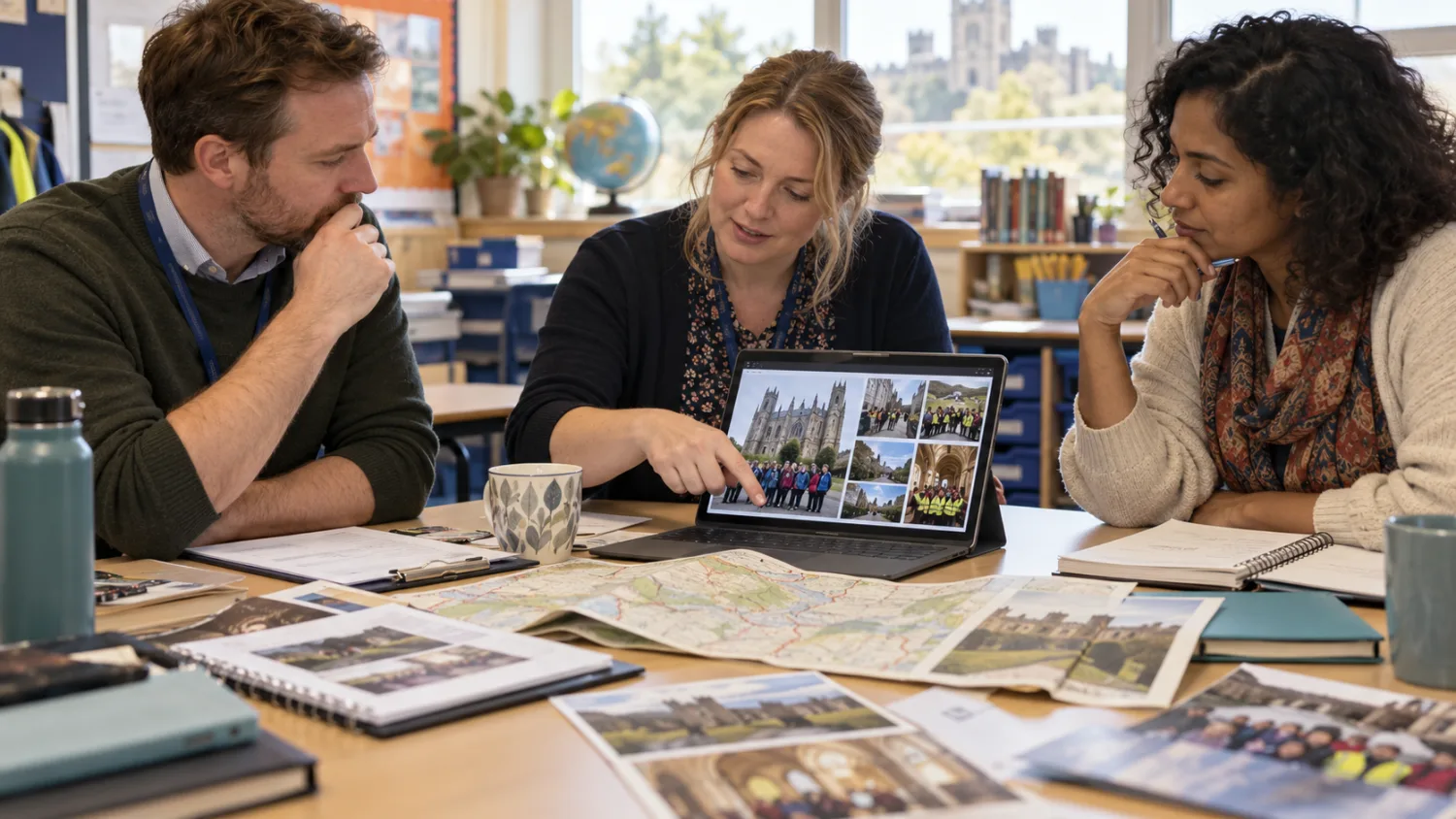
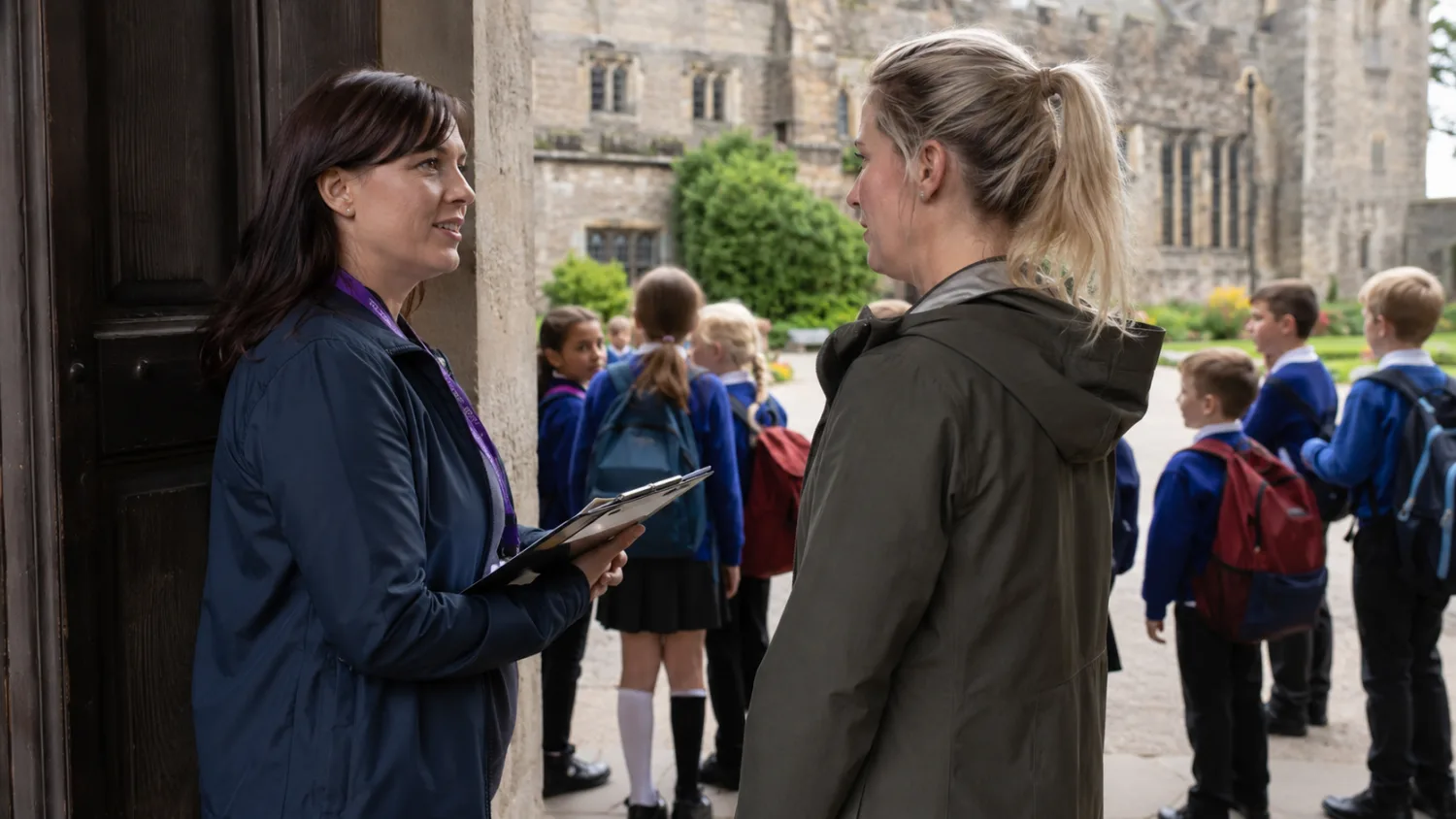
A good school trip venue can make a topic come alive. It can give pupils a memory, a question, a conversation and a real-world connection that lasts long after the coach returns to school.
But not every venue that welcomes children is ready for a school group. A place can be interesting without being well organised. It can look exciting online but be difficult for supervision. It can offer a brilliant activity but have poor wet-weather arrangements, limited toilets, unclear safeguarding information or no realistic plan for pupils with additional needs.
This is why teachers should ask careful questions before booking. Not to make the trip less exciting, but to protect the experience. The better the questions at the start, the fewer stressful surprises later.
This guide is written for teachers, trip leaders, educational visits coordinators and school staff who are comparing venues. It is also useful for museums, farms, activity centres, heritage sites, theatres, zoos, outdoor learning providers and local businesses that want to attract school visits. The questions below show what schools need to know before they can book with confidence.
If budget is one of your main constraints, you may also find our guide to school trips on a tight budget useful. A venue does not need to be expensive to be worthwhile, but it does need to be suitable, safe and purposeful.
Start with the most important question: why this venue?
Before asking the venue anything, ask yourself why this trip is worth doing.
The answer does not have to be complicated, but it should be clear. A venue might support a curriculum topic, provide fieldwork experience, build confidence, introduce pupils to careers, support transition, develop cultural capital, or help pupils understand their local community. What matters is that the visit has a purpose beyond “it would be nice to go”.
A useful starting sentence is:
“This visit will help pupils understand…”
That sentence helps you decide whether the venue is a good fit. It also helps when you explain the visit to senior leaders, parents and colleagues. If the purpose feels vague, the planning often becomes harder. If the purpose is strong, the rest of the decisions become easier.
For example, a castle is not just “a history trip”. It might help pupils understand power, defence, settlement, local history or changes over time. A farm is not just “seeing animals”. It might help pupils understand food production, habitats, sustainability or animal care. A theatre is not just “watching a play”. It might help pupils understand character, voice, performance, audience and storytelling.
If you are planning a curriculum-linked visit, our guide to the best school trip venues that link to the KS2 curriculum may help you think through the educational angle before you contact venues.
Does the venue regularly work with schools?
This is one of the most useful early questions because school groups are different from ordinary visitors.
A venue that works with schools regularly will usually understand arrival times, coach parking, registers, lunch storage, toilets, group movement, safeguarding expectations, staff briefings, risk assessment information and the need for a named contact. A venue that rarely hosts schools may still be excellent, but it may need more careful planning.
Ask how many school groups the venue usually welcomes, which age groups they work with, whether they have education staff, and whether they can adapt activities for your year group. It is also worth asking whether they have worked with schools similar to yours before, especially if you have pupils with significant SEND, medical needs, language needs or behaviour support needs.
The answer does not need to be polished marketing language. In fact, practical detail is often more reassuring than a glossy brochure. A venue that says, “Year 4 usually arrives at 10am, we split classes into two groups, toilets are here, lunch is here, and we provide teacher notes in advance” is already helping you picture the day.
Who is the named contact before and on the day?
A clear named contact can make the whole planning process calmer.
Before booking, ask who will handle your enquiry, who confirms the details, and who will be available on the day if something changes. This matters more than it may seem. School trips involve moving parts: transport, pupils, staff, weather, traffic, medical needs and timing. If no one at the venue clearly owns the booking, small problems can become stressful quickly.
Ideally, you should have a contact name, email address and phone number. You should also know who to call if the coach is delayed, if pupil numbers change, if a child is unwell, or if the school needs to leave early.
For venues, this is an easy way to build trust with schools. A teacher is far more likely to book when communication is prompt, clear and practical.
What exactly is included in the visit?
Teachers should never have to guess what they are paying for.
Ask whether the price includes entry, workshops, guided sessions, materials, equipment, lunch space, storage, access to exhibitions, trails, downloadable resources or follow-up materials. If the visit is free, ask what is free and what costs extra.
This is especially important with low-cost or free venues. Free entry may not include a guided session. A workshop may cost extra. A temporary exhibition may need a separate ticket. A venue may offer free self-led access but charge for staff-led learning. None of this is a problem if it is clear in advance.
It also helps to ask what pupils will actually do during the day. Will they listen, explore, handle objects, complete a trail, work in groups, take part in practical activities, watch a demonstration, meet staff, or move between different areas? A visit where pupils are active and purposeful is usually more memorable than one where they are simply moved from room to room.
How does the visit link to the curriculum?
A venue does not need to use perfect education terminology to be useful, but it should be able to explain the learning value of its offer.
Ask which subjects, year groups or topics the visit supports. Does it link to science, history, geography, English, art, design and technology, PSHE, careers or local studies? Can the venue adapt the session for KS1, KS2, KS3, GCSE or SEND groups? Are teacher notes available before the visit?
The strongest venues help teachers make the link clear. A museum might show how objects support historical enquiry. A zoo might frame the visit around adaptation and habitats. A theatre might connect the performance to English and drama. A workplace might support careers, maths, English and real-world problem-solving.
This does not mean the trip has to feel like a lesson in disguise. Pupils should still enjoy it. But enjoyment is stronger when it has meaning behind it. A curriculum-linked visit gives pupils something to think about afterwards, not just something to remember as a day out.
Can the venue provide risk assessment information?
Schools are responsible for planning visits properly, but venues should be able to support that process.
Ask whether the venue provides risk assessment information, site guidance, visitor rules, emergency procedures, fire evacuation information and details of known hazards. This might include roads, water, animals, tools, machinery, uneven ground, heights, dark spaces, crowds, food preparation, allergens or public access.
The venue’s information does not replace the school’s own risk assessment. The venue knows its site. The school knows its pupils. A sensible trip plan brings those two things together.
The Department for Education explains that some educational visits need risk assessment, detailed planning and informed approval from senior leaders or governors, depending on the nature of the visit. The Health and Safety Executive also encourages a proportionate approach that focuses on real risks rather than unnecessary paperwork. DfE educational visits guidance and HSE school trips guidance are useful references for schools checking their approach.
For a broader planning overview, you may also want to read our guide to planning safe and educational school trips in the UK.
What safeguarding arrangements are in place?
Safeguarding should be discussed clearly, calmly and early.
Ask whether venue staff will be working directly with pupils, whether sessions are supervised by school staff at all times, whether any staff or volunteers may be alone with pupils, and what the venue’s safeguarding policy says. You should also ask about photography, public access, toilets, lost-child procedures and how concerns would be reported on the day.
For many school visits, venue staff will not need to be left alone with pupils because school staff remain responsible for supervision. However, schools still need to understand how adults at the venue will interact with pupils and what boundaries are in place.
The current Keeping Children Safe in Education guidance sets out safeguarding duties for schools and colleges in England. Your school’s own safeguarding policy and educational visits procedures should always be followed.
If DBS checks are relevant to the way the visit is organised, ask about them before booking rather than on the day. Our guide to what a DBS check covers gives helpful background for schools and external providers.
What supervision does the venue expect from school staff?
A common source of trip-day stress is a mismatch between what the venue expects and what the school expects.
Ask whether venue staff lead the session, whether teachers are expected to manage behaviour, how groups are split, how many adults should attend, whether parent helpers are allowed, and whether there are areas where pupils must be supervised more closely.
Some venues provide educators who lead the learning but still expect school staff to manage pupils. Others provide self-led trails where school staff do almost everything. Some activity providers lead practical sessions but need teachers nearby for behaviour and medical support.
None of these models is wrong, but everyone needs to know which model applies.
It is also worth asking whether the venue has recommended group sizes. A beautiful museum room, small workshop, animal area or historic staircase may not work well with thirty pupils at once. Splitting the class can improve both safety and learning.
Are toilets, lunch areas and bag storage suitable?
These practical details may not sound exciting, but they can shape the entire day.
Ask where toilets are, how many are available, whether they are shared with the public, whether accessible toilets are available, and whether pupils will need adult supervision to reach them.
Ask where pupils can eat lunch. Is it indoors? Is it outdoors? What happens if it rains? Is there enough space for the whole group? Can lunches be stored before eating? Are there handwashing facilities? Is there drinking water?
Bag storage is another small detail that matters. If pupils need to carry coats, lunchboxes and clipboards all day, they may become tired and distracted. If bags can be stored securely, the visit often feels calmer.
A venue that explains these details clearly is usually a venue that understands schools.
Can the venue support pupils with SEND and medical needs?
Inclusion should never be an afterthought.
Ask about accessibility, step-free routes, quiet spaces, sensory demands, seating, visual supports, hearing support, lighting, noise, toilet access, medication arrangements, food allergies and whether activities can be adapted.
It is useful to describe what your pupils may need rather than asking only, “Are you accessible?” Accessibility means different things for different children. One pupil may need wheelchair access. Another may need a quieter entrance. Another may need warning before loud sounds. Another may need shorter instructions, visual information or a safe space to step away.
The best venues respond with practical detail. They may provide photos, maps, social stories, quieter timings, alternative routes, flexible seating or staff who can talk through the visit in advance.
If you are planning for pupils with additional needs, our guides to SEN Support and EHCPs and sensory-friendly learning environments may help staff think through reasonable adjustments before booking.
What happens if the weather changes?
Weather is one of the easiest things to underestimate, especially for outdoor learning, farms, heritage sites, fieldwork, zoos, forests and activity centres.
Ask whether the visit can still run in rain, heat, wind or cold weather. Are there indoor spaces? Are activities adapted? Are there shelter points? Does the venue ever cancel? Who makes that decision? How much notice is given? Is there a refund or rearrangement policy?
Also ask what pupils should wear. Do they need waterproofs, wellies, old trainers, sun hats, warm layers or school uniform? Parents need clear instructions, and schools need to avoid pupils being uncomfortable or unsafe because clothing expectations were vague.
A good venue should be honest. If an outdoor site becomes miserable or impractical in heavy rain, it is better to know that before booking.
How will pupils move around the site?
Movement is where many school trip problems happen.
Ask about entrances, exits, road crossings, public areas, narrow corridors, stairs, lifts, uneven ground, water, car parks, animal areas, machinery, restricted zones and how groups move between activities.
If the venue is open to the public, ask how school groups are managed alongside ordinary visitors. Are there meeting points? Are groups given wristbands or stickers? Are there areas where pupils could easily become separated? Is there a lost-child procedure?
For younger pupils, pupils with additional needs or large groups, movement around the site can be just as important as the activity itself. A venue may have excellent learning content, but if moving between areas is confusing, crowded or poorly supervised, the day can become stressful.
What are the transport and arrival arrangements?
Transport is often the hidden pressure point of a school trip.
Ask whether coaches can park or only drop off. Where should the coach arrive? Is the entrance easy to find? Is there a safe place for pupils to get off? How far is the entrance from the drop-off point? Is there space for a group to gather before going inside?
If you are using public transport, ask whether the venue has advice for school groups. The nearest station or stop may not be the safest or easiest route with pupils.
You should also check what happens if you arrive early or late. Some venues run tightly timed workshops and may not be able to extend sessions if traffic delays the coach. Others may be more flexible. Knowing this in advance helps you plan realistic departure times.
What is the full cost, and what could change it?
A school trip budget needs certainty wherever possible.
Ask for a clear breakdown of costs. Is the price per pupil, per class, per session or per group? Are adults free? Are there charges for workshops, materials, exhibitions, parking, lunch spaces, equipment, cancellation, late changes or VAT? Is there a minimum group size? What happens if pupil numbers drop?
Schools also need to know payment deadlines. Some venues require deposits. Some require final numbers weeks in advance. Some allow changes close to the day. Others do not.
If your school is trying to keep trips affordable for families, ask whether the venue offers school discounts, off-peak rates, free adult places, bursaries, local school rates or self-led options. Our article on creative fundraising ideas for schools may also help if the visit needs extra support.
What is the cancellation policy?
Cancellation policies are easy to ignore until something goes wrong.
Ask what happens if the school cancels, if the venue cancels, if transport fails, if severe weather affects the visit, if pupil numbers change, or if the school needs to rearrange. Is the deposit refundable? Can the booking be moved? How much notice is required? Are there different rules for workshops and general admission?
This matters because schools are dealing with public money, family contributions and packed timetables. A clear cancellation policy helps leaders make decisions if circumstances change.
Are food, allergies and hygiene properly considered?
Food is another practical area where details matter.
Ask whether pupils bring packed lunches, whether food can be stored, whether there is a café, and whether pupils are allowed to buy food. If food is part of the activity, ask about allergies, ingredients, cross-contamination, handwashing and how dietary requirements are managed.
For farms, animal encounters, outdoor learning and practical workshops, hygiene arrangements are especially important. Schools should know where pupils can wash hands, when they will do so, and how the venue manages contact with animals, soil, food or shared equipment.
Clear food rules also help avoid behaviour issues. If pupils are not allowed to visit the gift shop or café, say so before the day. If they may bring a small amount of spending money, set a limit and explain when it can be used.
What behaviour expectations does the venue have?
Pupils need to understand that a school trip is still a school day.
Ask whether the venue has rules around running, touching objects, noise, phones, photography, eating, restricted areas, animals, water, equipment, public visitors or respectful behaviour. Then share those expectations with pupils before the visit.
It is also worth asking how venue staff respond if a pupil behaves unsafely or disruptively. School staff should remain responsible for behaviour, but it helps to know where boundaries are firm, especially around animals, tools, machinery, historic objects or public areas.
If your school has pupils who may find the visit challenging, plan support before the day. This might include smaller groups, a known adult, a quiet break space, a visual timetable, seating arrangements, or a clear plan for what happens if a pupil becomes overwhelmed.
Can teachers visit or view materials in advance?
A preliminary visit is not always possible, but it can be extremely useful for unfamiliar venues, complex sites, outdoor activities or groups with particular needs.
Ask whether teachers can visit beforehand, join a virtual briefing, view maps, see photos, access teacher notes, download risk information or speak to the education team. Even a short phone call can help you picture the day more clearly.
Advance materials also help you prepare pupils. Photos of the entrance, toilets, lunch area, classroom space or route around the site can reduce anxiety and support pupils who need to know what to expect.
What should pupils do before and after the visit?
A strong venue helps the learning stretch beyond the day itself.
Ask whether there are pre-visit resources, vocabulary lists, videos, maps, teacher notes, enquiry questions, follow-up tasks or suggested classroom activities. These do not need to be complicated. Sometimes a few good questions are more useful than a large pack nobody has time to use.
Before the trip, pupils might learn key vocabulary, study a map, prepare questions, make predictions or explore background knowledge. After the trip, they might write a report, create a museum label, produce a fieldwork summary, design an information leaflet, give a presentation, write a thank-you letter or answer an enquiry question using evidence from the visit.
This follow-up is what turns the visit from an event into learning.
Is the venue good value, not just low cost?
Schools understandably need to watch budgets, but the cheapest option is not always the best value.
A free venue may be excellent if it offers strong curriculum links, good facilities and easy travel. It may be poor value if transport is expensive, the visit is unfocused or staff have to create everything from scratch. A paid workshop may be worth it if it provides expert teaching, specialist equipment, strong engagement and less workload for teachers.
Value is about what pupils gain for the time, effort and money involved.
A good question to ask is: “What will pupils experience here that they could not experience as well in school?” If the answer is strong, the venue may be worth serious consideration.
A practical question checklist for teachers
The following questions can be copied, adapted or used as a starting point when contacting venues.
Learning and curriculum
- What age groups and key stages do you usually work with?
- Which curriculum areas does the visit support?
- Can the session be adapted to our topic or year group?
- What will pupils actually do during the visit?
- Are pre-visit or follow-up resources available?
- Can you support self-led visits as well as guided sessions?
Safety and risk management
- Can you provide risk assessment information for schools?
- What are the main hazards on site?
- What emergency procedures are in place?
- How do you manage fire evacuation for school groups?
- Are there any areas where pupils need closer supervision?
- What happens if a pupil becomes unwell or injured?
Safeguarding
- Do you have a safeguarding policy?
- Will venue staff or volunteers work directly with pupils?
- Will any venue adult ever be alone with pupils?
- How are toilets managed when the venue is open to the public?
- What is your lost-child procedure?
- What are your photography and social media rules?
SEND and accessibility
- Is the site accessible for pupils with mobility needs?
- Are accessible toilets available?
- Are there quiet spaces or calmer routes?
- Can activities be adapted for pupils with SEND?
- Can you provide photos, maps or visual information before the visit?
- How do you support pupils with sensory sensitivities?
Practical arrangements
- Where should coaches or minibuses drop off and park?
- What happens if we arrive late?
- Where will pupils eat lunch?
- Can bags and packed lunches be stored?
- How many toilets are available for school groups?
- Is there a wet-weather plan?
Cost and booking
- What is the full cost per pupil or per group?
- Are adults free?
- Are workshops, resources or materials included?
- Are there deposits or payment deadlines?
- What happens if pupil numbers change?
- What is the cancellation or rearrangement policy?
What good answers sound like
Good venue answers are specific. They do not have to be long, but they should be clear.
A weak answer sounds like: “Yes, we’re fine with schools.”
A stronger answer sounds like: “We welcome Year 3 to Year 6 groups regularly. Classes usually arrive at 10am, split into two groups, use the education room for lunch, and follow a 90-minute workshop plus self-led trail. We provide risk information, a site map and teacher notes when you book.”
The second answer helps teachers imagine the day. It reduces uncertainty. It also shows that the venue understands school routines.
If a venue struggles to answer basic questions before booking, that does not always mean the visit should be rejected, but it may mean the school needs more information before committing.
Final thought
The purpose of asking questions is not to make school trips feel more difficult. It is to make them work better.
Teachers already carry a lot of responsibility when taking pupils off site. Clear answers from a venue reduce workload, build confidence and make it easier to focus on the learning rather than firefighting practical problems.
The best school trip venues understand this. They know that teachers need more than an attractive activity. They need safe organisation, honest communication, realistic pricing, inclusive provision, practical facilities and a clear reason why the visit is worth pupils’ time.
When those pieces are in place, a school trip becomes much easier to approve, easier to manage and much more likely to be remembered for the right reasons.