
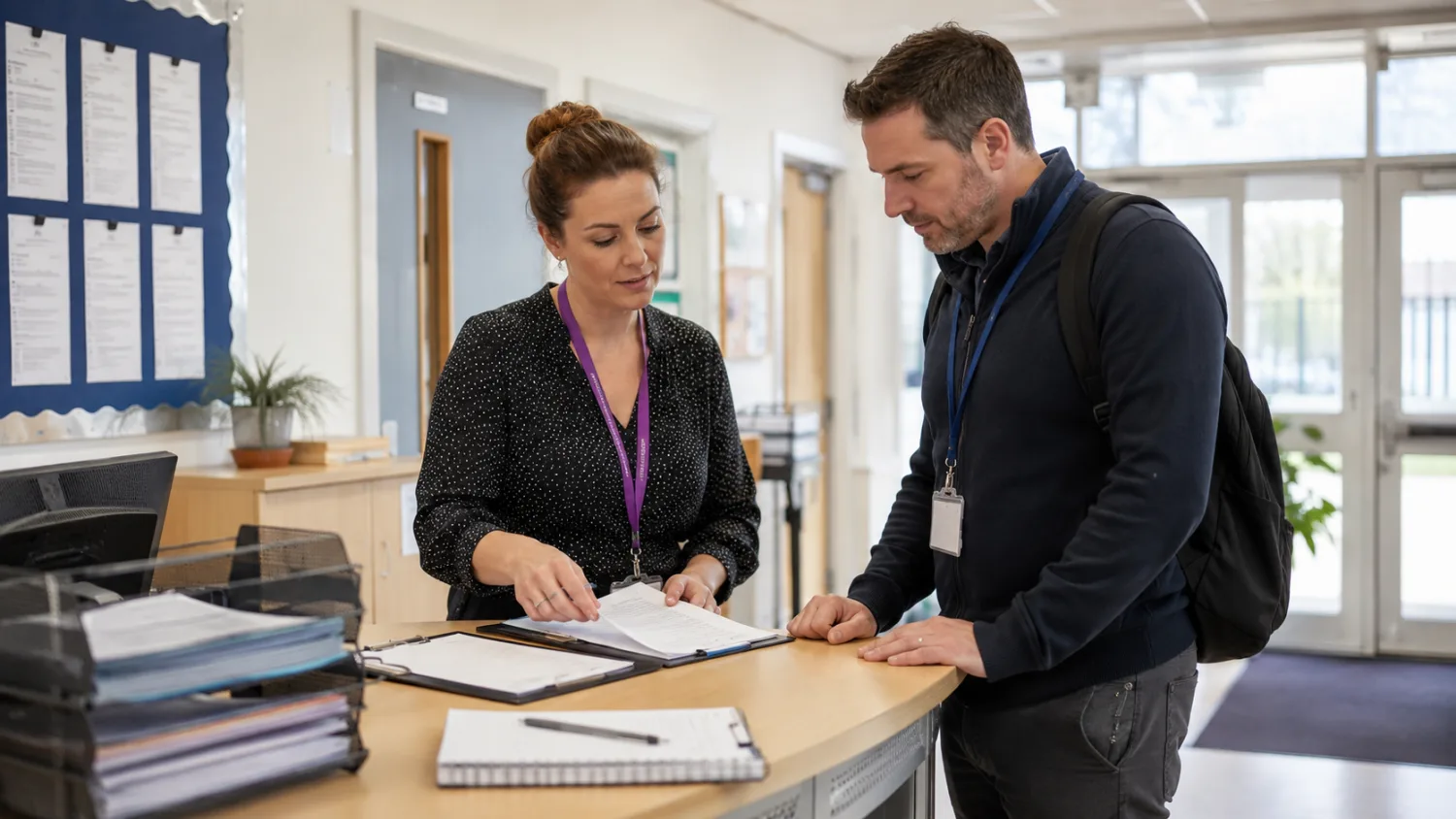
If your business wants to work with schools, your service is only part of the decision. Schools also need to know that you are safe, reliable, properly insured and ready to work in an environment where children are present.
This can feel confusing for suppliers. Do you need a DBS check? Which type? Does every member of staff need one? What insurance should you have? Do you need a safeguarding policy even if you are only visiting for one day? What will the school ask for before approving you?
The answer depends on what you do, where you do it, how often you work with pupils and whether your staff are supervised. A school photographer, playground installer, IT contractor, drama workshop leader, sports coach, tutor, catering company and cybersecurity consultant may all face different checks.
But the principle is the same: schools need confidence that your business can work safely and professionally around children.
This guide explains the main DBS, insurance and safeguarding requirements UK school suppliers should understand before approaching schools.
If you are also planning your pricing, read How to price your services for schools without underselling yourself. Compliance takes time and money, so it should be reflected in your pricing rather than treated as an afterthought.
Why schools take supplier checks so seriously
Schools have a legal and moral duty to safeguard children. They are not simply buying a product or service. They are allowing an external organisation into a setting where pupils, staff and sensitive information may be present.
That is why a school may ask for documents before confirming a booking, even if your service seems low risk. They may ask for DBS information, insurance certificates, safeguarding policies, risk assessments, staff names, data protection information or confirmation that your staff understand the school’s procedures.
This is not red tape for the sake of it. It is part of how schools manage risk.
For suppliers, being prepared can make a big difference. A business that responds quickly with clear documents feels safer and easier to approve. A business that seems unsure, defensive or disorganised creates extra work for the school.
If you want schools to trust you, your compliance should be as professional as your sales pitch.
Start with the key question: will you have contact with pupils?
The checks you need usually depend on the nature of your contact with children.
A supplier delivering a pupil workshop in a classroom is different from a company repairing a roof during the summer holidays. A tutor working regularly with pupils is different from a printer delivering prospectuses to reception. An IT engineer accessing school systems remotely is different again.
Before contacting schools, ask yourself:
- Will our staff be on school premises?
- Will pupils be present when we are there?
- Will we work directly with children?
- Will we be teaching, coaching, supervising, caring for or advising pupils?
- Will the work happen regularly?
- Will school staff supervise us at all times?
- Will we ever be alone with pupils?
- Will we access pupil data or school systems?
- Will we transport pupils?
- Will we take photographs, video or audio recordings?
The answers will shape what a school is likely to ask for.
What is a DBS check?
A DBS check is a criminal record check carried out through the Disclosure and Barring Service. Schools use DBS checks as part of safer recruitment and safeguarding processes.
There are different levels of DBS check. Not every role is eligible for every level. This is important: you cannot simply request the highest level because it feels safer. Eligibility depends on the work being done.
The main levels are:
- Basic DBS check: shows unspent convictions and conditional cautions. This is available to any individual.
- Standard DBS check: shows spent and unspent convictions, cautions, reprimands and final warnings, subject to filtering rules. This is only available for eligible roles.
- Enhanced DBS check: includes the standard information plus relevant information held by local police, where appropriate. This is only available for eligible roles.
- Enhanced DBS check with barred list information: used for roles involving regulated activity with children or adults, where eligible.
For many school suppliers, the important distinction is between an enhanced DBS check and an enhanced DBS check with children’s barred list information.
You can find official DBS eligibility guidance at GOV.UK: Eligibility guidance for enhanced DBS checks.
What is regulated activity with children?
Regulated activity is a legal term. It describes certain types of work that involve close or regular contact with children.
In a school context, regulated activity may include unsupervised teaching, training, instructing, caring for or supervising children. It can also include providing advice or guidance on wellbeing, or driving a vehicle only for children, depending on the circumstances and frequency.
Some types of personal care or healthcare activity can also be regulated activity, even if they only happen once.
If someone is carrying out regulated activity with children, the school will usually expect an enhanced DBS check with children’s barred list information.
The official DBS guidance on regulated activity is available here: Regulated activity with children in England and Wales.
Do all school suppliers need a DBS check?
No. Not every supplier working with a school automatically needs a DBS check.
A contractor who visits the school outside pupil hours and has no contact with children may not need the same checks as a sports coach delivering weekly sessions to pupils. A supplier attending reception for a short meeting may be treated as a visitor rather than someone working with children.
However, the school is responsible for deciding what checks and supervision arrangements are appropriate for its setting. Some schools and multi-academy trusts have stricter internal procedures than others.
As a supplier, the safest approach is not to claim “we definitely do not need DBS checks”. Instead, explain your role clearly and ask what the school requires based on its safeguarding procedures.
A professional response might be:
“Our staff will not be working directly with pupils and will remain supervised while on site. Please let us know what visitor, safeguarding or contractor checks you require before arrival.”
Or, where you do work directly with pupils:
“Our delivery staff hold enhanced DBS checks, and we can provide DBS certificate details and safeguarding documentation as part of your approval process.”
DBS checks for contractors, visitors and external providers
Schools usually think about external adults in different categories. These categories are not always labelled the same way in every school, but the difference matters.
Visitors
A visitor may be someone attending a meeting, delivering a short talk, observing, dropping off materials or visiting reception. If the person is not working regularly with pupils and is supervised, the school may use visitor procedures rather than requiring a DBS check.
Visitor procedures may include signing in, wearing a badge, being accompanied, reading safeguarding information and not moving around the site alone.
Contractors
Contractors may include tradespeople, maintenance workers, IT engineers, catering staff, cleaning contractors, photographers, transport providers or facilities companies.
If contractors are on site during the school day, schools will consider whether they have the opportunity for contact with children, how often they attend, whether they are supervised and whether their work is regulated activity.
External providers working directly with pupils
This includes tutors, sports coaches, arts providers, drama companies, wellbeing practitioners, therapists, workshop leaders, club providers and some consultants.
These suppliers are more likely to need enhanced DBS checks, especially where they work regularly with pupils or may be unsupervised.
Remote suppliers
A remote supplier may never visit the school, but may still create safeguarding or data protection questions. For example, an online tutor, software provider, IT support company or data protection consultant may access pupil data, communication systems or online learning platforms.
In these cases, DBS may not be the only issue. The school may also ask about GDPR, cyber security, access controls, confidentiality and data processing.
Enhanced DBS with barred list: when schools are likely to expect it
Schools are likely to expect an enhanced DBS check with children’s barred list information when someone is carrying out regulated activity with children.
This may apply where a supplier is:
- teaching pupils regularly;
- training or instructing pupils regularly;
- coaching pupils regularly;
- supervising pupils without school staff present;
- providing wellbeing advice or guidance to pupils;
- providing personal care;
- driving pupils as part of the service;
- working with pupils frequently and unsupervised.
Do not guess your eligibility. DBS eligibility depends on the specific duties, frequency and supervision arrangements. If in doubt, check official guidance or use an umbrella body that understands DBS applications.
Can self-employed suppliers get an enhanced DBS check?
Self-employed suppliers can apply for a basic DBS check themselves, but they cannot apply directly to DBS for a standard or enhanced check for themselves in the same way an organisation can request one for an eligible role.
Many self-employed school suppliers use a registered umbrella body to process eligible standard or enhanced DBS checks. In some cases, a school or organisation commissioning the work may arrange the check if the role is eligible.
If you are self-employed and want to work with schools, do not leave this until the school asks. Find out early whether your work is eligible for an enhanced check and how you will obtain one if needed.
Should suppliers use the DBS Update Service?
The DBS Update Service lets individuals keep their DBS certificate up to date and allows employers or organisations to check the certificate status online, with permission.
For school suppliers who work with multiple schools, the Update Service can be useful. It may reduce repeated applications and make it easier to show schools that your certificate status can be checked.
However, schools may still have their own requirements. They may need to see the original certificate, verify identity, check whether the certificate is the right level and workforce, or decide whether they accept the Update Service for their procedures.
If your staff use the Update Service, say so clearly in your supplier pack.
What should be in your safeguarding policy?
If your business works directly with pupils, you should have a safeguarding policy. Even if you are a small provider, a written policy shows that you understand your responsibilities and have a process for dealing with concerns.
Your safeguarding policy should be proportionate to your work. A one-person workshop provider does not need a 90-page policy copied from a large academy trust. But it does need to be clear, practical and aligned with school expectations.
A good supplier safeguarding policy should include:
- your commitment to safeguarding children;
- who the policy applies to;
- the name of your safeguarding lead;
- how staff should respond to a concern about a child;
- how staff should respond to an allegation about an adult;
- how concerns are recorded;
- how concerns are reported to the school’s designated safeguarding lead;
- safer recruitment or staff vetting processes;
- DBS arrangements where relevant;
- staff code of conduct;
- rules on one-to-one work;
- online safety expectations where relevant;
- photography, video or social media rules where relevant;
- training requirements;
- review date.
The Department for Education’s statutory guidance is Keeping children safe in education. It is written for schools and colleges, but suppliers should understand the safeguarding environment schools are working within.
What safeguarding training should suppliers have?
If you or your staff work directly with pupils, basic safeguarding training is strongly recommended and often expected by schools.
For some services, such as tutoring, coaching, therapy, wellbeing support, SEND services, transport or regular clubs, safeguarding training should be treated as essential.
Your training should help staff understand:
- what safeguarding means;
- types of abuse and neglect;
- signs that a child may be at risk;
- how to respond to a disclosure;
- why staff should not promise confidentiality;
- how to report concerns to the school’s designated safeguarding lead;
- professional boundaries;
- online safety where relevant;
- how to respond to allegations or low-level concerns about adults.
Keep a record of training dates. Schools may ask when your staff last completed safeguarding training.
Your staff code of conduct matters
A safeguarding policy explains the system. A code of conduct explains behaviour.
Schools want to know that your staff understand professional boundaries. This is especially important if your team works with pupils directly, communicates online, runs clubs, takes photographs, transports pupils or works in less supervised settings.
Your code of conduct should cover:
- appropriate language;
- physical contact;
- one-to-one situations;
- toileting and changing areas;
- mobile phone use;
- photography and filming;
- social media contact with pupils;
- gifts and favouritism;
- confidentiality;
- reporting concerns;
- what staff should do if they feel uncomfortable or unsure.
Simple, clear rules protect pupils, schools and your staff.
Insurance schools may ask for
Insurance requirements vary by service, school, local authority and trust. A school may ask for specific levels of cover before approving a supplier. Do not assume your existing business insurance is enough.
The most common types of insurance school suppliers may need are:
Public liability insurance
Public liability insurance covers claims for injury or property damage caused by your business activities. Schools commonly ask for this because you may be working on site, around pupils, staff, parents, equipment or buildings.
Many schools ask for proof of public liability insurance before allowing suppliers to work on site.
Employers’ liability insurance
If you employ staff, you are likely to need employers’ liability insurance. Schools may ask for this if your employees or contractors are attending site or delivering services on your behalf.
Professional indemnity insurance
Professional indemnity insurance is important if you provide advice, consultancy, training, assessment, design, technical recommendations or professional services.
This may apply to IT consultants, education consultants, SEND specialists, therapists, architects, engineers, data protection consultants, cybersecurity providers, training companies and many others.
Product liability insurance
If you supply physical products, equipment, furniture, playground items, uniforms, food products, teaching resources or other goods, product liability may be relevant.
Cyber insurance
If you provide software, IT support, cybersecurity, data services, cloud platforms or handle sensitive school data, cyber insurance may be worth considering. Schools may not always request it, but it can strengthen your risk position.
Motor insurance
If your service involves transporting pupils, equipment or staff, make sure your motor insurance is appropriate for business use. If you transport pupils, requirements may be much stricter and may involve safeguarding, licensing, risk assessment and parental consent processes.
How much insurance cover do schools expect?
There is no single amount that applies to every supplier. Requirements vary depending on risk, contract value and school policy.
Some schools may ask for £5 million or £10 million public liability cover. Others may accept lower levels for lower-risk services. Multi-academy trusts, local authorities and larger contracts may have more formal requirements.
The best approach is to speak with a broker who understands education or public sector work. Explain exactly what you do in schools. A generic business policy may not properly cover your activities.
Once your insurance is in place, keep certificates easy to access. Schools may ask for them at short notice.
Risk assessments: not just for building work
Schools may ask for a risk assessment before your visit or project. This is common for workshops, sports activities, trips, performances, maintenance work, playground projects, practical demonstrations, photography sessions, catering services and any activity involving equipment or movement around site.
A risk assessment should identify what could go wrong and how you will reduce the risk.
It may include:
- activity description;
- location;
- who may be affected;
- hazards;
- control measures;
- staff responsibilities;
- equipment checks;
- supervision arrangements;
- emergency procedures;
- first aid arrangements;
- review date.
A good risk assessment does not need to be overcomplicated. It needs to be specific, realistic and relevant to the school environment.
Data protection and confidentiality
Not every school supplier handles pupil data. But if you do, data protection becomes part of your approval process.
You may handle personal data if you:
- provide software or online platforms;
- process pupil names, dates of birth or assessment data;
- offer tutoring, therapy or wellbeing support;
- take photographs or videos;
- provide school management tools;
- support IT systems;
- run surveys or reports;
- manage bookings for clubs or trips;
- send communications to parents or pupils.
Schools may ask for a privacy notice, data processing agreement, information security policy, retention policy or details of where data is stored.
Do not treat GDPR as something only software companies need to worry about. If you collect, store, access or share pupil information, you need to handle it properly.
Photography, filming and pupil images
Photography and video create extra safeguarding and consent issues.
If your business takes photos or videos in schools, you should be clear about:
- who takes the images;
- what equipment is used;
- where images are stored;
- who can access them;
- how long they are kept;
- whether images are used for marketing;
- how consent is obtained;
- how pupils without consent are excluded;
- how images are deleted.
Never assume you can use school photographs for your own website or social media. You need clear permission from the school and appropriate consent arrangements.
What documents should a school-ready supplier pack include?
One of the easiest ways to look professional is to prepare a supplier compliance pack before schools ask for it.
Your pack might include:
- public liability insurance certificate;
- employers’ liability insurance certificate, if relevant;
- professional indemnity insurance certificate, if relevant;
- safeguarding policy;
- staff code of conduct;
- DBS information for relevant staff;
- confirmation of DBS Update Service status, if used;
- safeguarding training record;
- risk assessment template or activity-specific risk assessment;
- privacy notice or data protection statement;
- data processing agreement, if relevant;
- health and safety policy, if relevant;
- method statement for works, if relevant;
- references or testimonials from schools;
- named contact for safeguarding and compliance questions.
You do not need to send every document in your first email. But you should be ready to provide them quickly when a school asks.
For more on the questions schools ask before approving a supplier, read What schools ask before approving a new supplier.
How to talk about DBS and safeguarding in your marketing
Safeguarding should reassure schools, not overwhelm them. You do not need to fill your homepage with compliance language, but you should make it clear that you understand school requirements.
Useful phrases include:
- “Our delivery team hold appropriate DBS checks for their roles.”
- “Safeguarding documentation is available to schools before booking.”
- “All staff complete safeguarding training before working with pupils.”
- “We provide risk assessments and insurance certificates as part of onboarding.”
- “We follow the school’s visitor, safeguarding and reporting procedures while on site.”
Avoid vague claims such as:
- “Fully DBS checked” without explaining who and what level.
- “Safeguarding approved” without saying by whom.
- “School compliant” without evidence.
- “No checks needed” unless you are certain and the school agrees.
Schools value precision. Say what you have, not what sounds impressive.
Common mistakes suppliers make
1. Assuming one DBS certificate covers every role
A DBS check is linked to eligibility, workforce and role. A certificate from one type of work may not be appropriate for another. Schools may check whether the DBS level matches the work being carried out.
2. Saying “DBS checked” when only the business owner is checked
If other staff, freelancers or subcontractors attend schools, the school may need information about them too. Do not imply that the whole team has been checked if only one person has.
3. Forgetting subcontractors
If you use subcontractors, you are still responsible for making sure they meet school requirements. Schools may ask who is attending site and whether checks apply to every person.
4. Treating safeguarding as a document rather than a behaviour
A safeguarding policy is useful, but staff behaviour matters more. Train your team so they know what to do in real situations.
5. Letting insurance expire
Expired certificates delay bookings and damage trust. Keep renewal dates in your calendar and update documents before schools have to chase.
6. Ignoring data protection
If you handle pupil information, school data or images, you need clear data protection processes. A school may reject a supplier that cannot explain how data is protected.
7. Waiting until the last minute
DBS checks, insurance updates and safeguarding documents can take time. If you wait until a school wants to book, you may lose the opportunity because another supplier is already ready.
How requirements differ by supplier type
Tutors and intervention providers
Tutors working directly with pupils are likely to need enhanced DBS checks and safeguarding training. If tutoring is regular and unsupervised, barred list information may be relevant. Schools may also ask about reporting, pupil data, online tuition safety and lesson records.
Useful internal guide: How tutoring providers can build school partnerships.
Sports coaches and activity providers
Sports coaches and activity providers often work directly with children, sometimes in changing, outdoor or high-movement environments. DBS, safeguarding training, public liability insurance, risk assessments, first aid arrangements and coaching qualifications may all be relevant.
Arts, drama and workshop providers
Workshop providers may need enhanced DBS checks, safeguarding policies, risk assessments and clear supervision arrangements. If performances involve filming, photography or pupil participation, consent and image policies become important.
Wellbeing, therapy and SEND providers
These suppliers may work with vulnerable pupils or sensitive information. Schools may expect enhanced DBS checks, safeguarding training, professional qualifications, professional indemnity insurance, confidentiality procedures and clear referral/reporting processes.
Useful internal guide: How wellbeing providers can work with schools.
IT, edtech and cybersecurity companies
DBS requirements depend on site access and pupil contact, but data protection and information security are often central. Schools may ask about GDPR, access controls, data storage, cyber security, incident response and subcontractors.
Useful internal guide: How edtech companies can reach UK schools.
Facilities, maintenance and estates contractors
Facilities suppliers may need public liability insurance, employers’ liability insurance, risk assessments, method statements and site supervision arrangements. DBS requirements depend on whether work happens during school hours, whether pupils are present and whether contractors have regular contact with children.
School photographers
Photographers may need DBS checks depending on arrangements, but schools will also care about safeguarding, supervision, image consent, secure storage, proofing systems, deletion processes and use of images.
Transport providers
Transport providers face significant safeguarding and safety expectations. Schools may ask about driver checks, DBS, licences, insurance, vehicle safety, supervision, emergency procedures and what happens if a child is not collected.
How to answer a school that asks, “Are you DBS checked?”
This question sounds simple, but your answer should be precise.
A weak answer is:
“Yes, we are all DBS checked.”
A stronger answer is:
“Our staff who deliver pupil-facing sessions hold enhanced DBS checks for the child workforce. Where a role involves regulated activity, we ensure the appropriate barred list check is in place. We can provide certificate details and safeguarding documentation through your normal approval process.”
If you do not work directly with pupils, you might say:
“Our team will not work directly with pupils and will remain supervised while on site. We can follow your visitor and contractor procedures and provide insurance and risk assessment documents before the visit.”
The goal is not to overclaim. The goal is to show that you understand the issue.
What schools may record on the Single Central Record
Schools maintain a Single Central Record of safer recruitment checks for staff and certain others. Depending on your role, frequency and relationship with the school, the school may need to record checks relating to your staff or obtain written confirmation that checks have been completed.
This is especially relevant for contractors, agency staff and external providers working regularly with pupils.
Do not be surprised if a school asks for names, DBS certificate numbers, issue dates or written confirmation from your organisation. They are trying to meet their own safeguarding duties.
Build compliance into your pricing
DBS checks, insurance, safeguarding training, policies, admin and document management all cost money. If you ignore those costs, you will underprice your school work.
Your pricing should reflect the cost of being a safe, professional supplier.
This does not mean adding a “safeguarding fee” to every invoice. It means setting prices that allow you to:
- train staff properly;
- renew insurance;
- keep DBS checks up to date where needed;
- maintain policies;
- complete school paperwork;
- respond quickly to compliance questions;
- deliver without cutting corners.
If your price is too low to cover these basics, it is not a sustainable school price.
Read How to price your services for schools without underselling yourself for more on building realistic school supplier packages.
How to make compliance a selling point without sounding bureaucratic
Schools do not choose suppliers only because they have documents. But good compliance can remove doubt and make you easier to approve.
Instead of making compliance the whole message, weave it into your offer:
“We make school onboarding straightforward. Before delivery, we provide insurance certificates, safeguarding information, staff DBS details where required and a clear risk assessment.”
That tells the school you understand its workload. You are not just selling a service. You are making the buying process easier.
Questions to ask the school before delivery
Once a school is interested, ask practical safeguarding and site questions early.
- What arrival and signing-in process should our staff follow?
- Who is the school contact on the day?
- Who is the designated safeguarding lead?
- Will pupils be supervised by school staff?
- Are there pupils with medical, SEND or behaviour needs we should know about?
- Are there any photography or consent restrictions?
- Are mobile phones allowed during delivery?
- Where should staff go in an emergency?
- Are there site rules we should brief our team on?
- What documents do you need before confirming the booking?
These questions show professionalism. They also reduce the chance of confusion on the day.
Useful external resources
- Keeping children safe in education — statutory safeguarding guidance for schools and colleges.
- Regulated activity with children in England and Wales — official DBS guidance on regulated activity.
- DBS eligibility guidance for enhanced checks — guidance on which roles may be eligible for enhanced DBS checks.
- Buying for schools — DfE guidance for school buying and procurement.
- Buying procedures and procurement law for schools — useful context for how schools approach supplier approval and value for money.
How All Schools can help suppliers be found by schools
Having the right checks and documents matters, but schools also need to find you at the right moment. A clear supplier profile can help your business appear when schools are researching providers, comparing options or planning future budgets.
You can explore the All Schools supplier directory or learn how to join the school suppliers directory.
You may also find these guides useful:
- How to start selling to schools in the UK
- What schools ask before approving a new supplier
- How schools vet external providers
- Understanding school budget cycles: when UK schools actually spend money
The bottom line
DBS checks, insurance and safeguarding are not obstacles to working with schools. They are part of becoming a school-ready supplier.
The more prepared you are, the easier you make life for the school. You reduce delays, build trust and show that you understand the environment you are entering.
Do not wait until a school asks for documents. Work out what applies to your service, get advice where needed, prepare your policies and keep everything up to date.
Schools want suppliers who are safe, reliable and easy to work with. If your business can show that from the first conversation, you give yourself a much better chance of being approved, booked and recommended.
FAQs
Do I need a DBS check to work with schools?
It depends on what you do. If you work directly and regularly with pupils, especially unsupervised, you are more likely to need an enhanced DBS check. If you are a visitor with no direct pupil contact and are supervised, a DBS check may not be required. The school will decide what is appropriate based on the role and its safeguarding procedures.
What DBS check do school suppliers usually need?
Suppliers working directly with children may need an enhanced DBS check. If the work is regulated activity, an enhanced DBS check with children’s barred list information may be required. Eligibility depends on the activity, frequency and supervision arrangements.
Can I apply for my own enhanced DBS check if I am self-employed?
Self-employed individuals can apply for a basic DBS check themselves, but standard and enhanced checks must usually be requested through an eligible organisation or umbrella body. If your work with schools is eligible for an enhanced check, an umbrella body may be able to help process it.
Is a basic DBS check enough for school work?
Sometimes, but not always. A basic DBS check may be suitable for some low-risk roles, but it is not the same as an enhanced DBS check. If you work directly with pupils or in regulated activity, the school may require a higher level of check.
Do all members of my team need DBS checks?
Only staff whose role requires or is eligible for a DBS check should have the relevant check. However, if multiple staff attend school sites or work with pupils, the school may ask for information about each person, not just the business owner.
What insurance do I need to work with schools?
Most school suppliers should consider public liability insurance. You may also need employers’ liability, professional indemnity, product liability, cyber insurance or motor insurance depending on your service. Schools and trusts may specify minimum cover levels before approving you.
How much public liability insurance do schools ask for?
Requirements vary. Some schools or trusts may ask for £5 million or £10 million public liability cover, especially for higher-risk work. Others may accept lower cover for lower-risk services. Always check the school’s requirements and speak to an insurance broker if unsure.
Do I need a safeguarding policy if I only visit schools occasionally?
If you work directly with pupils, a safeguarding policy is strongly recommended, even if visits are occasional. If you only attend as a supervised visitor and have no pupil contact, the school may rely on its visitor procedures. However, having clear safeguarding awareness still helps build trust.
What should I send to a school before starting work?
This depends on the service, but schools may ask for insurance certificates, DBS information, safeguarding policy, risk assessment, staff names, training records, data protection documents and references. Having a supplier compliance pack ready can speed up approval.
Can I use pupil photos from a school visit on my website?
Not without clear permission. Schools have their own consent and safeguarding rules for pupil images. Always ask the school before taking or using photos, and never assume that permission for the visit includes permission for marketing use.