History and heritage school trips can make the past feel real in a way that classroom lessons alone often cannot. A castle wall, Roman road, Victorian classroom, industrial mill, battlefield, archive document, historic house, railway station or local museum object gives pupils something concrete to examine, question and remember.
The best history trips are not just about looking at old buildings. They help pupils think like historians. They encourage children and teenagers to ask how we know what happened, whose stories are being told, what evidence survives, what has changed, what has stayed the same, and why certain places still matter today.
For schools, the challenge is choosing heritage venues that are age-appropriate, curriculum-linked, safe, accessible and practical to organise. For castles, museums, historic houses, Roman sites, industrial heritage venues, archives, heritage railways, battlefield sites and local history centres, the opportunity is clear: schools are actively looking for meaningful history visits, but teachers need clear information before they can book.
This guide explores the best types of history and heritage school trip venues in the UK, what pupils can learn from them, what teachers should ask before booking, and how heritage venues can make their school offer stronger.
If you are planning a wider programme of educational visits, you may also find our guides to what schools need from a school trip provider before they book, how to write a school trip risk assessment and the best residential school trip centres in the UK useful alongside this article.
Why history and heritage trips are so valuable
History can feel distant when pupils only meet it through dates, timelines and textbook summaries. Heritage visits change that. They place pupils in real spaces where people lived, worked, worshipped, fought, travelled, invented, protested, built, governed or struggled.
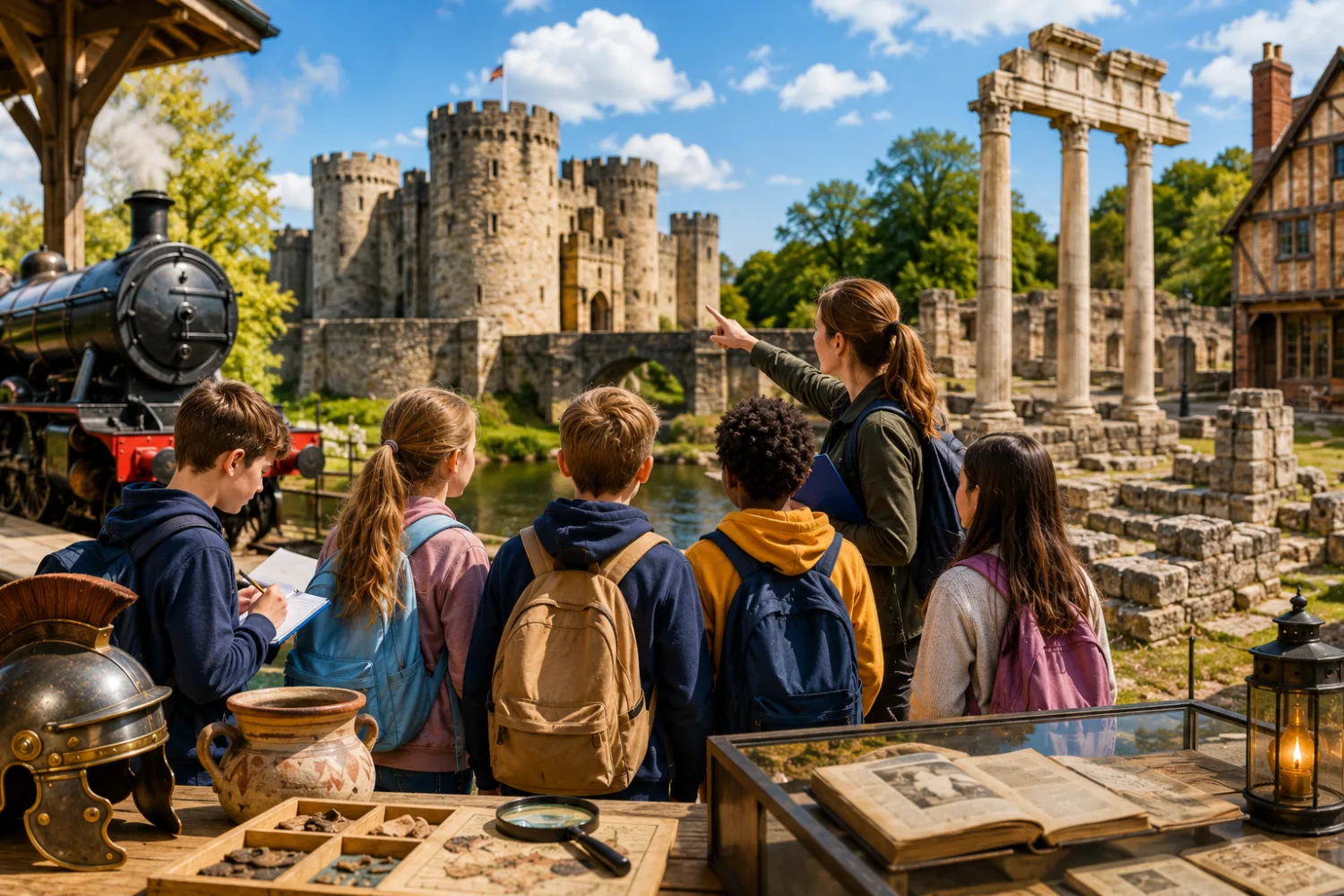
A visit to a castle can help pupils understand power, defence, status and daily life. A local museum can show how ordinary families lived in the area. A Roman site can make empire, roads, trade and settlement more visible. An industrial museum can show how technology, labour and urban growth changed lives. A war memorial or battlefield can help pupils think about remembrance, evidence and consequence.
Good heritage trips also support skills. Pupils can observe carefully, compare sources, handle objects, interpret buildings, question guides, examine maps, read inscriptions, sketch features, write explanations and discuss different viewpoints.
For many pupils, heritage visits also build cultural capital. They may visit a museum, castle, gallery, archive or historic house for the first time. That experience can change how confident they feel in cultural spaces and how connected they feel to local and national history.
1. Castles, forts and defensive sites
Castles and forts are among the most popular history school trip venues because they are dramatic, physical and easy for pupils to imagine. Towers, walls, gates, moats, battlements, courtyards and dungeons can help pupils understand defence, power, invasion, settlement and daily life.
For primary pupils, castles can support topics such as the Normans, medieval life, kings and queens, local history, materials, homes in the past and storytelling. Pupils can ask who lived there, who worked there, how the building was defended, what different rooms were used for, and how life in a castle differed from life today.
For secondary pupils, castles and forts can support deeper questions about military strategy, feudal power, monarchy, rebellion, border conflict, architecture, archaeology, conservation and how heritage sites are interpreted for the public.
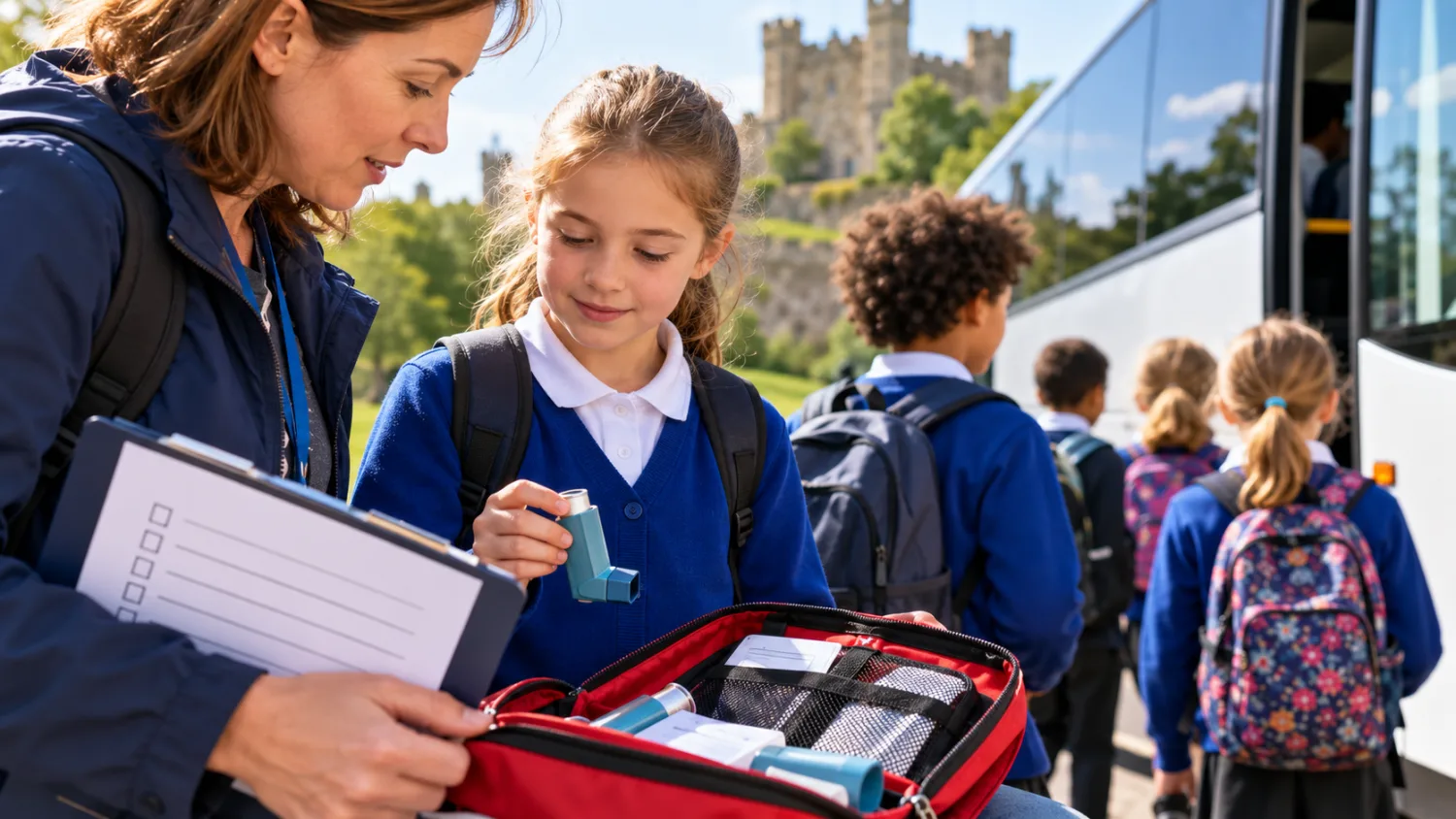
Teachers should check access carefully. Castles may involve stairs, uneven ground, narrow passages, exposed walls, low lighting, steep slopes and limited indoor space. A spectacular site may still need careful planning for younger pupils, pupils with mobility needs or groups visiting in poor weather.
2. Roman sites and ancient history venues
Roman forts, villas, roads, bath houses, town walls, amphitheatres and museums can help pupils understand the Roman Empire as something that physically shaped Britain.
Roman sites work well because pupils can connect large historical ideas to real evidence. They may see mosaics, coins, pottery, roads, heating systems, armour, inscriptions, foundations or reconstructed buildings. These details help pupils move beyond simple ideas of “Romans wore helmets” towards questions about trade, engineering, settlement, empire, belief and daily life.
For KS2, Roman visits can support the Roman Empire and its impact on Britain. For secondary pupils, they can support archaeology, empire, citizenship, power, cultural exchange, military organisation and historical interpretation.
Strong Roman venues often offer object handling, replica equipment, archaeology activities, costume interpretation, guided tours or enquiry-based workshops. Teachers should ask whether the session is pitched for the right age group and whether pupils will be actively investigating rather than only listening.
3. Historic houses, palaces and stately homes
Historic houses and palaces can help pupils explore wealth, power, family life, servants, architecture, art, politics, empire, gender, class and change over time.
These venues are useful because they often contain layered history. One building may tell stories about monarchs, servants, landowners, local communities, trade, colonial connections, wartime use, conservation and changing ideas of home.
For younger pupils, historic houses can support comparisons between homes past and present. Pupils can look at kitchens, bedrooms, heating, lighting, furniture, clothes, toys, gardens and domestic work. For older pupils, they can support more complex discussions about inequality, power, identity, ownership and whose histories are visible.
Teachers should ask whether the venue offers school workshops rather than only public tours. Pupils usually learn more when they are given a clear question or activity, such as comparing rooms, using source evidence, studying portraits, investigating servants’ lives or exploring how the house changed over time.
4. Local museums and community heritage centres
Local museums can be some of the most valuable history trip venues because they connect pupils to the place where they live. Children may discover that their town, village, high street, school, railway, factory, harbour, market, mine, canal or housing estate has a history worth studying.
This is powerful because local history makes the past feel close. Pupils can compare old photographs with streets they know, examine objects used by local people, hear stories about local workers, study maps, investigate changes in transport or explore how migration and industry shaped the area.
Local museums can support primary local history studies, secondary enquiry work, geography, English, art and citizenship. They are often more affordable and easier to reach than major national venues, which can make them useful for schools with limited budgets.
Teachers should ask whether the museum offers handling sessions, local history workshops, archive materials, trails, source packs or classroom follow-up resources. Small museums may not have large education teams, but many have deep local knowledge and strong volunteer expertise.
If affordability is important, our guide to school trips on a tight budget includes more ideas for low-cost and local educational visits.
5. Industrial heritage sites, mills and mines
Industrial heritage venues can make modern Britain easier to understand. Mills, mines, factories, canals, docks, railways, pumping stations, engineering works and transport museums show how work, technology and industry changed landscapes and lives.
These visits can support history, geography, science, design and technology, business studies, citizenship and careers. Pupils can explore invention, labour, class, urbanisation, migration, child labour, trade, pollution, machinery, transport and the relationship between industry and local identity.
For primary pupils, industrial sites can support local history and changes within living memory or beyond living memory. For secondary pupils, they can support the Industrial Revolution, working conditions, reform, empire, transport, economics and social change.
Teachers should check practical risks carefully. Some industrial heritage sites include stairs, machinery, dark spaces, loud demonstrations, water, uneven surfaces, narrow walkways or underground areas. These features can be educationally powerful, but they need clear supervision and preparation.
Strong industrial heritage venues usually explain not only how machines worked, but how industrial change affected real people.
6. Battlefields, war museums and remembrance sites
Battlefields, war museums, memorials and remembrance sites can support serious and meaningful learning, especially for older pupils. These visits can help pupils understand conflict, sacrifice, propaganda, technology, memory, citizenship and the human impact of war.
A good war-related visit should not be treated as a simple “weapons and uniforms” experience. It should help pupils ask deeper questions. What caused the conflict? Who was affected? How do we know what happened? How are events remembered? Whose stories are included or missing? How did war change communities?
These visits can support history, English, citizenship, religious education, politics, geography and art. Pupils might study letters, diaries, photographs, memorial inscriptions, maps, oral histories, propaganda posters or local records.
Teachers should prepare pupils emotionally, especially when visits involve death, trauma, persecution, genocide, bombing, displacement or personal testimony. Sensitive history needs careful framing before the visit and time for reflection afterwards.
For residential options linked to history, culture or cities, see our guide to residential school trip centres in the UK.
7. Archives, libraries and record offices
Archives and record offices are often overlooked as school trip venues, but they can be excellent for older primary pupils, secondary pupils and sixth form students.
Archives help pupils understand that history is built from evidence. They may examine letters, maps, census records, photographs, newspapers, court documents, school logbooks, parish records, business records, posters, diaries or oral history collections.
This can be especially powerful for local history. Pupils may discover records connected to their school, street, town, local industry, migration stories, wartime experience or community change.
Archive visits are usually most effective when they are enquiry-led. Rather than simply showing pupils old documents, the session should ask them to investigate a question: how did this area change? What can school records tell us about childhood? What does this map reveal? What can one photograph tell us and what can it not tell us?
Teachers should ask about age suitability, document handling rules, group size, reading demands, accessibility, session length and whether digital copies or follow-up resources are available.
8. Heritage railways, transport museums and maritime sites
Transport heritage venues can be highly engaging because they combine history with engineering, geography, technology and social change. Heritage railways, transport museums, aviation museums, canals, docks, ship museums and maritime heritage centres can show how movement changed Britain.
Pupils can learn how railways affected towns, work, holidays, trade, timekeeping and industry. They can explore how ships, docks and canals connected places and shaped local economies. They can study engineering, design, navigation, migration, empire, tourism and environmental change.
Transport venues can work well for both primary and secondary pupils. Younger pupils may compare old and new transport, while older pupils can explore industrialisation, logistics, trade, technology, urban growth and global connections.
Teachers should check boarding arrangements, platform safety, public access, toilets, weather, noise, accessibility, moving vehicles, water risks and how groups are supervised during transitions.
9. Places of worship and cultural heritage venues
Places of worship and cultural heritage venues can support religious education, history, citizenship, art, architecture, ethics, community learning and local identity.
Visits to churches, mosques, synagogues, gurdwaras, mandirs, temples, Buddhist centres, cemeteries, interfaith centres and cultural organisations can help pupils understand belief, practice, symbolism, community, migration, identity and continuity.
For history, these venues can also show how communities have changed over time. Buildings, memorials, inscriptions, stained glass, objects, rituals and community stories can all become historical evidence.
Teachers should prepare pupils respectfully. Behaviour expectations, dress, shoes, photography, gender arrangements, sensitive questions and the purpose of the visit should be explained before arrival.
A strong cultural or religious heritage visit should encourage thoughtful questions, not stereotypes. It should help pupils understand people and communities with care and accuracy.
10. Choosing the right history trip for your pupils
The best history trip depends on the topic, age group, learning purpose and practical realities of the school.
For KS1, trips should be simple, visual and concrete. Pupils may compare old and new toys, visit a local museum, explore an old building, hear stories from the past or investigate homes, transport and daily life. For more age-specific ideas, see our guide to the best school trip ideas for KS1.
For KS2, history trips can support Romans, Anglo-Saxons, Vikings, local history, ancient civilisations, castles, monarchs, industrial change and significant individuals. Pupils can begin to compare sources, ask enquiry questions and explain change over time. Our guide to school trip venues that link to the KS2 curriculum may help schools compare options.
For secondary schools, history and heritage visits should usually offer more depth. Pupils may need source analysis, interpretation, debate, exam relevance, local enquiry, social history, contested history, careers links or independent investigation. Our article on the best school trip venues for secondary schools includes more ideas for older pupils.
Teachers should ask one central question before booking: what will pupils understand better because they visited this place?
Planning, risk and inclusion for heritage visits
History and heritage venues can be rich learning environments, but they often need careful practical planning. Older buildings may have stairs, narrow corridors, uneven floors, low lighting, fragile objects, restricted routes, limited toilets or public visitors. Outdoor heritage sites may involve exposed weather, slopes, ruins, water, traffic, large grounds or limited shelter.
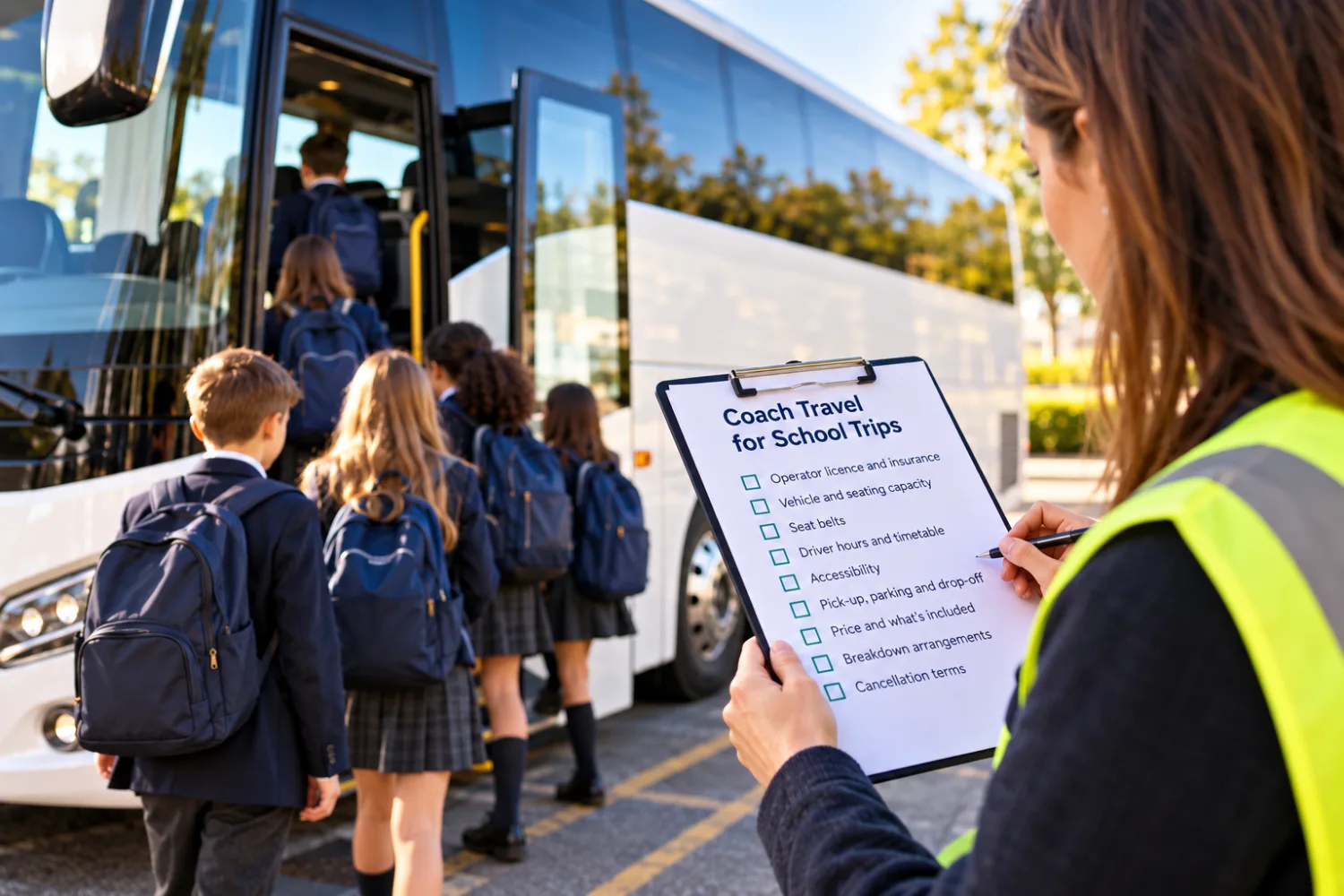
Teachers should ask venues for school-specific risk information, accessibility details, toilet and lunch arrangements, coach parking, wet-weather plans, supervision expectations and what happens if a pupil becomes separated from the group.
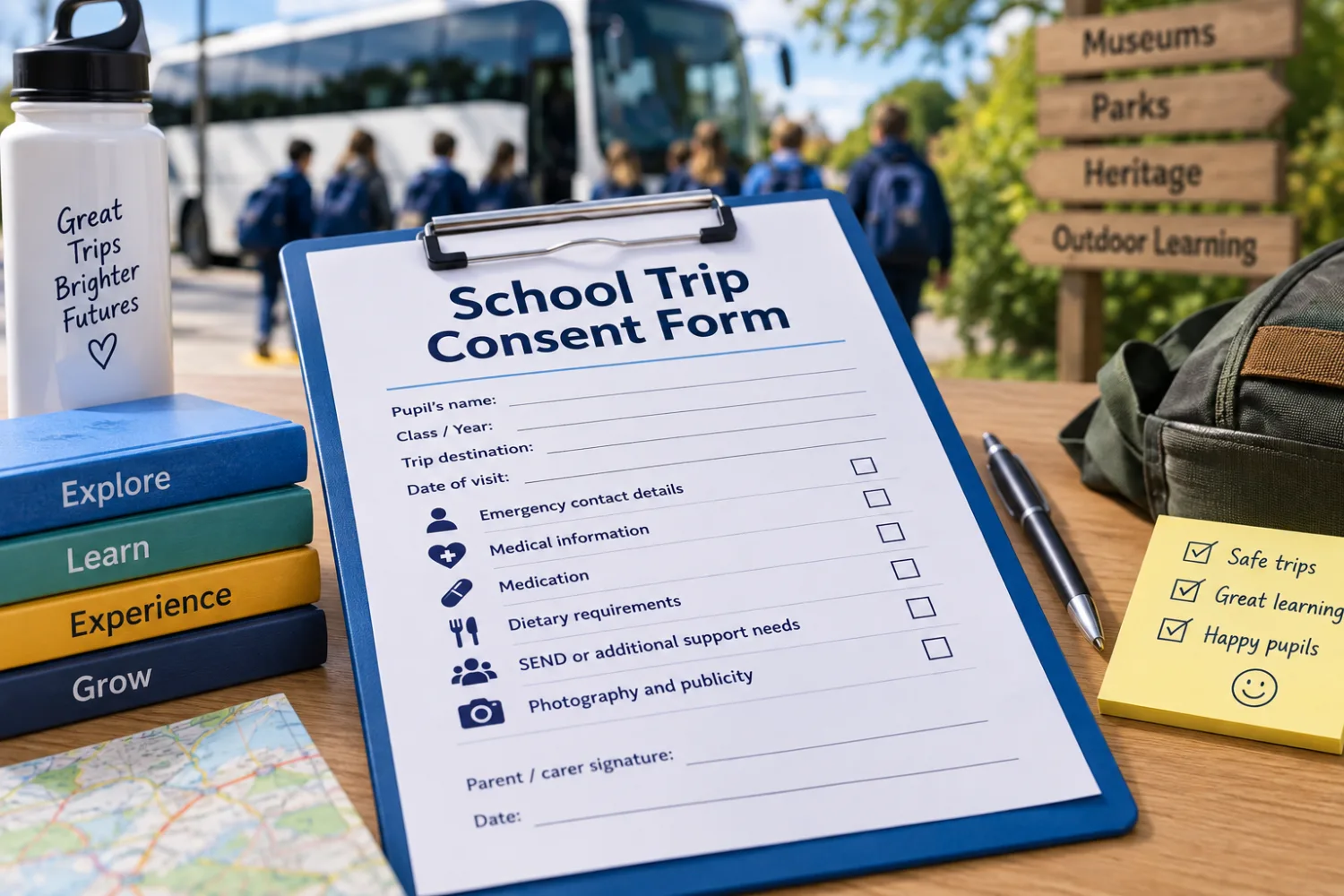
SEND planning is also important. Some pupils may need photos of the venue in advance, a visual timetable, quiet spaces, accessible routes, shorter walking distances, ear defenders, seating, a known adult or an alternative way to record learning.
Heritage venues should be honest about limitations. A listed building may not be fully accessible. A castle may involve steep stairs. A museum may have dark or echoing rooms. Teachers can plan properly when information is clear.
For more detailed support, see our guides to writing a school trip risk assessment and making a school trip work for pupils with SEND.
What heritage venues should show schools before they book
Heritage venues that want more school bookings should make their school offer easy to understand. Teachers should not have to search through general visitor information to work out whether a school trip is possible.
A strong school visits page should explain age suitability, curriculum links, workshop options, self-led visit options, prices, free visit availability where relevant, group sizes, toilets, lunch spaces, accessibility, risk information, coach parking, wet-weather arrangements and who teachers should contact.
Teacher resources are especially useful. Pre-visit vocabulary, source packs, maps, object handling notes, enquiry questions, classroom activities, image banks, timelines and post-visit tasks can help teachers connect the trip to learning before and after the day.
Photos also help. Teachers may need images of entrances, learning rooms, toilets, lunch spaces, outdoor routes, stairs and accessible areas to prepare pupils and reassure parents.
Heritage venues should also explain what pupils will actually do. Will they handle objects, meet costumed interpreters, analyse sources, follow a trail, visit rooms, take part in drama, complete field sketches, examine maps or join a guided workshop?
For a wider provider checklist, see what schools need from a school trip provider before they book.
FAQ: history and heritage school trip venues
What are the best history school trip ideas?
Good history school trip ideas include castles, Roman sites, historic houses, local museums, industrial heritage sites, battlefields, war museums, archives, heritage railways, transport museums, places of worship and local history walks.
Are heritage trips suitable for primary schools?
Yes. Heritage trips can work very well for primary schools when they are practical, visual and age-appropriate. Younger pupils benefit from object handling, storytelling, role play, simple enquiry questions and clear links to topics such as homes, toys, castles, Romans or local history.
What history trips work best for secondary schools?
Secondary schools often benefit from history trips that include source analysis, interpretation, debate, local enquiry, social history, industrial heritage, war and remembrance, archives, museums, historic houses and sites linked to GCSE or A level topics.
How can a history trip link to the curriculum?
A history trip can link to the curriculum by helping pupils investigate evidence, compare past and present, understand change and continuity, explore cause and consequence, analyse interpretations and study a period, person, event or local place in more depth.
What should teachers ask before booking a heritage venue?
Teachers should ask about age suitability, curriculum links, workshop content, self-led options, risk information, accessibility, toilets, lunch spaces, coach parking, SEND support, wet-weather plans, prices, cancellation terms and teacher resources.
Are local museums good school trip venues?
Yes. Local museums can be excellent because they connect pupils to the history of their own area. They can support local history, geography, English, art, citizenship and community learning, often at lower cost than larger attractions.
How can heritage venues attract more school bookings?
Heritage venues can attract more schools by clearly showing curriculum links, age suitability, workshop options, example timetables, prices, risk information, accessibility details, teacher resources, photos and a named school contact.
Do history trips need a risk assessment?
Schools should follow their own educational visit procedures. Many heritage visits will need some form of risk assessment or visit planning, especially where there are stairs, ruins, public spaces, outdoor areas, transport, water, uneven ground or pupils with specific needs.
Final thought
History and heritage school trips can help pupils understand that the past is not only something written in books. It exists in buildings, landscapes, objects, documents, memorials, streets, stories and communities.
The best heritage visits are not just impressive places. They are well-planned learning experiences that help pupils ask questions, examine evidence and connect the past to the world they live in now.