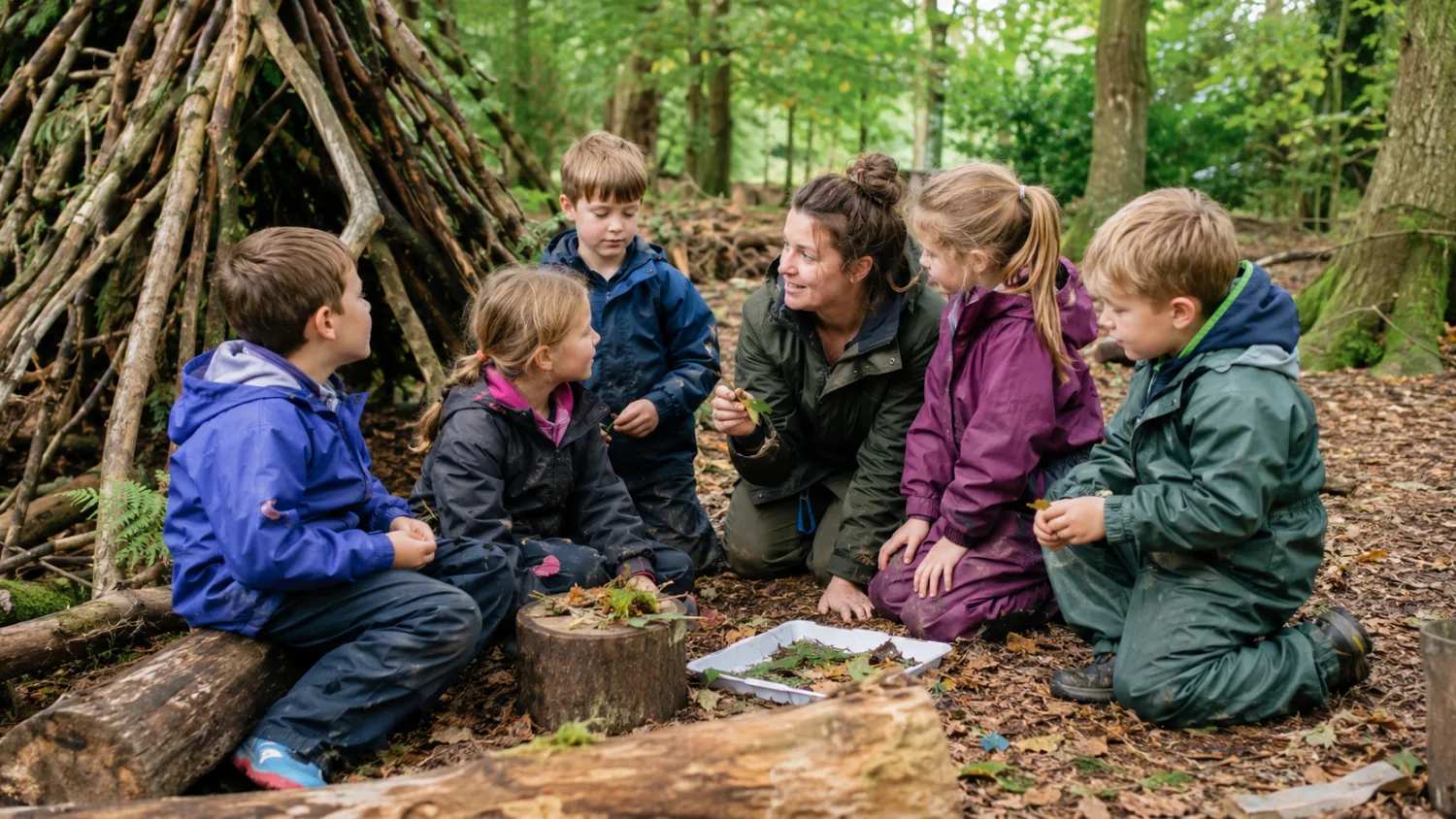
Outdoor learning has moved far beyond the idea of a class simply going outside for a nature walk. Across the UK, schools now use woodland centres, forest school providers, outdoor education centres, bushcraft venues, activity farms, conservation sites and adventure learning providers to support confidence, wellbeing, science, geography, teamwork, communication and personal development.
For pupils, the appeal is easy to understand. Outdoor learning feels different. It gives them space to move, touch, build, test, explore and notice. A child who struggles to concentrate indoors may become highly observant in a woodland. A pupil who rarely speaks in class may lead a den-building task. A group that finds teamwork difficult may begin to communicate more naturally when they have to solve a practical problem together.
For teachers, outdoor learning can be exciting but also difficult to choose well. The market is growing. Some providers offer true Forest School programmes over repeated sessions. Others offer one-day woodland workshops, bushcraft days, residential outdoor education, farm-based learning, conservation volunteering, adventure activities or nature-based wellbeing sessions. All can be valuable, but they are not the same thing.
This guide looks at the best types of outdoor learning and forest school trip venues in the UK, what schools should look for before booking, and how providers can make their offer clearer to teachers. If your school is also comparing animal-based outdoor visits, our guide to school trips to private zoos, wildlife parks and animal sanctuaries may be useful alongside this article.
What do schools usually mean by outdoor learning?
Outdoor learning is a broad phrase. It can mean curriculum lessons outside, fieldwork, nature study, residential activities, farm visits, environmental projects, woodland skills, adventure challenges, or wellbeing sessions in green spaces.
That breadth is one of its strengths, but it can also create confusion. A one-hour minibeast hunt, a geography fieldwork day, a high-ropes residential, a weekly Forest School programme and a bushcraft survival workshop are all outdoor learning in some sense. But they have different aims, different risks, different staffing needs and different outcomes.
Before choosing a venue, schools should be clear about the main purpose of the visit. Is the aim science learning? Geography fieldwork? Confidence? Teamwork? Transition? Wellbeing? Behaviour support? Enrichment? Careers? Environmental awareness? The same woodland can serve many purposes, but the session should be designed around the purpose that matters most for your pupils.
Forest School is not just a one-off woodland trip
Forest School has become a popular phrase, but it has a specific meaning. In good practice, Forest School is not simply “children learning outside” or “a trip to the woods”. It is usually a longer-term process, with regular sessions in a woodland or natural environment, where pupils develop confidence, independence, resilience, problem-solving and a relationship with the natural world over time.
This matters because schools sometimes book a one-day woodland activity and call it Forest School. That may still be a worthwhile outdoor learning day, but it is not the same as a proper Forest School programme.
A true Forest School approach is often child-centred, practical and responsive. Pupils may build shelters, use tools, explore natural materials, learn fire safety, identify plants, tell stories, create art, manage supported risk, work together and make choices. The value comes not only from the activities, but from repeated experience, reflection and growing confidence.
For schools, the question is not whether a provider uses the words “Forest School” in its marketing. The question is what the pupils will actually experience, how often they will attend, who will lead the sessions, what qualifications and experience the adults have, and how the programme supports the school’s aims.
Woodland centres and dedicated Forest School providers
Dedicated woodland centres and Forest School providers are often the most natural choice for schools that want pupils to build confidence, independence and practical outdoor skills.
These venues may offer regular programmes, one-off taster days, seasonal sessions, transition activities, nurture group provision, early years sessions, primary outdoor learning or targeted support for pupils who benefit from a less formal learning environment.
A strong woodland provider should be able to explain the purpose of its sessions clearly. It should not simply list activities. It should help the school understand how those activities support learning and development. Den building can support teamwork and problem-solving. Fire lighting can support risk awareness, responsibility and sequencing. Tool use can support fine motor skills, concentration and trust. Natural art can support creativity, observation and language.
Teachers should ask how sessions are structured. Is there a welcome routine? Are boundaries explained? Are pupils given choices? How are risks introduced? How does the provider support pupils who are anxious, impulsive, physically cautious or overconfident? What happens in poor weather? What facilities are available?
The best woodland centres feel calm, purposeful and well managed. They allow pupils freedom, but not chaos. They support risk-taking, but not carelessness. They make the outdoors feel adventurous and safe at the same time.
Outdoor education centres and residential activity venues
Outdoor education centres are a strong option for schools looking for a more intensive experience. These may include day visits, overnight stays or residential trips with activities such as climbing, canoeing, archery, orienteering, team challenges, problem-solving tasks, high ropes, bushcraft, shelter building, navigation or environmental studies.
Residential outdoor trips can be especially powerful because pupils are away from their normal routines. They learn to manage belongings, share space, try unfamiliar activities, encourage each other and cope with challenge. For some pupils, this is a major step in independence.
The curriculum links can be broad. Geography fieldwork, science, PE, PSHE, citizenship, careers, leadership, transition and wellbeing can all be supported. But the personal development outcomes are often just as important: resilience, trust, communication, confidence and problem-solving.
Schools should check qualifications, safety standards, instructor experience, accommodation arrangements, night-time supervision, medical support, food, SEND access, behaviour expectations, insurance, emergency procedures and cancellation policies. Residential visits involve more planning than a day trip, so clarity from the provider is essential.
If you are planning any kind of off-site visit, our guide to how to plan a school trip without the stress covers the practical areas teachers need to consider before confirming a booking.
Bushcraft venues and survival skills days
Bushcraft school trips are popular because they feel adventurous while still offering clear learning outcomes. Pupils might learn how to build a shelter, light a fire safely, filter water, identify natural materials, cook outdoors, tie knots, use simple tools, follow tracks or understand basic survival priorities.
The best bushcraft sessions are not about pretending pupils are in danger. They are about teaching judgement, patience, planning and respect for the natural environment.
These visits can work well for upper primary and secondary pupils. They can support science through materials, combustion, habitats and weather. They can support geography through maps, land use, resources and environmental awareness. They can support PSHE through teamwork, confidence, leadership and responsible risk-taking.
Teachers should ask very practical questions before booking. Will pupils use tools? Will they light fires? What safety briefing is given? What qualifications do instructors have? What adult supervision is expected from school staff? What happens in wet or windy weather? Are pupils able to opt out of certain activities? Is there a first-aid plan?
Bushcraft can be extremely memorable, but it needs careful organisation. A provider that explains risk clearly is usually more reassuring than one that tries to make everything sound easy.
Activity farms and countryside learning venues
Activity farms and countryside education venues can be a good bridge between outdoor learning, food education, animal care, sustainability and rural geography.
These venues may offer farm walks, animal care talks, crop sessions, pond dipping, woodland trails, seasonal growing activities, composting, food production workshops, farm machinery talks or conservation activities.
For younger pupils, this can make everyday life more understandable. Food stops being something that simply appears in a supermarket. Pupils begin to see soil, weather, animals, plants, machinery, labour and seasonal change. For older pupils, farms can support deeper questions about food miles, land use, climate, sustainability, supply chains and rural employment.
Teachers should check handwashing, animal contact, allergies, uneven ground, wet-weather plans, accessible routes, toilets, lunch spaces and the provider’s experience with school groups. Outdoor learning on farms can be excellent, but hygiene and supervision need to be planned properly.
For schools trying to reduce costs, a local farm or countryside centre may be more affordable than a major attraction. Our guide to school trips on a tight budget includes more ideas for free and low-cost educational visits.
Nature reserves, wetlands and conservation sites
Nature reserves, wetlands, wildlife trusts, country parks, riversides and conservation sites can offer some of the strongest curriculum links for outdoor learning.
These venues are especially useful for science and geography. Pupils can study habitats, food chains, classification, seasonal change, plants, animals, biodiversity, rivers, land use, climate, environmental quality and human impact.
A good conservation visit gives pupils something to investigate. They might compare habitats, survey minibeasts, identify plants, test water quality, map land use, measure tree height, look for evidence of erosion, monitor litter, listen for bird calls, or compare managed and unmanaged spaces.
These visits can also support citizenship and pupil voice. Pupils can return to school thinking about how their own school grounds could support wildlife, reduce waste, improve biodiversity or become more climate aware.
The best nature-based venues help schools connect fieldwork to action. Pupils do not just see a habitat. They begin to understand how it is protected, why it matters and what people can do to help.
Forestry sites and public woodland visits
Public forests and managed woodland sites can be excellent for schools, especially where there are marked trails, learning resources, toilets, parking and clear visitor information.
A forest visit can support science, geography, art, English, maths and wellbeing. Pupils can compare tree species, study woodland layers, investigate habitats, sketch natural forms, write poetry, calculate age or height, map trails, explore sound, or discuss how forests are managed for people, wildlife and timber.
Forestry sites can also be useful for schools that want a more self-led visit. Teachers can prepare their own enquiry questions and fieldwork activities while using an established public woodland with known routes and facilities.
However, self-led does not mean unplanned. Schools still need to consider supervision, boundaries, toilets, weather, clothing, first aid, mobile signal, emergency access, water, roads, public visitors and pupils with additional needs.
For pupils who rarely spend time in woodland, even a simple forest visit can be powerful. It gives them a chance to slow down, notice detail and experience a natural environment directly.
Adventure parks and high-energy outdoor venues
Some outdoor learning venues are built around adventure: climbing, ropes courses, zip wires, obstacle challenges, archery, raft building, orienteering, team games or water-based activities.
These visits can be excellent for confidence, resilience, communication and teamwork. They can be particularly useful for transition days, end-of-year enrichment, Year 6 to Year 7 preparation, reward visits, leadership development or groups that need to build trust.
The educational value should still be clear. A high-energy activity day can easily become “fun but forgettable” if pupils are not helped to reflect on what they learned. Teachers can ask pupils how they handled fear, what helped their team succeed, when they showed leadership, how they encouraged others, and what they would do differently next time.
Schools should check instructor qualifications, activity safety standards, height or age restrictions, clothing requirements, medical exclusions, wet-weather rules, supervision expectations, insurance and alternative activities for pupils who cannot or do not want to take part in a specific challenge.
Outdoor learning for wellbeing and confidence
Outdoor learning is not only about curriculum content. Many schools use woodland and outdoor environments to support wellbeing, confidence, behaviour, attendance, transition and social skills.
This can be particularly valuable for pupils who find classroom learning stressful, pupils who need more movement, pupils who struggle with peer relationships, or pupils who benefit from practical tasks and calmer spaces.
A nature-based wellbeing session might include sensory walks, campfire reflection, storytelling, mindfulness outdoors, natural art, gardening, den building, small-group problem-solving or quiet observation. The aim is not to remove academic expectations forever, but to give pupils another route into confidence, regulation and participation.
Schools should be careful to choose providers who understand children, not just outdoor activities. A good wellbeing-focused provider should be able to explain how it supports anxious pupils, pupils with SEND, pupils with low confidence and pupils who may struggle with group situations.
If your school is thinking about emotional support and outdoor provision, our articles on neurodiversity in the classroom and creating a sensory-friendly classroom on a budget may also be useful.
Curriculum links for outdoor learning venues
Outdoor learning can support many subjects, but it works best when the curriculum link is chosen before the trip.
In science, pupils can study plants, animals, habitats, rocks, soils, forces, materials, seasonal change, lifecycles, food chains and working scientifically. They can observe, classify, measure, compare and record evidence.
In geography, outdoor venues support fieldwork, maps, land use, rivers, coasts, settlements, weather, climate, human impact and environmental quality. Pupils can gather real data rather than only reading about places.
In English, outdoor learning can provide rich material for poetry, description, explanation, persuasive writing, instructions, diary entries, reports and storytelling.
In maths, pupils can measure height, distance, area, time, temperature, rainfall, speed, angles, capacity and data sets from the natural environment.
In art and design, pupils can sketch natural forms, explore texture, use natural materials, study pattern, design shelters or respond creatively to landscape.
In PSHE, outdoor learning can support teamwork, confidence, resilience, leadership, self-awareness, cooperation, responsibility and respect for the environment.
A strong provider should be able to help schools connect these curriculum links to real activities. “Outdoor learning” is a good starting point, but teachers need to know what pupils will actually do and what they will learn from it.
What schools should ask before booking an outdoor learning provider
Outdoor learning can involve more variables than an indoor venue. Weather, terrain, tools, fires, water, animals, public access and physical challenge all need sensible planning.
Before booking, teachers should ask whether the provider regularly works with schools, which age groups it supports, what qualifications staff hold, what risk assessment information is available, whether instructors are first-aid trained, and how the provider manages emergencies.
Schools should also ask what pupils will do, what equipment is provided, what clothing is needed, what happens in bad weather, whether toilets and handwashing are available, where pupils eat lunch, how groups are supervised, whether activities can be adapted, and how pupils with SEND or medical needs are supported.
If activities involve tools, fire, water, climbing, animals or cooking, ask for specific safety information. A good provider should welcome these questions. Clear answers show that the provider understands school responsibility.
For a wider checklist, see our guide to questions every teacher should ask before booking a school trip venue.
Safeguarding, DBS and supervision
Outdoor venues can feel informal, but safeguarding expectations still apply.
Schools should know whether provider staff will work directly with pupils, whether school staff remain with groups at all times, whether any adult could be alone with a pupil, how toilets are managed, whether the site is open to the public, and what the lost-child procedure is.
DBS checks may be relevant depending on the nature of the activity, the adults involved and the level of contact with pupils. Schools should follow their own safeguarding policy and ask providers for clear information before booking. Our guide to what a DBS check covers gives useful background for schools and external providers.
Supervision should be planned as more than a ratio. Staff need to know who leads the group, who stays at the back, who supports specific pupils, who carries medical information, who has emergency contacts, and who liaises with the provider.
In outdoor settings, boundaries should be explained clearly. Pupils need to know where they can go, where they cannot go, what signal brings them back, and what to do if they become separated from the group.
SEND, accessibility and inclusion outdoors
Outdoor learning can be highly inclusive, but only when it is planned thoughtfully.
Some pupils thrive outdoors because learning becomes practical, visual and active. Others may find outdoor environments challenging because of noise, mud, insects, smells, uneven ground, weather, open space, transitions or changes in routine.
Teachers should ask about accessible routes, quiet areas, seating, toilets, sensory demands, visual information, shorter routes, alternative activities and whether pupils can opt out of specific tasks. Providers should be willing to discuss adjustments before the visit.
For some pupils, preparation is crucial. Photos of the site, a simple timetable, clear clothing instructions, a map, a named adult, a quiet break plan or a social story can make the difference between anxiety and success.
If you are planning with additional needs in mind, our guide to SEN Support and EHCPs may help staff think through what pupils might need to access the visit safely and meaningfully.
Weather is not a small detail
Outdoor learning providers often say there is no bad weather, only unsuitable clothing. There is some truth in that, but schools still need a realistic weather plan.
Ask what happens in heavy rain, high winds, heat, ice or thunderstorms. Does the session continue? Are activities adapted? Is there shelter? Is there an indoor backup space? Who decides whether to cancel or rearrange? What is the refund policy if weather makes the visit unsafe?
Clothing instructions should be clear for families. Pupils may need waterproof coats, wellies, old trainers, warm layers, sun hats, gloves or spare socks. The more specific the provider is, the easier it is for schools to communicate with parents.
A trip can be memorable in drizzle, cold or mud. It becomes miserable when pupils are unprepared.
Cost and value: what schools need to compare
Outdoor learning costs vary widely. Some schools use local woods or public forests with self-led activities. Others book specialist instructors, residential centres, bushcraft providers, farm workshops or adventure venues.
The cheapest option is not always the best value, and the most expensive option is not automatically the best experience. Schools should compare what pupils gain for the full cost involved.
The full cost may include venue fees, instructor fees, transport, equipment, accommodation, food, additional adults, supply cover, insurance, payment administration and support for families who cannot afford the full contribution.
Ask what is included. Are instructors, equipment, resources, lunch space, waterproofs, firewood, tools, accommodation or follow-up materials included? Are adults free? Are there off-peak rates, local school rates, bursaries or funded places?
Schools may also need to think about fundraising or grant support. Our article on creative fundraising ideas for schools may help if the school wants to make outdoor learning more accessible.
How outdoor providers can make schools more likely to book
Outdoor learning providers, forest school leaders, bushcraft venues, activity farms and woodland centres are often passionate about what they offer. But passion alone does not win school bookings. Teachers need clear, practical information.
A strong school visits page should explain which age groups the provider works with, what activities are available, what curriculum links exist, how long sessions last, what the price includes, what qualifications staff hold, what risk assessment information is available, how safeguarding is managed, what facilities exist, and how SEND needs can be supported.
It should also include practical details: coach access, parking, toilets, handwashing, lunch spaces, wet-weather plans, clothing requirements, example timetables, cancellation terms and a named contact.
Providers that make this information easy to find reduce teacher workload. That matters. Schools are far more likely to enquire when they can quickly see that a venue understands school pressures.
Our guide to requirements for businesses working with schools is useful for outdoor providers that want to understand how schools assess external organisations.
What makes an outdoor learning venue stand out?
The best outdoor learning venues combine natural richness with professional organisation.
A beautiful woodland is not enough if the provider cannot explain safety arrangements. A thrilling activity is not enough if pupils with additional needs are not considered. A low price is not enough if teachers have to chase basic information. A long list of activities is not enough if the learning purpose is unclear.
Strong venues usually have a few things in common. They understand schools. They communicate clearly. They know how to manage risk without removing challenge. They can adapt for different ages and needs. They help pupils reflect, not just participate. They make teachers feel that the day will be exciting and manageable.
Most importantly, they give pupils an experience that feels real. Mud, leaves, tools, fire, maps, weather, insects, trees, water, teamwork and problem-solving all give pupils something to remember.
FAQ: outdoor learning and forest school trip venues
What is the difference between Forest School and outdoor learning?
Outdoor learning is a broad term for learning that takes place outside the classroom. Forest School is more specific and usually refers to a long-term, regular, child-centred process in a woodland or natural environment. A one-off woodland trip can be valuable outdoor learning, but it is not always a full Forest School programme.
Are forest school trips suitable for primary schools?
Yes, forest school and woodland sessions can work very well for primary pupils, especially when activities are age-appropriate and well supervised. They can support confidence, communication, science, PSHE, physical development, creativity and problem-solving.
Can secondary schools use outdoor learning venues?
Yes. Secondary schools may use outdoor learning for geography fieldwork, science, PE, Duke of Edinburgh preparation, transition, leadership, wellbeing, behaviour support, careers, team-building and residential experiences.
What should teachers ask before booking an outdoor learning provider?
Teachers should ask about staff qualifications, risk assessment information, safeguarding, supervision, first aid, SEND access, toilets, handwashing, wet-weather plans, clothing requirements, activity safety, transport arrangements, cost and cancellation terms.
Do pupils need special clothing for forest school or outdoor learning?
Usually, yes. Pupils may need waterproof coats, suitable footwear, warm layers, sun hats or spare socks depending on the season and activity. Providers should give clear clothing guidance so schools can communicate expectations to parents.
Are outdoor learning visits safe?
Outdoor learning involves some risk, but good providers manage risk sensibly and explain it clearly. Schools should use venue information alongside their own risk assessment, considering the site, activities, weather, supervision and the needs of their pupils.
How can outdoor learning support pupils with SEND?
Outdoor learning can support pupils with SEND by offering practical, sensory, movement-based and flexible experiences. However, adjustments may be needed, such as visual timetables, quieter areas, accessible routes, shorter sessions, a named adult or alternative activities.
What makes a good outdoor learning provider for schools?
A good provider offers clear educational value, experienced staff, strong communication, sensible risk management, inclusive planning, practical facilities, transparent pricing and activities that match the age and needs of the pupils.
Final thought
Outdoor learning and forest school trips can give pupils something that is difficult to create indoors: space to explore, confidence built through action, teamwork shaped by real tasks, and a closer relationship with the natural world.
The best venues are not always the biggest or most dramatic. A small woodland centre, local forest, activity farm, bushcraft site, nature reserve or outdoor education provider can be exactly right if the visit is safe, purposeful, inclusive and well organised.
For teachers, the challenge is to choose outdoor learning that matches the pupils and the purpose. For providers, the opportunity is clear: schools are actively looking for memorable, well-run outdoor experiences, but they need clear information before they book.
When the match is right, outdoor learning becomes more than a trip. It becomes a memory pupils can stand in, touch, smell, build, question and carry back into the classroom.