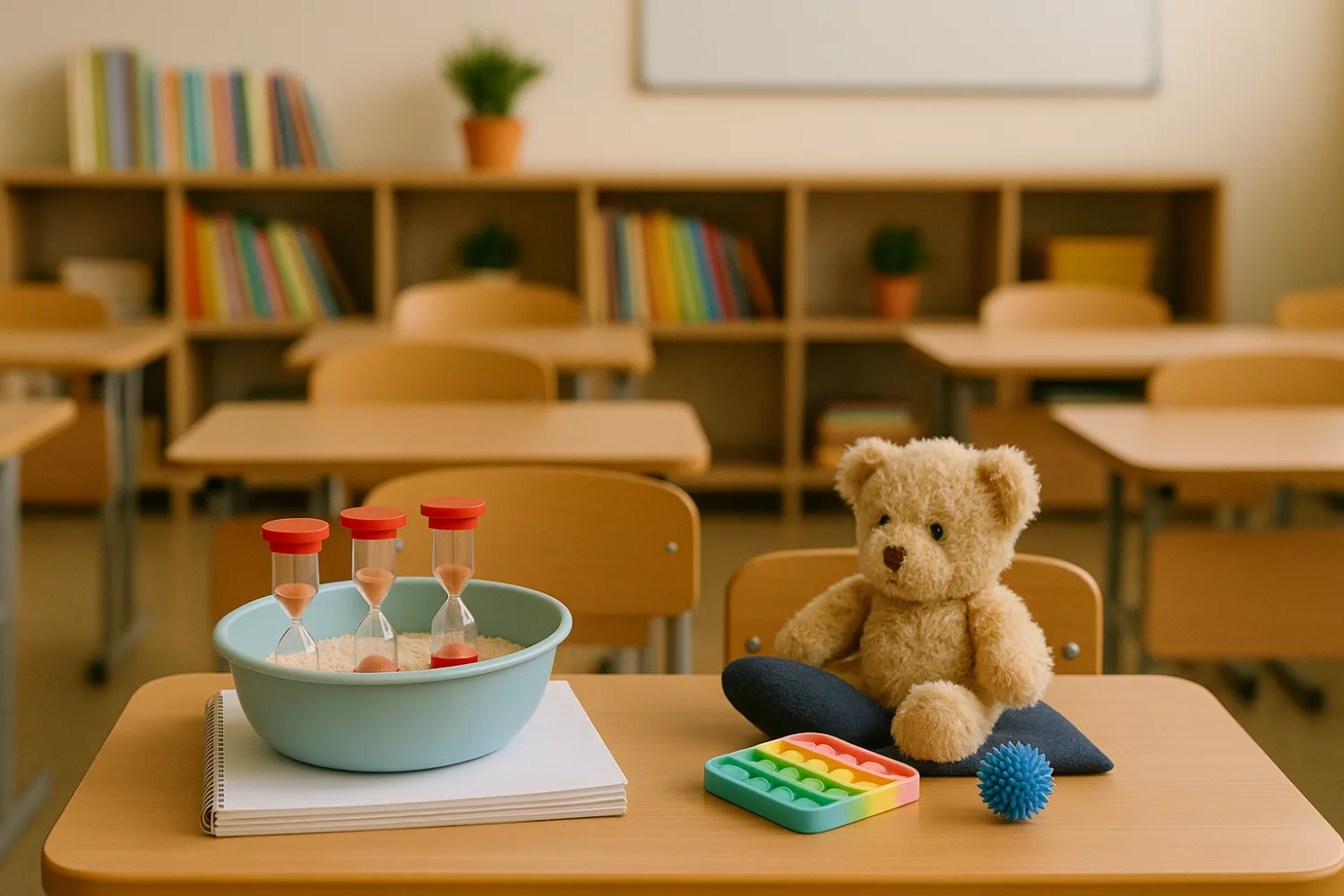
Classrooms are energetic, colourful spaces, but for many pupils—especially autistic children, those with ADHD, sensory processing differences, or anxiety—typical classroom environments can be overwhelming. Small sensory triggers such as bright lights, visual clutter, noise, or busy transitions can quickly lead to dysregulation and difficulty learning.
The encouraging truth is that sensory-friendly environments do not require expensive equipment or specialist resources. With thoughtful observation and small, low-cost adjustments, teachers can create classrooms that help every child feel calm, regulated, and ready to learn.
For background reading, see Understanding Autism in Schools and Recognising Early Signs of ADHD.
Why Sensory-Friendly Classrooms Matter
Many neurodivergent pupils experience sensory input more intensely. A flickering light, a buzzing projector, or chairs scraping across the floor may go unnoticed by most pupils but cause real discomfort for others. When pupils feel overwhelmed, their ability to focus, regulate emotions, or engage in learning decreases significantly.
One Year 5 child described his classroom as “too bright and too buzzy,” making learning feel impossible before the lesson even began. After small environmental changes, his engagement improved dramatically.
NHS guidance explains how sensory differences shape pupil behaviour: https://www.nhs.uk/conditions/autism/signs/
Creating a sensory-friendly classroom is about removing barriers so pupils can show their true potential.
Start With Observation
Before making any changes, observe your classroom through your pupils’ perspective. Notice when pupils begin to fidget or disengage, when they become overwhelmed, or which areas of the class seem calming.
Sometimes the smallest patterns reveal the biggest problems. A teacher once discovered that a child's afternoon meltdowns were caused by sunlight reflecting off the whiteboard. A £4 sheet of window film completely changed his experience.
Observation guides the most effective and budget-friendly improvements.
Softening the Lighting
Lighting is one of the strongest sensory triggers. While fluorescent lights are common in UK schools, they can hum, flicker, or cast harsh glare.
Affordable Lighting Adjustments
Teachers often soften lighting by switching off a row of overhead lights and using lamps with warm bulbs. Natural light is especially calming and works well when blinds are partially opened to avoid glare.
DIY diffusers made from thin white fabric or rice paper can reduce harshness without altering fixtures. Even lowering screen brightness or using less reflective slide backgrounds can make a difference for pupils with visual sensitivity.
Lighting changes are subtle but powerful, often improving calmness and focus across the whole class.
Reducing Noise Without Costly Equipment
Noise is one of the most common sensory stressors. Echoes, chairs scraping, cupboard doors slamming, or corridor chatter can be overwhelming.
Practical, Low-Cost Noise Strategies
Felt pads on chairs and tables eliminate scraping sounds entirely. Carpet offcuts from local shops absorb sound well, especially under table groups. Hanging fabric over shelves or adding curtains softens both noise and visual clutter.
Teachers can adopt quieter transition cues, such as raising a hand instead of clapping. Ear defenders offer support during particularly loud times, such as group work or assemblies.
These small adjustments create a noticeably calmer classroom without requiring expensive acoustic panels.
Creating a Calm Corner
A calm corner doesn’t need to be large or elaborate. Its purpose is to offer a small, regulated space where pupils can recover from sensory overload.
Simple Ways to Build a Calm Corner
A cushion, blanket, or beanbag immediately makes the space comforting. Some teachers create small dens using cardboard boxes or simple fabric drapes. A warm lamp helps signal that this is a quieter, slower space.
Calming visuals — such as breathing exercises, colour gradients, or simple nature images — support self-regulation. A “calm menu” offers pupils choices like counting, stretching, tracing shapes, or squeezing a cushion.
Even a few minutes in such a space can help pupils return to learning with renewed focus.
Reducing Visual Clutter
Visual overload is common in classrooms full of posters, patterned borders, and bright displays. For sensory-sensitive pupils, excessive visuals can feel chaotic.
Strategies for a Cleaner Visual Environment
Leaving one wall mostly blank creates a place for the eyes to rest. Using muted display colours instead of bright tones softens the room’s atmosphere. Storing supplies in opaque boxes hides visual noise, and using matte materials avoids glare.
Many teachers report that after simplifying displays, the entire class becomes calmer.
Using Sensory Tools Without Overspending
Sensory tools do not need to be expensive. Many effective tools can be made from everyday items.
Low-Cost Sensory Supports
DIY stress balls made from balloons and flour, pipe cleaners, Velcro strips under desks, putty, blue tack, and textured fabric squares are all affordable and quiet. Weighted lap pads can be made with rice-filled pillowcases. Mini sand timers and soft pencil grips can help with focus.
The key is setting clear expectations so sensory tools support learning rather than distract from it.
Incorporating Free Movement Breaks
Movement is essential for regulation, especially for pupils with ADHD. Allowing small, structured movement breaks can significantly improve learning and reduce frustration.
Effective Movement Ideas
Chair push-ups, wall push-ups, stretching routines, balance challenges, desk-yoga movements, or a short walk to the door and back all help reset the nervous system. Walk-and-talk pair tasks combine movement with learning.
These activities support regulation at no cost.
Establishing Predictable Routines
Predictability provides emotional safety and gives pupils a sense of control. This is particularly important during transitions, which are often sensory-heavy moments.
Simple Routine Improvements
A visual “Now, Next, Then” board helps pupils understand the flow of lessons. Consistent morning tasks settle pupils at the start of the day. Two-minute warnings before transitions prevent sudden shifts. Emotional check-ins allow pupils to express and regulate feelings.
Clear routines reduce anxiety and help pupils stay engaged.
Listening to Pupils’ Sensory Needs
Pupil voice is one of the most effective tools teachers have. Many pupils can articulate their sensory needs clearly when given the opportunity.
Some prefer dimmer lighting, some need quieter spaces, some focus better when doodling, and others cannot sit near movement-heavy areas. Asking simple questions can reveal easy adjustments that make a significant difference.
When pupils feel heard, they feel safe — and safe pupils learn.
Working With SENCos and Parents
Parents and SENCos often understand a child’s sensory profile deeply. Their insight helps create consistent support between home and school.
Collaboration doesn’t need to be time-consuming. Short weekly notes, brief check-ins, or shared sensory strategies can help teachers adapt the environment effectively.
Parents who want to understand support options may find our guide The Ultimate Guide to SEN Support and EHCPs useful.
Using Donations and Community Support
Many sensory-friendly classrooms are built from donated items. Parents may have spare cushions, rugs, storage baskets, or lamps. Carpet shops often provide offcuts for free. Local businesses undergoing refurbishment may donate soft furnishings.
Creating a “classroom wish list,” organising a small donation drive, or seeking PTA support can stretch resources without burdening teachers financially.
A sensory-friendly environment is often a community effort.
Final Thoughts
A sensory-friendly classroom is not about expensive equipment or perfect décor. It is about understanding your pupils, noticing what overwhelms or comforts them, and making thoughtful adjustments that support wellbeing and learning.
Every small improvement contributes to a calmer, more inclusive, more emotionally safe environment.