DBS checks are one of the most familiar parts of safer recruitment in schools. Teachers, support staff, supply staff, contractors, volunteers, governors, trustees and many external providers may all be asked about DBS checks before working with or around pupils.
But a DBS certificate is not a complete safeguarding system. It is one important check, not a guarantee that someone is suitable, safe, qualified, supervised, insured, trained or appropriate for a particular role in school.
This distinction matters. Schools need to understand what a DBS check can tell them, what it cannot tell them, and what they still need to verify through safer recruitment, procurement and day-to-day safeguarding procedures. Suppliers and external providers also need to understand this, because simply saying “all our staff are DBS checked” is rarely enough.
This guide explains what a DBS check covers, the different levels of check, how barred list checks fit in, and what schools still need to check for themselves before allowing adults to work with pupils.
What is a DBS check?
A DBS check is a criminal record check carried out through the Disclosure and Barring Service. In schools, DBS checks are used as part of safer recruitment and safeguarding processes to help assess whether a person is suitable for a role involving children, young people or access to a school environment.
The key phrase is “part of”. A DBS check may reveal certain criminal record information, and in some cases whether a person is barred from working with children. But it does not replace references, identity checks, right to work checks, qualification checks, employment history, interview judgement, induction, supervision, training, risk assessment or professional curiosity.
The Department for Education’s statutory guidance, Keeping children safe in education, is clear that safer recruitment is not just about carrying out the right DBS checks. Safeguarding needs to be embedded in the organisation’s wider culture, systems and procedures.
The main types of DBS check
There are different levels of DBS check. The correct level depends on the role, the work being done, the setting and whether the role is legally eligible for that type of check.
Basic DBS check
A basic DBS check shows unspent convictions and conditional cautions. It is the lowest level of criminal record check and is available for many types of role.
In a school context, a basic check may be relevant for some roles where a standard or enhanced check is not legally available. However, for many roles involving regular work with children, a basic check alone will not be sufficient.
Standard DBS check
A standard DBS check shows certain spent and unspent convictions, cautions, reprimands and warnings held on the Police National Computer, subject to filtering rules. It is only available for roles that are eligible in law.
Standard checks are not usually the main check people think of for school staff working directly with pupils. Many school roles that involve children are more likely to require an enhanced check, depending on the role and activity.
Enhanced DBS check
An enhanced DBS check includes the information shown on a standard check and may also include relevant information held by local police forces, where the police consider that information relevant to the role and that it ought to be disclosed.
This is the level often associated with work in schools, childcare and other roles involving children. But schools still need to check whether the role is eligible for an enhanced check. Organisations should not request a higher level of DBS check simply because they would like more information.
Enhanced DBS check with children’s barred list check
An enhanced DBS check with a children’s barred list check includes the enhanced criminal record information and also checks whether the person is barred from working in regulated activity with children.
This is a critical distinction. Not every enhanced DBS check includes a barred list check. A barred list check should only be requested where the role is eligible, usually because the person will be engaging in regulated activity with children.
The DBS provides guidance for employers on DBS check requests, and schools should also follow the relevant sections of Keeping children safe in education.
What information can appear on a DBS certificate?
Depending on the level of check, a DBS certificate may include information such as:
- unspent convictions;
- certain spent convictions;
- certain cautions, reprimands or warnings;
- relevant police information, for enhanced checks;
- whether the person is included on the children’s barred list, if a barred list check is legally requested.
There are filtering rules, which means some old or minor cautions and convictions may not appear on standard or enhanced certificates if they are protected under the rules. A DBS check is therefore not always a complete lifetime list of everything that has ever happened.
It is also important to remember that a DBS certificate is a snapshot at the time it is issued. If an individual is subscribed to the DBS Update Service, schools and employers may be able to check whether new information has come to light, but this still needs to be handled correctly and only where the original certificate is for the right workforce, role and level.
What a DBS check does not prove
This is where schools sometimes need to be especially careful. A DBS check does not prove that someone is good at their job. It does not prove that they are safe in every context. It does not prove that the school has completed all necessary safer recruitment checks. It does not prove that a supplier is suitable to work with pupils.
A DBS check does not verify:
- the person’s identity on its own;
- their right to work in the UK;
- their qualifications;
- their professional registration or prohibition status;
- their employment history;
- the quality of their references;
- their training in safeguarding;
- their suitability for the specific school environment;
- their insurance cover;
- their organisation’s safeguarding policies;
- whether they understand school procedures;
- whether they will behave appropriately once on site.
For suppliers and external providers, this is especially important. Schools are increasingly careful about due diligence. A provider that says “we are DBS checked” but cannot explain safeguarding training, insurance, supervision, risk assessment, complaints procedures, data protection or staff conduct may not reassure a school leader. For more on this wider process, see How Schools Vet External Providers.
Why “DBS checked” can be a misleading phrase
“DBS checked” sounds simple, but it can hide several important questions.
Schools should ask:
- What level of DBS check was carried out?
- Was it basic, standard, enhanced, or enhanced with children’s barred list?
- Was the check for the child workforce?
- Was the role eligible for that level of check?
- When was the certificate issued?
- Is the person registered with the DBS Update Service?
- Does the certificate relate to the same type of work?
- Who carried out the check?
- Has the school seen the original certificate where required?
- Has identity been checked on arrival?
A person may have a DBS certificate from a previous role, but that does not automatically mean a school can rely on it without further thought. The level, workforce, barred list status, date, role and Update Service status all matter.
What schools still need to verify themselves
A DBS check sits inside a wider safer recruitment and safeguarding process. Schools need to complete, record and review the appropriate checks for the person’s role.
Identity
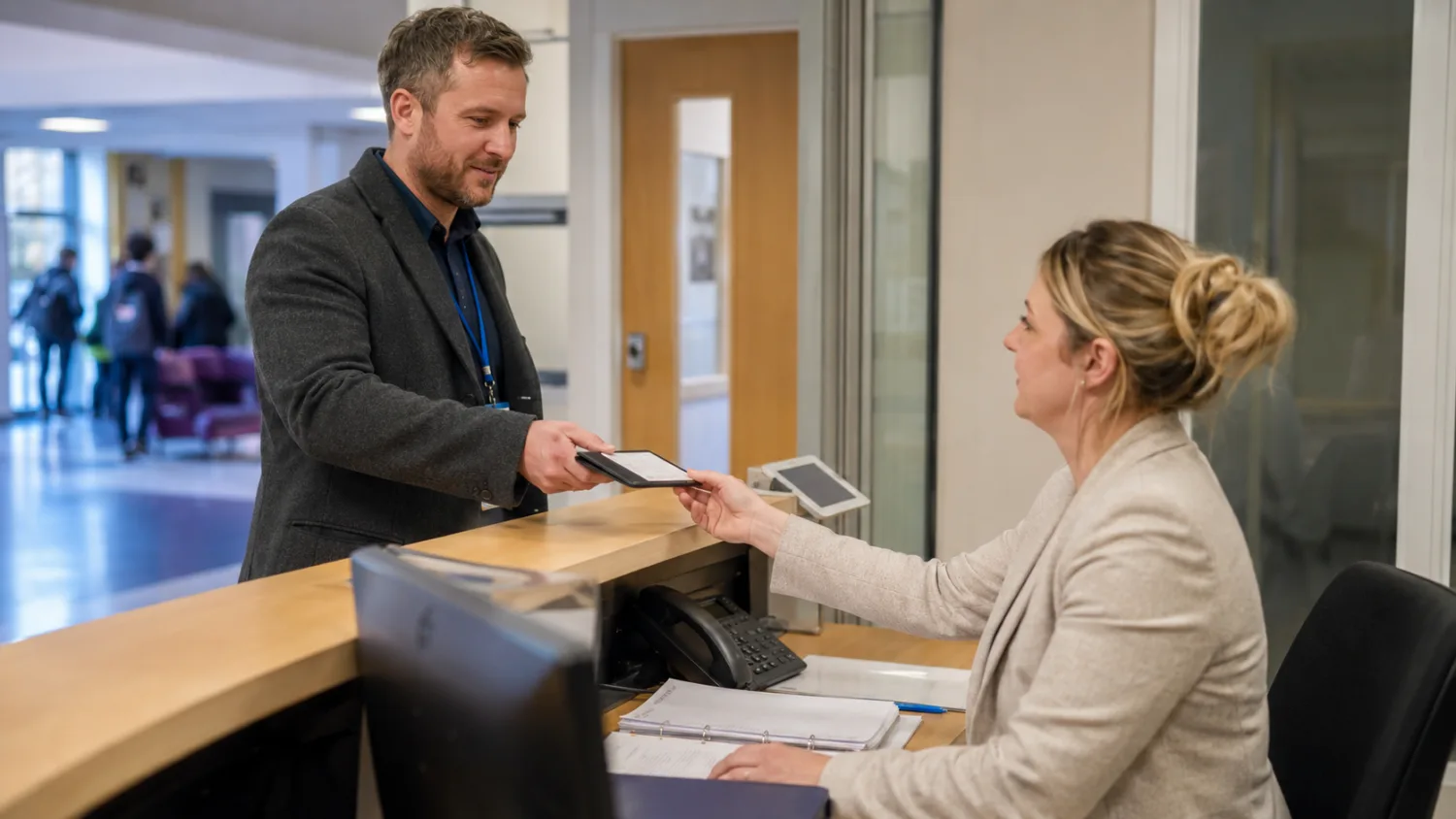
Schools must be confident that the person arriving on site is the person who has been checked. Identity verification is not a small administrative detail. If a contractor, supply teacher, coach, tutor or agency worker arrives at reception, the school still needs to confirm who they are.
For agency and third-party staff, schools usually need written confirmation that the relevant checks have been completed, but they should still verify identity when the person arrives.
Right to work in the UK
A DBS check does not prove that someone has the right to work in the UK. Employers must complete right to work checks separately. For direct employees, this is part of pre-employment checking. For contractors or agency staff, schools need assurance that the employer or agency has completed the relevant checks.
References
References remain a vital part of safer recruitment. A clean DBS certificate does not tell a school whether there were concerns about conduct, reliability, boundaries, behaviour management, safeguarding awareness or suitability in a previous role.
Schools should treat vague references carefully and follow up where appropriate. The question is not simply “Does this person have a criminal record?” but “Is this person suitable for this role, in this school, with these pupils?”
Employment history and gaps
Schools should check employment history and explore gaps or inconsistencies. Gaps may be perfectly ordinary, but unexplained patterns should be followed up. DBS checks do not explain someone’s work history or why they left previous roles.
Qualifications and professional status
If a role requires a particular qualification, registration or professional status, the school must verify it separately. For teaching roles, this may include checking qualified teacher status where relevant, prohibition from teaching checks, and other role-specific requirements.
For external providers, this might include sports coaching qualifications, first aid training, therapeutic registration, SEND expertise, food hygiene certification, professional body membership or other evidence linked to the service being delivered.
Overseas checks
If a person has lived or worked outside the UK, schools may need to consider overseas checks or certificates of good conduct where appropriate. A UK DBS check may not show information from another country.
Safeguarding training
A DBS check does not mean someone understands safeguarding. Schools still need to ensure that adults working with pupils understand the school’s safeguarding expectations, who the designated safeguarding lead is, how to report concerns, how to respond to disclosures, and what behaviour is expected of adults on site.
This matters for visitors as well as employees. A visiting coach, workshop leader, tutor, therapist, photographer or club provider may have an enhanced DBS check, but still needs to understand school safeguarding procedures.
Suitability for the specific activity
Not all school roles carry the same risks. A one-off visitor speaking in an assembly is different from a sports coach taking small groups every week. A contractor fixing a boiler during school hours is different from a tutor working one-to-one with pupils. A photographer attending a school event is different from a mentor working regularly with vulnerable pupils.
Schools should look at the actual activity, frequency, level of supervision, access to pupils, setting, timing, and whether the person will be in regulated activity.
Insurance and organisational safeguarding
For external providers, schools should also check organisational safeguards. This may include public liability insurance, employer’s liability insurance, risk assessments, safeguarding policy, code of conduct, staff training, complaints procedure, data protection arrangements and incident reporting.
If your organisation wants to work with schools, this is part of becoming school-ready. The guide Requirements for Businesses Working with Schools explains the wider expectations suppliers may need to meet.
DBS checks for school employees
For school employees, DBS checks are part of the pre-appointment process. The exact checks depend on the role, but schools should follow Keeping children safe in education and maintain appropriate records on the single central record.
For teachers and other staff, schools may need to consider:
- identity checks;
- enhanced DBS check;
- children’s barred list check where the role is eligible;
- right to work check;
- prohibition from teaching check where relevant;
- qualification checks where required;
- references;
- employment history;
- overseas checks where appropriate;
- medical fitness where applicable;
- induction and safeguarding training.
The DBS check is important, but it is only one line in the wider safer recruitment picture.
DBS checks for supply staff and agency workers
Supply staff and agency workers create a particular challenge because the school may not be the direct employer. Schools still have safeguarding duties.
Where staff are supplied by an agency or third party, schools should usually obtain written confirmation that the appropriate checks have been completed. They should also check the person’s identity when they arrive at school.
Schools should not assume that an agency has done everything properly without evidence. Contract terms, written confirmations and reception procedures all matter.
DBS checks for contractors
Contractors can range from building workers and IT technicians to catering staff, cleaners, sports coaches, photographers, theatre groups and specialist service providers. The correct approach depends on what they are doing, how often they attend, whether they have access to pupils, and whether they are supervised.
Some contractors may be in regulated activity and require an enhanced DBS check with children’s barred list check. Others may not be eligible for that level of check, in which case schools may need to manage risk through supervision, timing, access controls, signing-in procedures and clear boundaries.
For example, a contractor repairing a roof outside pupil areas during school holidays presents a different safeguarding profile from a coach working weekly with a small group of pupils. A visiting author giving a supervised assembly is different from an external mentor meeting pupils one-to-one.
Schools should avoid blanket assumptions. The right question is: what will this person actually do on site, and what checks and controls are appropriate for that activity?
DBS checks for volunteers
Volunteers can play a valuable role in school life, from reading support and trips to clubs, governance and community events. But volunteers still need appropriate checks and supervision.
The level of check depends on the nature of the role. A supervised volunteer helping occasionally with a one-off event may be treated differently from an unsupervised volunteer working regularly with children. Schools should follow the relevant guidance and record their decisions clearly.
For volunteers, supervision is especially important. A DBS check does not remove the need for clear expectations, boundaries, induction and oversight.
DBS checks for governors and trustees
Governors, trustees and members of proprietor bodies are part of the safeguarding framework of a school or trust. They may not be teaching pupils every day, but they hold positions of responsibility and should be checked in line with statutory guidance.
Schools and trusts should ensure the correct checks are completed and recorded properly. The exact requirements can depend on the type of school and role, so schools should follow the current version of Keeping children safe in education and any relevant governance guidance.
The single central record
Schools in England must keep a single central record of required pre-appointment checks. This is not just a filing exercise. The single central record helps schools demonstrate that required checks have been completed and provides leaders, governors, trustees and inspectors with a clear overview of safer recruitment compliance.
The single central record should not be treated as the whole safeguarding system. It records checks, but it does not replace judgement, supervision, training, culture or follow-up.
What schools should ask suppliers and external providers
When a supplier says staff are DBS checked, schools should ask more precise questions. This is not about being difficult. It is about understanding risk and confirming suitability.
Useful questions include:
- What level of DBS check do staff have?
- Are checks enhanced, and do they include the children’s barred list where eligible?
- How recently were checks completed?
- Are staff subscribed to the DBS Update Service?
- Who verifies identity before staff are sent to schools?
- What safeguarding training do staff receive?
- How are concerns reported to schools?
- Do staff understand they must follow the school’s safeguarding procedures on site?
- What is your safer recruitment process?
- Do you take references and verify qualifications?
- Do you have public liability and employer’s liability insurance?
- Do you have a safeguarding policy and code of conduct?
- How do you handle allegations or complaints?
- Will your staff ever work unsupervised with pupils?
These questions often appear in procurement and provider approval conversations. For more detail, see What Schools Ask Before Approving a New Supplier.
What suppliers should prepare before approaching schools
If you are a business, charity, tutor, therapist, coach, club provider, creative workshop leader, IT supplier or other external provider, you should not wait for a school to ask basic safeguarding questions. Prepare the evidence in advance.
A school-ready provider should be able to explain:
- which roles require DBS checks in your organisation;
- what level of check is used and why;
- whether barred list checks are required for particular roles;
- how you verify identity;
- how you check right to work;
- how you take references;
- how you verify qualifications and professional registrations;
- what safeguarding training staff receive;
- how staff are supervised and managed;
- what happens if a concern is raised;
- how you comply with school visitor procedures;
- what insurance and risk assessments you hold.
This is especially important for providers working directly with pupils, such as tutors, SEND specialists, wellbeing providers, after-school clubs, sports coaches and mentoring services. For related advice, read How to Offer SEND Services to Schools and How Tutoring Providers Can Build School Partnerships.
What a DBS check cannot tell you about conduct and culture
Some safeguarding risks do not show up on a DBS certificate. A person may have no criminal record but still have poor boundaries, weak judgement, inappropriate communication habits, a dismissive attitude to school rules, or a pattern of behaviour that makes pupils or staff uncomfortable.
That is why safer recruitment and safeguarding culture matter. Schools need staff and visitors to understand expectations from the start. This includes:
- not being alone with pupils unless authorised and appropriate;
- using school-approved communication channels;
- following photography and mobile phone rules;
- reporting concerns promptly;
- maintaining professional boundaries;
- wearing identification where required;
- signing in and out correctly;
- following supervision arrangements;
- knowing who the designated safeguarding lead is.
A DBS check may help screen for known criminal history. It does not manage day-to-day behaviour. Schools do that through culture, policy, supervision and vigilance.
How schools should think about supervision
Supervision is not just “someone is somewhere nearby”. It should be meaningful and proportionate to the activity. If a visitor or contractor is not checked to the level required for unsupervised work with pupils, the school should be clear about how access will be managed.
Questions to consider include:
- Will the adult be in pupil areas?
- Will pupils be present?
- Will the adult be working one-to-one with pupils?
- Will the adult be visible to school staff?
- How frequently will they attend?
- Can the work be scheduled outside pupil hours?
- Who is responsible for supervising them?
- What should happen if the supervising adult is called away?
Clear supervision arrangements protect pupils, staff and visitors. They also prevent confusion at reception or in classrooms.
How often should DBS checks be renewed?
There is no single universal renewal period that applies in the same way to every situation. Schools and employers should follow statutory guidance, local policies, trust policies and role-specific requirements.
Some schools or trusts have renewal cycles. Some roles use the DBS Update Service. Some checks may need to be redone if a person changes role, workforce, employer, level of responsibility or type of activity. Schools should not rely on a certificate simply because it exists; they need to consider whether it is appropriate for the current role.
Where there is uncertainty, schools should check current DBS guidance and Keeping children safe in education, or seek advice from their local authority, trust, HR provider or safeguarding adviser.
What if a DBS certificate shows information?
A disclosure on a DBS certificate does not automatically mean a person can never work in a school. Schools should follow their safer recruitment policy and make a fair, proportionate risk assessment, considering the nature of the information, relevance to the role, seriousness, timing, pattern, explanation and any other safeguarding considerations.
However, barred list information is different. A person barred from regulated activity with children must not be placed in regulated activity with children. Schools must treat this with the highest seriousness and follow statutory requirements.
Schools should also handle DBS information carefully and confidentially, in line with data protection requirements and the DBS code of practice.
Common mistakes schools and suppliers should avoid
DBS checks are familiar, but mistakes still happen. Common problems include:
- using “DBS checked” without specifying the level of check;
- assuming a basic DBS check is enough for pupil-facing work;
- requesting a barred list check when the role is not eligible;
- failing to check identity on arrival;
- accepting old certificates without considering role, workforce or Update Service status;
- forgetting overseas checks where relevant;
- treating DBS as a substitute for references;
- not recording checks properly on the single central record;
- allowing contractors into pupil areas without clear supervision arrangements;
- not giving visitors safeguarding information;
- assuming suppliers have completed checks without written confirmation.
Most of these are avoidable with clear procedures, trained staff and a culture that treats safeguarding as more than paperwork.
A practical checklist for schools
Before appointing staff, accepting agency workers, using contractors or bringing in external providers, schools should ask:
- Is this person or provider eligible for the DBS check being requested?
- Is the level of check appropriate for the role?
- Is a children’s barred list check required and legally allowed?
- Has identity been verified?
- Has right to work been checked where relevant?
- Have references been taken and reviewed?
- Have qualifications or professional registrations been verified?
- Are overseas checks needed?
- Has the person received safeguarding information?
- Are supervision arrangements clear?
- Has the school recorded the required checks?
- Is there a plan for reporting concerns?
For a wider safeguarding overview for parents and schools, see How Schools Handle Safeguarding.
A practical checklist for suppliers
If your organisation wants to work with schools, prepare a simple safeguarding and compliance pack. It should be easy for a school business manager, DSL, headteacher or trust procurement lead to understand.
Include:
- a short explanation of your safer recruitment process;
- your DBS checking approach by role;
- confirmation of safeguarding training;
- your safeguarding policy;
- your code of conduct for staff working in schools;
- insurance certificates;
- risk assessments;
- relevant qualifications or accreditations;
- complaints and incident procedures;
- data protection information, if pupil data is involved;
- named safeguarding contact within your organisation.
This helps schools trust that you understand their responsibilities. It also speeds up procurement conversations. If you are trying to enter the schools market, the guide How to Start Selling to Schools in the UK explains how to approach schools professionally.
Final thoughts
A DBS check is an essential safeguarding tool, but it is not a complete answer. It can reveal certain criminal record and barring information, depending on the level of check. It cannot prove identity by itself, confirm qualifications, check right to work, assess conduct, replace references, guarantee future behaviour or remove the need for supervision.
For schools, the safest approach is to treat DBS as one part of a wider safer recruitment and safeguarding framework. For suppliers, the strongest approach is to be precise, transparent and prepared. Do not just say “DBS checked”. Explain what checks are carried out, why they are appropriate, how staff are trained, and how you help schools keep pupils safe.
In safeguarding, paperwork matters. But judgement, culture and follow-through matter just as much.
Frequently Asked Questions
What does a DBS check show?
It depends on the level of check. A basic DBS check shows unspent convictions and conditional cautions. A standard check shows certain spent and unspent criminal record information. An enhanced check includes the standard information and may include relevant local police information. An enhanced check with barred list check can also show whether someone is barred from working in regulated activity with children, where that check is legally allowed.
Does an enhanced DBS check automatically include a barred list check?
No. An enhanced DBS check and an enhanced DBS check with children’s barred list check are not the same thing. The barred list check should only be requested where the role is eligible, usually because the person is engaging in regulated activity with children.
Can a school ask anyone for an enhanced DBS check?
No. Standard and enhanced DBS checks are only available for roles that are eligible in law. Schools and employers must request the correct level of check for the role and should not request a higher level simply because they prefer it.
Is a DBS check enough to work in a school?
No. A DBS check is only one part of safer recruitment and safeguarding. Schools may also need to verify identity, right to work, references, qualifications, employment history, overseas checks, professional status, safeguarding training and supervision arrangements.
Do contractors working in schools need DBS checks?
It depends on the nature of the work. Contractors who are in regulated activity with children may need an enhanced DBS check with children’s barred list check. Contractors who are not in regulated activity may need different controls, such as supervision, restricted access or work scheduled outside pupil hours.
Do visitors to schools need DBS checks?
Not always. A visitor who is supervised and attending for a one-off activity may not need the same checks as someone working regularly and unsupervised with pupils. Schools should assess the nature, frequency and level of contact with pupils.
Can a school accept an existing DBS certificate?
Sometimes, but it depends on the level of check, workforce, role, date, Update Service status and school policy. Schools should be cautious about accepting existing certificates without checking whether they are appropriate for the current role.
What is the DBS Update Service?
The DBS Update Service allows an employer, with permission, to check whether new information has been added since a DBS certificate was issued. It does not remove the need to check that the original certificate is for the right level, workforce and role.
What should suppliers say instead of “our staff are DBS checked”?
Suppliers should be more specific. They should explain what level of DBS check is used, whether barred list checks apply, how eligibility is assessed, how often checks are reviewed, what safeguarding training staff receive, and what other safer recruitment checks are completed.
Does a clean DBS certificate mean someone is safe?
No. A clean certificate means no relevant information was disclosed through that check at that time. It does not guarantee future behaviour or prove that the person is suitable in every context. Schools still need safer recruitment, induction, supervision and safeguarding culture.
What should schools record on the single central record?
Schools should record the required pre-appointment checks in line with Keeping children safe in education and their school or trust procedures. This may include identity, DBS, barred list, right to work, prohibition, qualifications and other relevant checks depending on the role.
Where should schools check the latest DBS rules?
Schools should use official guidance from the Disclosure and Barring Service and the Department for Education. The key starting points are DBS check guidance for employers and Keeping children safe in education.