A visit to a church, mosque, synagogue, mandir, gurdwara or other place of worship can do something that even a very good classroom lesson cannot.
It lets pupils encounter religion as something lived.
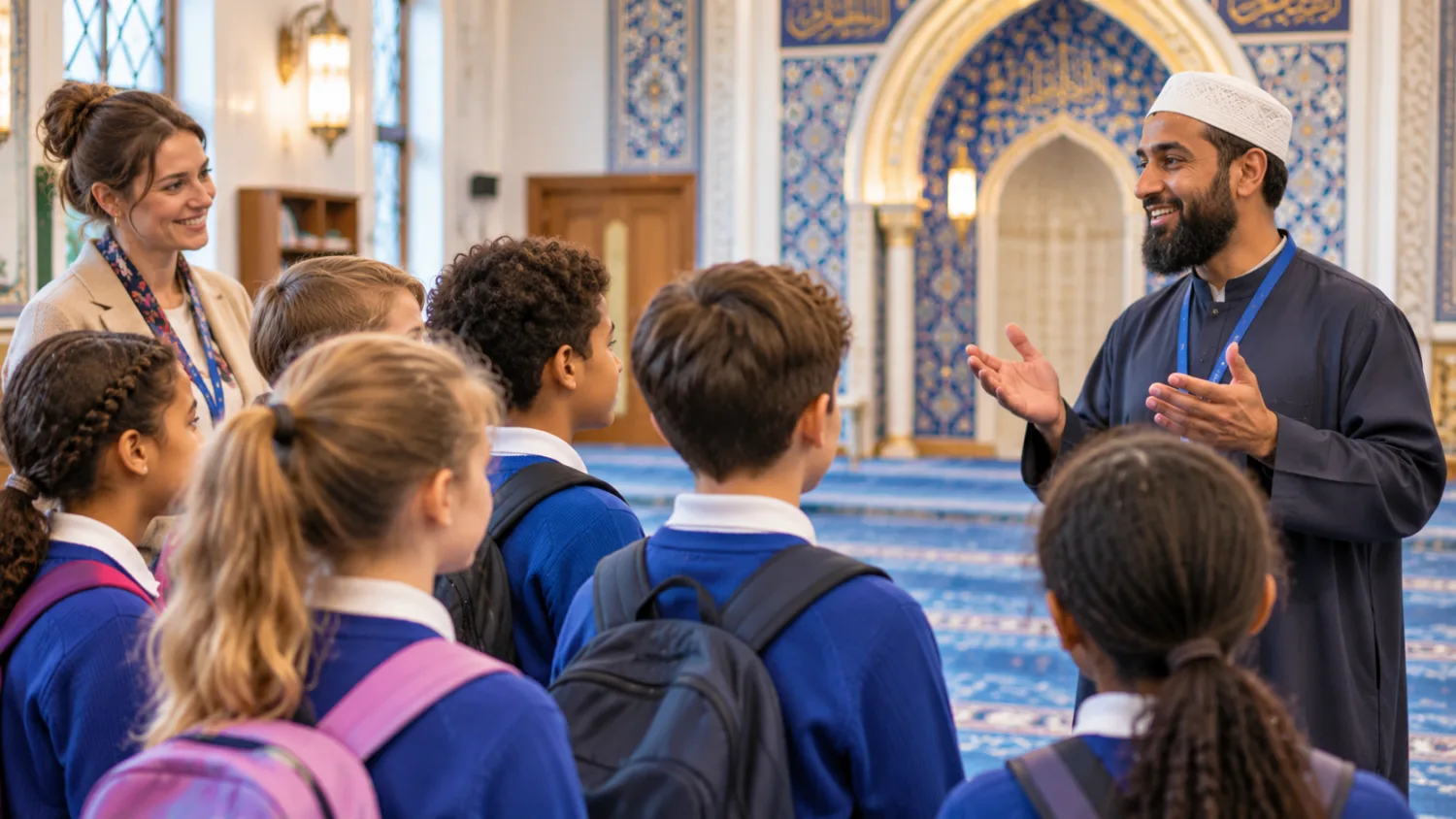
They can see how a building is used, speak to people for whom faith matters, encounter objects in their real setting and begin to understand that a place of worship is not simply an interesting building.
It is part of a community.
That makes visits to places of worship potentially very valuable for religious education.
They also need thoughtful planning.
Pupils may be entering a religious setting they have never experienced before. Some may belong to the faith being studied. Some may follow another religion. Some may come from non-religious families.
There may be expectations around clothing, shoes, food, photography, sacred objects or behaviour that are unfamiliar to the class.
The aim should not be to make pupils nervous about doing something wrong.
It should be to prepare them well enough that they can enter respectfully, ask good questions and concentrate on learning.
Local SACRE guidance on visits to places of worship consistently recommends agreeing clear learning objectives with the host, preparing pupils beforehand and treating the visit as part of the RE curriculum rather than simply arranging a general tour.
Begin with the learning, not the building
The weakest reason for arranging a visit is:
“We are doing Sikhism, so we should visit a gurdwara.”
The stronger question is:
“What do we want pupils to understand better because they have been there?”
That might be how worship is organised.
It might be how sacred space is used.
It might be how religious belief influences daily life.
Or it might be how a place of worship supports the wider local community.
Once that purpose is clear, the visit becomes easier to plan.
You can tell the host what pupils already know.
You can decide which parts of the building matter most.
You can prepare questions.
And you can plan follow-up work that makes use of what pupils actually experienced.
SACRE guidance for schools specifically warns that a general “look around” is less likely to create meaningful learning than a visit with clearly defined aims.
This is the same principle that should guide any educational visit: start with the learning value, then build the logistics around it.
For the wider planning process, see School Trips and Educational Visits: Complete Planning Guide for UK Schools.
Contact the faith community early and explain your class
A place of worship is not necessarily a visitor attraction with a full-time education team.
Your contact may be a volunteer.
They may be balancing school visits with worship, community work and other responsibilities.
So make contact early.
Explain the age of the pupils, approximate group size, what they are studying and what you hope they will learn.
This helps the host pitch the visit appropriately.
A forty-minute explanation aimed at adults may be perfectly accurate but completely unsuitable for Year 3.
Likewise, older secondary pupils may gain much more from discussing belief, identity and contemporary practice than from a very basic tour of the building.
Guidance for faith communities receiving schools recommends finding out pupils' age and ability, their existing knowledge and the aims of the visit before planning activities. It also encourages a mixture of listening, talking, questioning and doing rather than relying entirely on a long talk.
If possible, ask whether pupils can meet ordinary members of the community as well as a faith leader.
Hearing someone explain what their religion means in everyday life can make the visit much more personal and useful.
A preliminary visit can prevent a lot of problems
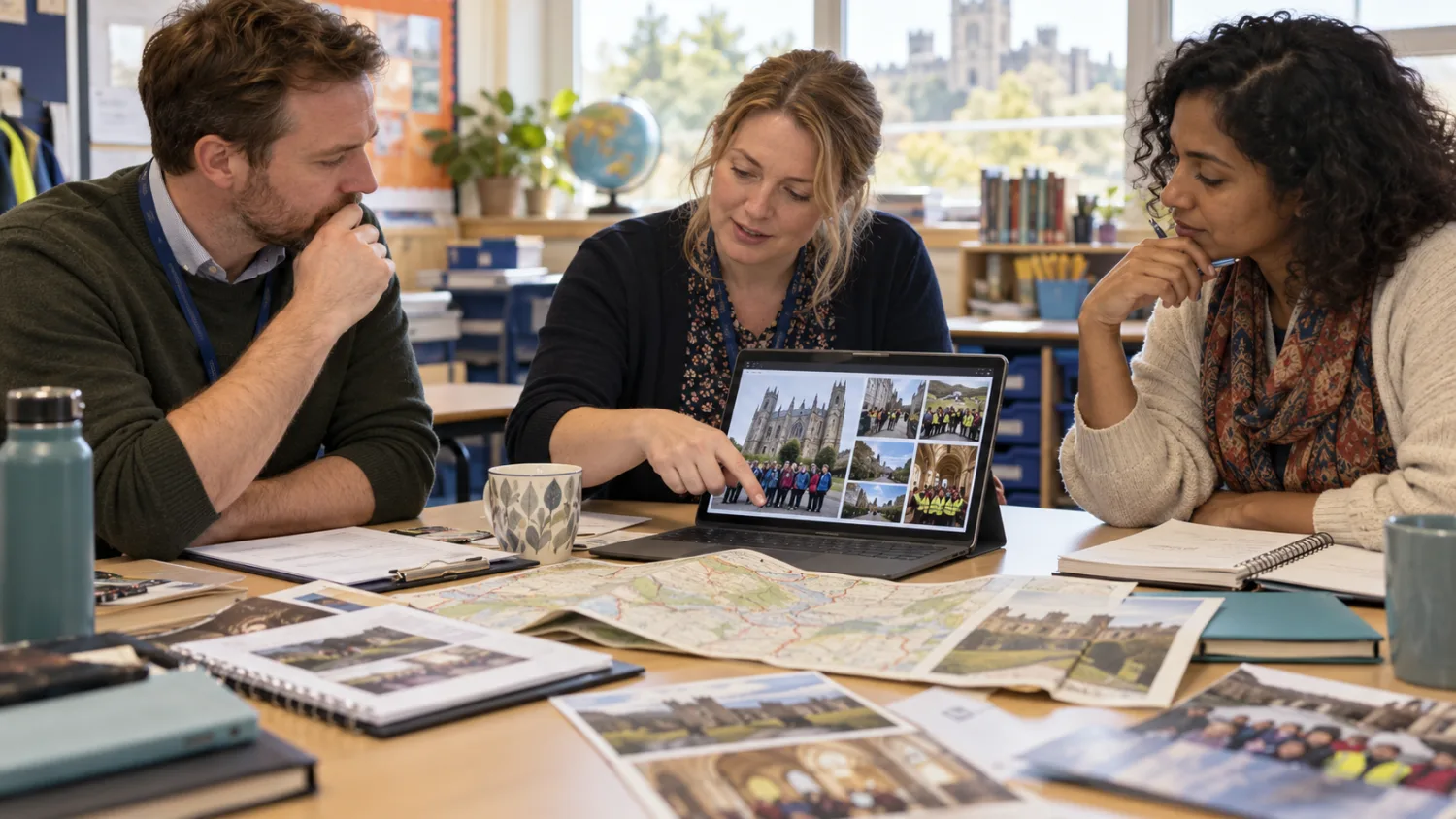
If the venue is unfamiliar, a teacher pre-visit is extremely useful.
You can see the entrance.
Check coach or minibus access.
Look at toilets.
Discuss accessibility.
See where pupils will sit.
Understand how the building will be used on the day.
And identify any practical issues that would be difficult to understand from an email.
SACRE guidance commonly recommends a preliminary visit because it allows the teacher and host to agree the purpose of the visit, explore the learning opportunities and discuss expectations before pupils arrive.
A pre-visit can also reveal opportunities you had not considered.
Perhaps there is a community kitchen.
A library.
A memorial area.
A classroom used for religious education.
Or a feature that links closely to something pupils are studying.
The visit becomes much easier to teach when you know what pupils are actually going to encounter.
Prepare pupils for respectful behaviour without making the visit intimidating
For some pupils, the main anxiety may be:
“What if I accidentally do something disrespectful?”
Good preparation removes that uncertainty.
Tell pupils beforehand if they may need to remove shoes.
Explain whether head coverings are required or offered.
Tell them where they may sit and whether some areas should not be entered.
Explain that objects should not be touched unless the host invites them to do so.
This should be practical rather than dramatic.
You do not need to give pupils a huge list of rules.
Most expectations can be explained simply:
“This is a place that people use for worship, so we behave as respectfully as we would expect visitors to behave somewhere important to us.”
SACRE guidance recommends preparing pupils for unfamiliar expectations such as removing shoes, covering the head, moving quietly and not handling religious objects without permission.
That preparation also allows pupils to focus more fully on the experience once they arrive.
Be clear about observation and participation
This is one of the most important areas to discuss with the host before the visit.
A school visit to a place of worship is an educational experience.
That is not automatically the same thing as participating in worship.
The distinction matters because the group may include pupils from several religious and non-religious backgrounds.
For example, a host might demonstrate:
how prayer is performed;
how a sacred text is handled;
or how part of a religious ceremony works.
Pupils may observe and learn without being required to make a personal religious commitment themselves.
Older SACRE guidance on visiting places of worship explicitly recommends agreeing with hosts that pupils are there as observers rather than being required to participate in worship.
This should be handled sensitively rather than suspiciously.
Faith communities hosting schools generally want pupils to understand their tradition, not to put children in an uncomfortable position.
A short conversation beforehand avoids ambiguity.
It is also worth remembering that RE itself is part of the school curriculum, although the detailed arrangements differ between maintained schools and academies. The Department for Education publishes separate guidance on religious education in English schools.
Plan inclusion around the actual building and activity
Accessibility should be discussed before the visit, not discovered at the entrance.
Some places of worship are modern and fully accessible.
Others are historic buildings with steps, narrow spaces or several levels.
There may also be practical issues that are not obvious from the venue website.
A pupil may find removing shoes difficult.
Another may need somewhere quieter if the building becomes crowded.
A pupil with mobility needs may require a different entrance.
A pupil with autism may benefit from photographs of the venue and a simple outline of what will happen before the day.
Discuss those needs with the host.
Many adjustments are straightforward when agreed in advance.
If the school simply arrives and tries to solve them on the spot, the pupil may have a much less positive experience.
For wider practical advice, see How to Make a School Trip Work for Pupils With SEND.
Ask about photography before pupils take out their phones or cameras
Do not assume photographs are permitted everywhere.
Some communities may be perfectly happy for pupils to photograph architecture, objects and displays.
Others may restrict photography in particular areas or during worship.
There may also be people using the building for private prayer who do not want to appear in school photographs.
Agree the rule beforehand and tell pupils before entering.
If pupils are collecting evidence for later classroom work, they can still use notes, sketches or teacher-provided photographs if photography is restricted.
Also think carefully about what the school later publishes.
A photograph showing pupils standing inside a place of worship can easily be misunderstood online if it is presented without context.
A short caption explaining that pupils were taking part in an RE educational visit may be useful.
For the wider privacy issues around school photography, see School Photos, Performances and Privacy: What Parents Should Know.
Prepare better questions than “What do you believe?”
The quality of pupils' questions can transform the visit.
If possible, prepare some before leaving school.
Instead of:
“What do Muslims believe?”
a pupil visiting a mosque might ask:
“Why is praying together important to you?”
Instead of:
“What happens in a church?”
a pupil might ask:
“Which part of this building is most important to your community, and why?”
Those questions invite the person speaking to explain lived experience rather than produce a textbook definition.
It is also valuable to let pupils encounter diversity within religions.
One Christian cannot speak for every Christian.
One Muslim cannot speak for every Muslim.
A host can explain:
“This is what happens in our community”
without pupils assuming that every member of that religion practises identically.
That is an important piece of religious literacy in its own right.
Do the ordinary school-trip planning properly
A place of worship may feel familiar, local and low risk.
It is still an educational visit.
Normal school procedures still apply.
You need suitable supervision.
A safe route.
Appropriate emergency arrangements.
Information about pupils' medical needs.
And whatever approval your school or trust requires for educational visits.
The Department for Education's current health and safety guidance for educational visits emphasises proportionate planning around the real risks of the visit rather than unnecessary bureaucracy.
If the place of worship is within walking distance, that may simplify transport but creates its own practical questions around roads, crossings and group organisation. See How to Plan a Local Walking School Trip Safely.
For information sent to families, School Trip Consent Forms: What Information Should Schools Collect? covers medical needs, emergency contacts and other useful information.
Follow up while the experience is still fresh
The visit should not end when pupils get back onto the coach.
Some of the most useful learning happens afterwards.
Ask pupils what surprised them.
What did they notice that they could not have learned from a worksheet?
Did anything challenge an assumption they had?
Can they explain why particular objects, spaces or practices mattered to the people they met?
This is also a good moment to separate observation from generalisation.
If pupils saw one particular practice, ask:
“Does this mean every person in this religion does exactly the same thing?”
Probably not.
The visit has shown them a real community.
It has not shown them every possible expression of a worldwide religion.
A short follow-up task can turn an enjoyable morning out into much deeper learning.
It also gives the teacher useful information about whether the visit actually achieved its purpose.
Frequently asked questions
Do school visits to places of worship count as RE?
They can form a valuable part of religious education when they are linked clearly to the school's curriculum and learning objectives. They should not simply be treated as tourism.
Should pupils participate in worship during the visit?
Normally the purpose of an educational visit is observation and learning rather than requiring pupils to participate in an act of worship. Agree expectations clearly with the host beforehand.
Do pupils have to cover their heads?
Some places of worship may ask visitors to follow particular dress conventions. Check with the host in advance and explain the arrangements to pupils and families clearly.
Do pupils have to remove their shoes?
In some places of worship, yes. Ask beforehand and make practical arrangements for pupils who may have mobility, medical or sensory difficulties with doing so.
Can pupils take photographs?
It depends on the venue. Ask the faith community before the visit and respect restrictions around worship, sacred areas or people using the building privately.
Should teachers visit the venue beforehand?
Where practical, a preliminary visit is very useful. SACRE guidance commonly recommends one because it helps teachers understand the building, agree educational aims and identify practical issues before pupils arrive.
What should we tell parents?
Explain the educational purpose, where the pupils are going, what they will be learning, travel arrangements and any practical expectations such as clothing or footwear.
What if a parent objects to the visit?
Listen to the concern and explain the educational context clearly. Some concerns arise because families assume pupils will be required to take part in religious worship rather than observing and learning about a faith community.
Can a non-religious pupil visit a place of worship?
Yes. An educational visit does not require pupils to share the religion of the community they are visiting. The purpose is learning and understanding.
What if pupils belong to the religion being studied?
Do not assume they are experts or ask them to represent an entire religion. They may choose to contribute, but that should not become an obligation.
How long should a visit last?
There is no single correct length. It should be long enough to meet the learning objectives without exceeding pupils' ability to remain engaged. Discuss this with the host, who may have experience of different age groups.
What if the faith representative gives an explanation that differs from our textbook?
That can be educationally useful. Religions contain diversity. Encourage pupils to distinguish between what one community or individual practises and broad claims about an entire religion.
Can places of worship charge schools for visits?
Some may request a fee or donation, particularly where they provide staff, learning materials or a structured education programme. Ask about costs when booking so there are no surprises.
What is the most important thing to agree with the host?
The purpose of the visit.
If the host understands what pupils are learning and the teacher understands what the community can realistically provide, most of the other planning becomes much easier.
A visit to a place of worship should be more than a walk around an interesting building.
It should help pupils encounter religion as something lived by real people.
That requires preparation.
Choose the visit because it supports learning.
Talk to the host early.
Prepare pupils for unfamiliar customs.
Be clear about observation and participation.
Plan for SEND and accessibility.
Agree photography rules.
Encourage thoughtful questions.
And return to the experience afterwards in the classroom.
When those pieces are in place, a place-of-worship visit can become one of the most memorable and meaningful parts of RE—not because pupils simply saw somewhere new, but because they understood something more clearly after being there.