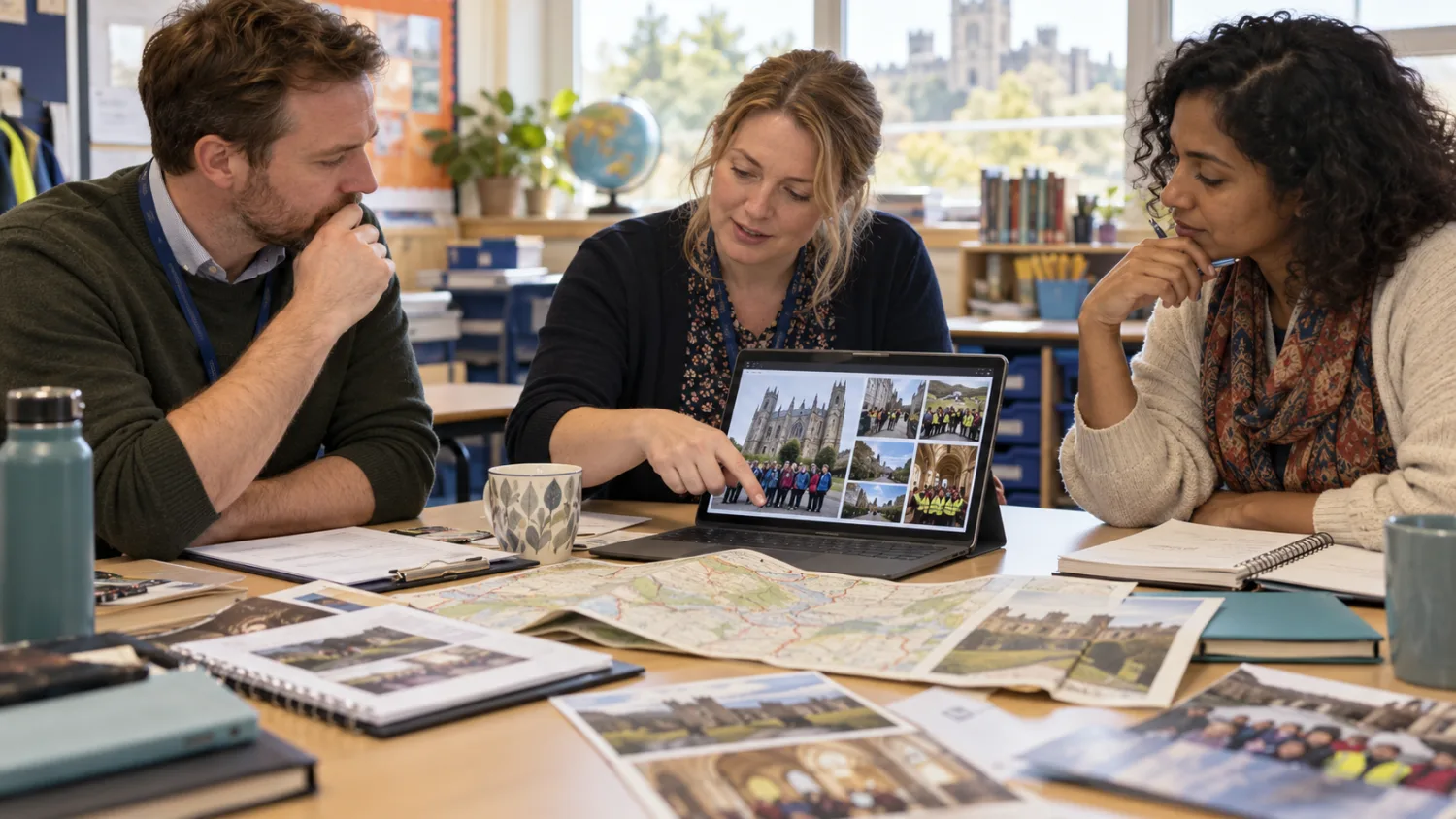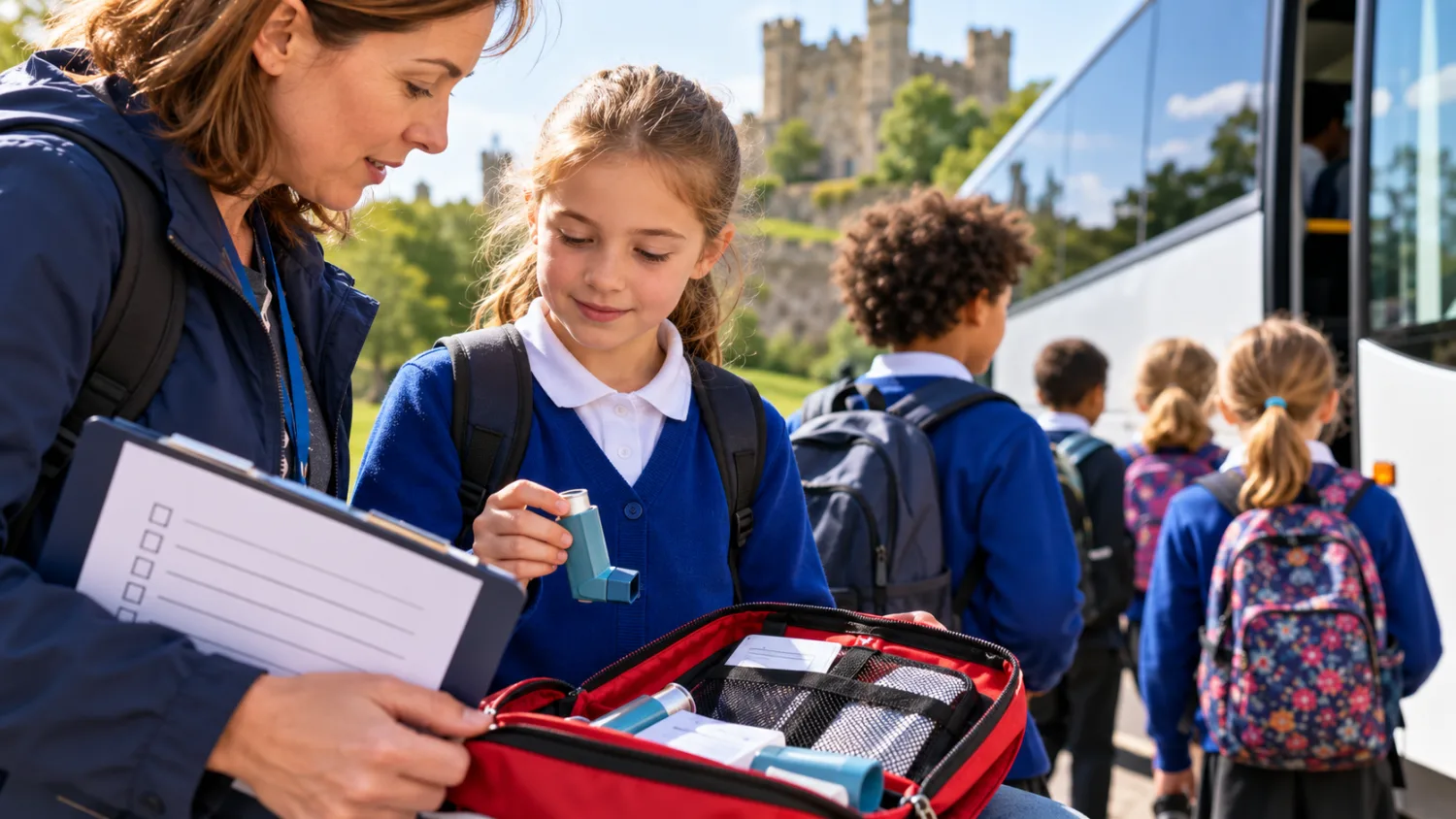
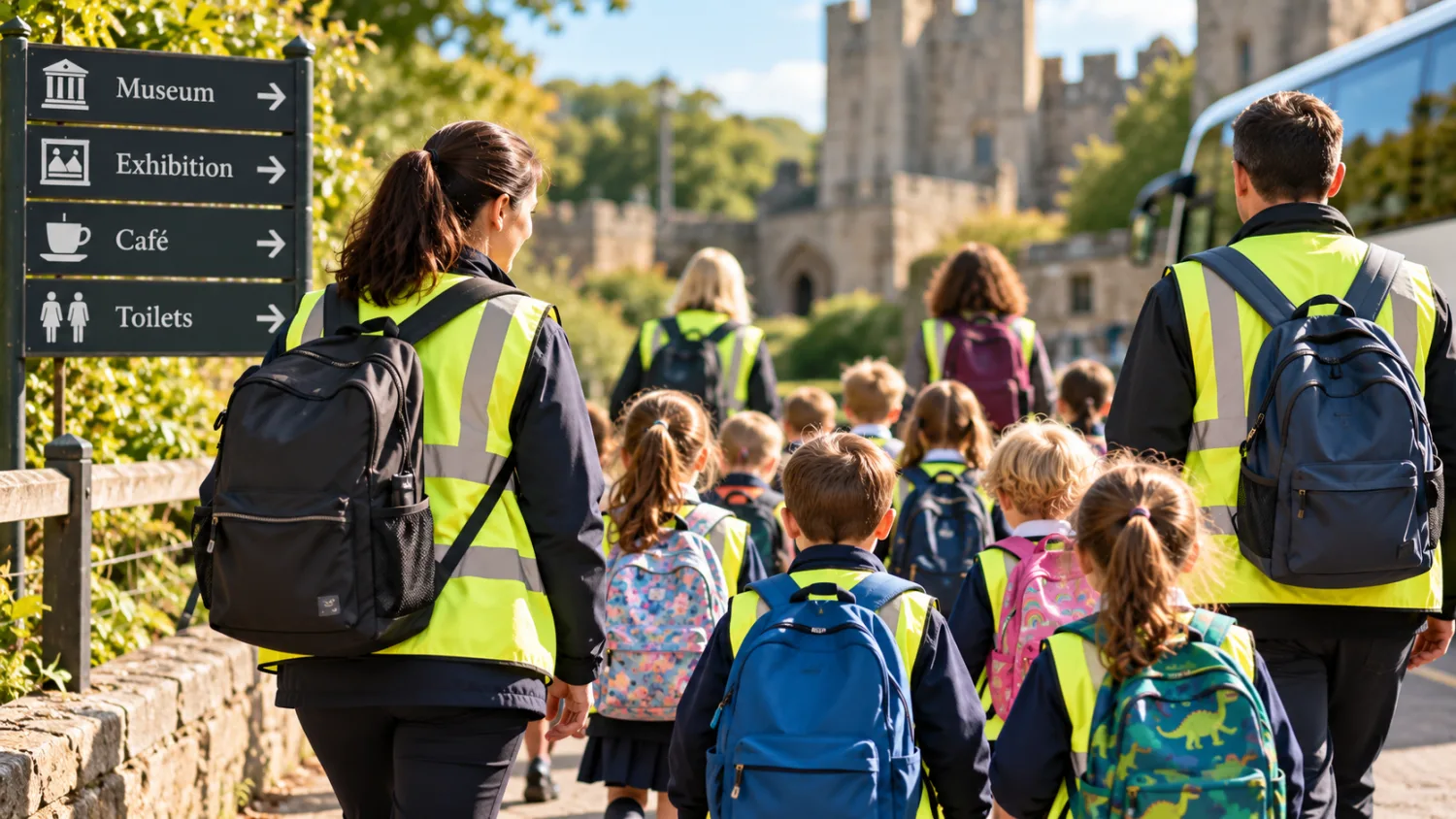
One of the first questions teachers ask when planning a school trip is:
“How many adults do we need?”
It sounds like there should be a simple answer.
One adult for every six pupils.
Or one for every ten.
Or perhaps different ratios for primary and secondary.
But for most school trips in England, there is no single statutory adult-to-pupil ratio that schools must use.
Current Department for Education guidance says schools should plan visits proportionately around the genuine risks involved. OEAP National Guidance is more explicit: staffing ratios are a risk-management issue and should be determined through risk assessment rather than by applying one fixed ratio to every group or activity.
That means the real question is not:
“What ratio are we allowed?”
It is:
“How many competent adults do we need to supervise this particular group effectively throughout this particular visit?”
A Year 10 group visiting a controlled museum is very different from a Reception class walking beside busy roads.
A coach trip to a theatre is different from fieldwork beside water.
A group with significant medical or SEND needs may require additional staffing even when the number of pupils is relatively small.
This guide explains how to make that decision sensibly.
There is no universal school-trip ratio
For ordinary educational visits, the law does not prescribe a standard numerical ratio for pupils and staff.
OEAP's April 2026 guidance says it is not possible to set definitive ratios for a particular age group or activity because staffing should follow the actual supervision needs of the visit.
That means figures such as
- 1:6;
- 1:10;
- 1:15
should not automatically be treated as legal requirements unless your employer, local authority, academy trust or specific provider has adopted them as its own rule.
Your school may still have internal guidance
Some local authorities and trusts publish indicative ratios or minimum staffing expectations.
If your school has such a policy, follow it.
But remember that an internal minimum is not automatically enough for every visit.
A higher level of supervision may be needed once you consider the actual group and activity.
Start with the pupils, not the calculator
The same number of pupils can require very different staffing.
Consider age and maturity
Ask:
- Can pupils follow instructions reliably?
- Can they remain with an agreed group?
- Can they respond appropriately if plans change?
Consider behaviour
A group with several pupils who:
- run off;
- ignore boundaries;
- require frequent individual support
may need more adults than another group of the same age.
Consider medical, emotional and SEND needs
OEAP guidance says staffing decisions should consider individual needs including behavioural, medical, emotional and educational needs.
For example, an additional adult may be needed because one pupil requires:
- 1:1 support;
- regular medication;
- mobility assistance;
- help managing sensory overload.
See How to Make a School Trip Work for Pupils With SEND and How to Plan a School Trip for Pupils With Medical Needs.
Then consider the environment
A ratio that works inside a controlled attraction may not work outside it.
Ask whether the group will be in
- a secure museum;
- a busy city centre;
- woodland;
- open countryside;
- a crowded public event;
- near water.
Public spaces normally need more thought
At a Christmas market, for example, pupils may mix with large crowds, move between stalls and cross public spaces.
That can justify smaller supervision groups than a booked workshop where one class remains together in a controlled room.
See Christmas Market School Trips: Learning Value, Safety and Crowds.
Walking routes matter too
A 20-minute walk involving:
- busy crossings;
- narrow pavements;
- several road junctions
may require more close supervision than the destination itself.
See How to Plan a Local Walking School Trip Safely.
Activity risk can change staffing during the same trip
One visit can contain several different supervision situations.
For example
A secondary-school science trip might include:
- coach travel;
- a classroom workshop;
- outdoor fieldwork beside a river.
The number of adults may remain the same.
But the way they are deployed should change.
Higher-risk activities may need specialist staff
DfE guidance says activities such as climbing, caving, trekking and watersports require appropriate risk assessment, and schools should consider the abilities of pupils and the competence of those leading the activity.
Provider instructors do not automatically solve your supervision requirement
You need to understand:
- who is responsible for the pupils;
- when the provider takes instructional control;
- what school staff are expected to do.
DfE guidance says responsibility should be clear when an outside organisation is involved, particularly if its staff take over supervision of pupils.
Plan for what happens if one adult becomes unavailable
This is one of the most useful tests of whether staffing is genuinely sufficient.
Imagine one member of staff has to leave
Perhaps they need to:
- accompany a pupil to hospital;
- stay with a sick child;
- deal with a transport problem.
Can the remaining adults still supervise everybody safely?
OEAP guidance specifically says staffing should take account of the possibility that a leader becomes indisposed or has to leave the group, for example to accompany a sick child to hospital.
This is why the smallest mathematically possible team may be a poor plan
Imagine:
30 pupils + 2 adults.
On paper that is 1:15.
If one adult leaves, you suddenly have:
30 pupils + 1 adult.
Would that still be manageable?
If not, the original staffing may have had too little resilience.
Early Years needs additional care
EYFS provision has statutory staff-to-child ratio requirements that differ according to children's ages and staff qualifications.
The current EYFS framework, effective from September 2026, also specifically requires providers to consider staff-to-child ratios when assessing the safety of outings.
Do not simply transfer classroom ratios to an outing
An outing may require more adults because of:
- roads;
- toileting;
- mobility;
- children becoming separated;
- the unfamiliar environment.
OEAP guidance notes that outings with Early Years children often need higher staffing than the statutory minimum and that in some situations even 1:1 supervision may be appropriate.
Follow your EYFS lead and setting policy
Do not rely on generic school-trip ratios for nursery-age children.
Parent volunteers can help, but count competence rather than bodies
Adding five adults does not automatically create strong supervision.
Every adult needs to understand
- which pupils they are responsible for;
- where they should be;
- what the boundaries are;
- what to do in an emergency.
Parent volunteers may be very useful
Especially for:
- younger children;
- local walking trips;
- museum groups;
- zoos and heritage visits.
But not every volunteer should automatically take sole responsibility for a group
The visit leader needs to be satisfied that adults are competent for the role they are being given.
Some situations may require school staff to remain directly responsible.
A parent can also become distracted by their own child
OEAP specifically highlights this as a factor schools should consider when using parents as helpers.
Do not count the coach driver as a normal supervising adult
The coach driver's job is to drive safely.
They should not normally be treated as part of the school's supervision team.
Local-authority educational-visit guidance, for example, commonly makes clear that a driver should not be included in the staffing ratio because driving duties need their full attention.
School staff still need to manage
- behaviour;
- seat belts;
- boarding;
- head counts;
- medical incidents.
If you are booking coach transport, see Coach Travel for School Trips: Questions to Ask Before Booking.
Residentials need a different kind of staffing plan
A residential is not simply a day trip with beds added.
You need supervision across the whole period
Consider:
- evenings;
- overnight emergencies;
- staff rest;
- pupils becoming ill;
- privacy and safeguarding.
The staff team needs resilience
One adult should not become the only workable supervisor because everybody else is technically off duty.
Consider the needs of the group
Mixed groups, medical needs, SEND and overnight support may all affect staffing.
There is no absolute national rule requiring male and female staff simply because a residential includes boys and girls, but schools need a sound plan for privacy, safeguarding and welfare. OEAP guidance emphasises planning around actual needs rather than blanket assumptions.
See Best Residential School Trip Centres in the UK when comparing potential venues.
Indicative examples: how staffing decisions might differ
The examples below are not statutory ratios.
They simply show how the same number of pupils can lead to different staffing decisions.
Example 1: Year 9 museum workshop
30 pupils.
The venue is controlled, pupils remain mainly together and behaviour is reliable.
A school might decide that:
3 competent adults
provide effective supervision.
Example 2: Year 4 city-centre visit
30 pupils.
The group will walk through public streets and divide into smaller groups.
The school might decide:
5 or 6 adults
are more appropriate.
Example 3: 20 pupils with several additional needs
A few pupils require close supervision and one has significant medical needs.
Even though the overall group is smaller, the school might need:
5 or more adults.
Example 4: Year 11 theatre trip
24 mature pupils.
Coach transport, booked seating and a controlled venue may allow a smaller team than the Year 4 city-centre visit.
The point is not the figures
The point is that supervision follows:
the group + activity + environment + staff competence.
Not age alone.
Ask whether the adults can actually be deployed effectively
A staffing plan is not just a head count.
Before leaving, decide
- who leads;
- who has each group;
- who manages medication;
- who has emergency contacts;
- who brings up the rear during walking sections.
Give adults manageable groups
If one teacher is notionally responsible for 25 pupils while four volunteers have one child each, the staffing may look generous overall but be badly deployed.
Think about transitions
Many supervision difficulties happen during:
- coach boarding;
- toilet breaks;
- lunch;
- moving between activities.
Those are often the points when pupils become separated.
Review staffing after the trip
You will learn more from the real visit than from the original spreadsheet.
Ask afterwards
- Did any group feel too large?
- Were adults in the right places?
- Could we manage an emergency?
- Was any additional staffing unnecessary?
DfE guidance says schools should evaluate educational visits afterwards and record incidents, accidents and near misses so future planning improves.
The AllSchools guide How to Evaluate Whether a School Trip Was Worthwhile includes a broader post-visit review.
A simple school-trip staffing checklist
Pupils
- How many pupils are going?
- What are their ages?
- How mature and independent are they?
Individual needs
- Are there SEND needs?
- Medical needs?
- Behaviour concerns?
Environment
- Is the venue controlled?
- Are there crowds?
- Roads?
- Water?
- Remote areas?
Activity
- Is specialist instruction required?
- Will groups separate?
- Will pupils have independent time?
Staff
- Are adults competent?
- Who is the visit leader?
- Who can administer medical support?
Emergency resilience
- What happens if one adult leaves?
- Can the remaining group still be supervised safely?
School policy
- Does your local authority or trust specify minimum staffing?
- Has the Educational Visits Coordinator approved the plan?
Frequently asked questions
Is there a legal staff-to-pupil ratio for school trips?
For most school trips in England, no single statutory ratio applies. Staffing should be based on risk assessment and effective supervision, taking into account the activity, environment, pupils and staff competence.
Is 1 adult to 10 pupils the rule?
No. Some schools or local authorities may use 1:10 as an internal guideline in certain situations, but it is not a universal national legal requirement for school trips.
Do primary schools need more adults than secondary schools?
Often, but not automatically. Younger pupils may require closer supervision, but the actual staffing decision should also consider behaviour, environment, activity and individual needs.
Can a teacher take pupils out alone?
In some low-risk situations, one competent leader may be sufficient if school policy allows it and the risk assessment supports it. However, schools should consider what happens if that adult becomes ill or unable to continue supervising. OEAP specifically highlights this issue.
Can teaching assistants count as supervising adults?
Yes, where they are competent and appropriately briefed for the responsibility they are given.
Can parents count in the adult ratio?
They can contribute to supervision where the visit leader is satisfied that they are suitable and competent for the role. They should receive clear instructions and responsibilities.
Can the coach driver count?
Normally no. Their responsibility is driving the vehicle safely, so schools should not generally rely on them as part of the supervision team.
Do pupils with SEND always need an extra adult?
No. Some pupils need no additional staffing, while others may require close or 1:1 support. Staffing should reflect the individual pupil's actual needs and the demands of the trip.
Does the venue's staff count towards our ratio?
Only if the school's arrangements clearly establish that they are taking responsibility for supervision during a defined activity. Do not simply count every employee at the venue as another supervising adult.
Do EYFS trips have different rules?
Yes. EYFS providers must meet statutory staff-to-child ratio requirements and must specifically consider staffing ratios when assessing outings. The outing may require more adults than the normal minimum.
Do residential trips need two adults?
There is no universal national numerical rule covering every residential in every circumstance, but staffing must provide effective 24-hour supervision and resilience if an adult becomes unavailable. Your employer or local authority may impose its own minimum requirements.
Who approves staffing for a school trip?
Schools should follow their own visit approval process. The Educational Visits Coordinator normally advises on risk management, staff competence and planning, while the headteacher or other authorised person may approve higher-risk visits. DfE guidance recommends schools appoint an Educational Visits Coordinator.
What is the safest ratio?
There is no universally safest numerical ratio. Ten pupils with the wrong adults can be poorly supervised; twenty pupils with a well-organised, competent team in a controlled environment may be managed very effectively.
Can we add more adults than the minimum suggested by school policy?
Yes, if risk assessment shows they are needed. Internal ratios should normally be treated as a baseline rather than a reason to ignore additional needs.
The most useful answer to:
“How many adults do we need?”
is not a number.
It is a process.
Look at the pupils.
Look at the environment.
Look at the activity.
Look at individual needs.
Look at staff competence.
Then ask what happens if something goes wrong.
If your supervision still works when:
- a pupil becomes ill;
- groups separate;
- the environment becomes busier than expected,
you probably have a much stronger staffing plan than one based solely on a generic ratio.
For the wider planning process, see School Trips and Educational Visits: Complete Planning Guide for UK Schools and How to Plan a School Trip Without the Stress.