School trips are among the most memorable experiences of a child’s education. Whether it’s a visit to a museum, a residential outdoor adventure, or a simple local walk, well-planned trips can bring learning to life in ways that classrooms cannot. They build confidence, deepen understanding, strengthen friendships, and connect pupils with the wider world.
However, organising a trip in the UK involves far more than booking transport and permission slips. Schools must balance educational value with rigorous safety standards, legal responsibilities, inclusion, and practical logistics. When done properly, trips become powerful teaching tools — not risks to manage.
This guide explains how to plan school trips that are safe, meaningful, and genuinely enriching for pupils.
Why School Trips Matter More Than Ever
Research consistently shows that experiential learning improves retention, motivation, and engagement. Pupils who see real-world applications of classroom topics are more likely to understand and remember them.
A Year 5 class visiting the Natural History Museum, for example, doesn’t just learn about evolution from a textbook. They encounter real fossils, models, and exhibits that make abstract concepts tangible. A geography field trip to a coastal area transforms diagrams into lived experience. Even a short visit to a local farm can deepen understanding of food systems, sustainability, and animal welfare.
Trips also support social development. Pupils learn independence, teamwork, and responsibility — especially on residential visits where they navigate unfamiliar environments.
Understanding Legal Duties and Safety Expectations
In the UK, schools have a clear duty of care when taking pupils off-site. Trips must comply with health and safety regulations, safeguarding policies, and local authority guidance.
Government guidance on educational visits emphasises risk assessment and appropriate supervision rather than banning activities. Schools are encouraged to enable enriching experiences while managing risks sensibly.
External guidance:
https://www.gov.uk/government/publications/health-and-safety-on-educational-visits
Risk management should not eliminate challenge or adventure. A carefully planned canoeing trip, for instance, can be perfectly safe with trained instructors and appropriate safety equipment.
Choosing a Trip With Genuine Educational Value
The strongest trips are directly linked to the curriculum or developmental goals.
For younger pupils, simple experiences can be highly effective. A local library visit supports literacy, while a walk around the community can reinforce geography or history lessons. Older pupils may benefit from subject-specific trips such as science centres, theatres, or industrial sites.
For example, a secondary school studying Shakespeare might attend a live performance rather than relying solely on classroom reading. Seeing professional actors interpret the text often unlocks understanding and engagement.
Trips should ideally answer a clear question: What will pupils learn here that they cannot learn as effectively in school?
Risk Assessment Without Losing the Experience
Risk assessment is essential, but it should be proportionate.
A visit to a city museum involves different risks from a residential activity centre or overseas trip. Schools typically consider:
-
Transport safety
-
Supervision ratios
-
Medical needs
-
Accessibility
-
Environmental hazards
-
Emergency procedures
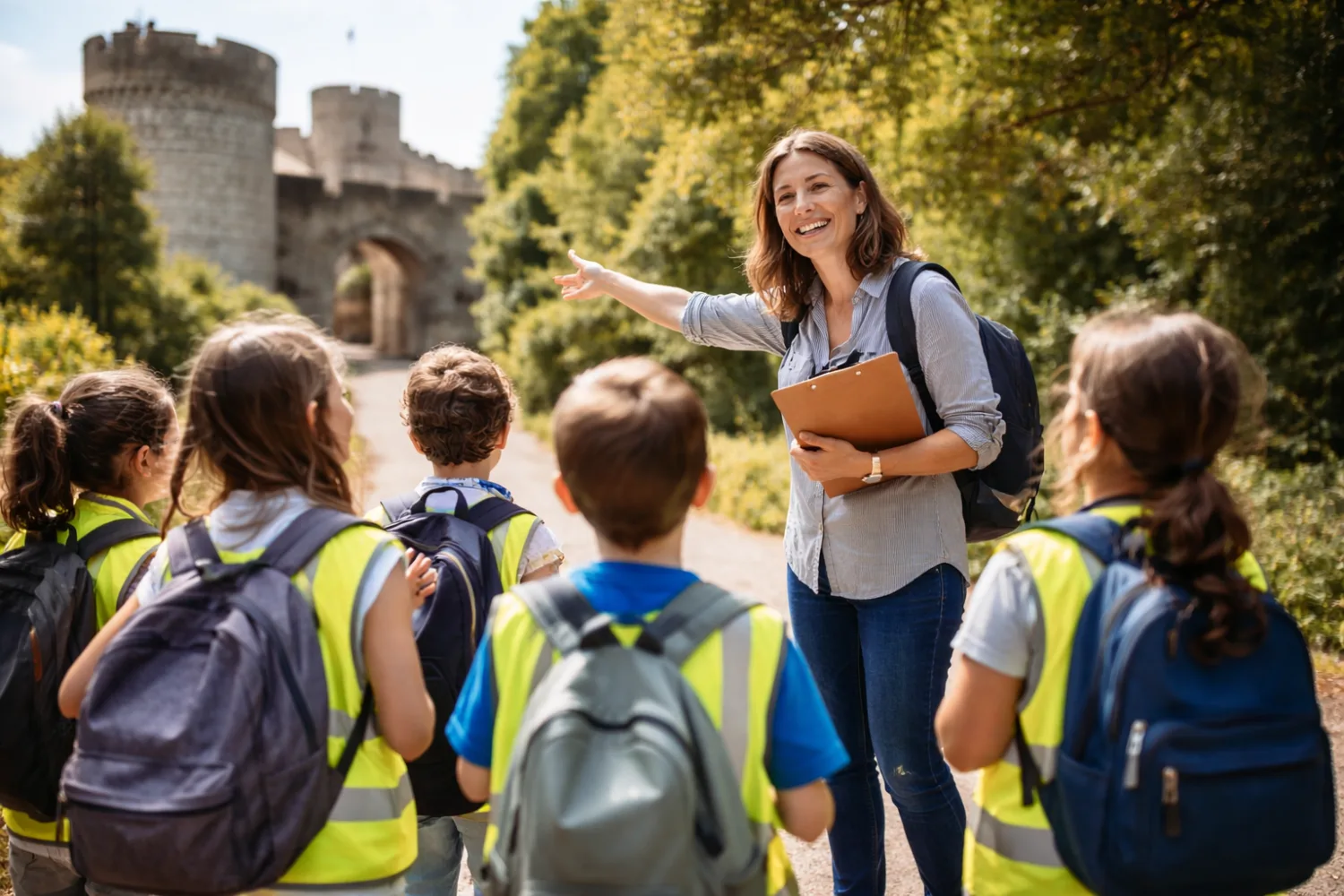
For instance, when taking pupils to a coastal location, staff must account for tides, weather changes, and safe boundaries. Simple measures such as high-visibility jackets, clear meeting points, and buddy systems can dramatically reduce risk.
Importantly, pupils themselves should be briefed on safety expectations in age-appropriate language. When children understand why rules exist, compliance improves.
Ensuring Inclusion for All Pupils
A truly successful trip is one every pupil can access.
Schools must consider physical disabilities, special educational needs, medical conditions, financial barriers, and cultural considerations. Adjustments might include accessible transport, alternative activities, or additional staff support.
For pupils with special educational needs, preparation is especially important. Visiting a venue’s website beforehand, using visual schedules, or arranging a familiarisation visit can reduce anxiety.
You can explore broader SEN support approaches in schools here:
https://allschools.co.uk/resources/the-ultimate-guide-to-sen-support-and-ehcps-for-parents
Financial inclusion also matters. Some schools use voluntary contributions, fundraising, or hardship funds to ensure no child misses out.
The Importance of Preparation Before the Trip
Learning begins before pupils leave school.
Pre-trip lessons can introduce key concepts, vocabulary, or historical context. For example, before visiting a castle, pupils might study medieval life, defensive architecture, and relevant historical figures. This preparation transforms the visit from sightseeing into active learning.
Behaviour expectations should also be clearly explained. Pupils need to know how to behave in public spaces, on transport, and at the venue.
Parents should receive detailed information including:
-
Itinerary
-
Contact arrangements
-
Clothing requirements
-
Medical instructions
-
Emergency procedures
Clear communication builds trust and reduces last-minute confusion.
Making the Most of the Experience During the Trip
Once on site, staff should focus on engagement, not just supervision.
Encouraging pupils to ask questions, complete tasks, or record observations helps turn passive visits into active learning experiences. A simple worksheet or scavenger-style activity can guide attention without overwhelming pupils.
For example, at a science centre, pupils might be asked to identify three exhibits demonstrating energy transfer. At a historical site, they could sketch architectural features or note evidence of daily life.
Staff enthusiasm matters too. When teachers show curiosity and interest, pupils mirror that attitude.
Supporting Wellbeing and Behaviour
Trips can be exciting but also tiring and overstimulating. Younger pupils, in particular, may become overwhelmed.
Regular rest breaks, hydration, and predictable routines help maintain wellbeing. Clear group structures — such as assigning pupils to specific adults — improve safety and reduce anxiety.
Trips can also support mental health. Outdoor experiences, social bonding, and a break from routine often boost mood and confidence. Schools increasingly recognise these benefits as part of broader wellbeing strategies.
Related reading:
https://allschools.co.uk/resources/the-role-of-exercise-in-supporting-pupils-mental-health
Reflecting After the Trip: Turning Experience Into Learning
The educational impact continues after returning to school.
Follow-up activities help pupils process and consolidate what they experienced. These might include:
-
Writing reports or diary entries
-
Creating presentations or displays
-
Group discussions
-
Linking observations back to curriculum topics
For example, after a visit to a recycling facility, pupils could design posters about waste reduction or conduct a school recycling audit.
Reflection also allows staff to evaluate the trip’s success and identify improvements for future visits.
Simple Examples of Effective UK School Trips
Not every trip needs to be complex or expensive.
A primary class might walk to a local park to study habitats and seasonal changes. Pupils can collect leaves, observe wildlife, and discuss environmental conservation.
A secondary school geography group might conduct fieldwork along a river, measuring flow speed and analysing erosion patterns.
Even visiting a local supermarket can support maths and citizenship learning by exploring pricing, supply chains, and nutrition labels.
These everyday experiences often provide the richest connections between classroom learning and real life.
Building Positive School–Community Relationships
School trips also strengthen ties with local organisations, museums, charities, and businesses. Community partnerships can provide expert knowledge, specialised facilities, or volunteering opportunities.
Long-term relationships may lead to repeat visits, tailored workshops, or collaborative projects that benefit both pupils and the wider community.
Final Thoughts
Planning safe and educational school trips in the UK requires careful preparation, thoughtful risk management, and a clear focus on learning outcomes. When done well, trips offer something no textbook can replicate: direct experience.
They help pupils see the relevance of education beyond the classroom, build confidence, and create lasting memories. From a simple local walk to a multi-day residential adventure, every well-planned trip can become a powerful part of a child’s educational journey.
In an increasingly digital world, real-world experiences matter more than ever. With sensible planning and a commitment to inclusion and safety, school trips remain one of the most valuable investments schools can make in their pupils’ development.