A school trip should not become automatically off-limits because a pupil has asthma, diabetes, epilepsy, a severe allergy or another medical condition.
But it may require more planning.
The school needs to know:
- what the pupil needs during an ordinary day;
- what could go wrong away from school;
- which staff need to know what;
- what medication must travel with the pupil;
- how quickly emergency help could be reached;
- whether transport, food or activities need adjusting.
Current Department for Education guidance for England says schools should actively support pupils with medical conditions to participate in school trips and visits, making reasonable adjustments where needed unless clinical evidence says participation is not possible. Schools should use risk assessment, consultation with parents and pupils and, where appropriate, advice from healthcare professionals to plan safe participation.
The aim is not to eliminate every imaginable risk.
It is to understand the pupil's actual needs and make the trip workable and safe.
This guide explains how to do that.
Start planning early enough to make adjustments
Medical planning should not begin the afternoon before departure.
If a pupil has a known medical condition, identify this during the early trip-planning stage.
Ask what changes because the trip is happening
For example:
- Will medication need to be administered away from school?
- Will meals happen at a different time?
- Will there be substantially more walking?
- Will the pupil be far from normal medical support?
- Will the journey be unusually long?
- Will the activity expose the pupil to a known trigger?
Do not assume the school-day arrangement automatically transfers
A pupil may manage perfectly well in school because:
- medication is stored nearby;
- trained staff are available;
- food is predictable;
- the healthcare plan is familiar to everyone involved.
A visit changes that environment.
The plan needs to travel too.
For the wider organisational side, see How to Plan a School Trip Without the Stress.
Use the pupil's existing healthcare plan
If a pupil already has an individual healthcare plan, that should normally be the starting point.
DfE statutory guidance says an individual healthcare plan should explain the pupil's medical needs and, where relevant, what constitutes an emergency and what staff should do.
Review whether the plan works for this particular visit
Ask:
- Does the trip create any new triggers?
- Will medication timings change?
- Is the pupil likely to need additional rest?
- Will food or hydration arrangements differ?
- Does the plan need a trip-specific addendum?
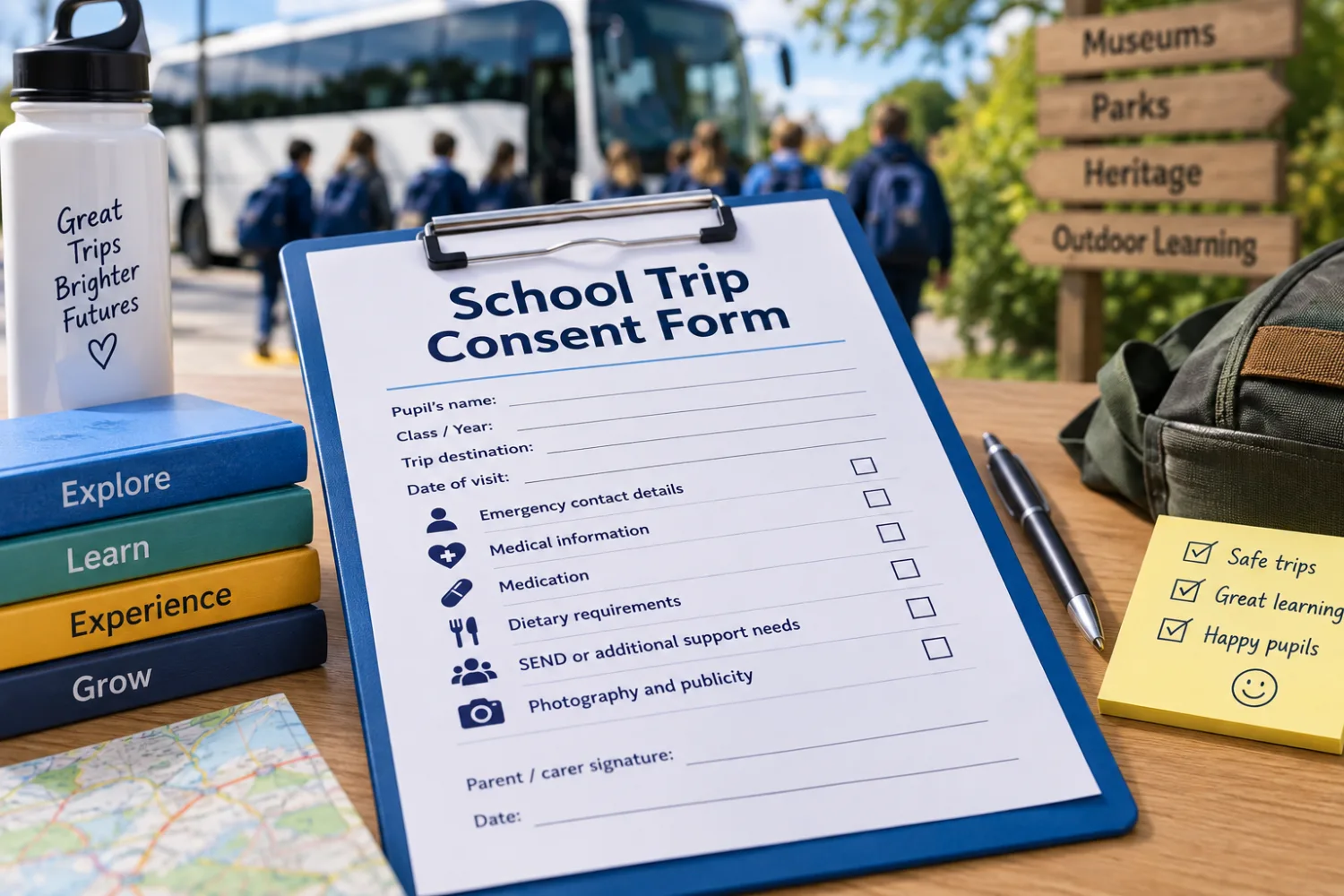
Do not replace a detailed plan with a consent-form note
A box saying:
“Asthma – inhaler required”
may be useful as a prompt.
It is not a substitute for the information staff actually need.
Consult the people who know the pupil
That may include:
- the pupil;
- parents or carers;
- the school nurse;
- relevant healthcare professionals;
- staff who support the pupil routinely.
DfE guidance specifically recommends consultation with the pupil, family and relevant healthcare professionals when planning participation in trips.
Update medical information before departure
Even where the school already holds medical information, check whether anything has changed.
Useful questions include
- Has medication changed?
- Has dosage changed?
- Have there been any recent reactions or episodes?
- Are there any new triggers?
- Has emergency guidance changed?
Use the consent process to confirm, not recreate, records
A sensible form might ask:
“Does the school currently hold accurate information about your child's medical needs and medication?”
Then provide space for updates.
That is usually better than asking parents to rewrite an entire medical history for every visit.
See School Trip Consent Forms: What Information Should Schools Collect?.
Plan medication in practical detail
Medication should not be treated as a line on the checklist that simply says:
“Bring medication.”
Clarify
- what medication is required;
- who carries it;
- who administers or supervises it;
- when it is required;
- where it will be stored;
- whether refrigeration is needed;
- what happens if the trip is delayed.
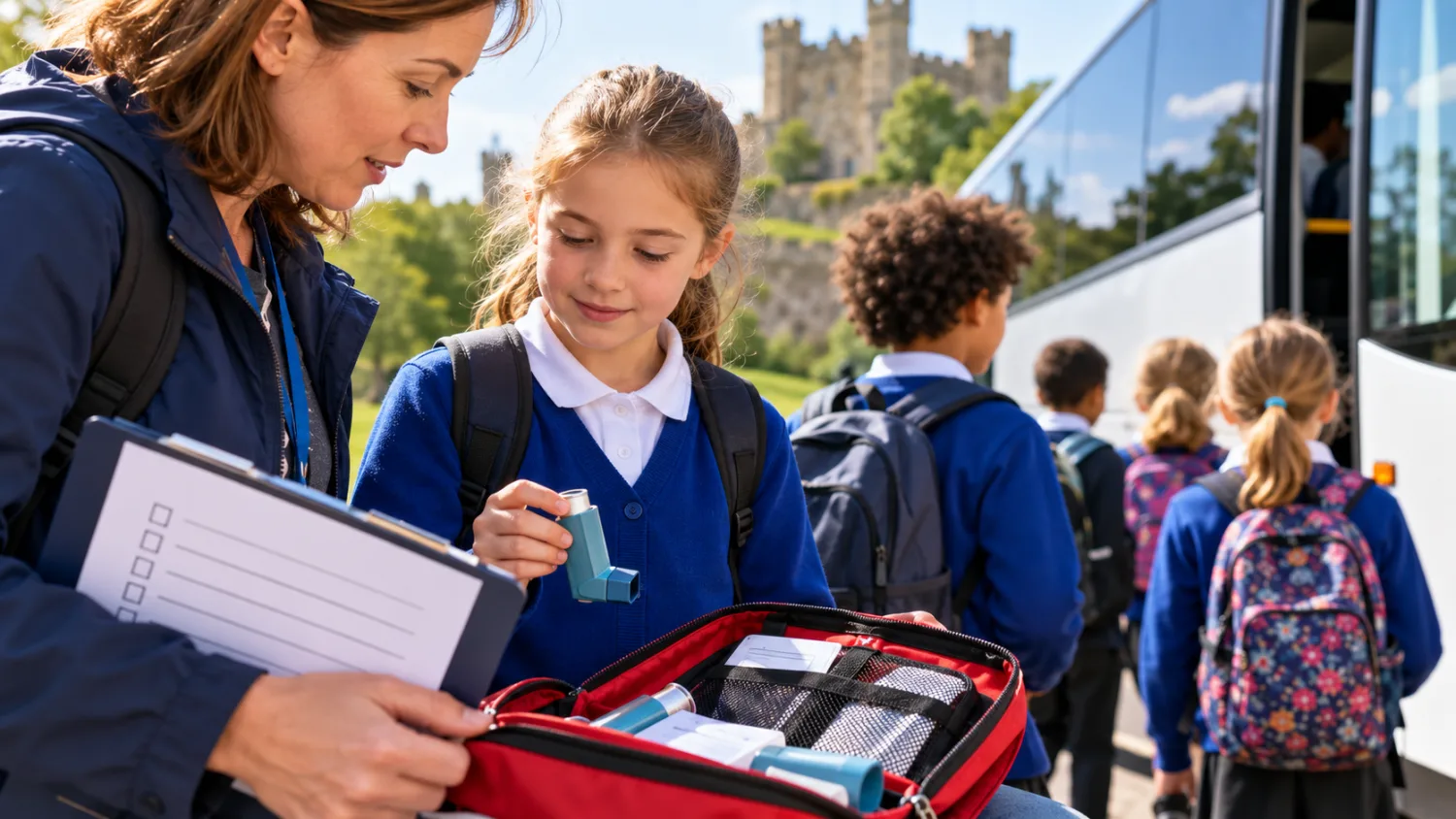
Essential medication should remain accessible
An inhaler, adrenaline auto-injector or emergency seizure medication is of little use if it is locked in luggage under a coach.
Check expiry dates and supply
Before departure, confirm:
- the medication is present;
- it is in date;
- there is enough for the whole visit;
- any required backup is available.
Follow existing school procedures
DfE guidance includes templates and expectations for parental agreement to administer medicines and keeping records of medicine administered. A school trip should normally use the school's established medicines procedures rather than create an improvised separate system.
Make emergency arrangements specific
Every school trip needs emergency planning.
A pupil with a significant medical condition may require additional detail.
Staff should know
- what symptoms require immediate action;
- which medication should be given;
- when to call 999;
- who contacts parents;
- which adult stays with the pupil;
- who continues supervising the rest of the group.
DfE guidance says schools should have emergency arrangements for all school activities, wherever they take place. Where a pupil has an individual healthcare plan, it should clearly define what counts as an emergency and what action should be taken.
Know where you are
This sounds obvious until an emergency happens.
Staff should know:
- the venue address;
- the precise location if on a large site;
- where the coach is;
- how emergency services can reach the group.
Plan for the group as well as the pupil
If one member of staff accompanies a child to hospital, does supervision remain adequate for everybody else?
DfE guidance says if a child needs to go to hospital, a staff member should stay with them until a parent arrives or accompany them in the ambulance where necessary.
Make the risk assessment pupil-specific where necessary
A general venue risk assessment will not necessarily cover the medical needs of an individual pupil.
Consider the interaction between the condition and the visit
For example:
- Does prolonged walking affect blood glucose management?
- Could pollen or animal exposure trigger asthma?
- Could strobe lighting affect a pupil with epilepsy?
- Could food preparation create an allergy risk?
- Could heat increase dehydration risk?
Do not overcomplicate the paperwork
The risk assessment should record meaningful additional controls.
For example:
“Pupil carries prescribed inhaler; named staff member checks it is present before departure; inhaler remains with pupil throughout activity; venue first-aid point identified.”
That is more useful than a generic line saying:
“Medical risk – staff vigilant.”
For the wider framework, see How to Write a School Trip Risk Assessment.
Choose the venue with medical needs in mind
A venue that works well for most pupils may create avoidable difficulty for a child with medical needs.
Ask the venue
- Where is the first-aid room?
- Is there somewhere private to administer medication?
- Can medication be refrigerated if required?
- How far is the group from vehicle access?
- Are there places to rest?
- Can staff bring their own medical equipment?
For allergies, ask about food processes
If catering is provided:
- Can the venue handle the allergy safely?
- How is cross-contamination managed?
- Who should the school speak to?
Get important answers in writing
Do not rely on:
“I'm sure the café can sort something out.”
For general venue due diligence, see Questions Every Teacher Should Ask Before Booking a School Trip Venue and What Schools Need From a School Trip Provider Before They Book.
Think about food, allergies and meal timing
Food can be central to medical planning.
This may matter for pupils with
- severe food allergies;
- diabetes;
- coeliac disease;
- other medically required diets.
Ask practical questions
- Who is providing food?
- What ingredients are used?
- Can pupils bring their own food?
- Will lunch be later than normal?
- Are emergency snacks required?
Do not let the timetable accidentally create the medical risk
A delayed coach or late lunch may be inconvenient for most pupils.
For some pupils, it can affect medical management.
Build some flexibility into the plan.
Plan transport around medical needs
The journey itself may be the longest continuous part of the day.
Consider
- access to medication;
- planned rest stops;
- toilet access;
- travel sickness;
- temperature;
- where the pupil sits.
Tell the coach operator what affects the booking
You do not need to give an external company unnecessary medical details.
But you may need to confirm practical requirements such as:
- wheelchair access;
- space for medical equipment;
- rest-stop needs;
- access to luggage.
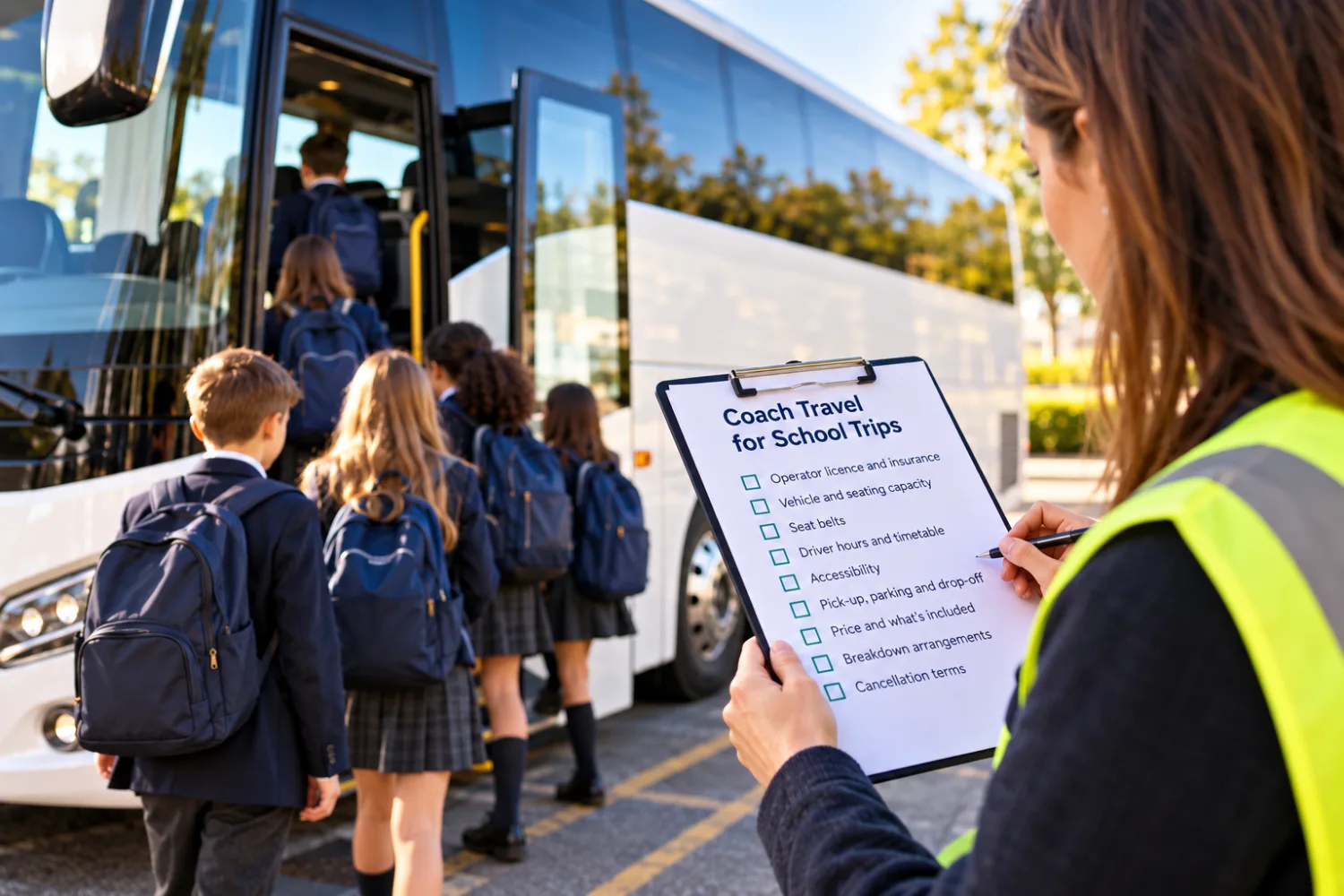
See Coach Travel for School Trips: Questions to Ask Before Booking.
Make sure the right staff know the right information
Medical information should be available to people who need it.
It should not be unnecessarily shared with everybody.
Relevant staff may need to know
- the condition;
- warning signs;
- where medication is;
- what to do in an emergency.
Identify named responsibility
Do not rely on:
“Someone will remember the medication.”
Decide:
- who checks it before leaving;
- who carries it;
- who is trained to use it;
- who records administration where necessary.
Consider staff absence
If the one member of staff familiar with the pupil becomes unavailable on the morning of the trip, can the visit still run safely?
Build enough resilience into the staffing plan.
Do not confuse inclusion with taking unnecessary risk
The starting point should be:
“How can this pupil participate?”
not:
“Would it be easier if they stayed behind?”
DfE guidance says pupils with medical conditions should be actively supported to participate in trips, sporting activities and visits, with appropriate adjustments.
But inclusion does not mean ignoring clinical advice
Sometimes a particular activity genuinely may not be safe.
That judgement should be based on:
- the pupil's actual condition;
- professional advice where relevant;
- the specific activity;
- the adjustments available.
Look for alternatives
For example:
- an alternative activity at the same venue;
- additional breaks;
- a shorter route;
- different transport;
- extra staffing.
For broader inclusion planning, see How to Make a School Trip Work for Pupils With SEND.
Check everything again on the morning of the trip
The plan may have been excellent three weeks ago.
The question on departure morning is whether the essentials are physically present.
Before leaving, confirm
- required medication is present;
- emergency medication is accessible;
- relevant staff are present;
- emergency contacts are available;
- the healthcare plan is accessible;
- the pupil is well enough to participate that day.
Ask whether anything changed overnight
A parent may need to tell staff:
- the pupil was unwell;
- medication was already administered;
- symptoms have changed;
- the child has had a recent reaction or episode.
Do not rush the check because the coach is waiting
Five minutes spent confirming a medical plan is better than discovering halfway down the motorway that essential medication is still in the school office.
For residential visits, plan several days rather than one
Residential visits add another level of complexity.
Think about
- overnight medication;
- secure storage;
- refrigeration;
- sleep disruption;
- meal planning;
- staff handovers;
- what happens if the pupil becomes unwell overnight.
Carry enough medication
Consider whether contingency supply is needed if:
- the trip is delayed;
- travel is disrupted;
- medication is accidentally damaged.
Make responsibilities clear across shifts
A plan that works at 2pm must still work at 2am.
If you are planning a residential, see Best Residential School Trip Centres in the UK for venue considerations.
A medical-needs school trip checklist
Before booking
- Identify known medical needs.
- Check whether the venue can make required adjustments.
- Consider transport and emergency access.
During planning
- Review the individual healthcare plan.
- Consult the pupil and family.
- Seek healthcare advice where necessary.
- Add relevant controls to the risk assessment.
Medication
- Confirm medicine and dosage.
- Check expiry date.
- Assign responsibility.
- Plan storage and access.
Emergency arrangements
- Know the warning signs.
- Know when to call emergency services.
- Know who contacts parents.
- Plan how the rest of the group will be supervised.
On the day
- Check medication is physically present.
- Confirm staff roles.
- Check for any medical updates.
- Keep emergency information accessible.
Frequently asked questions
Can a pupil with a medical condition go on a school trip?
Usually, yes. DfE guidance says schools should actively support pupils with medical conditions to participate in school trips and make appropriate adjustments unless clinical evidence indicates this is not possible.
Does every pupil with a medical condition need a separate risk assessment?
Not necessarily a completely separate document, but the trip risk assessment should account for any additional relevant risks and controls created by the pupil's medical needs.
Should the school ask a GP for permission before every trip?
No. Healthcare advice may be appropriate where the pupil's condition or proposed activity creates uncertainty, but routine visits do not normally require a new medical opinion simply because a pupil has a known condition.
Who should carry medication on a trip?
This depends on the pupil, medication and school policy. Some pupils may carry their own medication where appropriate, while staff may hold other medicines. Emergency medication must remain readily accessible.
Can medicine be kept in the coach luggage compartment?
Essential or emergency medication should be accessible when needed. Storage arrangements should reflect the medication's instructions and the pupil's healthcare plan.
What if a pupil needs medication during the visit?
Follow the school's existing medicines procedure and the pupil's healthcare plan, including any parental authorisation and recording requirements.
What if a pupil needs emergency hospital treatment?
Follow the pupil's emergency plan and call emergency services where required. DfE guidance says a member of staff should stay with the child until a parent arrives, or accompany them in the ambulance where necessary.
Should all adult volunteers be told about the pupil's condition?
Only people who genuinely need the information should receive it. Staff directly responsible for the pupil should know enough to keep them safe and respond appropriately.
What if the parent says the pupil can go but school staff are worried?
Discuss the specific concern with the family and relevant healthcare professionals where appropriate. Decisions should be based on the actual risk, the pupil's plan and the adjustments available rather than assumptions about the diagnosis.
Should a pupil with severe allergies eat venue-provided food?
Only where the school and family are satisfied that the arrangements are suitable. Ask the venue specific questions about ingredients and cross-contamination rather than relying on general assurances.
What if the pupil becomes unwell on the morning of the trip?
Use the normal school and healthcare-plan decision-making process. A booked trip should not create pressure to send a child who is not medically well enough to participate safely.
Can a school exclude a pupil from a trip because planning is difficult?
Difficulty alone is not a good reason. Schools should consider reasonable adjustments and ways to support participation. Where a pupil is disabled, duties under equality law may also be relevant. GOV.UK confirms schools should make reasonable adjustments for disabled pupils.
Does the school need a fresh consent form for every medical condition?
No. The school should use accurate existing medical records and healthcare plans, with updated information where needed. Whether a separate trip consent form is required depends on the nature of the visit and school arrangements.
Planning a school trip for a pupil with medical needs is not mainly about adding more paperwork.
It is about making sure the normal safety net that exists in school still exists when the pupil is somewhere else.
Know the condition.
Know the plan.
Know where the medication is.
Know who is responsible.
Know what an emergency looks like.
Know what the venue and journey change.
Then make the adjustments that allow the pupil to take part as fully as possible.
The strongest medical planning is usually quiet and almost invisible on the day.
The pupil gets on the coach.
They join the visit.
The medication is where it should be.
Staff know what to do.
And the medical condition becomes one part of the planning rather than the reason the pupil misses the experience.