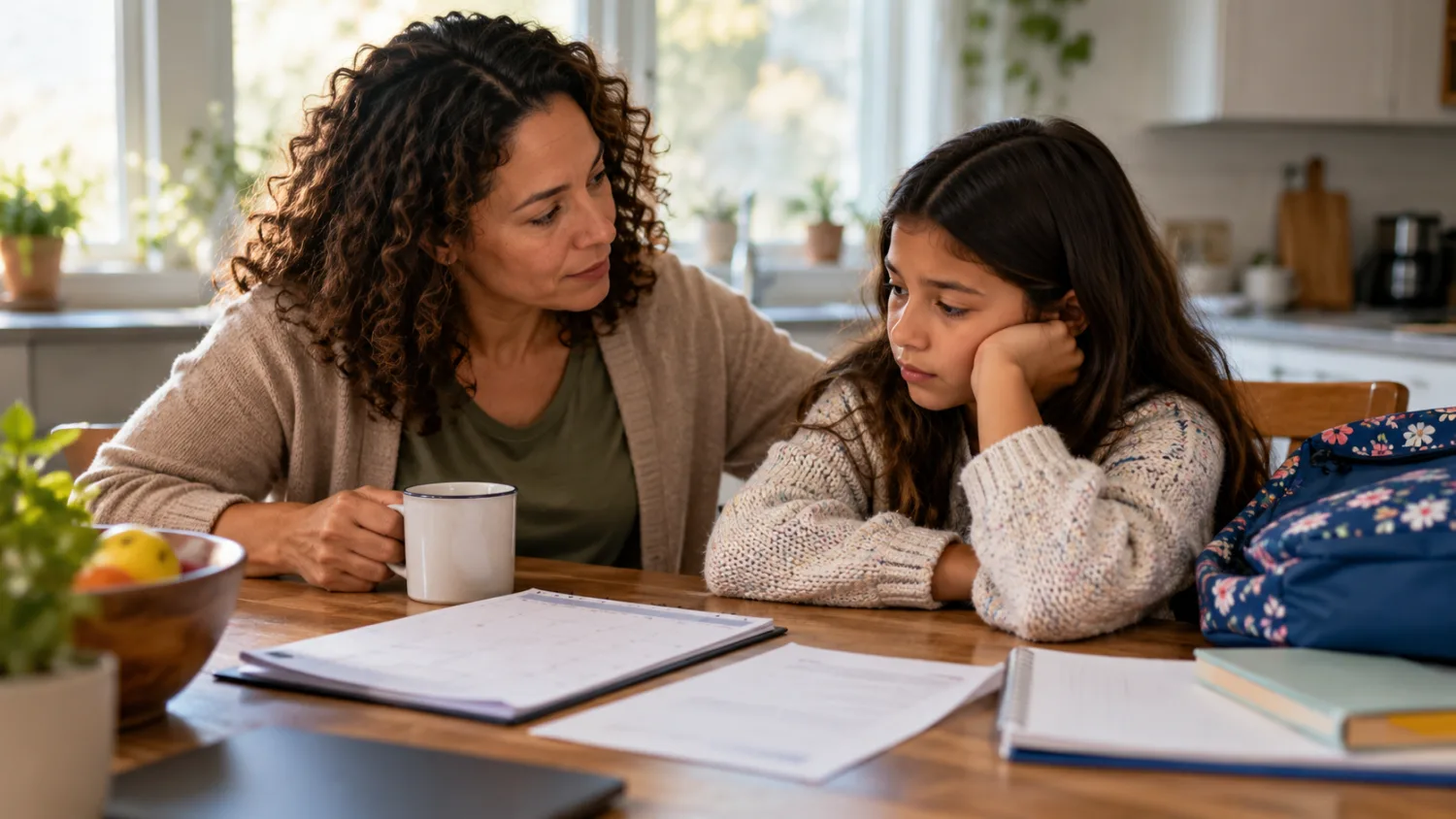
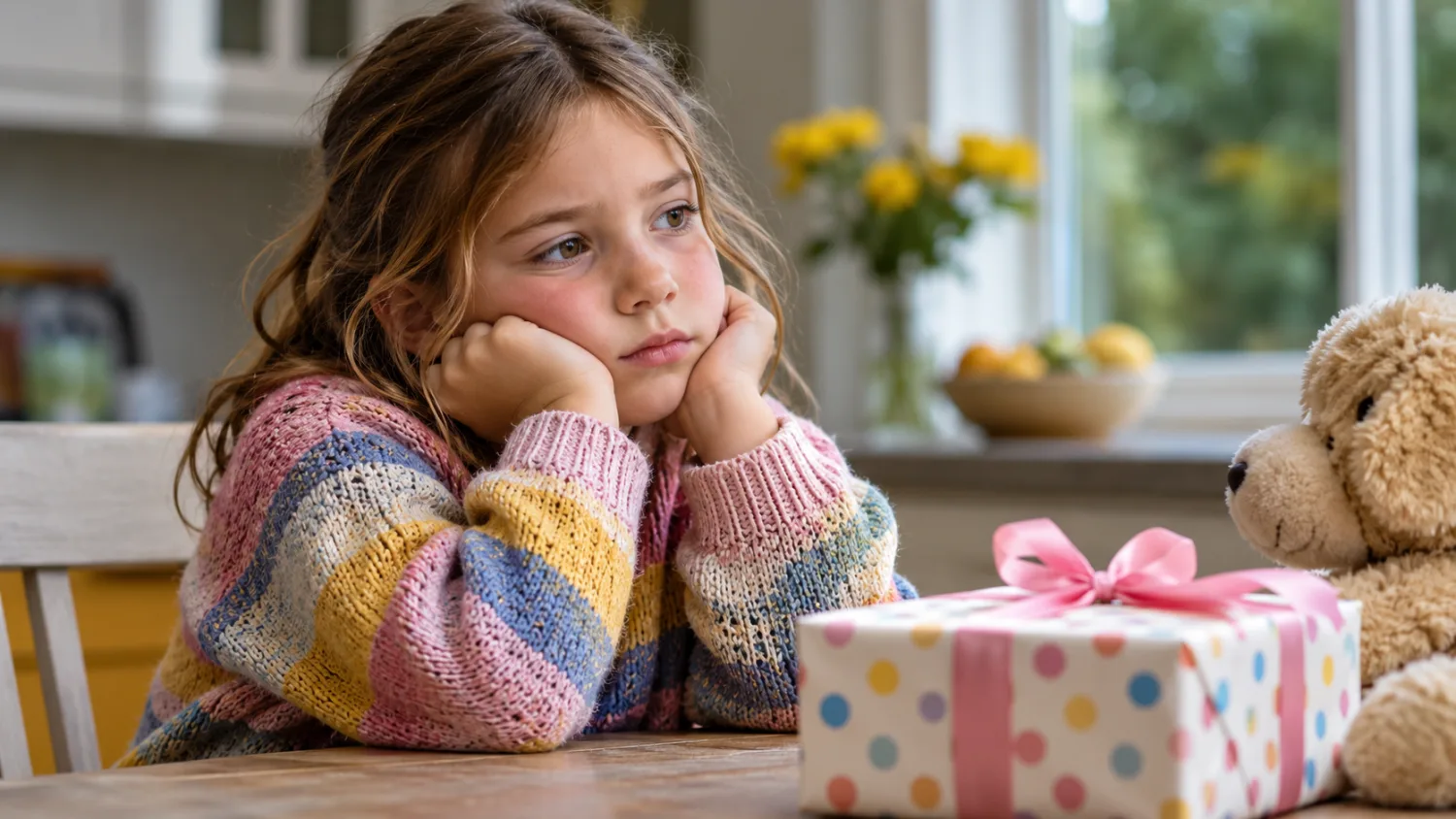
Few things make a parent feel quite as helpless as watching their child realise they have not been invited.
Perhaps the class is talking excitedly about a birthday party on Monday morning.
Your child suddenly understands that almost everyone else seems to have been there.
Or you see photographs in a parent WhatsApp group and realise several of your child's friends spent Saturday together without them.
Sometimes your child shrugs.
Sometimes they cry.
And sometimes they insist:
“I don't care.”
while clearly caring very much.
Your first instinct may be to fix it.
You might want to message the other parent, contact the teacher or immediately organise your own party and invite everybody.
Usually, it is better to slow down first.
Children are not going to be invited to every party, sleepover or group activity. Families have limits on space, money and numbers, and friendships naturally change.
But repeated exclusion can also be painful, particularly when it reflects difficulties your child is already experiencing at school.
The useful question is not simply:
“Why wasn't my child invited?”
It is:
“Is this an ordinary disappointment, or is it telling us something important about their friendships?”
Start by finding out how your child actually feels
Parents can sometimes become more upset by an exclusion than the child themselves.
Your child may be disappointed but move on quickly.
Or they may appear calm while feeling deeply embarrassed.
So begin with them.
You might say:
“I heard some people talking about the party. How did that feel for you?”
Then listen.
Avoid immediately saying:
“That's terrible. I can't believe they did that to you.”
Your child may not have interpreted the situation that strongly until you did.
Equally, avoid dismissing it with:
“You can't be invited to everything.”
That may be true, but it does not help much when they are hurting.
A better response might be:
“I can understand why that feels upsetting.”
You can acknowledge the feeling without deciding yet what the event means.
One missed invitation does not automatically mean exclusion
Birthday parties come with practical limits.
A family may have room for six children rather than thirty.
The child may have invited only football friends, cousins or a small friendship group.
Sometimes children who get along perfectly well at school are simply not close enough to be included in every social event.
This is one of the uncomfortable parts of friendship that children gradually learn.
Not every friend is an equally close friend.
Not every friendship continues forever.
And being liked does not mean being invited to everything.
Childline's guidance on friendship problems makes a similar point: friendships change, people sometimes drift apart and disagreements do not automatically mean a friendship is over.
So if this is the first missed invitation and your child otherwise seems socially settled, you may not need to do anything beyond helping them cope with the disappointment.
What matters more is the pattern
A different picture emerges when your child is repeatedly the one left out.
Perhaps several parties have happened without them.
Perhaps their classmates discuss plans in front of them deliberately.
Perhaps they are removed from group chats, told everyone is meeting except them or repeatedly discover that their friendship group has arranged something they were specifically excluded from.
Then the issue is no longer simply one birthday party.
It may be worth asking how things are going more generally.
Is your child spending breaktimes with other children?
Do they have one or two people they genuinely trust?
Are they being included in games and group work?
Have they recently fallen out with somebody?
Are they telling you that they have nobody to play with?
If this is part of a wider pattern of loneliness, see My Child Says They Have No One to Play With at School.
Try not to contact the other parent immediately
This is tempting.
Especially if you know the family well.
You may want to send:
“I noticed Ella wasn't invited. Has something happened?”
Occasionally that conversation may be appropriate.
But it is rarely the best first step.
The other family is entitled to decide whom they invite to a private event.
Asking for an explanation can put both parents and children in an awkward position, particularly if the simple answer is that the children are not as close as you thought.
Worse, your child may be horrified to discover that you contacted another parent about their invitation.
Before doing anything, ask yourself:
“Am I trying to solve my child's problem, or my own discomfort about seeing them disappointed?”
If there is a genuine friendship conflict, help your child understand it first.
Do not try to buy your way out of the problem with a bigger party
Another understandable reaction is:
“Fine. We'll organise an amazing party and invite everyone.”
That may make you feel better.
It does not necessarily help your child.
Friendship is not a competition in hospitality.
A child who feels excluded needs genuine connection, not proof that their family can host a better event.
If your child's own birthday is approaching, involve them in choosing the people they actually enjoy spending time with.
A small party with three comfortable friendships may do far more for confidence than a huge event designed to demonstrate popularity.
The goal is not to get your child invited everywhere.
It is to help them build relationships in which they feel wanted.
Help your child widen their friendship world
When children feel excluded, they can become intensely focused on the group that is excluding them.
They may think:
“If those four people don't want me, nobody wants me.”
That is rarely true.
Sometimes the most useful response is to gently broaden their opportunities.
There may be another classmate they get on well with but rarely see outside school.
A sports team, art club, Scouts, Guides, drama group, music activity or other interest can introduce friendships that are not tied to one classroom social hierarchy.
This does not mean saying:
“Forget your friends and find better ones.”
That can feel dismissive.
Instead, help your child create more places where friendship can develop naturally.
This can be especially helpful for shy children who may need more time and repeated contact before friendships become comfortable. See Helping Shy Children Build Confidence at School for more ideas.
Know when exclusion starts to look like bullying
Not inviting somebody to a private party is not automatically bullying.
Children are allowed to choose their friends.
But exclusion can become part of bullying when it is repeated and deliberately used to hurt, humiliate or isolate somebody.
For example, the concern is much greater if pupils repeatedly arrange activities specifically to exclude one child, announce the plans in front of them to cause distress or use group chats to demonstrate that everyone else has been included.
Childline's guidance specifically identifies deliberately excluding someone from plans or group chats as behaviour that can form part of bullying or an unhealthy friendship.
The distinction is usually not:
invited = kind, not invited = bullying.
It is about the wider behaviour, repetition and intention.
If your child describes name-calling, threats, humiliation, deliberate isolation or other repeated behaviour, read Dealing With Bullying: Advice for Parents & Pupils.
The NSPCC also has useful guidance for parents on supporting a child who is being bullied.
When should you speak to the school?
A private birthday party outside school is normally a family matter.
You generally would not contact the teacher simply because your child did not receive an invitation.
But school becomes relevant when the exclusion is part of something happening between pupils that is affecting school life.
Perhaps your child now sits alone at lunch.
Perhaps pupils are discussing the exclusion throughout the school day.
Perhaps your child is frightened to attend because a friendship group has turned against them.
Perhaps online exclusion is spilling directly into classroom behaviour.
In those situations, it is reasonable to make the teacher aware.
You do not need to demand that the school make other children invite your child to private events.
Instead, explain what you are noticing.
You might say:
“There have been a few situations outside school where she has been excluded by the same group, and recently she has started saying she is alone at lunchtime. Have you noticed any change in the friendships at school?”
That gives the teacher something useful to observe.
In England, schools can respond to some bullying that happens outside school where it has repercussions for pupils or school life. GOV.UK explains that headteachers have powers to deal with certain off-site bullying and that school behaviour policies should explain how the school approaches behaviour and bullying. See GOV.UK guidance on bullying outside school.
If you are worried about starting this conversation, see How to Talk to Your Child's Teacher When You're Worried.
Be careful with class-wide party rules
Some primary-school communities develop informal expectations such as:
“If you're having a party, invite the whole class.”
This can work when children are young and parties are large.
But it is not always practical.
Families have different budgets, homes and circumstances.
A child may genuinely want a small party with four close friends.
The healthier goal is usually not to require every child to invite everybody.
It is to avoid using invitations as a weapon.
There is a big difference between quietly inviting five friends and handing out twenty-nine invitations in front of the one child deliberately left out.
Parents can help by showing some sensitivity about how invitations and party discussions are handled, particularly with younger children.
Watch how much social media magnifies the disappointment
Children once discovered on Monday that a party happened without them.
Now they may watch it unfold in real time.
Photos appear.
Videos appear.
Friends post group pictures.
The child is reminded repeatedly that they are not there.
For older children especially, the online part can hurt more than the original invitation.
You do not necessarily need to confiscate the phone.
But it can help to say:
“Watching everybody's updates tonight is probably going to make this harder. How about we do something else for a while?”
If exclusion is happening through group chats as well as in person, it is worth looking more closely at the wider friendship dynamic.
Our guide How to Check Your Child Is Safe Online Without Spying may also be useful.
Pay attention if the hurt is becoming something bigger
Most children will experience friendship disappointment at some point.
They may be upset for a day or two and then recover.
What deserves more attention is a sustained change.
Your child may begin refusing social activities because they expect rejection.
They may say nobody likes them.
They may become anxious about school, stop eating properly, sleep badly or repeatedly ask to stay home.
At that point, the problem is no longer only the party.
It is affecting their wellbeing.
The NHS advises seeking additional help when a child's anxiety is persistent, worsening or affecting school, family life or friendships. A GP can be a sensible starting point where anxiety has become significant. See NHS guidance on anxiety disorders in children.
If school attendance begins to fall as part of the problem, see My Child's School Attendance Is Falling: What Should I Do First?.
What your child may need most from you
Parents naturally want to make the pain disappear.
You cannot always do that.
You cannot make another child become a close friend.
You cannot guarantee invitations.
You cannot prevent every falling-out.
What you can provide is a safe place where your child can say:
“That really hurt.”
without being told they are overreacting and without the situation immediately becoming a parental campaign.
Help them make sense of what happened.
Ask what they want to do next.
Remind them of relationships that are going well.
Create opportunities for new friendships.
And step in more actively when the pattern becomes persistent, targeted or damaging.
That combination—comfort without panic and support without taking over—is often exactly what children need.
Frequently asked questions
Should I ask the other parent why my child was not invited?
Usually not after a single party. Families are allowed to limit guest numbers and children are allowed to choose close friends. If you know the parent particularly well and there is clearly an unresolved conflict between the children, a calm conversation may occasionally help, but consider how your child would feel about you making contact first.
Is not inviting a child to a party bullying?
Not by itself. A single missed invitation is normally a social decision rather than bullying. Repeated, targeted exclusion intended to isolate or humiliate a child can form part of a wider bullying pattern.
Should I tell the school?
Not simply because your child missed a private party. Contact the school if the exclusion reflects wider friendship problems, bullying or isolation that is affecting your child during the school day.
What if almost the whole class was invited except my child?
That understandably feels much more hurtful and is worth exploring with your child. It still does not automatically prove bullying, but if it reflects a wider pattern of deliberate isolation, it is reasonable to ask school what staff are observing socially.
Should I organise more playdates?
They can help, particularly with younger children. Focus on one or two children your child genuinely gets along with rather than trying to secure membership of a large friendship group.
What if my child says they have no friends?
Take the statement seriously without assuming it is literally true. Ask what happens at break and lunch, who they talk to and whether anything has recently changed. The AllSchools guide My Child Says They Have No One to Play With at School goes into this in more detail.
Should children be required to invite the whole class?
That is generally a matter for families and any school-specific expectations about distributing invitations. Requiring every private party to include an entire class can be unrealistic. Courtesy around how invitations are distributed is usually more useful.
What if the exclusion is happening in group chats?
Save relevant evidence if the behaviour is deliberately cruel or threatening. Talk to your child about what is happening and, where it affects relationships or safety at school, raise it with the school.
What if my child is always the one being left out?
Look beyond the parties. Ask about friendships at school, breaktimes, confidence and whether there has been conflict or bullying. Repeated exclusion is a reason to understand the wider social picture.
When should I worry about my child's mental health?
Seek more support if distress is persistent, getting worse or beginning to affect school attendance, sleep, eating, family life or ordinary friendships. NHS guidance recommends seeking professional help when anxiety is significantly affecting everyday life.
Your child will not be invited to everything.
That can be painful for them—and painful for you to watch.
But one missed party does not define their friendships or their place at school.
Start with how your child feels.
Give them space to be disappointed.
Look for the wider pattern before reacting.
Help them invest in the friendships that feel reciprocal and kind.
And if exclusion becomes repeated, deliberate or tied to bullying and school-day loneliness, involve the school calmly and specifically.
The aim is not to make sure your child never feels left out.
No parent can promise that.
The aim is to help them learn something more important: that one invitation does not determine their worth, that healthy friendships should feel mutual, and that there are adults who will help when ordinary disappointment turns into something more serious.