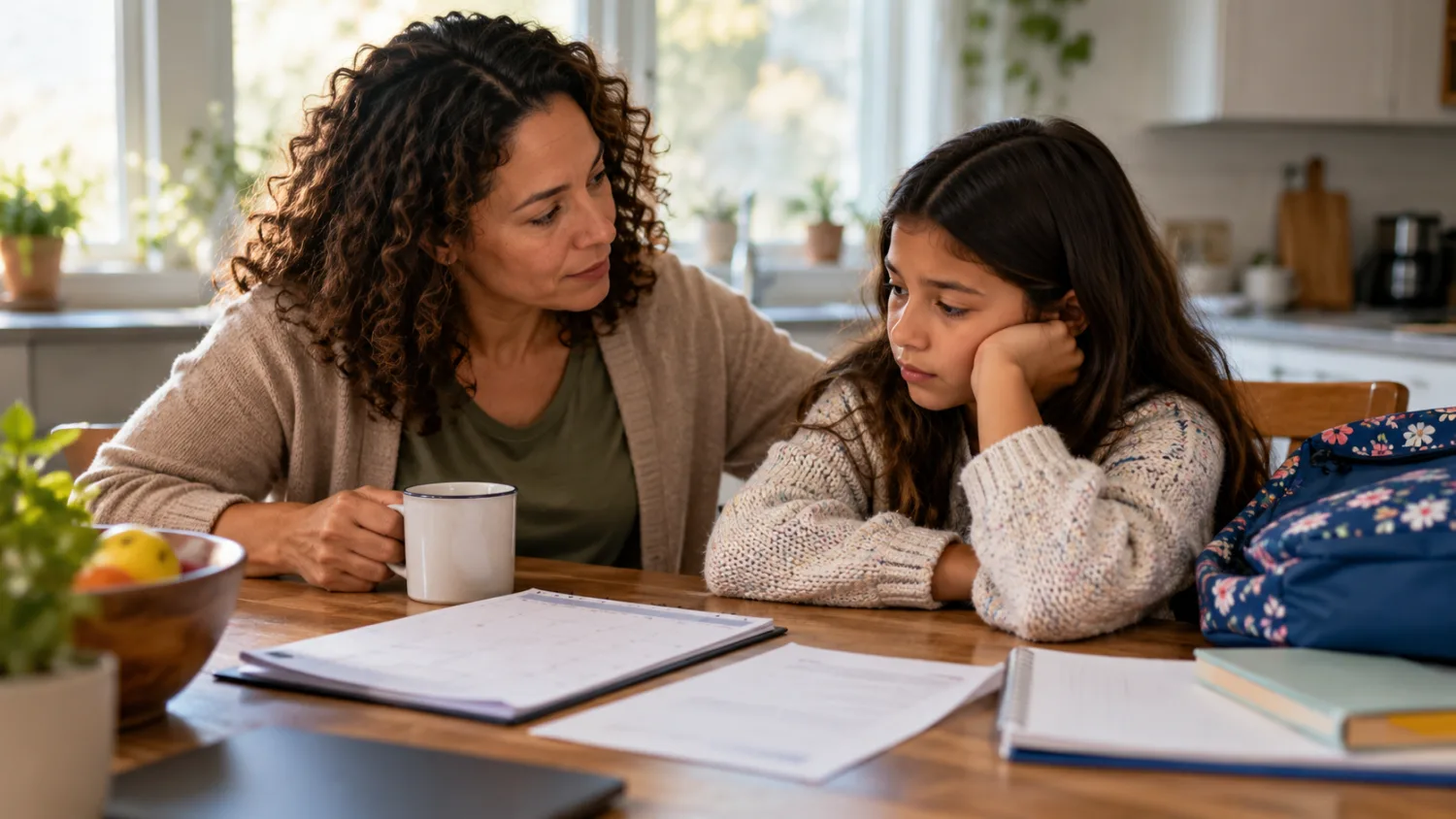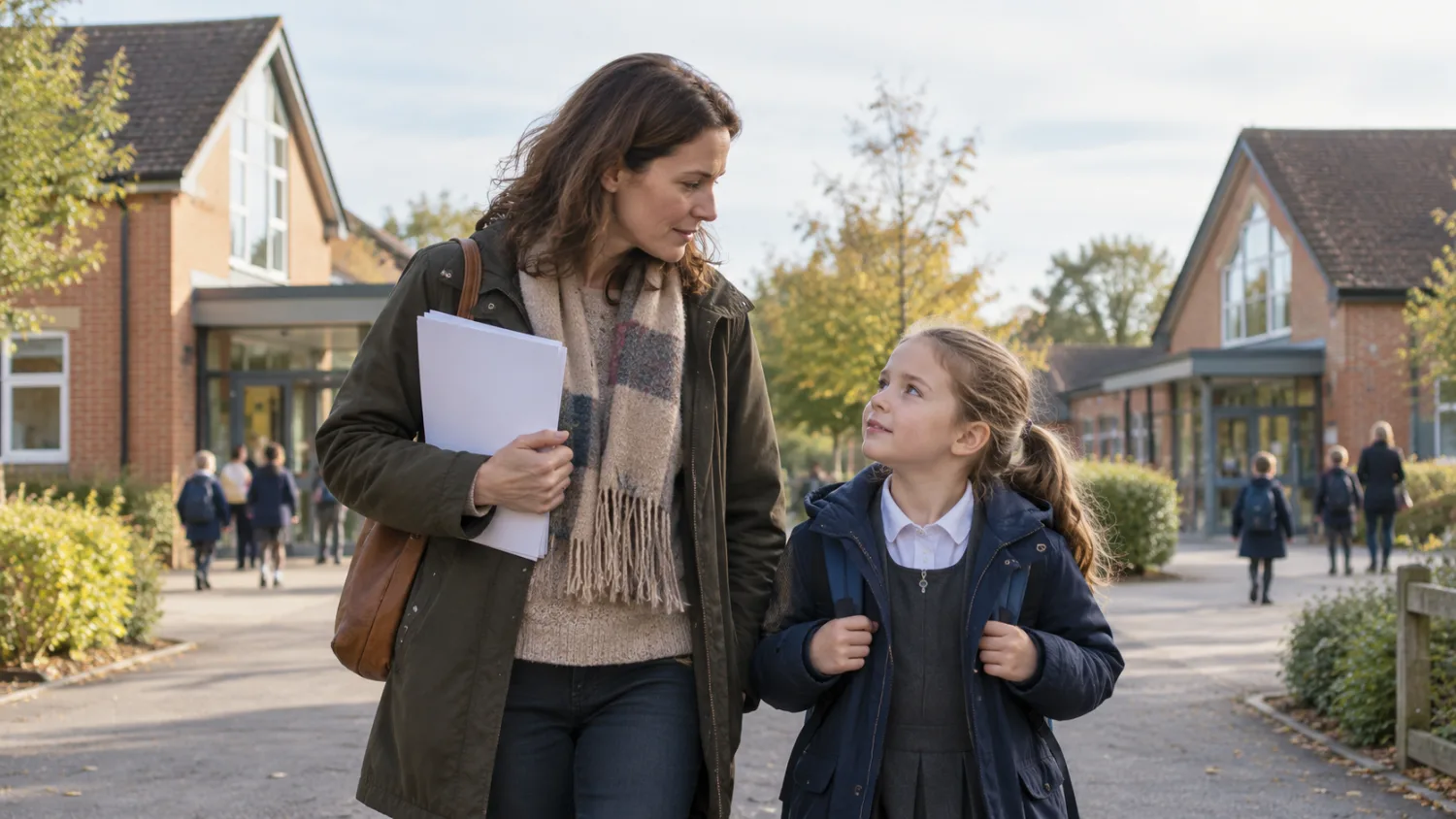
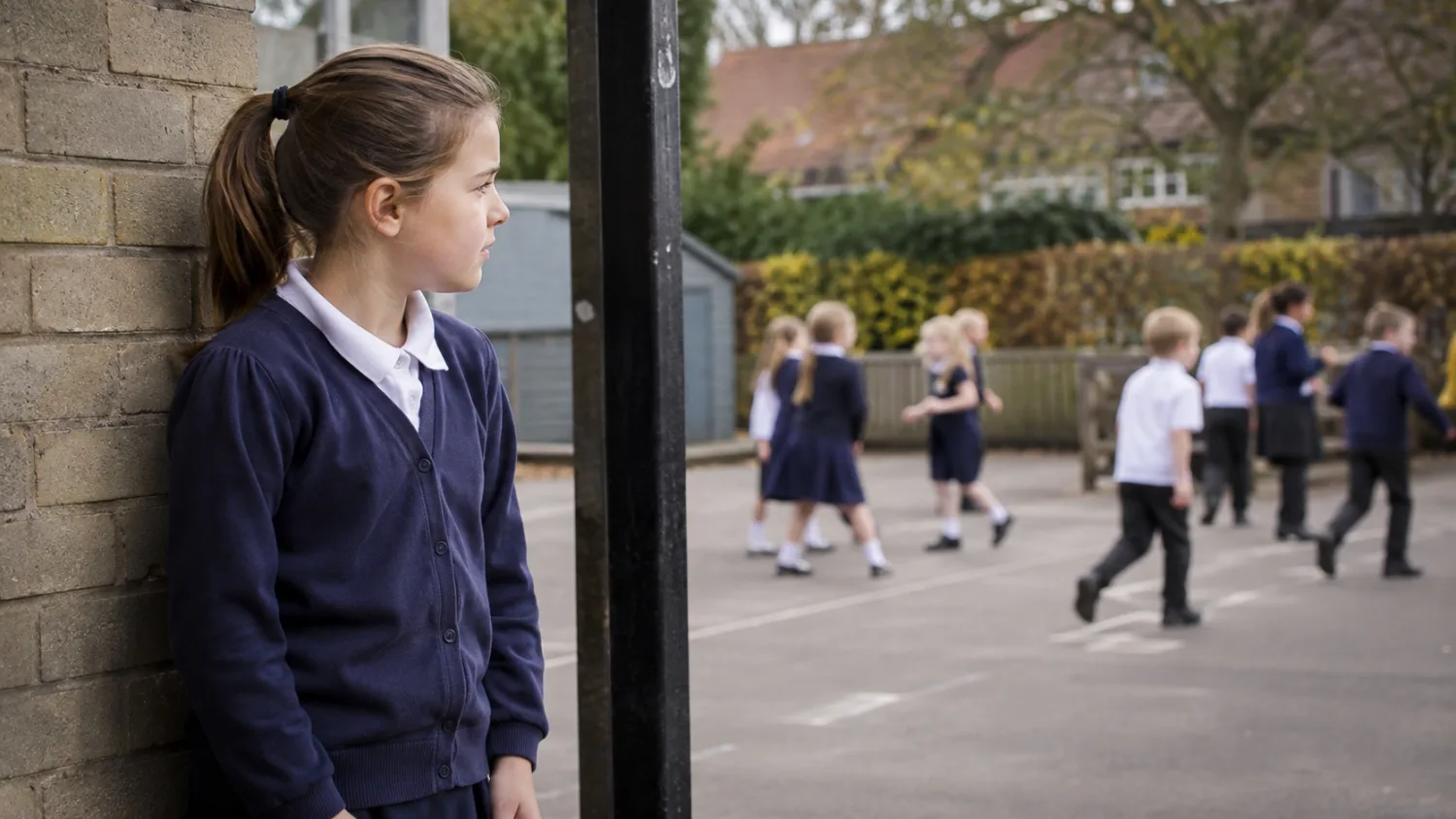
Few things are harder for a parent to hear than:
“I had no one to play with today.”
Or:
“Everyone has friends except me.”
Your immediate instinct may be to fix it.
You might want to message another parent, arrange a playdate, email the teacher, ask exactly who excluded your child or reassure them that they have lots of friends.
Sometimes one of those things will help.
But first, it is worth understanding what your child actually means.
A child saying they had nobody to play with may be describing one difficult breaktime. They may be adjusting to a new class. A friendship group may have temporarily changed. They may have wanted to play a game that nobody else wanted to play. They may be finding it difficult to approach other children. Or there may be a more persistent problem involving exclusion, bullying or loneliness.
Those situations need different responses.
The aim is not to make sure your child is surrounded by friends every minute of the school day.
It is to help them feel that they belong, have opportunities for positive relationships and know what to do when social situations become difficult.
This guide explains how to listen without panicking, work out what may be happening, help your child build connections and know when it is time to involve the school.
Start by finding out what “no one to play with” actually means
Young children often describe the most recent or emotionally important moment as though it represents the whole day.
A child who happily played with two classmates for most of lunch may still come home saying:
“Nobody played with me.”
because those classmates chose a different game during the final five minutes.
That does not mean the feeling is unimportant.
It means you need a little more context before deciding what has happened.
Ask small, specific questions
Instead of:
“Why does nobody play with you?”
try:
- What happened at break today?
- What were you trying to play?
- Who was nearby?
- Did you play with anyone earlier?
- What happened when you asked to join?
- Was lunchtime different from morning break?
- Is this happening every day or was today particularly difficult?
The wording matters.
“Why does nobody play with you?” already assumes that nobody does.
It can also make the child feel that there is something wrong with them.
Let the story emerge gradually
Some children will give you a detailed account immediately.
Others need time.
You may learn more while:
- walking home;
- eating a snack;
- playing;
- drawing;
- getting ready for bed.
A tired child may not be able to explain a complicated playground situation immediately after school.
Do not dismiss the feeling just because the facts are complicated
Parents sometimes try to reassure too quickly.
A child says:
“Nobody likes me.”
and the adult immediately replies:
“That's not true. You have loads of friends.”
You may be factually correct.
But you have not yet responded to what the child is feeling.
Acknowledge first
You might say:
“That sounds lonely.”
Or:
“It sounds like breaktime was really difficult today.”
Then explore what happened.
Acknowledging the feeling does not mean agreeing that nobody likes them.
Avoid creating a bigger story than the child gave you
The opposite problem is also common.
A child says another pupil did not let them join a game.
A parent concludes:
“They're excluding you. That's bullying.”
Maybe it is.
But perhaps the game was already full. Perhaps the children had fallen out temporarily. Perhaps your child had just told the same group they did not want to play their game.
Gather information before giving the situation a label.
Remember that friendships at school can be very fluid
Children's friendships do not always look like adult friendships.
This is especially true in Reception and primary school.
A child may have a “best friend” on Monday, argue with them on Tuesday and be playing happily together again on Wednesday.
Friendship difficulties are not automatically friendship failure
Children are learning how to:
- take turns;
- share ideas;
- handle disagreement;
- join existing games;
- cope when somebody says no;
- repair relationships after arguments;
- understand other people's preferences.
Those skills develop through experience.
We cannot prevent every disagreement without also removing opportunities to learn how relationships work.
Starting a new class can temporarily disrupt established friendships
September can be particularly difficult.
Your child may have:
- moved classes;
- been separated from previous friends;
- started Reception;
- started secondary school;
- joined a larger year group;
- discovered that old friends are making new connections.
This can feel like losing friends even when the relationships themselves have not disappeared.
If your child has recently been placed away from close friends, the AllSchools guide My Child Has Not Been Placed With Their Friends: What to Do looks specifically at that transition.
Help your child work out how to join in
“Just go and play with someone” sounds simple to an adult.
To a child standing on the edge of an established football game or group conversation, it may feel extremely difficult.
Practise specific ways to approach other children
Instead of telling your child to “make friends”, help them with usable phrases.
For younger children:
“Can I play too?”
“What are you playing?”
“Can I be on your team?”
“Do you want to play hide and seek?”
For older children:
“Mind if I sit here?”
“Are you going to football club today?”
“What did you get for question five?”
“Do you want to walk over together?”
Friendships often begin through repeated small interactions rather than dramatic introductions.
Teach your child to look for open situations
Joining a group of six children deeply involved in a game can be harder than approaching one child standing nearby.
Help your child notice:
- another child who is alone;
- a game that naturally allows more people;
- an organised lunchtime activity;
- a familiar classmate walking towards lunch;
- a child they have worked well with in class.
Practise what to do when someone says no
A child can ask politely to join and still be told no.
That hurts.
But one rejection does not always mean deliberate exclusion.
Help them have a second plan:
“Okay, I’ll ask Sam if they want to play.”
or:
“I'll go to the drawing club instead.”
Resilience does not mean pretending rejection does not hurt. It means learning that one difficult interaction does not have to end the whole breaktime.
The AllSchools guide to building resilience in children has more practical ideas for helping children cope with everyday setbacks.
Look for structured opportunities to make friends
Unstructured breaktimes can be the hardest part of the school day for children who struggle socially.
The classroom may feel manageable because activities and groups are organised.
Then lunchtime arrives and everybody appears to know where to go except them.
Clubs can make social contact easier
A club gives children:
- a shared activity;
- something obvious to talk about;
- a smaller group;
- repeated contact with the same pupils;
- an alternative to navigating a busy playground.
This might be:
- football;
- chess;
- art;
- coding;
- choir;
- library club;
- craft;
- board games;
- gardening;
- school council.
YoungMinds suggests structured break or lunchtime activities, peer buddies, clubs and responsibilities as possible ways schools can support children who feel isolated or find relationships difficult.
You can also read How Clubs and After-School Activities Boost Learning for more on the wider benefits of shared activities.
Do not overload a child with activities solely to manufacture friendships
The goal is to create opportunities, not fill every free hour.
One enjoyable activity with repeated contact may be more useful than five clubs the child does not actually like.
Be careful about organising friendships for your child
Parents can help create opportunities outside school.
But there is a difference between helping and managing another child's social life completely.
A simple playdate may help younger children
If your child mentions enjoying another child's company, you could consider arranging:
- a short playdate;
- a trip to the park;
- an invitation after school;
- a shared activity.
One-to-one time can help children who find larger groups difficult.
Follow your child's lead
Do not arrange an intense friendship campaign with every parent in the class because your child had one lonely Tuesday.
Ask:
“Is there anybody you'd like to invite?”
The answer may surprise you.
Do not pressure another family
You can invite.
You cannot require another child to become your child's friend.
Likewise, avoid confronting another parent over ordinary playground disagreements unless there is a compelling reason.
Schools are usually better placed to understand what is happening during the school day.
Work out whether your child is lonely, excluded or being bullied
These terms overlap, but they are not identical.
Loneliness
A child may want more social connection but struggle to create it.
There may be no particular pupil deliberately causing the problem.
Friendship conflict
Children may fall out, argue, stop playing together or disagree about who is included in a game.
That can be upsetting without necessarily being bullying.
Social exclusion
A child may be repeatedly kept out of a group or activity.
Sometimes this happens deliberately and becomes part of a harmful pattern.
Bullying
GOV.UK notes that there is no single legal definition of bullying, but it is commonly understood as behaviour that is repeated, intended to hurt someone physically or emotionally and may involve an imbalance of power. It can include teasing, threats, name-calling, physical behaviour and online bullying.
One child saying:
“You can't play with us today.”
may be unkind.
A group repeatedly excluding, mocking and isolating one child over weeks is more concerning.
Look for repetition and impact
Ask whether the problem:
- keeps happening;
- involves the same pupils;
- appears deliberate;
- makes your child frightened to attend school;
- extends into messages or group chats;
- involves threats, humiliation or physical behaviour;
- is affecting sleep, eating or mood.
If bullying may be involved, see the AllSchools guide Dealing With Bullying: Advice for Parents and Pupils.
Know when to speak to school
You do not need to wait until your child is completely miserable before asking the teacher what they have noticed.
Teachers and lunchtime staff see social situations that parents cannot.
Speak to school when there is a repeated pattern
It is reasonable to make contact when:
- your child repeatedly says they are alone;
- the problem has lasted more than a few isolated days;
- your child appears increasingly distressed;
- they regularly have nobody to work or play with;
- they are being deliberately excluded;
- you suspect bullying;
- they are beginning to avoid school;
- their confidence has changed significantly.
Ask what staff have observed
You could say:
“Jamie has been telling us quite regularly that they are alone at lunchtime. I wondered whether you've noticed how they're getting on socially?”
This is often a better starting point than:
“Why are you allowing my child to be excluded?”
The first approach allows you and the teacher to put information together.
Ask about different parts of the day
Your child may struggle at:
- morning break but not lunch;
- the playground but not the classroom;
- PE changing time;
- after-school club;
- the lunch hall;
- school transport.
Knowing where the difficulty happens helps the school choose useful support.
The AllSchools guide How to Talk to Your Child's Teacher When You're Worried offers a practical approach to starting these conversations.
Ask school for observation before demanding a particular solution
Parents understandably arrive with ideas.
You may want the teacher to:
- move your child's seat;
- make another child play with them;
- put them back with an old friend;
- tell a particular group to include them.
Sometimes one of these actions may help.
But the school's observations may point to a different problem.
Useful support could include
- help joining a playground game;
- a lunchtime club;
- a peer buddy;
- a small friendship group;
- a responsibility that gives the child a social role;
- structured activities during break;
- careful classroom pairings;
- an adult checking in periodically;
- support with social communication.
The school may also discover that the child has more social contact than they perceive, but is struggling with one particular friendship.
Do not ask school to force friendship
A teacher can create opportunities for children to interact.
They cannot require two pupils to become close friends.
The aim should be social inclusion and positive relationships rather than assigning another child permanent responsibility for your child's happiness.
Consider whether your child needs help with specific social skills
Children who feel excluded are not necessarily doing anything wrong.
But sometimes there are skills they are still developing.
Your child may find it difficult to
- approach a group;
- notice whether somebody wants to continue a conversation;
- take turns;
- accept another child's idea;
- cope with losing;
- repair an argument;
- understand jokes or indirect communication;
- move between different friendship groups.
These skills can be taught without telling a child:
“You need to be better at making friends.”
Use real situations rather than lectures
If your child tells you:
“They wouldn't play football because I said I had to be goalkeeper.”
you might ask:
“What else could you try next time if somebody else wants to be goalkeeper too?”
Let the child think.
Different children have different social needs
Not every child wants a large friendship group.
One or two close relationships may be completely satisfying.
A quieter child should not automatically be treated as socially unsuccessful because they do not behave like the most outgoing pupil in the class.
The AllSchools guide to helping shy children build confidence at school may be useful where confidence is part of the difficulty.
Watch for loneliness beginning to affect school attendance or wellbeing
Friendship difficulties can become more serious when school itself begins to feel unsafe or unbearable.
YoungMinds notes that loneliness, difficulty fitting in and relationship problems can contribute to school anxiety. Suggested school supports can include peer buddies, staff mentors, structured clubs and safe spaces.
Pay attention if your child begins to
- regularly complain of tummy aches before school;
- cry on school mornings;
- ask repeatedly to stay home;
- struggle to sleep because of school worries;
- lose interest in activities they usually enjoy;
- become significantly withdrawn;
- appear frightened of a particular pupil or group.
Do not assume these signs prove friendship problems are the cause.
But they are a reason to investigate.
If anxiety is beginning to interfere with attendance, read the AllSchools guide School Anxiety and School Avoidance: A Parent's Guide.
Seek further support when necessary
If your child's mood, anxiety or distress is significant or persistent, consider speaking with your GP or another appropriate health professional as well as the school.
Social difficulties and emotional wellbeing can affect one another.
If bullying is involved, move beyond general friendship advice
A child who is being deliberately and repeatedly targeted does not simply need to “try harder to make friends”.
The response should change.
In England, state schools must have behaviour policies containing measures to prevent bullying, and schools should explain these policies to pupils and parents.
GOV.UK advises parents to report bullying to the school first. Schools may respond differently depending on the seriousness of the behaviour.
Keep a record
If there is a pattern, note:
- dates;
- what your child reports;
- which pupils were involved;
- where it happened;
- messages or online evidence where relevant;
- what has already been reported to school.
NSPCC guidance similarly recommends working in partnership with school, reviewing relevant school policies and taking evidence to meetings where available.
Do not encourage retaliation
“Hit them back” can put your child at greater risk and make the situation harder for school to resolve.
Help them practise:
- moving towards trusted adults;
- reporting what happened clearly;
- keeping online evidence;
- staying near safer peers or supervised areas where appropriate.
Escalate serious safety concerns
Some behaviour goes beyond ordinary bullying.
GOV.UK notes that violence, assault, theft, repeated harassment, threats and hate crimes may involve criminal behaviour. Immediate danger should be treated as an emergency.
A practical plan for the next two weeks
If there is no immediate safeguarding or bullying concern, you do not need to solve everything tonight.
Try a short, structured approach.
Days 1–3: Listen and observe
- Ask specific questions rather than interrogating.
- Look for whether the same problem repeats.
- Notice whether your child names any pupils they do enjoy.
- Ask what happens during different breaks.
Days 3–5: Practise one small strategy
Choose something manageable:
- ask one child to play;
- sit beside a familiar pupil at lunch;
- try one lunchtime club;
- ask an adult for help joining an activity.
Do not give them seven friendship targets at once.
By the end of week one: Contact school if the pattern continues
Ask the teacher what they are seeing.
You may discover useful information immediately.
Week two: Agree one or two supports
For example:
- an adult checks how lunch went;
- the child tries a structured activity;
- staff help with a suitable peer connection;
- the teacher observes the friendship group more closely.
Review rather than assume
After another week, ask:
- Is my child reporting fewer lonely periods?
- Has school noticed more social interaction?
- Is anxiety improving?
- Is there now evidence of exclusion or bullying?
The plan can then change according to what you have learned.
Frequently asked questions
Is it normal for a child to sometimes have nobody to play with?
Yes. An occasional lonely breaktime or friendship disagreement is common. Look at whether it is becoming a repeated pattern and how much distress it is causing.
Should I contact the teacher immediately?
You can contact school whenever you are concerned. For one isolated incident, you may first want to understand what happened. If your child repeatedly reports loneliness, exclusion or distress, speak to the teacher rather than waiting for the problem to become severe.
What should I say to the teacher?
Keep it specific and collaborative. For example: “Sophie has told us several times this week that she is alone at lunchtime. Have you noticed how she is getting on with other children?”
Should I arrange playdates?
They can be useful, especially for younger children who find one-to-one interaction easier than large groups. Follow your child's interests rather than trying to manufacture a friendship they do not want.
Should I tell my child to just join another group?
You can encourage them, but give practical guidance. Approaching a group can be intimidating. Practise what they might say and help them identify easier opportunities to join in.
What if other children say my child cannot play?
An occasional disagreement is different from repeated deliberate exclusion. Ask what happened before and afterwards. If exclusion is persistent or targeted, speak with school.
Does having no best friend mean my child is lonely?
No. Children differ in how many friendships they want. A child may be perfectly content with several casual friendships or one close friend.
What if my child says they have friends but never sees them outside school?
That does not necessarily indicate a problem. Many genuine school friendships exist primarily at school, particularly when families live far apart or have busy schedules.
How do I know whether it is bullying?
Look for repeated, intentional harmful behaviour and patterns such as persistent exclusion, threats, humiliation, physical aggression or online targeting. Speak to school if you are unsure.
Should I contact the other child's parent?
For ordinary friendship arrangements this can be fine. For conflict or suspected bullying, speaking with school first is often more productive because staff can see the wider context and manage the issue consistently.
What if school says my child does play with other children?
Both accounts can be true. Your child may interact with others while still feeling lonely or excluded at particular times. Ask for more detail and continue listening to your child's experience.
What if my child does not want me to tell school?
Listen to why. They may fear embarrassment or retaliation. Explain what you plan to share and involve them where possible. If there is a safety or serious bullying concern, adults may still need to act even if the child would prefer secrecy.
When should I seek help beyond school?
If friendship difficulties are contributing to significant anxiety, persistent low mood, sleep problems, school avoidance or major changes in behaviour, consider discussing this with your GP or another appropriate professional as well as school.
Hearing your child say they have nobody to play with can make you want to solve the situation before the next school morning.
Usually, the most useful response is slower.
Listen first.
Find out whether this was one difficult moment or a repeated pattern.
Help your child practise small ways to connect with others.
Create opportunities without controlling every friendship.
And involve school when the problem continues, causes significant distress or appears to involve deliberate exclusion or bullying.
Children do not need to be the most popular person in their year group.
They need to feel that there are people they can approach, activities they can join and adults who will notice when something is not working.
Sometimes one friendship is enough to transform a school day.
Sometimes what a child needs first is simply an adult who believes them when they say that lunchtime feels lonely—and helps them work out what can change.