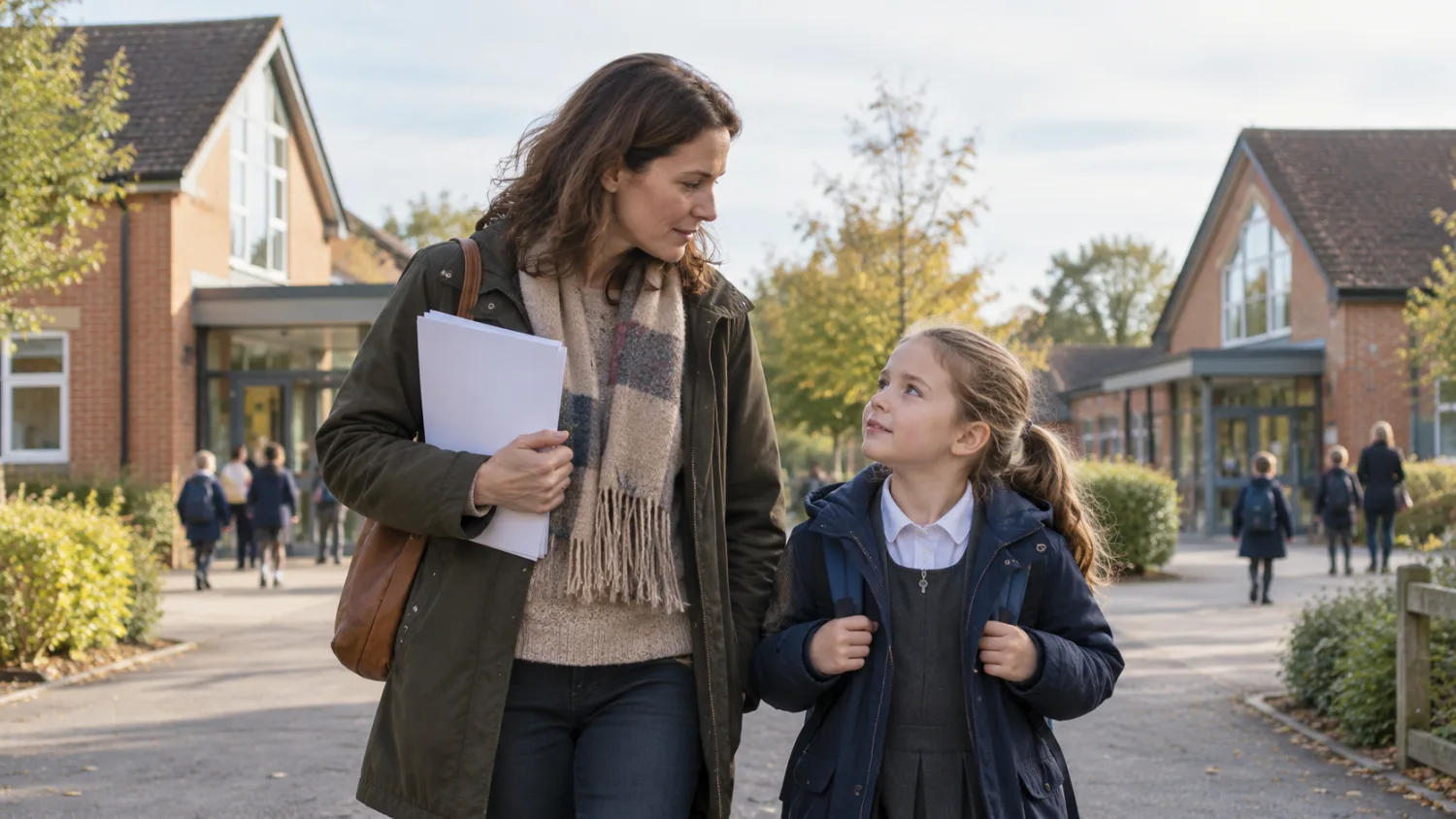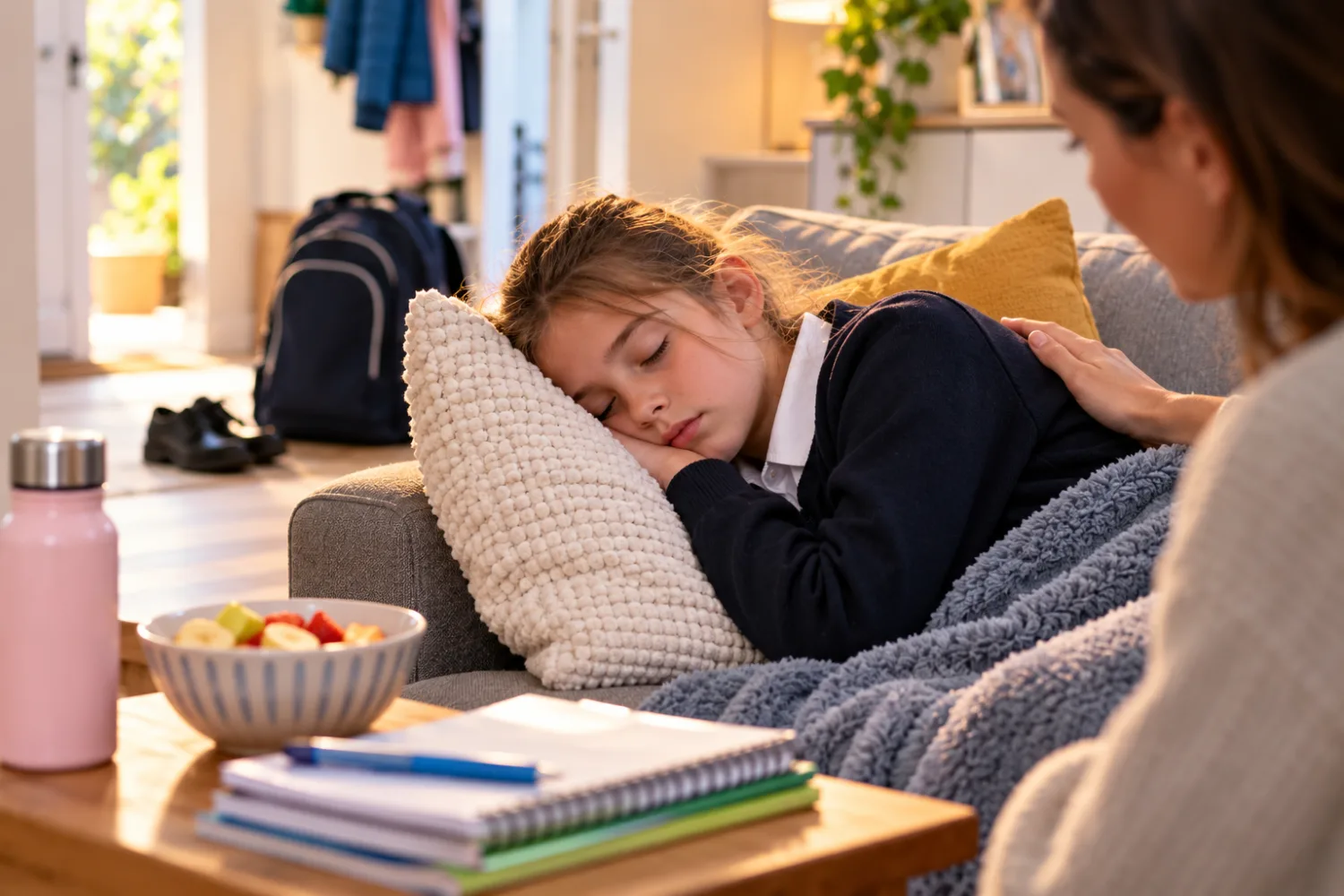
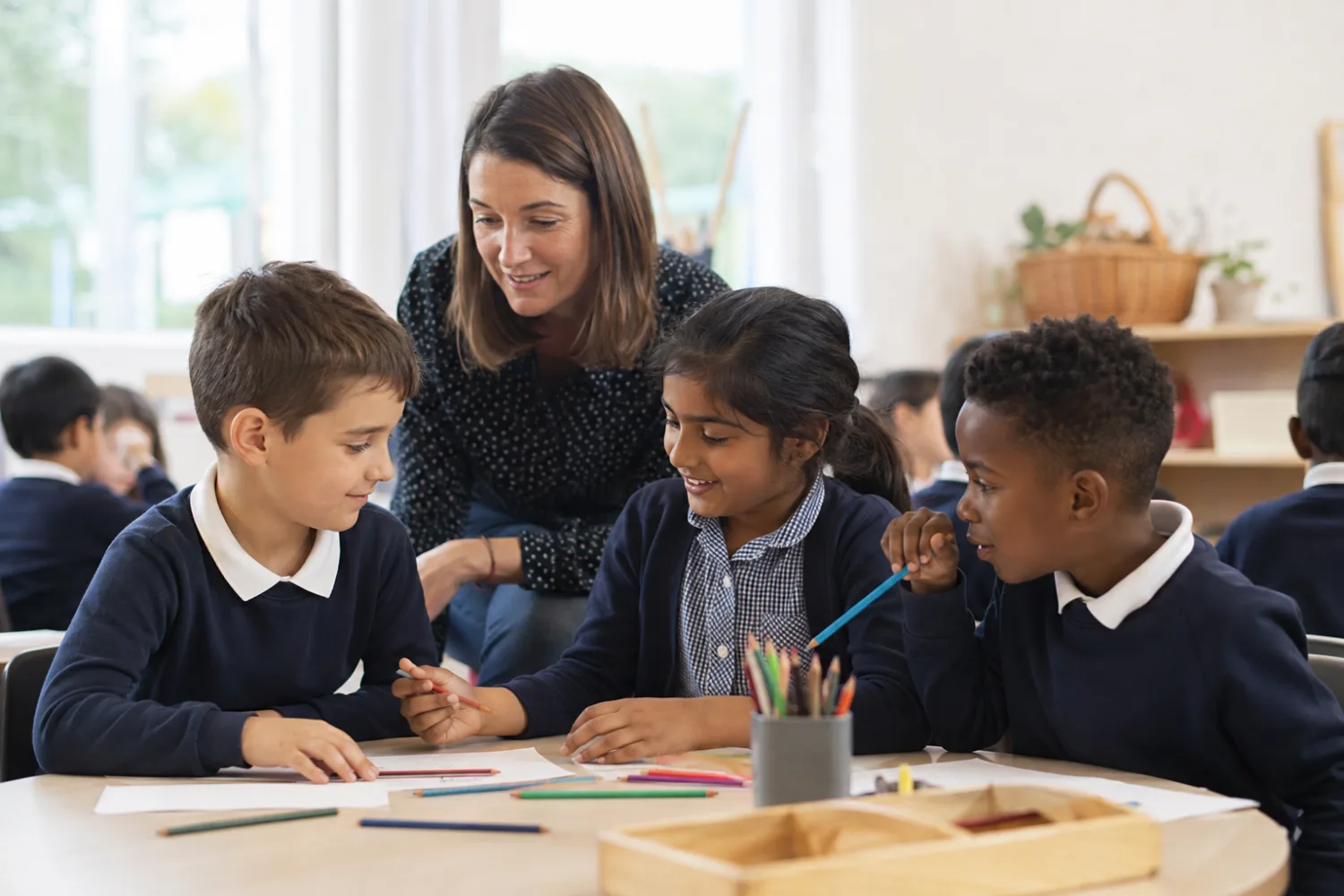
Finding out that your child has not been placed in the same class, tutor group or teaching set as their friends can feel surprisingly upsetting. Your child may have been looking forward to starting the year with familiar faces, and you may worry that they will be lonely or unsettled.
Sometimes the news arrives before the summer holidays. In other cases, children discover it on their first day back. Either way, an initial disappointment can quickly grow into a much bigger fear: “I will have no one to talk to,” “Everyone else will be together,” or “I won’t make any new friends.”
For many children, the situation becomes much easier once school begins. They continue seeing existing friends at break and lunchtime while gradually becoming comfortable with new classmates. However, some children need more preparation or support, particularly if they are anxious, shy, neurodivergent or have previously found friendships difficult.
The most helpful response is usually neither to dismiss the concern nor to assume that the placement must be changed immediately. Begin by listening, finding out what the arrangement really means and helping your child approach the transition one manageable step at a time.
Start by letting your child be disappointed
Adults often try to reassure children by solving the problem as quickly as possible. We may say, “You’ll make new friends,” “It isn’t a big deal,” or “You can still see them at break.” These things may all be true, but they can feel dismissive when a child is genuinely worried.
Before offering solutions, acknowledge what has happened. You might say:
“I understand why you’re disappointed. You were expecting to be with Sophie, and now everything feels less certain.”
This does not confirm that the placement is disastrous. It simply shows that you have heard your child. Once children feel understood, they are often more able to talk about what they are actually afraid of.
Try to identify the fear underneath the disappointment. Is your child worried about being alone at lunchtime? Are they frightened that their existing friendship will end? Do they believe everyone else will already have a group? Are they concerned about a particular child in the new class? The right support depends on the real worry.
Avoid making promises you cannot keep, such as saying the school will definitely move them. It is better to be honest:
“I don’t know whether the class can be changed, but we can find out more and make sure the school knows how you are feeling.”
Being in a different class does not have to end a friendship
Children may initially imagine that being separated in lessons means they will lose the friendship altogether. In most schools, however, pupils have opportunities to see friends outside their class or tutor group. They may meet at break, lunchtime, clubs, assemblies, on the journey to school or outside school.
Some friendships remain strong despite children being taught separately. In fact, having different experiences can give friends more to talk about, while reducing the pressure for one friendship to meet every social need.
If the children usually spend time together outside school, it may help to maintain some familiar contact during the transition. An occasional playdate, walk home or shared activity can reassure your child that the friendship has not disappeared. The aim is not to organise every moment of their social life, but to show that a timetable change does not automatically end a valued relationship.
At the same time, try not to make the existing friend your child’s only route to feeling safe. If every conversation focuses on when they can next see that friend, the separation may begin to feel even more threatening. Support the old friendship while leaving space for new ones.
Childline’s guidance on coping with friendship problems may be helpful for older children who want to read advice privately. It acknowledges that separation from a friend can feel difficult and that adjusting can take time.
Why schools sometimes separate friends
Class organisation is rarely based on friendships alone. Schools may need to balance class sizes, attainment, additional needs, language, behaviour, gender, staffing and existing group dynamics. They may also consider which pupils work well together and which combinations make learning more difficult.
In primary schools, classes may be reorganised between year groups to create balanced groups. In secondary schools, pupils may be placed into different tutor groups and then taught in several changing combinations throughout the week. Teaching sets may also change as the school learns more about pupils.
Sometimes a school deliberately separates close friends because staff believe both children may become more independent or widen their social connections. In other cases, there is no specific decision about the friendship at all; it is simply one consequence of organising a large number of pupils.
Parents may disagree with the school’s reasoning, but it is worth gathering information before assuming the decision was careless or punitive. What looks like a simple swap from the outside may affect several other pupils and the balance of two classes.
This does not mean schools always get placements right. Staff may not know how important a particular friendship is, especially when children are joining from different settings. Transition information can also be incomplete. If your child has a genuine vulnerability, it is reasonable to explain it clearly.
Find out what the new arrangement will actually look like
A child’s imagination may be much worse than the reality. Before asking for a move, find out how much time the children will really spend apart.
In a primary school, you might ask whether the classes share breaktimes, lunchtimes, assemblies, trips or some lessons. In secondary school, pupils who are in different tutor groups may still meet in subject lessons or during unstructured time.
It is also useful to establish whether the placement is permanent. Some schools review tutor groups, sets or class arrangements after the first few weeks. Others avoid changes unless there is a significant concern because movement can disrupt several pupils.
If your child is starting Year 7, explain that secondary-school friendships often extend beyond one class. Pupils may sit with different people in English, science, PE and option subjects. Existing friendships can continue, but there are also many more opportunities to meet others. Our guide to the Year 6 to Year 7 transition explains some of the other changes families may not expect.
For younger children, it may help to look at the school day together. Identify the points when they might see their old friend and the adults they can approach if they feel lonely. Turning a vague fear into a clearer picture can make it feel more manageable.
Should you ask the school to change the placement?
You can contact the school, but it is usually best to begin with a calm request for information rather than a demand.
A brief message might say:
“Amelia is very worried about being placed separately from the children she knows. Could you let me know how the classes will mix during the school day and whether there is anything planned to help pupils form new connections? She has previously found transitions difficult, so I would also appreciate the class teacher being aware.”
This gives the school useful information and opens a constructive conversation. It does not assume that staff have acted wrongly.
A request for reconsideration is more likely to need careful attention when the separation affects your child’s ability to access school rather than simply their preference. Relevant circumstances could include:
- a diagnosed or suspected additional need that makes transitions unusually difficult;
- a history of severe anxiety or emotionally based school avoidance;
- a recent bereavement, family disruption or other major change;
- previous bullying or significant social isolation;
- a friendship that provides important communication, emotional or practical support;
- or professional advice suggesting that a familiar peer would support the transition.
Explain the need rather than simply stating that the children are best friends. Include relevant information the school may not have, but avoid overstating the situation or asking another child to be moved.
The school may still decide that the original placement is appropriate. If so, ask what support can be offered and when the situation will be reviewed. A planned review after two or three weeks is often more useful than arguing about predictions before the children have entered the classroom.
Help your child approach the new class in small steps
Advice such as “just go and make new friends” can feel impossible to an anxious child. Friendship usually grows from repeated small interactions, not one brave introduction.
Talk about manageable actions rather than the final goal of finding a new best friend. Depending on your child’s age, these might include sitting near someone approachable, learning one new name, joining a shared activity or asking a simple question.
Children often find conversation easier when there is something specific to talk about. They might ask:
- “Do you know what we’re meant to do next?”
- “Which book did you choose?”
- “Are you going to football club?”
- “Do you want to work together?”
You can practise one or two opening lines at home, but avoid turning social interaction into a performance your child must complete. The aim is to make the first step more familiar, not add another source of pressure.
It may also help to remind your child that other pupils could be feeling uncertain. A class that appears full of established friendship groups from the doorway may include several children hoping someone will speak to them.
Childline offers practical tips for making friends, written directly for children and young people. Older pupils may prefer exploring this themselves rather than receiving detailed instructions from a parent.
Do not turn the first few days into a daily interrogation
When parents are worried, it is tempting to ask for a complete friendship report at the end of every day:
“Who did you sit with? Did anyone speak to you? Did you see your old friends? Who did you play with? Were you alone?”
These questions are well meant, but they can make a child feel that the day was successful only if they made an obvious new friend. They may also encourage the child to search for evidence that the placement is going badly.
Try broader, gentler questions:
- “What felt easier than you expected?”
- “Was there a part of the day you enjoyed?”
- “Who seemed kind or interesting?”
- “Is there anything that would make tomorrow easier?”
Some children need time to decompress before talking. A snack, walk, quiet activity or ordinary conversation may help more than questions immediately outside the school gate.
Look for progress that is smaller than friendship. Your child may learn someone’s name, exchange a joke, complete a task with a partner or feel less nervous entering the room. These are meaningful steps even if they have not yet found someone to spend every break with.
Our guide to helping shy children build confidence at school contains further ideas for supporting participation without forcing a child to become unusually outgoing.
When the problem is more than ordinary settling-in
It is normal for some children to feel disappointed or uncertain for a while. However, parents should not assume that every difficulty will resolve by itself.
Contact the teacher or pastoral team if your child consistently reports being alone, becomes increasingly distressed or appears to be excluded by other pupils. Other warning signs can include frequent stomach aches or headaches before school, disrupted sleep, loss of appetite, tearfulness, angry outbursts after school or repeated attempts to avoid attending.
The NHS guidance on anxiety in children recommends listening carefully, avoiding dismissing worries and working with the school to identify problems and possible solutions. If anxiety is severe, persistent or interfering with everyday life, families may also need advice from a GP or school nurse.
Try to separate different possible problems:
- Initial uncertainty may improve with time, encouragement and ordinary classroom support.
- Social isolation may require planned opportunities to connect with others.
- Bullying needs to be reported and addressed through the school’s behaviour or anti-bullying procedures.
- School anxiety may require a broader support plan rather than a class move alone.
- An unmet additional need may call for discussion with the SENCO and reasonable adjustments.
If your child describes deliberate exclusion, threats, humiliation or repeated unkind behaviour, do not treat this simply as a failure to make friends. Keep a clear record and speak to the school. Our guide to dealing with bullying explains how parents can raise concerns constructively.
How schools can help without forcing friendships
Schools cannot manufacture a close friendship, but they can create conditions in which pupils are more likely to connect.
A teacher might use carefully planned seating, paired activities or changing groups so that a new pupil is not repeatedly left to find a partner. Staff can identify welcoming classmates, introduce shared responsibilities or suggest clubs linked to the child’s interests.
Unstructured times often matter more than lessons. A child may cope well in a classroom where the teacher organises groups but feel lost in a large playground or dining hall. Schools may be able to provide a quieter lunchtime space, a supervised activity, a peer mentor, a buddy arrangement or help joining a club.
Support should be discreet and age-appropriate. A child may feel more self-conscious if an adult publicly announces that they need a friend. It is usually better to create natural opportunities for interaction and check in privately.
Parents can help by giving the school specific information. “He has nobody” may be difficult to act on, whereas “He manages lessons but spends the whole lunch break in the toilets because he does not know where to sit” points to a clear problem requiring attention.
Similarly, explain what tends to help. A pupil who struggles with open-ended social situations may find a structured club easier than being told to join a group in the playground.
Try not to carry your own friendship experiences into theirs
A child being separated from friends can stir up powerful memories for a parent. You may remember feeling excluded at school or worry that your child will experience the same thing. Alternatively, you may have found making friends easy and struggle to understand why the situation feels so serious.
Notice these reactions without allowing them to determine the response. Your child’s experience may not follow yours.
It is also wise to avoid discussing the class placement angrily in front of your child. If they repeatedly hear that the school has made a terrible mistake, they may enter the new class expecting it to fail. Even if you are challenging the decision privately, try to give your child a message of calm confidence:
“This is not what you hoped for, but you will not have to manage it alone. We’ll see how it feels, and the adults will help if you need them.”
Be careful with conversations involving other parents too. Attempts to reorganise classes through group messages can quickly become upsetting, particularly when adults begin discussing which children should or should not be together.
Keep communication focused on your own child’s needs and direct it to the school rather than the parent WhatsApp group.
Give the situation time, but agree when to review it
“Wait and see” can be reasonable advice, but it should not mean ignoring a distressed child indefinitely.
For a child who is disappointed but attending and beginning to engage, two or three weeks may provide a much clearer picture. During that time, maintain ordinary routines, encourage manageable social opportunities and stay in light contact with the teacher.
If your child has significant anxiety, a history of school avoidance or another known vulnerability, the review may need to happen sooner. Agreeing a date with the school can be reassuring because your child knows the situation will not simply be forgotten.
At the review, consider more than whether your child has found a new best friend. Ask:
- Are they entering school with less distress?
- Can they name classmates they feel comfortable with?
- Do they participate in paired or group activities?
- Are breaktimes and lunchtimes manageable?
- Are they still able to see existing friends?
- Does the teacher see signs of settling that may not be obvious at home?
If things are improving, even slowly, the placement may be giving your child a chance to broaden their confidence. If distress remains high or the school identifies genuine isolation, additional support or reconsideration may be appropriate.
Children beginning a completely new school may need broader preparation as well. Families can use our practical guide to the summer before starting secondary school to work through travel, routines, friendships, organisation and anxiety.
Frequently asked questions
Can I insist that my child is placed with a friend?
Parents can explain their child’s circumstances and ask the school to reconsider, but class and tutor-group organisation is normally a matter for the school. A request may carry more weight when there is evidence of a particular educational, emotional, medical or additional need. Even then, the school may decide that other support is more appropriate than moving the child.
Should twins or siblings always be placed together?
There is no single arrangement that suits every pair of twins or siblings. Some benefit from being together, while others develop greater independence in separate classes. Parents should share information about the children’s individual needs, relationship and previous experience so the school can make an informed decision.
What if all my child’s friends are together in another class?
This can feel particularly unfair, but first check how much contact the classes have during the day. Tell the school if your child appears to be the only pupil separated from an established group, especially if they find social communication or transitions difficult. Ask how staff will support connections in the new class and when the arrangement can be reviewed.
Will my child’s old friends forget about them?
Friendships can change, but being in different classes does not automatically end them. Children may continue meeting during breaks, clubs, travel or outside school. It is healthy to maintain important existing friendships while also encouraging your child to get to know other people.
How long does it usually take to make new friends?
There is no fixed timetable. Some children connect quickly, while others need repeated contact over several weeks or months. Look for smaller signs of belonging, such as joining a conversation, working comfortably with a partner or having someone to greet in the morning.
What if my child refuses to attend because of the class placement?
Contact the school promptly rather than allowing absence to become the only solution. Work together to identify exactly what feels unmanageable and agree a supported return plan. If anxiety is persistent or severe, advice from the school’s pastoral team, SENCO, school nurse or your child’s GP may be appropriate. Our parent guide to school anxiety and school avoidance explains the next steps in more detail.
Not being placed with friends can be a painful start to the year, but it does not necessarily predict an unhappy one. Children can keep valued friendships while forming new connections, and many become more confident once the unfamiliar class begins to feel ordinary.
Your child does not need to be pushed into instant independence or rescued from every uncomfortable feeling. They need to know that their disappointment makes sense, that the adults around them are paying attention and that support will be available if settling in proves harder than expected.