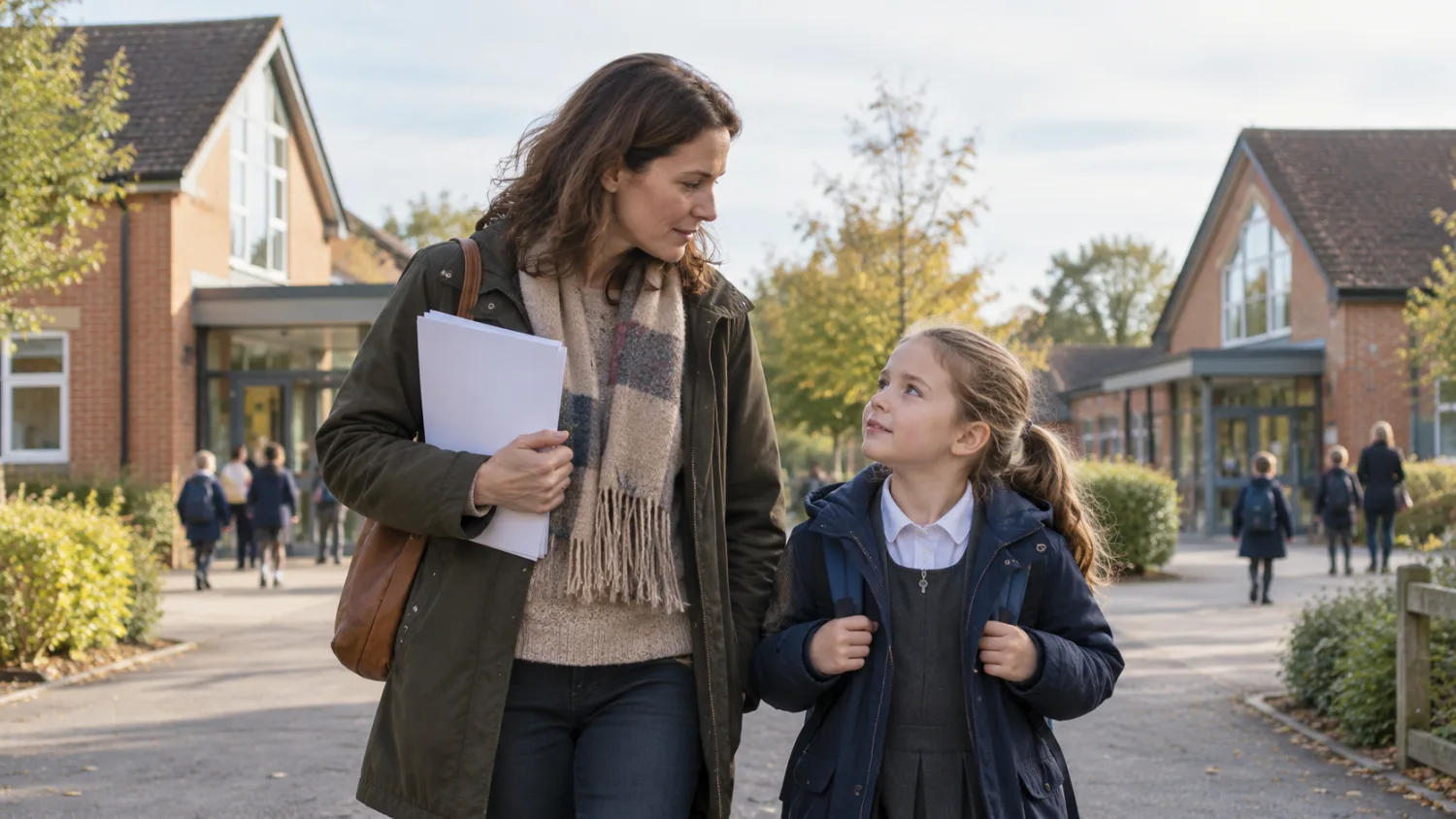

The first month of secondary school is a major adjustment, even for children who appear excited and confident. They are learning a new building, timetable, set of rules and social environment while also managing more teachers, more equipment and greater expectations of independence.
Many children cope well at school and then arrive home exhausted, irritable or unusually quiet. Others enjoy the first few days but begin to struggle once homework, changing classrooms and friendship groups become more complicated. This does not necessarily mean that the transition is going badly. Settling into secondary school is a process, not something completed on the first morning.
Parents can help most by creating steady routines, listening without interrogating and allowing their child to take increasing responsibility. The goal is not to prevent every forgotten book or uncomfortable moment. It is to provide enough structure that ordinary mistakes remain manageable and genuine problems are noticed early.
This first-month checklist focuses on what families should watch, discuss and gradually hand over during the opening weeks.
Before the first day: make the basics predictable
By the final evening before school begins, preparation should become simpler rather than more intense. This is not the time to introduce an elaborate organisation system or rehearse every possible thing that might go wrong.
Check the practical essentials:
- the morning alarm and expected leaving time;
- the route to school and an alternative if transport is disrupted;
- uniform, shoes and PE kit;
- lunch or payment arrangements;
- essential stationery and equipment;
- any medicines or medical information;
- and how your child will contact you if a genuine problem occurs.
Keep a copy of the timetable at home once it is available. Some families place it near the area where the school bag is packed. Others keep a photograph on a shared device. The system does not need to be attractive; it needs to be easy to use.
Talk through what your child should do if they get lost, miss a bus, forget something or feel unwell. Children often feel calmer when they know the next step, even if the situation never happens.
Childline’s advice on starting a new school reminds pupils that getting lost is common and that it is always acceptable to ask for directions. Parents can reinforce this message: needing help in an unfamiliar school is not evidence that a child is failing to cope.
If you are still deciding what to buy, our guide to what children really need for secondary school separates genuine essentials from purchases that can usually wait.
Week one: focus on arrival, safety and finding their way
The first week is mainly about orientation. Academic work matters, but your child is also using a great deal of energy to remember rooms, names, routines and expectations.
Do not expect a complete account of the day as soon as they walk through the door. Some children will talk continuously. Others need food, quiet or an unrelated activity before they can explain anything.
Useful first-week questions are practical and open:
- “Was there any part of the day that was easier than you expected?”
- “Is there somewhere you still aren’t sure how to find?”
- “Do you know which adult you could ask if you needed help?”
- “What do you need to remember for tomorrow?”
Try not to turn every mistake into a lesson about responsibility. If your child goes to the wrong classroom, misreads the timetable or forgets a minor item, help them work out what to do differently next time. The first week should allow for errors while routines are still unfamiliar.
Make sure your child knows their tutor, head of year or another trusted member of staff. They should also know where to go if they feel ill, lose something important or experience a problem during break or lunch.
If your child has a medical condition, disability or additional need, confirm that essential information and agreed arrangements have reached the relevant staff. Do not assume that every subject teacher has immediately seen every transition document. A short, calm clarification with the school may prevent a significant problem.
Expect tiredness and changes in behaviour at home
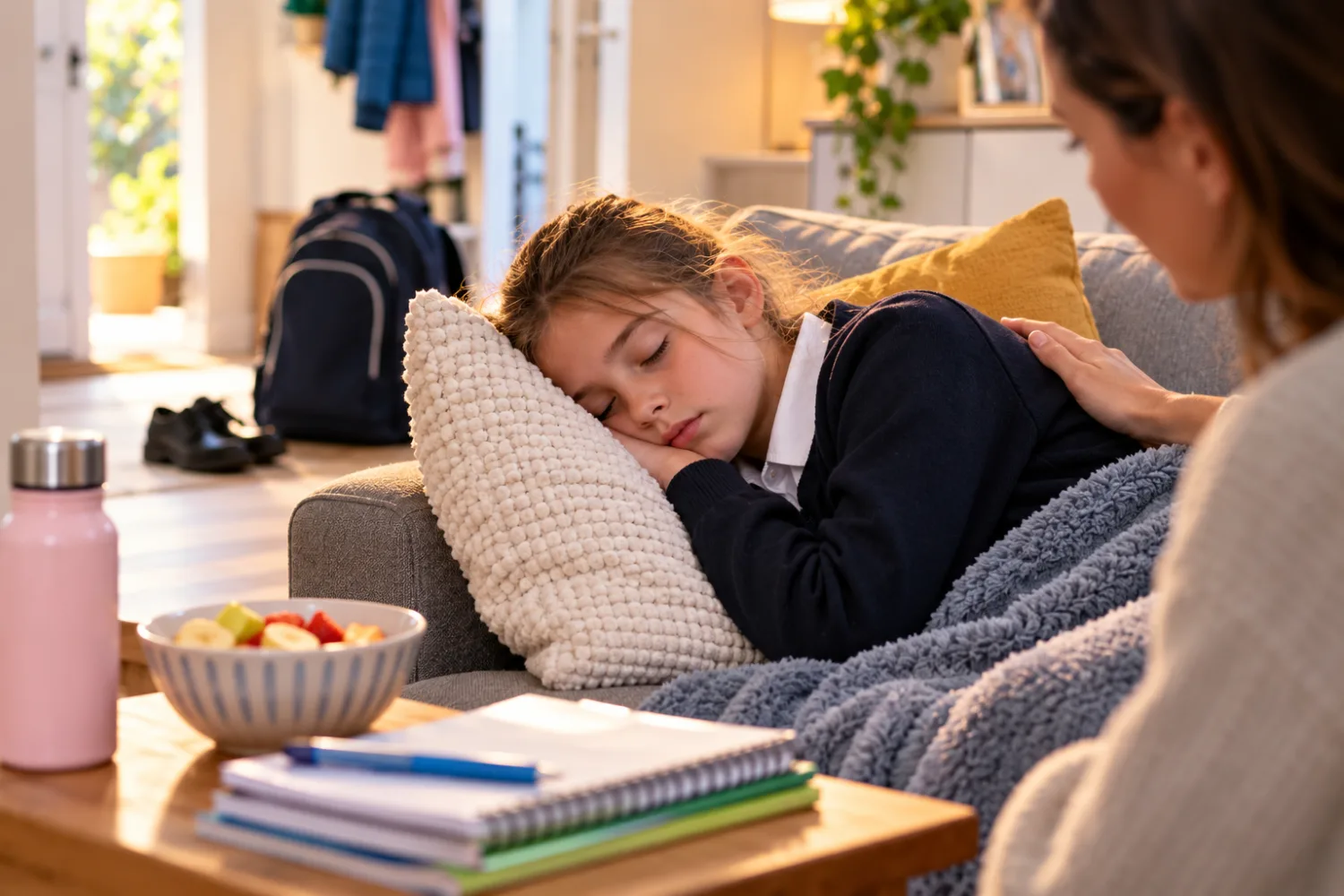
Secondary school can be mentally and physically tiring. Pupils may walk much further during the day, carry equipment, concentrate across several subjects and repeatedly adjust to different teachers’ expectations.
Some children hold themselves together throughout the school day and release their emotions once they feel safe at home. This can look like irritability, tears, withdrawal or arguments over small things. It is sometimes described as after-school restraint collapse.
Responding calmly does not mean accepting harmful behaviour. It means recognising that exhaustion may be contributing to it. Food, water, quiet and a short period without demands can help before homework or detailed conversation begins.
Protect sleep as much as possible. A consistent bedtime, reduced late-night screen use and preparation the evening before can make mornings easier. Try not to fill every evening with new clubs and social activities immediately. Your child may need time to adjust before adding further commitments.
Our guide to healthy sleep habits for school-aged children explains how routines, light, devices and daily activity can affect sleep.
Tiredness should usually begin to improve as the school becomes familiar. Speak to the school or a healthcare professional if exhaustion is extreme, continues to worsen or comes with other concerns such as persistent pain, fainting, significant changes in eating or an inability to manage ordinary daily activity.
Build an evening routine that your child can eventually own
Organisation is one of the biggest changes between primary and secondary school. Pupils may need different books, equipment and PE kit on different days, while homework is set by several teachers.
During the first month, parents can provide structure without taking complete control.
A simple evening routine might involve:
- checking the timetable for the next day;
- reviewing homework and deadlines;
- putting completed work into the bag;
- adding the correct books and equipment;
- checking whether PE kit or another special item is needed;
- and placing the bag, coat and shoes in a predictable location.
At first, you might complete the check together. After several days, let your child lead while you prompt only if necessary. Eventually, your role should reduce to an occasional question or final glance rather than packing the bag yourself.
Do not create a system so complicated that nobody can maintain it. Colour coding, checklists and folders can help, but only when your child understands and uses them. A plain handwritten list may work better than an elaborate planner designed by an adult.
Keep spare basic stationery at home if possible. Replacing a lost pen should not become a nightly crisis. At the same time, encourage your child to notice what repeatedly goes missing and take reasonable care of their belongings.
If organisation remains unusually difficult despite practice, talk to the school. Persistent problems may reflect attention, processing, working-memory or executive-function difficulties rather than carelessness.
Let homework settle before deciding there is too much or too little
Homework during the first month can be inconsistent. Some subjects begin immediately, while others spend time establishing routines. Pupils may also misunderstand instructions or believe that every task needs to be completed on the same evening.
Help your child establish where homework is recorded. This may be a planner, an online platform or a combination of systems. If the school uses several digital services, make sure your child can access them and understands where to look.
Encourage them to note the deadline, not just the task. A piece of work due next week should not automatically take priority over something needed tomorrow.
Parents can help interpret instructions, divide a larger task into stages and create a workable routine. Try not to correct every answer or turn homework into a second teaching shift. The finished work should still show the pupil’s understanding.
If your child is spending an excessive amount of time on routine tasks, find out why. They may be aiming for unnecessary perfection, struggling with a concept, becoming distracted or misunderstanding the expected depth. A brief message to the teacher can be appropriate if the pattern continues.
Our guide to helping with homework without the stress explores how parents can support learning without taking over.
A forgotten piece of homework in the first weeks is not a disaster. Help your child respond honestly, complete it where possible and learn from the experience. Repeated missing work needs a plan; one mistake needs perspective.
Watch friendships without trying to manage them
Friendships are often one of the greatest concerns about starting secondary school. Some children arrive with a secure group from primary school. Others know nobody, or discover that familiar friends have been placed in different tutor groups.
Early friendships can change quickly. A child may spend the first week with the person they sat beside on day one and become closer to someone else later. Try not to treat every change as permanent.
Ask about who your child spends time with, but avoid requesting a daily ranking of friends. Questions such as “Who did you sit with?” or “Did anyone seem friendly?” are usually less pressurising than “Have you made a best friend yet?”
It can take weeks or months for genuine friendships to develop. Smaller signs of connection matter: recognising someone in the corridor, sharing lunch, working comfortably with a partner or joining a club.
If your child has not been placed with familiar pupils, our guide to what to do when a child is separated from their friends explains when to wait, when to contact the school and how to support new connections.
Encourage clubs or activities linked to genuine interests rather than joining everything in the hope of finding friends. Shared activity can make conversation easier, but an overloaded timetable may add stress.
Contact the school if your child is repeatedly alone, excluded, threatened or afraid of unstructured times. Bullying is not a normal part of “learning to fit in” and should be reported clearly.
Make travel safe without removing every bit of independence
Travelling independently can be one of the most exciting and worrying parts of secondary school.
During the first month, check that the planned route works under real conditions. A bus may be more crowded than expected, a crossing may be difficult at school time or the journey may take longer when pupils are carrying bags.
Your child should know:
- which route or service to use;
- where to get on and off;
- what to do if the bus or train does not arrive;
- who to contact if they miss a stop or become lost;
- how to cross roads safely;
- and where they can go for help.
Agree how much contact is reasonable. A message on arrival may be helpful during the first days, but continuous location checking can increase anxiety for some families. The arrangement should reflect your child’s age, maturity, route and needs.
If a phone is carried for safety, make sure your child understands the school’s rules. It may need to remain switched off and out of sight during the day. A phone should support the journey rather than become another classroom problem.
Gradually step back as confidence grows. A child who practises handling a small delay or asking a transport employee for help becomes better prepared than one whose journey is managed remotely at every moment.
Keep communication with the school clear and proportionate
Secondary-school communication can feel less personal than primary school. Parents may no longer see the class teacher at the gate, and a child may be taught by ten or more members of staff.
Find out how the school wants parents to make contact. There may be a central email address, parent portal, absence line or specific route through the tutor or head of year.
For pastoral or transition concerns, the form tutor is often a sensible starting point. Subject-specific questions may need to go to the relevant teacher. Safeguarding concerns should follow the school’s safeguarding route and should not wait for a routine parents’ evening.
Keep messages focused. Explain what has happened, how often it has happened, how it is affecting your child and what response you are seeking. A long account of every difficulty since the first day can make the immediate issue harder to identify.
Try not to email every teacher after one poor evening. First establish whether the problem is isolated, a misunderstanding or part of a pattern. Equally, do not wait for months if your child is significantly distressed.
Our guide to talking to a teacher when you are worried can help parents prepare for a constructive conversation.
Remember that your child should gradually learn to ask questions too. Encourage them to seek clarification about homework, equipment or classroom expectations where they can. Parental contact remains important, but it should not replace every opportunity for the pupil to advocate for themselves.
Distinguish normal transition worries from signs that help is needed
Feeling nervous, getting lost, forgetting equipment and being unusually tired can all be normal during the first month. The important questions are whether things are gradually improving and whether your child can still attend, participate and recover at home.
Pay closer attention if your child:
- becomes increasingly distressed rather than gradually more settled;
- has frequent stomach aches, headaches or nausea linked to school;
- cannot sleep because of school worries;
- stops eating normally;
- repeatedly asks to stay home;
- appears frightened of a particular pupil, adult, lesson or location;
- regularly loses or damages belongings in unexplained circumstances;
- withdraws from activities they usually enjoy;
- or talks about hopelessness, self-harm or not wanting to be alive.
Do not assume all physical symptoms are “just anxiety”. Seek medical advice when symptoms are persistent, severe or otherwise concerning.
The NHS guidance on anxiety in children advises parents to listen carefully, avoid dismissing worries and work with the school to identify the problem and possible solutions. If anxiety is severe, persists or interferes with everyday life, speak to the school and consider advice from a GP or school nurse.
When your child says they do not want to attend, explore what is making school difficult rather than beginning a battle over motivation. Avoiding school can sometimes make anxiety harder to overcome, but simply forcing attendance without addressing the cause may also intensify distress.
Our detailed guide to school anxiety and school avoidance explains how families and schools can identify barriers and plan appropriate support.
At the end of the month: review progress, not perfection
After four weeks, your child does not need to have mastered every routine, become close friends with a large group or achieved perfect homework records.
Look for a direction of travel. Do they know their way around more confidently? Can they name adults who can help? Are mornings becoming more predictable? Have they begun to manage their timetable and equipment with less support?
A useful end-of-month conversation can cover:
- what now feels normal that seemed difficult at first;
- which routine still creates problems;
- whether homework is manageable;
- how break and lunchtime feel;
- whether there is a trusted adult at school;
- and one thing that might make the next month easier.
Celebrate progress without making a large performance of it. Your child may appreciate a quiet acknowledgement that they have handled a significant change.
Adjust the support you provide. If your child can now pack their bag reliably, stop checking every item. If they still miss PE kit twice a week, keep a checklist in place. Independence should increase in areas that are becoming secure while support remains where it is genuinely needed.
Childline’s guidance on moving schools reminds young people that planning travel, preparing equipment, recording homework and asking trusted adults for help can make the adjustment easier. Parents can encourage all of these while allowing the child to take more ownership over time.
For a wider view of the transition, read our guide to what parents wish they had known about moving from Year 6 to Year 7.
Frequently asked questions
How long does it take to settle into secondary school?
Some children feel comfortable within days, while others need a term or longer. Settling is rarely a straight line. A child may enjoy the first week and struggle once work becomes more demanding. Look for gradual improvement rather than expecting every difficulty to disappear by a fixed date.
Should I pack my child’s school bag for them?
It can be helpful to pack the bag together during the first few days, particularly if your child finds organisation difficult. Let them lead the process and gradually reduce your involvement. The long-term aim is for your child to manage the routine with a checklist or timetable rather than depend on a parent remembering everything.
What if my child keeps getting lost?
Occasional mistakes are normal in a large new school. Encourage your child to use their map, follow signs and ask staff or older pupils designated to help. Contact the tutor if getting lost remains frequent, causes significant distress or is linked to mobility, processing, visual or other additional needs.
How much homework should a Year 7 pupil receive?
Homework expectations vary between schools and subjects. More important than a universal number of minutes is whether tasks are purposeful, clearly explained and manageable alongside rest and family life. Contact the school if routine homework regularly takes far longer than expected or causes persistent distress.
What if my child has not made friends after the first month?
Close friendships can take time, but your child should have some opportunity to feel included. Ask about lessons, breaktimes and clubs rather than focusing only on a “best friend”. If they are consistently alone, distressed or being excluded, speak to the tutor or pastoral team about practical support.
Should my child stay home if they are anxious?
A short-term absence can sometimes feel relieving, but repeated avoidance may make returning harder. Talk to your child and the school promptly to identify the cause and agree support. The government’s school attendance and absence guidance explains the general rules in England, but wellbeing concerns should be addressed through support rather than treated only as an attendance statistic.
When should I contact the school about transition problems?
Contact the school promptly if there are safeguarding concerns, bullying, serious anxiety, repeated refusal to attend, unmet medical needs or problems preventing your child from accessing lessons. For smaller organisational difficulties, it may be reasonable to try a routine at home and monitor it for several days before contacting the tutor.
The first month of secondary school is not a test of whether your child can suddenly manage everything alone. It is a period in which independence begins to grow through practice, mistakes and reliable support.
Keep the foundations steady: sleep, food, travel, preparation and open communication. Notice what is improving, act early when distress is increasing and allow your child to own more of the routine as they become ready. By the end of the first month, the school may not feel completely familiar, but it should be beginning to feel possible.