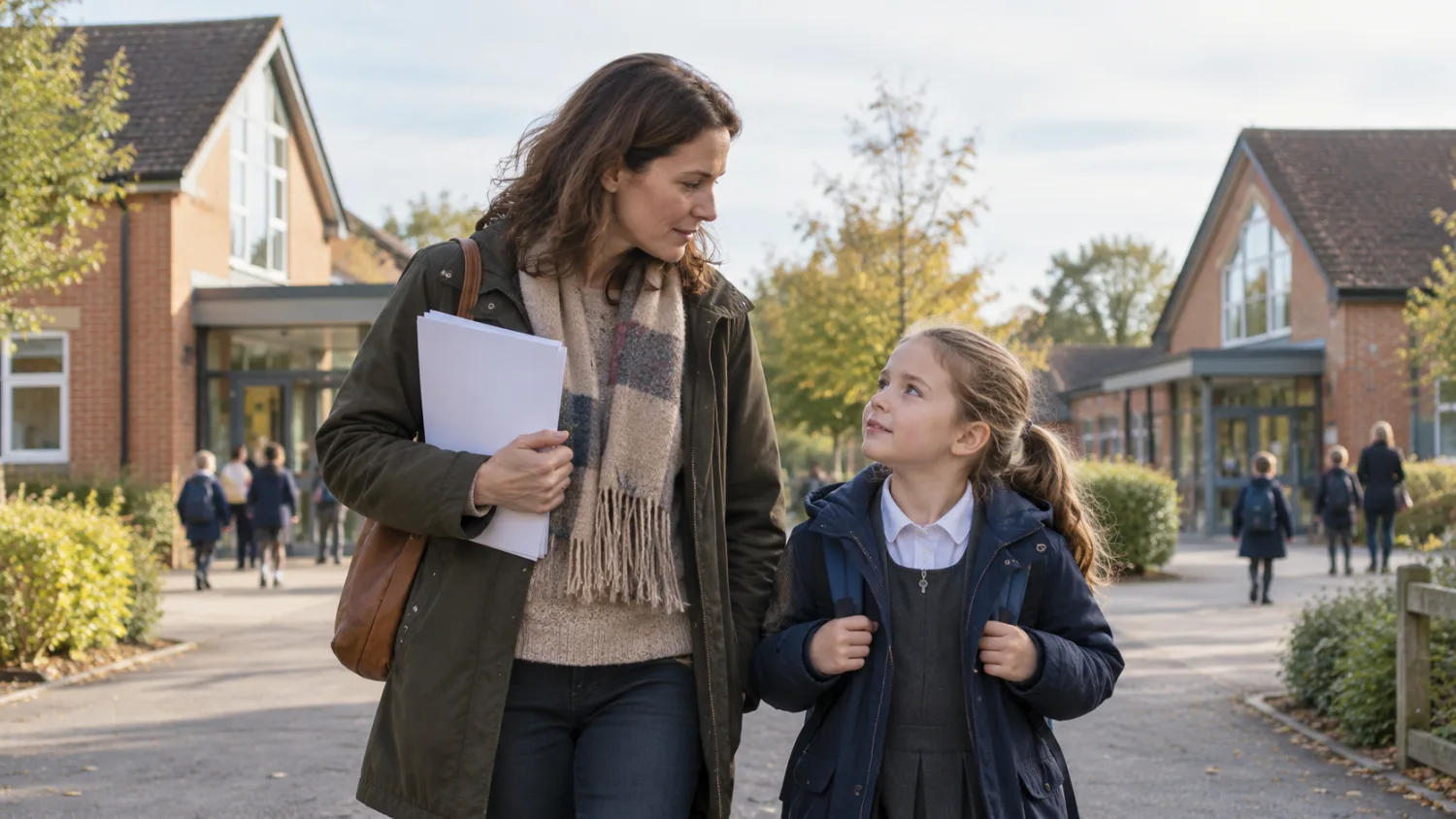
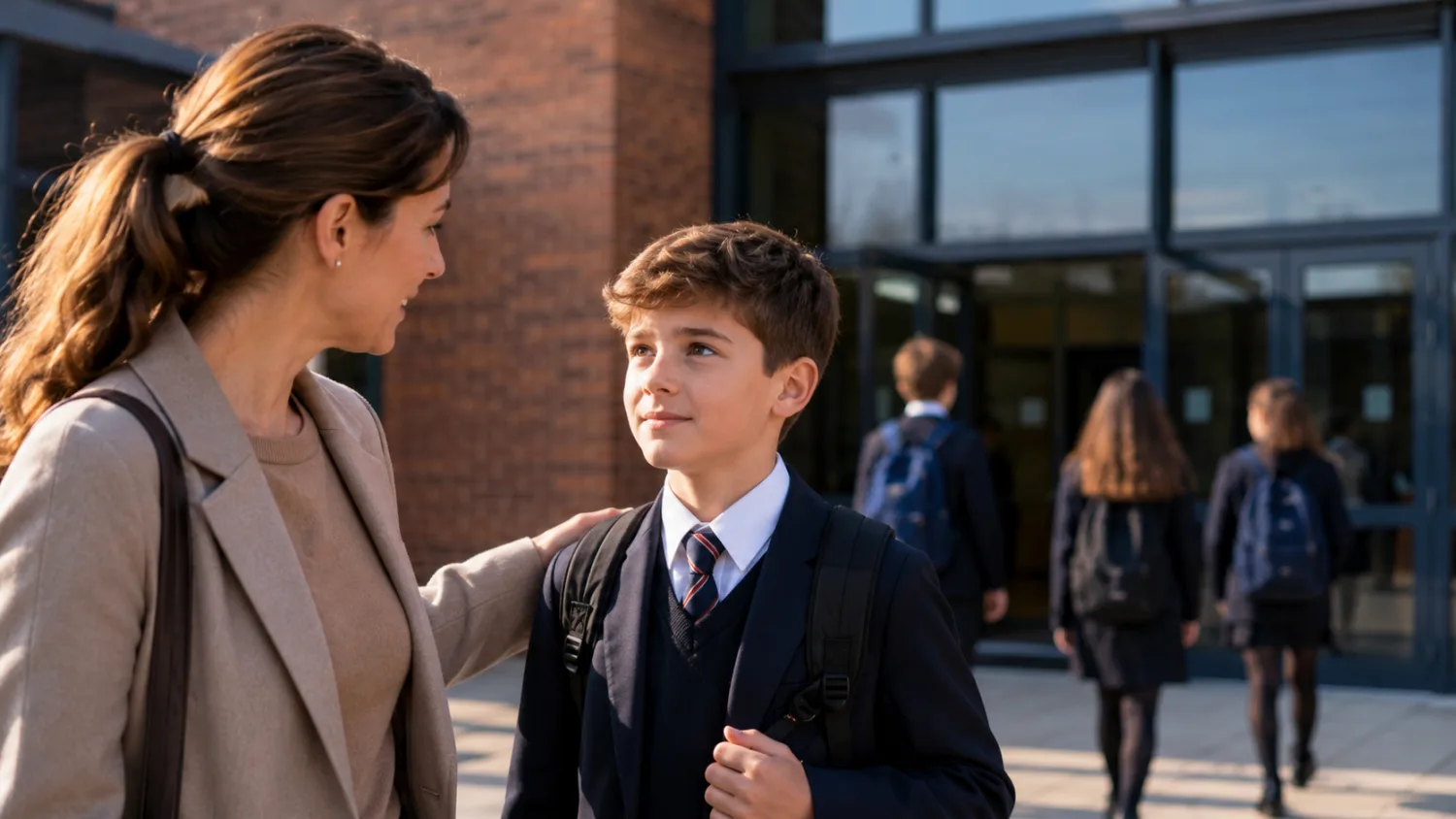
The move from Year 6 to Year 7 is one of the biggest changes in a child’s school life. It is exciting, but it can also feel unsettling. Your child goes from being one of the oldest pupils in a familiar primary school to one of the youngest in a much larger secondary school. They may have a new route to school, a new uniform, a timetable, different teachers, different classrooms, more homework, new friendship groups and a stronger expectation that they manage things independently.
Many children cope well. Some thrive almost immediately. Others wobble quietly, even if they seemed confident in Year 6. And many parents later say the same thing: “I wish I had known what the transition was really like before September.”
This guide brings together the things parents often wish they had understood earlier — not to make the move sound frightening, but to make it more manageable. A good Year 6 to Year 7 transition is not about buying every item perfectly, drilling your child all summer, or solving every worry in advance. It is about preparing for the practical, emotional and social changes so your child starts secondary school feeling as steady as possible.
The biggest change is not the building — it is the independence
Parents often focus on the obvious changes: the bigger site, the older pupils, the uniform, the journey, the lunch system, the timetable. These matter. But the deeper change is independence.
In primary school, one teacher usually knows your child very well. The classroom is familiar. Equipment is often shared. The day has fewer transitions. If your child forgets something, an adult may notice quickly. If they look upset, someone who knows them may spot it.
In Year 7, your child may have ten or more teachers. They may move room every lesson. They may need to remember books, PE kit, ingredients, logins, homework deadlines, lunch money, bus passes and which staircase leads where. The school may be caring and well organised, but no single adult will automatically see everything in the way a Year 6 class teacher might.
That does not mean your child is on their own. It means they need systems. The children who settle best are not always the most academically able. They are often the ones who learn how to organise themselves, ask for help, recover from small mistakes and keep going when the day feels busy.
Do not assume Year 6 confidence will automatically carry over
Many Year 6 pupils seem ready by July. They are taller, more independent, sometimes a little restless, and often excited to leave primary school behind. Then September arrives and the confidence dips.
This is normal. Being ready to leave primary school is not the same as being instantly comfortable in secondary school. Your child may be enthusiastic one day and tearful the next. They may love the idea of secondary school but panic about the canteen. They may be fine in lessons but exhausted at home. They may say “it’s okay” while quietly worrying about friendships, homework or getting lost.
Try not to treat wobbles as failure. A wobble is often part of transition. The question is whether your child is gradually settling, or whether the worries are growing and starting to affect sleep, appetite, attendance, behaviour or mood.
The NHS notes that starting secondary school can be difficult because the school is bigger, children need to make new friends, and they become more responsible for managing their day. If your child shows signs of anxiety, the NHS advice on anxiety in children is a useful place to start.
The summer before Year 7 should not become a boot camp
It is tempting to use the summer holiday to prepare for everything: academic gaps, handwriting, spelling, timetables, uniform, friendship worries, bus routes, lunch routines and phone rules. But children also need rest after Year 6. Some will have had SATs, leavers’ events, emotional goodbyes and a long build-up to change.
A good summer transition is balanced. You want enough preparation that September feels familiar, but not so much that secondary school starts to feel like a looming test.
Focus on a few practical habits:
- practising the journey to school;
- trying on uniform and shoes early enough to fix problems;
- using a planner or calendar for small responsibilities;
- packing and unpacking a school bag;
- checking they can open lunch containers, use a bank card or manage cash if needed;
- building a sleep routine before the final week of the holiday;
- talking calmly about what will be different.
If you want to keep learning ticking over, keep it light. Reading, times tables, mental maths, short writing, everyday problem-solving and conversation are usually better than turning the summer into a catch-up programme. If your child’s Year 6 report mentions “working at expected standard” and you are unsure what that really means, read What “Working at Expected Standard” Actually Means.
The first few weeks may be more tiring than you expect
One of the most common surprises is how tired children are in September. Even children who like their new school can come home drained.
This is not just because lessons are harder. It is because everything is new. They are decoding a new building, new routines, new adults, new expectations, new social rules and new consequences. They may be trying to look confident all day. They may be concentrating on not getting lost, not being late, not forgetting equipment and not standing out.
At home, this can look like:
- short temper;
- tears over small things;
- silence after school;
- sleepiness;
- increased appetite;
- less patience with siblings;
- homework panic;
- saying “I hate it” and then being fine the next day.
Try to keep the first few weeks gentle where possible. Avoid overloading evenings. Have easy food ready. Expect some emotional release. Do not interrogate them at the door. Some children talk best after food, in the car, on a walk, or just before bed. Others need quiet before they can explain anything.
Friendships may shift, even if they start secondary with friends
Parents often feel reassured if their child starts secondary school with friends from primary. It can help. But it does not guarantee a smooth social transition.
Friendships often change in Year 7. Children meet new people, join new forms, develop new interests and sometimes try out new versions of themselves. A best friend from Year 6 may drift. A child who knew nobody may make friends quickly. A child with a large primary group may suddenly feel left out.
This can be painful for parents to watch. The instinct is to fix it quickly, but Year 7 friendships often need time to settle. Listen carefully, but do not assume every friendship wobble is a crisis. Ask gentle questions:
- “Who did you sit with at lunch today?”
- “Is there anyone you feel comfortable with yet?”
- “Which lesson feels easiest socially?”
- “Are there clubs you might try?”
- “Is anyone being unkind, or does it feel more like people are moving around?”
If there is repeated targeted unkindness, humiliation, threats, exclusion or online harassment, treat it seriously and contact school. But if the issue is general loneliness or shifting groups, the best support may be helping your child build small opportunities: joining a club, speaking to a form tutor, arranging a weekend meet-up, or finding one friendly face rather than trying to secure a whole group immediately.
The form tutor matters more than many parents realise
In primary school, parents usually know exactly who to speak to. In secondary school, it can feel less obvious. Is it the form tutor, head of year, subject teacher, SENCO, pastoral lead, office, attendance officer or safeguarding team?
For many everyday concerns, the form tutor is a good first contact. They may not teach your child much, but they often have the overview: attendance, punctuality, equipment, friendship concerns, general wellbeing and patterns across subjects. If they are not the right person, they can usually point you to the right route.
Subject-specific concerns are usually best directed to the subject teacher. For example, if your child is struggling in maths but fine elsewhere, contact the maths teacher. If the issue is wider — anxiety, friendship problems, behaviour, attendance, organisation, SEND or a pattern across several subjects — start with the form tutor, head of year or pastoral team, depending on the school’s system.
If you are unsure how to raise a worry constructively, use the approach in How to Talk to Your Child’s Teacher When You’re Worried. The same principles apply in secondary school: be specific, stay calm, ask what school has noticed and agree a next step.
Homework is often a shock because it is spread across subjects
Year 7 homework can feel heavier not because each task is huge, but because it comes from different teachers. One small task from English, one from maths, one from science, one from geography and one from languages can suddenly feel like a lot to manage.
The hardest part for many children is not doing the homework. It is remembering it, understanding the instructions, bringing home the right book, logging into the right platform, knowing when it is due and starting before panic sets in.
Parents can help by building routines rather than hovering over every answer. At the start of Year 7, you may need to check the homework platform together each evening. Over time, the aim is to step back.
Try a simple routine:
- check homework at the same time each day;
- write deadlines somewhere visible;
- pack the bag the night before;
- break longer tasks into smaller chunks;
- encourage your child to message or speak to the teacher early if they are confused;
- avoid leaving everything until Sunday evening.
If homework regularly ends in tears, do not assume your child is lazy. It may be tiredness, unclear instructions, weak organisation, anxiety, working memory difficulties, perfectionism or a genuine subject gap.
Your child needs to know how to ask for help
In Year 7, adults may not automatically notice every problem. This makes help-seeking a key transition skill.
Some children find this easy. Others would rather sit in confusion than put up their hand. They may worry about looking silly, annoying the teacher, being told off or standing out. Quiet pupils are especially easy to miss if their work looks neat but they do not really understand.
Before September, practise the language of asking for help:
- “I don’t understand the first step.”
- “Could you explain what I need to do first?”
- “I think I wrote the homework down wrong.”
- “I’ve lost my timetable. Where should I go?”
- “I’m worried about something at lunch. Who can I speak to?”
It can also help to identify safe adults before there is a problem. At transition events, ask who pupils should go to if they are lost, upset, bullied, unwell, confused about homework or worried about getting home.
Organisation is a teachable skill, not a personality trait
Some children seem naturally organised. Others are chaotic, forgetful and easily overwhelmed. But organisation can be taught.
Secondary school requires pupils to manage more moving parts. They need to know what to take each day, where to go, what to hand in, which books to bring home and when to prepare for PE, technology, music or food lessons.
Do not wait until September to discover that your child has never packed their own bag. In Year 6 and over the summer, practise:
- checking a timetable;
- packing for the next day;
- putting letters or forms in one place;
- charging devices, if used;
- keeping a pencil case stocked;
- placing keys, travel cards and lunch cards somewhere consistent;
- using folders without turning them into a paper mountain.
At first, you may need to do this with your child. Then move to prompting. Then move to checking occasionally. The goal is independence, but independence often needs scaffolding before it becomes real.
The journey to school is part of the transition
For many children, Year 7 is the first time they travel further, use public transport, walk with friends, cross busier roads or manage a journey without an adult. This can be exciting, but it can also create anxiety for both parent and child.
Practise the route before term starts. Do it at the right time of day if possible, so your child sees what the traffic, bus stop, crossing or walk actually feels like. Talk through what to do if:
- the bus is late;
- they miss a stop;
- their phone battery dies;
- they lose their travel card;
- a friend wants to take a different route;
- they feel unsafe;
- they arrive late.
Do not frighten them with every possible risk, but do give them a plan. Children feel more confident when they know what to do if something goes wrong.
Uniform and equipment can become emotional
Uniform is not just clothing. In Year 7, it can become part of belonging. Children may worry about having the wrong shoes, the wrong bag, the wrong skirt length, the wrong coat, the wrong PE socks or the wrong interpretation of a rule.
Parents often wish they had checked uniform details earlier. Secondary uniform policies can be more specific than primary ones. There may be rules about logos, jewellery, trainers, coats, hairstyles, makeup, nails, PE kit, bags and branded items.
Check the school website carefully. Schools are legally expected to publish key information online, and uniform information is often included with policies or parent information. If you want to understand what schools are required to publish, see What Schools Are Legally Required to Publish on Their Website.
Try everything on before the final week of summer. Label everything. Take a photo of PE kit laid out if your child finds packing difficult. Keep spare basics if you can. If cost is a concern, ask the school about second-hand uniform, hardship support or local schemes. Schools should be aware that uniform affordability matters, and this is explored further in How to Become a School Uniform Supplier: What Schools Need From a Partner.
Phones are useful, but they need boundaries
Year 7 is often the point when phone use changes. A child may need a phone for travel, safety, messages or school apps. But phones can also bring social pressure, group chats, distraction, late-night notifications and friendship drama.
Before September, agree expectations. These might include:
- where the phone stays overnight;
- what happens during homework;
- whether notifications are off during sleep;
- which apps are allowed;
- what to do if a group chat becomes unkind;
- how to handle unknown contacts;
- when your child should call rather than message;
- the school’s phone policy.
Do not rely only on monitoring. Talk about judgement. Your child needs to know that they can come to you if something goes wrong online without immediately losing all access. If they think the only outcome is punishment, they may hide problems.
Secondary schools expect parents to read more systems
Primary school communication is often direct and familiar. Secondary communication can be more system-based: apps, portals, behaviour points, homework platforms, attendance messages, online payments, email bulletins and website updates.
Parents often wish they had got logins sorted earlier. In the first half-term, make sure you know:
- how homework is set;
- how behaviour or reward points are shared;
- how attendance is reported;
- how to pay for lunch, trips or activities;
- how to contact the form tutor;
- how to update medical or contact details;
- where term dates and policies are published;
- where to find letters and announcements.
It is also worth bookmarking the school website. A well-maintained website can tell you a lot about policies, safeguarding, curriculum, uniform, SEND, complaints, governance and key contacts.
Academic expectations change gradually, then suddenly
Year 7 is not usually “GCSE pressure” from day one, but academic expectations do change. Children may meet more specialist vocabulary, longer reading, more extended writing, different marking styles and subject-specific ways of thinking.
The biggest jump is often not difficulty but variety. In one day, a child might move from science to French to history to maths to drama to PE. Each subject has different equipment, language, expectations and homework style.
Parents can help by asking better questions than “Did you do your homework?” Try:
- “Which subject felt clearest today?”
- “Was there anything you didn’t understand?”
- “Do you know what to do first for that homework?”
- “Is this a quick task or a longer one?”
- “Do you need anything for tomorrow?”
If your child starts to fall behind, act early but calmly. Ask what the specific issue is. Is it knowledge, confidence, reading, writing, organisation, attention, homework, attendance or anxiety? The answer matters because each problem needs a different solution.
Transition is different for children with SEND
For children with special educational needs or disabilities, transition needs more than a standard induction day. A child may need extra visits, visual information, maps, social stories, timetable practice, sensory planning, key adult introductions, support around lunch and break, or careful handover between primary and secondary staff.
If your child has SEN support, an EHCP, medical needs, autism, ADHD, dyslexia, speech and language needs, anxiety, sensory needs or a history of school avoidance, contact the secondary school early. Do not assume everything has transferred smoothly.
Ask:
- Has the secondary SENCO received information from primary school?
- What support will be in place from the first day?
- Who is the key adult my child can go to?
- Will staff receive relevant information before teaching them?
- How will homework and organisation be supported?
- What happens if my child becomes overwhelmed?
- How will we review the transition after a few weeks?
Anna Freud’s guidance for parents and carers on secondary transition is a useful evidence-informed resource. If you are unsure about school-level support and statutory plans, read SEN Support vs EHCP: What Is the Difference?.
Behaviour systems can feel very different
Secondary schools often use more formal behaviour systems than primary schools. There may be behaviour points, detentions, removal rooms, uniform checks, punctuality rules, equipment sanctions and online behaviour logs.
Some children adapt quickly. Others are shocked by how fast consequences can happen, especially for forgotten equipment, lateness, talking, missing homework or uniform mistakes.
Before term starts, read the behaviour policy with your child in a calm way. Do not make it sound threatening. Frame it as: “Every school has rules. It helps to know them so you don’t get caught out.”
If behaviour incidents begin to repeat, look for patterns. Is your child late because they cannot find rooms? Missing homework because they do not understand the platform? Getting detentions for equipment because their bag routine is weak? Being removed from lessons because they are anxious, overwhelmed or trying to impress peers?
Consequences may be part of the school system, but repeated problems need understanding as well as punishment.
Attendance worries can start quietly
Some children who attended primary school happily begin to struggle with attendance after moving to secondary. It may start with Sunday-night stomach aches, Monday-morning tears, repeated requests to stay home, or complaints that feel vague: “I just can’t go.”
Do not ignore early signs, but do not panic either. Ask what part of school feels hard. Is it the journey, the gate, form time, a particular lesson, lunch, friendships, homework, toilets, noise, uniform, older pupils or fear of getting into trouble?
If avoidance grows, contact school early. YoungMinds has advice for parents on school anxiety and refusal, and early joined-up support is usually better than waiting until attendance has collapsed.
For more detail, read What to Do If Your Child Refuses to Go to School and School Anxiety and School Avoidance: A Parent’s Guide.
Do not compare your child’s transition too closely with others
Some children come home from the first day delighted. Others cry. Some make friends quickly and then wobble in October. Some seem anxious all summer and then settle beautifully. Some are fine until the first homework deadline. Some are happy socially but overwhelmed academically.
There is no single correct transition pattern.
Try not to compare your child too closely with friends’ children. Parents often share the highlights: “He loves it”, “She’s made loads of friends”, “He’s already joined three clubs.” They may not mention the tears, lost PE kit, lunchtime worries or bedtime meltdowns.
Look instead for your child’s direction of travel. Are they gradually learning routines? Are they finding at least one adult they trust? Are they beginning to recognise faces? Are they recovering from small problems? Are they becoming more confident week by week?
Ask about clubs, but do not force everything at once
Clubs can be one of the best ways to settle into secondary school. They help children meet pupils beyond their form, build confidence, use lunchtime positively and feel part of the school.
But the first few weeks can be exhausting, so do not force a full timetable immediately. Encourage your child to try one thing. It might be sport, choir, drama, chess, art, coding, homework club, library club, debating, science club or a quiet lunchtime space.
If your child is shy, anxious or socially unsure, a structured club can be easier than an unstructured playground. It gives them something to do and a reason to be near other children without having to walk up and start a conversation from nothing.
Parents need to step back, but not disappear
Year 7 is a gradual handover. Your child needs more independence, but they do not suddenly become an adult in September.
Stepping back means letting them try. It means they pack the bag, but you check the routine is working. They write the email to a teacher, but you help them phrase it. They manage homework, but you help them plan the week. They solve small friendship issues, but you listen and watch for signs it is becoming more serious.
The aim is not to rescue them from every difficulty. The aim is to help them build the skills to handle ordinary difficulties and know when to seek adult help for bigger ones.
What parents wish they had done before September
Looking back, many parents say they wish they had focused less on the perfect pencil case and more on practical confidence.
Useful preparation includes:
- walking or travelling the school route several times;
- checking uniform rules carefully;
- labelling everything, including shoes, coats, calculators and PE kit;
- practising using a timetable;
- helping the child memorise key information such as address and emergency contacts;
- setting up a simple homework routine;
- agreeing phone and screen boundaries;
- finding out who the form tutor or pastoral contact is;
- checking the school website for policies, term dates and parent systems;
- talking about what to do if something goes wrong.
None of these guarantees a perfect transition. But they reduce avoidable stress.
What parents wish they had not worried about so much
Parents also often realise they worried too much about things that sorted themselves out.
Common examples include:
- whether their child would get lost forever;
- whether they would be the only one without friends;
- whether one forgotten book would ruin everything;
- whether every homework task had to be perfect;
- whether the first week determined the whole year;
- whether their child had to join clubs immediately;
- whether every emotional wobble meant the school was wrong.
Most children get lost once or twice and survive. Most forget something. Most have awkward social moments. Most need time to understand the rhythm of secondary school. The first week matters, but it does not define the next five years.
When to contact the school
Some transition issues need time. Others need adult support. Contact the school if your child:
- is regularly distressed before or after school;
- cannot manage homework despite trying;
- is repeatedly getting lost, late or sanctioned;
- has no one to sit with at lunch after several weeks;
- reports bullying or targeted unkindness;
- is refusing school or becoming physically unwell with anxiety;
- has SEND support that does not seem to be in place;
- is having repeated behaviour incidents;
- seems unusually withdrawn, angry or low;
- has stopped sleeping well because of school worries.
When contacting school, be specific. Instead of “She isn’t settling”, say: “She is crying most evenings, says she has no one to sit with at lunch, and is worried about science because she cannot find the room.” Specific information helps school act.
A simple script for contacting secondary school
If you are not sure what to write, keep it calm and practical:
Hello, I’m contacting you because I’m a little concerned about how my child is settling into Year 7. They have mentioned feeling anxious at lunchtime and are coming home upset several times a week. Could we arrange a short conversation about what school has noticed and what support might help?
For academic concerns:
Hello, I’m concerned that my child is finding the homework system difficult to manage. They are trying, but they are becoming overwhelmed and missing deadlines. Could you advise who we should speak to and whether there is support for organisation in Year 7?
For SEND concerns:
Hello, I wanted to check that the transition information from primary school has been received and that the agreed support is in place. Could we arrange a review with the SENCO or relevant pastoral member of staff?
What to ask at the first Year 7 parent meeting
The first parent meeting or settling-in evening can pass quickly. Go in with a few questions that reveal the bigger picture.
You might ask:
- How is my child settling socially?
- Do they seem confident moving around school?
- Are they organised for lessons?
- Are they completing homework reliably?
- Do they ask for help when needed?
- Are there any subjects where they seem less secure?
- Have there been any behaviour or punctuality patterns?
- Who should I contact if I have a concern?
- What would help them settle further this term?
If academic language on reports feels confusing later in the year, return to What “Working at Expected Standard” Actually Means for help interpreting school wording.
What if the chosen school does not feel right?
Sometimes transition worries are temporary. Sometimes parents begin to wonder whether the school is the wrong fit. It is important not to jump to that conclusion after one bad week, but it is also important to listen if problems are serious and persistent.
Before deciding a school is wrong, ask:
- Have we spoken to the right person?
- Does school understand the problem clearly?
- Has a support plan been tried?
- Has the SENCO or pastoral team been involved if needed?
- Is the issue about transition, or something more specific?
- Is my child gradually improving, even slowly?
If you do consider changing schools later, the process is different from normal Year 7 entry. GOV.UK explains that secondary school applications are made through the local council, and in-year moves have their own processes. You can start with the official page on applying for a secondary school place.
A realistic timeline for transition
Every child is different, but this rough timeline may help.
Spring and early summer of Year 6
School places are confirmed, transition information begins, and parents start thinking about uniform, travel and induction days. This is a good time to tell the secondary school about any needs, worries or important context.
Late summer term
Children may attend transition days, meet form tutors, receive information packs and say goodbye to primary school. Emotions can be mixed. Some children become excited; others become unsettled as the reality approaches.
Summer holiday
Focus on rest, gentle preparation, uniform, journey practice and routines. Avoid turning the whole holiday into secondary school preparation.
First two weeks of Year 7
Expect tiredness, information overload and small mistakes. Keep routines simple and evenings calm. Help your child find the right systems for homework, equipment and sleep.
First half-term
Patterns begin to emerge. This is a good time to contact school if worries are not easing. Do not wait until parents’ evening if your child is distressed.
By Christmas
Many children feel much more settled. If your child is still highly anxious, isolated, frequently sanctioned, refusing school or falling behind, ask for a proper review rather than assuming they just need more time.
Final thoughts
The Year 6 to Year 7 transition is not one event. It is a process. It starts before the first day and continues through the first term, sometimes longer.
What parents often wish they had known is that the little things matter: the journey, the bag, the lunch queue, the timetable, the first friendship wobble, the forgotten PE kit, the homework login, the courage to ask for help. These are not side issues. They are the daily experiences that shape whether a child feels safe, capable and ready to learn.
Your child does not need to start Year 7 perfectly organised, socially confident and academically fearless. They need steady adults, clear routines, permission to wobble, and support to build independence step by step.
Secondary school is a big leap, but children do not have to make it in one jump. With preparation, patience and good communication, they can grow into it.
Frequently Asked Questions
When should parents start preparing for the move to secondary school?
Start gentle preparation after the school place is confirmed, but avoid making the whole of Year 6 about transition. The most useful preparation usually happens in the summer term and summer holiday: practising the journey, checking uniform, building organisation habits and talking calmly about what will change.
Is it normal for children to be anxious about Year 7?
Yes. Some anxiety is normal because the move involves a bigger school, new friends, new teachers and more independence. Worry becomes more concerning if it is intense, persistent, affects sleep or attendance, or stops your child taking part in normal life.
What should my child know before starting Year 7?
They should know how to get to school, who to ask for help, how to read a timetable, how to pack their bag, what to do if they are lost or late, and what the basic school rules are. They do not need to know everything on day one.
How can I help my child make friends at secondary school?
Encourage small steps rather than forcing instant friendships. Clubs, form activities, shared journeys and lunchtime routines can all help. Ask who they sit with, whether anyone seems friendly, and whether there are structured activities they might try.
What if my child starts secondary school with no friends?
This can feel worrying, but many children make friends after starting. Encourage them to join a club, speak to their form tutor if they feel isolated, and focus on finding one friendly person rather than a whole group immediately.
How much homework should Year 7 pupils expect?
It varies by school. The challenge is often managing homework across several subjects rather than the size of each individual task. If homework regularly causes distress or takes far longer than expected, contact the school.
Should I still help my child pack their bag?
At first, yes, but aim to move gradually towards independence. Do it together, then prompt them, then check occasionally. Many Year 7 pupils need support while they learn to manage a timetable and equipment.
Who should I contact if my child is struggling in Year 7?
For general settling, friendship, organisation or wellbeing concerns, the form tutor or head of year is often the best first contact. For a specific subject, contact the subject teacher. For SEND concerns, contact the SENCO.
What if my child keeps getting detentions in Year 7?
Look for patterns. Are they forgetting equipment, missing homework, arriving late, talking in certain lessons, or struggling with routines? Contact school early and ask what they have noticed. Repeated sanctions may show that your child needs help with organisation, confidence, behaviour or unmet needs.
How do I know if transition worries are becoming school anxiety?
Watch for persistent distress, refusal to attend, repeated physical symptoms on school days, sleep problems, panic, withdrawal or intense fear that does not ease over time. Contact school early and seek advice from your GP or mental health services if concerns are serious.
What should I do if SEND support does not seem to be in place?
Contact the SENCO and ask for a transition review. Check what information was received from primary school, what support is currently in place, who knows about your child’s needs, and when the plan will be reviewed.
How long does it take children to settle into Year 7?
Some settle within days, many take a half-term, and others need longer. Look for gradual progress rather than instant confidence. If problems are worsening or still serious by the end of the first term, ask school for a more detailed review.