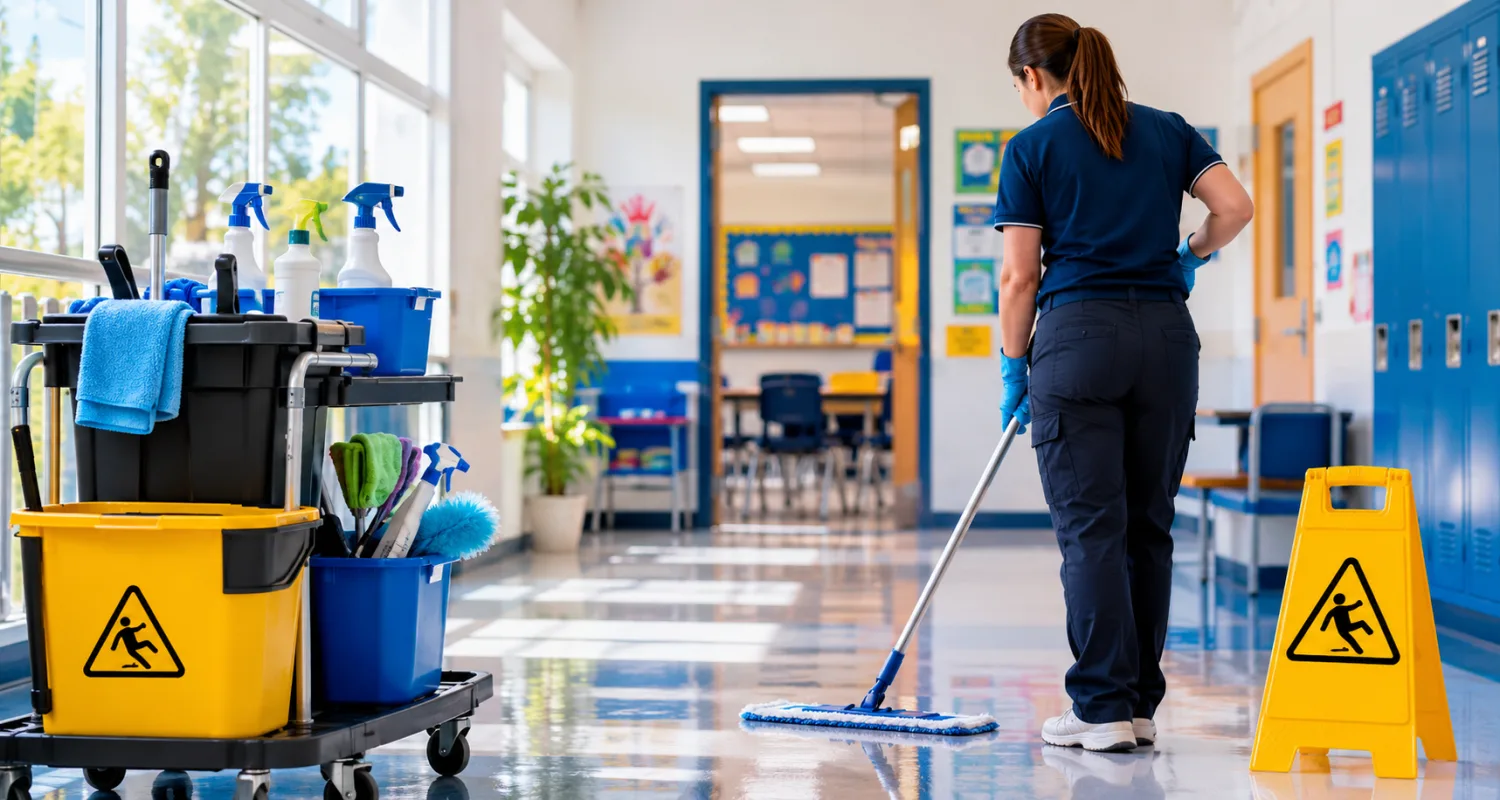
School cleaning contracts can be valuable, stable and long-term work for cleaning companies. Schools need clean, safe, well-maintained buildings every day. They need classrooms ready for learning, toilets that pupils and staff can use confidently, dining areas cleaned quickly, offices kept professional, and site teams that can trust the cleaning provider to turn up and do the job properly.
But winning school cleaning contracts is not just about offering a good price.
Schools and multi-academy trusts need reliable providers who understand safeguarding, health and safety, school routines, procurement rules, staff checks, cleaning standards, communication, and the reality of working around children and busy school sites.
A cleaning company that wants to work with schools needs to show more than “we clean offices”. It needs to show that it understands the education environment.
This guide explains how cleaning companies can position themselves, approach schools, prepare the right evidence, and improve their chances of winning school cleaning contracts.
Understand what schools are really buying
When a school buys cleaning services, it is not only buying labour. It is buying trust.
A school cleaning provider may be responsible for spaces used by hundreds or thousands of pupils, staff, parents and visitors. The work affects hygiene, safeguarding, reputation, staff workload, pupil wellbeing and the daily running of the school.
Schools may need cleaning support for:
- classrooms;
- toilets and washrooms;
- corridors and stairwells;
- dining halls and food areas;
- sports halls and changing rooms;
- science rooms, art rooms and practical areas;
- offices and reception areas;
- libraries and shared spaces;
- nursery or early years areas;
- deep cleans during holidays;
- infection control cleaning;
- window cleaning or specialist cleaning;
- cleaning after events, lettings or building works.
That means your offer should be school-specific. A generic commercial cleaning pitch is rarely enough.
A weak message says:
“We provide professional cleaning services at competitive prices.”
A stronger message says:
“We provide reliable school cleaning services for primary schools and academies, including daily classroom cleaning, washroom hygiene, holiday deep cleans, COSHH documentation, staff vetting and clear site communication.”
The second message sounds more credible because it speaks to what schools actually need.
Know how schools buy cleaning services
Schools do not always buy cleaning services in the same way.
Some schools employ cleaning staff directly. Some outsource to a cleaning contractor. Some are part of a multi-academy trust that makes decisions centrally. Some may use local authority arrangements, procurement frameworks, dynamic purchasing systems, or request quotes from several providers.
The Department for Education has specific guidance on buying cleaning services for schools and multi-academy trusts. It advises schools to consider whether they can buy through a DfE-approved buying option and to think about their needs before starting the process.
For cleaning companies, this means you need to understand the buying route before expecting a quick decision.
Useful questions include:
- Does the school currently outsource cleaning?
- When does the current cleaning contract end?
- What notice period applies?
- Is the decision made by the school, local authority or academy trust?
- Does the school need a formal tender?
- Does the school use a framework or approved buying route?
- Who manages cleaning day to day?
- Who signs off the contract?
- What problems does the school have with the current service?
Cleaning contracts are often planned months ahead. If you contact a school only when you need work immediately, you may be too late. The school may be tied into an existing contract or not yet ready to tender.
This is why timing matters. For a deeper guide, read Best Times of Year to Contact Schools.
Decide which schools are the best fit for your cleaning company
Not every school is the right prospect.
Before approaching schools, define the type of school cleaning work you want and can deliver well.
Consider:
- Do you want primary schools, secondary schools, special schools or independent schools?
- Can you cover multi-site academy trusts?
- What is your realistic service area?
- Can you provide early morning, daytime or after-school cleaning?
- Can you handle large secondary school sites?
- Can you provide holiday deep cleans?
- Can you provide specialist cleaning such as carpets, floors, windows or kitchens?
- Can you support emergency or infection-control cleaning?
- Do you have enough staff cover for absence?
- Can you manage several school sites at once?
A small local cleaning company may be ideal for a local primary school but not ready for a large multi-academy trust contract. A larger cleaning company may be better suited to multi-site contracts, but may need to prove it can still offer responsive local communication.
Think carefully about your strongest fit.
For example, you may position yourself as:
- a local primary school cleaning specialist;
- a school deep-clean provider for holidays;
- a cleaning contractor for academies and MATs;
- a washroom hygiene and daily cleaning provider;
- a specialist cleaning company for schools with high-traffic sites;
- a flexible partner for schools unhappy with inconsistent cleaning.
Clear positioning makes your outreach stronger. It also helps schools understand quickly whether you are relevant.
If you are building a list of schools to contact, read How to Build a School Outreach List That Matches Your Offer.
Prepare the compliance evidence schools will ask for
Schools need cleaning providers who can prove they are safe, reliable and properly managed.
Before approaching schools, prepare a school-specific evidence pack. This can make you much more credible when a school business manager, headteacher, operations lead or trust procurement team reviews your company.
Your evidence may include:
- public liability insurance;
- employer’s liability insurance;
- health and safety policy;
- risk assessments;
- COSHH assessments;
- cleaning method statements;
- safe systems of work;
- staff training records;
- DBS and safeguarding approach where relevant;
- supervision and quality assurance process;
- absence cover process;
- data protection and confidentiality awareness;
- references from similar sites;
- sample cleaning schedules;
- mobilisation plan for starting a new contract.
COSHH is particularly important because cleaning often involves chemical products. The Health and Safety Executive explains that common risks in cleaning include risk assessment, slips and trips, dermatitis, musculoskeletal disorders, work at height and COSHH. HSE also provides specific COSHH guidance for cleaners.
Schools do not want vague reassurance. They want to know that cleaning products will be used safely, stored safely and managed properly around children and staff.
If you can provide organised documentation quickly, you immediately look more professional than a company that simply says, “Yes, we have all that.”
For more on what schools look for before approving providers, read What Schools Ask Before Approving a New Supplier and Requirements for Businesses Working With Schools.
Show that you understand safeguarding and school environments
Cleaning in a school is not the same as cleaning an empty office.
Cleaners may be on site before pupils arrive, after pupils leave, during after-school clubs, during breakfast clubs, or while staff are still working. In some schools, cleaning staff may occasionally pass pupils, parents, contractors or visitors.
Schools therefore need confidence that your staff understand boundaries, behaviour, safeguarding expectations and site rules.
Your school cleaning offer should explain:
- how staff are recruited and checked;
- whether DBS checks are used where appropriate;
- how staff are trained before working on school sites;
- how cleaners sign in and out;
- how keys, alarms and access are managed;
- how staff report concerns, hazards or damage;
- how cleaners avoid unsafe contact with pupils;
- who supervises the cleaning team;
- who the school contacts if there is a problem.
Do not overclaim. If DBS checks are required for a particular role or site arrangement, explain how you handle that. If cleaning happens only when pupils are not present, explain that too. The key is to show that you have thought about safeguarding, rather than treating it as irrelevant.
Schools are cautious for good reasons. A cleaning company that understands safeguarding and site procedures will feel safer to work with.
For background, see How Schools Handle Safeguarding.
Make your proposal about outcomes, not just hours
Many cleaning proposals focus too heavily on hours and price.
Hours and price matter, but schools also care about outcomes:
- Are classrooms ready each morning?
- Are toilets clean throughout the school day?
- Are high-touch areas cleaned properly?
- Are problems reported quickly?
- Is the same standard maintained every week?
- Is there enough supervision?
- Are cleaners reliable?
- Does the provider respond when the school raises concerns?
- Will the contract reduce pressure on the site team?
A strong proposal should explain how your company will deliver and monitor standards.
Include:
- daily cleaning schedule;
- weekly and periodic tasks;
- deep-clean programme;
- washroom hygiene approach;
- high-touch point cleaning;
- quality audits;
- site supervision;
- issue reporting process;
- communication with the school;
- staff absence cover;
- contract review meetings;
- mobilisation and handover plan.
Instead of saying:
“We provide 20 cleaning hours per week.”
Say:
“We provide a structured daily cleaning schedule designed around classroom readiness, washroom hygiene, high-traffic areas and clear reporting to the school site team.”
This sounds more like a school cleaning solution and less like a staffing calculation.
For proposal structure, read How to Write a Proposal That Wins School Contracts.
Be clear about pricing and what is included
Schools need value for money, but they also need to understand what they are actually buying.
A cleaning quote should make it clear what is included and what is not included.
Clarify:
- number of cleaners;
- hours per day or week;
- cleaning times;
- areas covered;
- term-time cleaning;
- holiday cleaning;
- deep cleans;
- consumables;
- washroom supplies;
- equipment;
- supervision;
- quality audits;
- emergency call-outs;
- specialist cleaning;
- contract length;
- review and price adjustment terms.
Schools may be suspicious of very low prices if they suggest that the provider has not allowed enough time, staff or supervision to clean the site properly.
Do not race to the bottom. If your price is higher than another provider, explain why:
- better supervision;
- trained staff;
- proper absence cover;
- clear quality checks;
- safe chemical management;
- more realistic cleaning hours;
- specialist school experience;
- responsive management.
School buyers want value, not just the lowest number. If your quote is clear and realistic, it may be more attractive than a cheap quote that looks risky.
You may also find this useful: How to Price Your Services for Schools.
Use timing to contact schools before they review contracts
Cleaning contracts often have notice periods, review dates and procurement timelines.
If you contact a school two weeks before you want to start, you are probably too late. The school may need to review its current provider, get internal approval, compare quotes, use a framework or run a tender.
Useful outreach windows may include:
- January to March: good for early conversations about next academic year provision and contract reviews.
- April to June: strong for September planning, summer deep cleans and supplier decisions.
- July and August: useful for summer works, deep cleaning and operational teams, but less useful for cold emails to teaching staff.
- September to November: useful for introductions, especially if schools are unhappy with the start-of-year service from their current provider.
Your email should explain why you are contacting them now.
For example:
“We are contacting local schools now because many teams begin reviewing cleaning arrangements ahead of the next academic year and summer deep-clean period.”
This is stronger than:
“We offer cleaning services. Can we send a quote?”
Timing creates relevance. Relevance improves response rates.
For a full timing guide, read Best Times of Year to Contact Schools.
Approach the right decision-makers
Cleaning decisions are often made by operational or finance-focused staff, not classroom teachers.
The right contact may be:
- school business manager;
- operations manager;
- site manager or premises manager;
- headteacher or principal;
- trust estates lead;
- trust procurement lead;
- finance director;
- local authority contact, in some cases.
For a single primary school, the school business manager, headteacher or office route may be appropriate. For a large secondary school, the site manager, business manager or operations lead may be more relevant. For a multi-academy trust, cleaning may be managed centrally.
Do not send the same message to every person.
A message to a school business manager might focus on value, reliability, compliance and communication.
A message to a site manager might focus on daily standards, reporting, staff cover and practical delivery.
A message to a trust estates lead might focus on multi-site consistency, mobilisation, auditing and contract management.
The better you match the message to the role, the more professional you look.
For email guidance, read How to Write a School Outreach Email That Gets a Reply.
Consider frameworks, tenders and public contract opportunities
Some school cleaning opportunities are advertised formally.
Cleaning companies can monitor public opportunities through services such as Contracts Finder, which helps businesses search for public sector contracts. Larger school trusts may also publish tenders through procurement portals.
DfE buying guidance also encourages schools to consider DfE-approved buying options. The Buying for Schools guidance explains that schools should use approved buying options to get better value and remain compliant with procurement regulations.
For cleaning companies, this means you should not rely only on cold emails. You may also need to:
- monitor local school cleaning tenders;
- understand relevant frameworks or dynamic purchasing systems;
- prepare tender documents in advance;
- collect references and case studies;
- document insurance, policies and training;
- respond professionally to requests for quotation;
- understand procurement scoring criteria;
- be ready to explain mobilisation, quality control and staffing.
Frameworks and tenders can feel intimidating, but they are part of the school market. If you want larger school or multi-academy trust cleaning contracts, procurement readiness matters.
Build visibility before schools are ready to switch
Many schools will not switch cleaning providers the first time they hear from you.
They may not be ready. Their current contract may not be ending. They may need to gather information. They may want to see whether your company looks credible before they respond.
This is why visibility matters.
You can build visibility by:
- creating a school cleaning page on your website;
- publishing clear service areas;
- showing school-specific cleaning schedules;
- sharing compliance and safety information;
- collecting reviews or testimonials;
- building case studies from similar sites;
- joining school supplier directories;
- using LinkedIn to connect with school business managers and MAT operations staff;
- following up professionally at sensible times;
- being visible when schools search for local providers.
This is where AllSchools can help.
If your cleaning company wants to be found by schools, academies and education buyers, you can join the AllSchools suppliers section. A supplier profile gives you a place to explain your school cleaning services, link to your website, describe your service area and make it easier for schools to discover your business when they are researching providers.
You can start here: AllSchools School Suppliers.
A practical outreach email for school cleaning companies
Your first email should be short, specific and easy to answer.
Here is a simple example you can adapt:
Subject: School cleaning services in [area]
Hello,
I’m getting in touch from [Company Name]. We provide cleaning services for schools and education settings in [area], including daily classroom cleaning, washroom hygiene, high-touch area cleaning, holiday deep cleans and clear site communication.
We are contacting local schools now because many teams begin reviewing cleaning arrangements before the next academic year and summer deep-clean period.
If you are considering a change of provider, or would like to compare options, I’d be happy to send over our school cleaning overview, sample schedule and pricing approach.
If this is not relevant, just reply “no thanks” and I won’t contact you again about this.
Kind regards,
[Name]
This works because it:
- states the service clearly;
- mentions school-specific cleaning needs;
- gives a reason for the timing;
- asks for a small next step;
- includes a simple opt-out.
If you are unsure about emailing schools, read Can You Email Schools Legally in the UK? and School Email Lists in the UK: What Businesses Should Know.
Common mistakes cleaning companies should avoid
School cleaning contracts can be competitive. Avoiding common mistakes can make your company look more professional.
Common mistakes include:
- sending generic commercial cleaning emails that do not mention schools;
- focusing only on price;
- not preparing COSHH and risk assessment documents;
- failing to explain staff checks and site procedures;
- not understanding school safeguarding expectations;
- contacting the wrong person;
- approaching schools too late in the contract cycle;
- not explaining absence cover;
- not providing sample cleaning schedules;
- being vague about supervision and quality checks;
- sending long brochures in the first email;
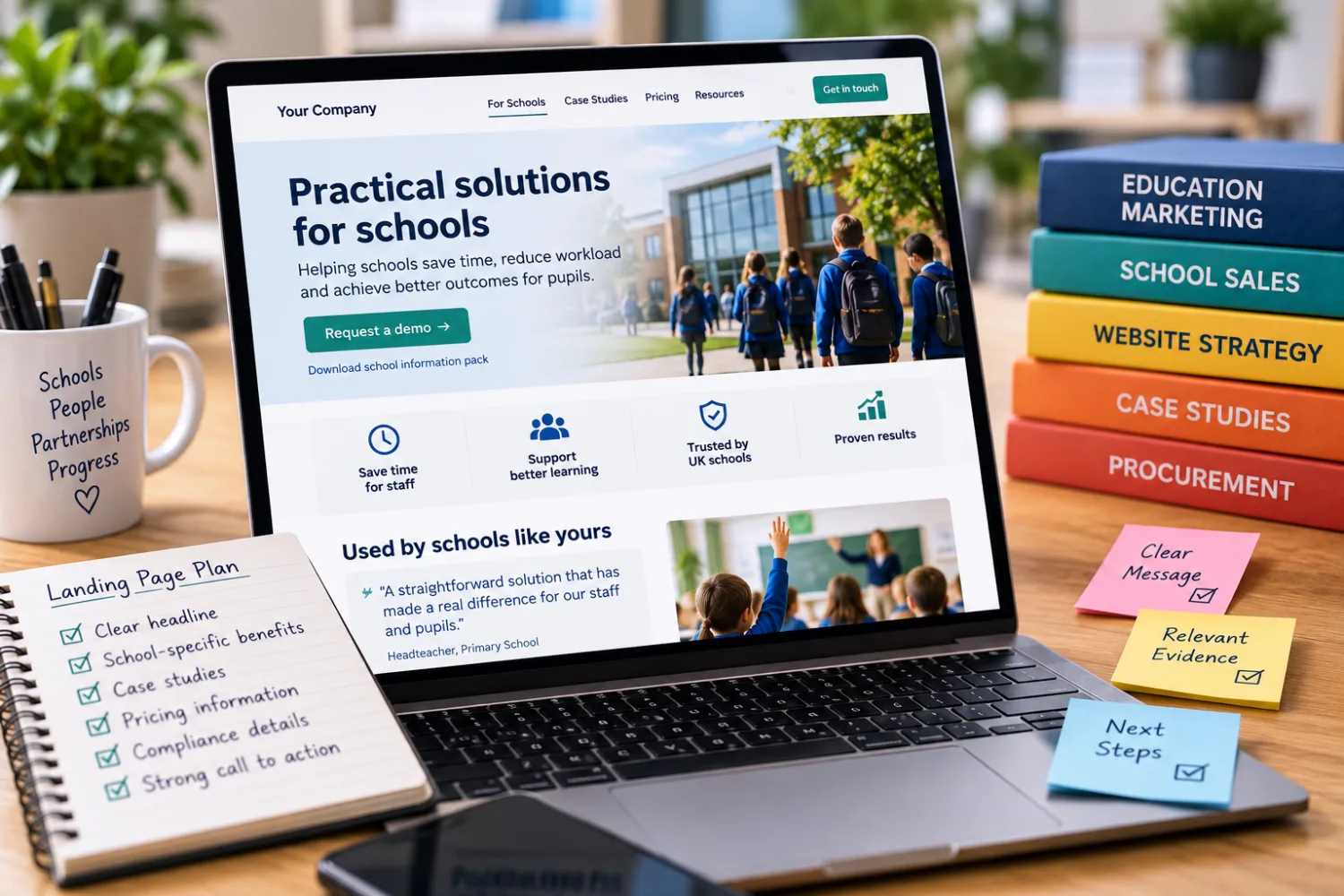
- not having a school-specific page on your website;
- failing to follow up professionally.
Another mistake is taking on a school contract that is not realistic for your staffing, management or service area. A badly delivered school contract can damage your reputation quickly.
It is better to win the right contracts than to chase every school.
How to stand out when schools compare cleaning providers
When schools compare cleaning companies, they may look at price, but they also look at risk.
You can stand out by making the decision feel safer.
Provide:
- a school-specific service summary;
- sample daily and weekly cleaning schedules;
- holiday deep-clean options;
- insurance documents;
- risk assessments and COSHH approach;
- staff vetting and training information;
- supervision and quality audit process;
- absence cover plan;
- clear communication process;
- references from similar sites;
- mobilisation timeline;
- transparent pricing.
The strongest cleaning companies show that they understand the school day, not just the cleaning task.
They explain how classrooms will be ready, how toilets will be maintained, how issues will be reported, how chemicals will be managed, how staff will be supervised, and how the school can raise concerns if standards slip.
Schools want clean buildings, but they also want peace of mind.
FAQ: Winning school cleaning contracts
How do cleaning companies get school contracts?
Cleaning companies can get school contracts by identifying suitable schools, preparing school-specific compliance evidence, approaching the right decision-makers, monitoring tenders, understanding procurement routes and submitting clear proposals that show reliability, safety and value for money.
Who decides school cleaning contracts?
It depends on the school. Decisions may involve the school business manager, headteacher, site manager, operations manager, trust estates lead, trust procurement team, finance team or local authority. In multi-academy trusts, cleaning may be decided centrally.
When is the best time to contact schools about cleaning services?
January to June can be a strong period because schools may be reviewing contracts, planning summer deep cleans and preparing for September. September to November can also work for introductions, especially if a school is unhappy with its current provider.
Do school cleaning companies need DBS checks?
It depends on the work, site arrangements and level of contact with pupils. Schools will expect cleaning companies to understand safeguarding, staff checks, site access and supervision. Providers should be clear about their approach and follow the school’s requirements.
What documents should a cleaning company have before approaching schools?
Useful documents include insurance certificates, health and safety policy, risk assessments, COSHH assessments, method statements, staff training information, safeguarding approach, sample cleaning schedules, references and a mobilisation plan.
Do schools always choose the cheapest cleaning company?
No. Schools need value for money, but they also consider reliability, safety, supervision, staff cover, quality control, communication and compliance. A very cheap quote may look risky if it does not allow enough time or staff to clean the site properly.
Can small local cleaning companies win school contracts?
Yes. Small local cleaning companies can win school contracts if they are reliable, well organised, compliant and clear about what they can deliver. Local knowledge, responsive communication and strong supervision can be advantages.
How can cleaning companies find school tenders?
Cleaning companies can check Contracts Finder, local authority procurement portals, academy trust websites, framework opportunities and school supplier networks. They can also build relationships with schools before contracts are formally reviewed.
Should cleaning companies join school supplier directories?
Yes, a relevant supplier directory can help cleaning companies become easier for schools to find. A supplier profile can support trust, explain services and provide another route for schools researching cleaning providers.
What should a first email to a school say?
A first email should briefly explain who you are, what school cleaning services you provide, where you operate, why the timing is relevant, and what small next step the school can take. It should also include a clear opt-out.
How can cleaning companies stand out from competitors?
They can stand out by providing clear school-specific schedules, strong compliance documents, reliable staffing, good supervision, responsive communication, realistic pricing, references and a clear plan for maintaining standards.
What should a school cleaning proposal include?
A proposal should include cleaning schedules, staffing levels, supervision, quality checks, COSHH and risk management, safeguarding approach, pricing, deep-clean options, absence cover, communication process and mobilisation plan.