
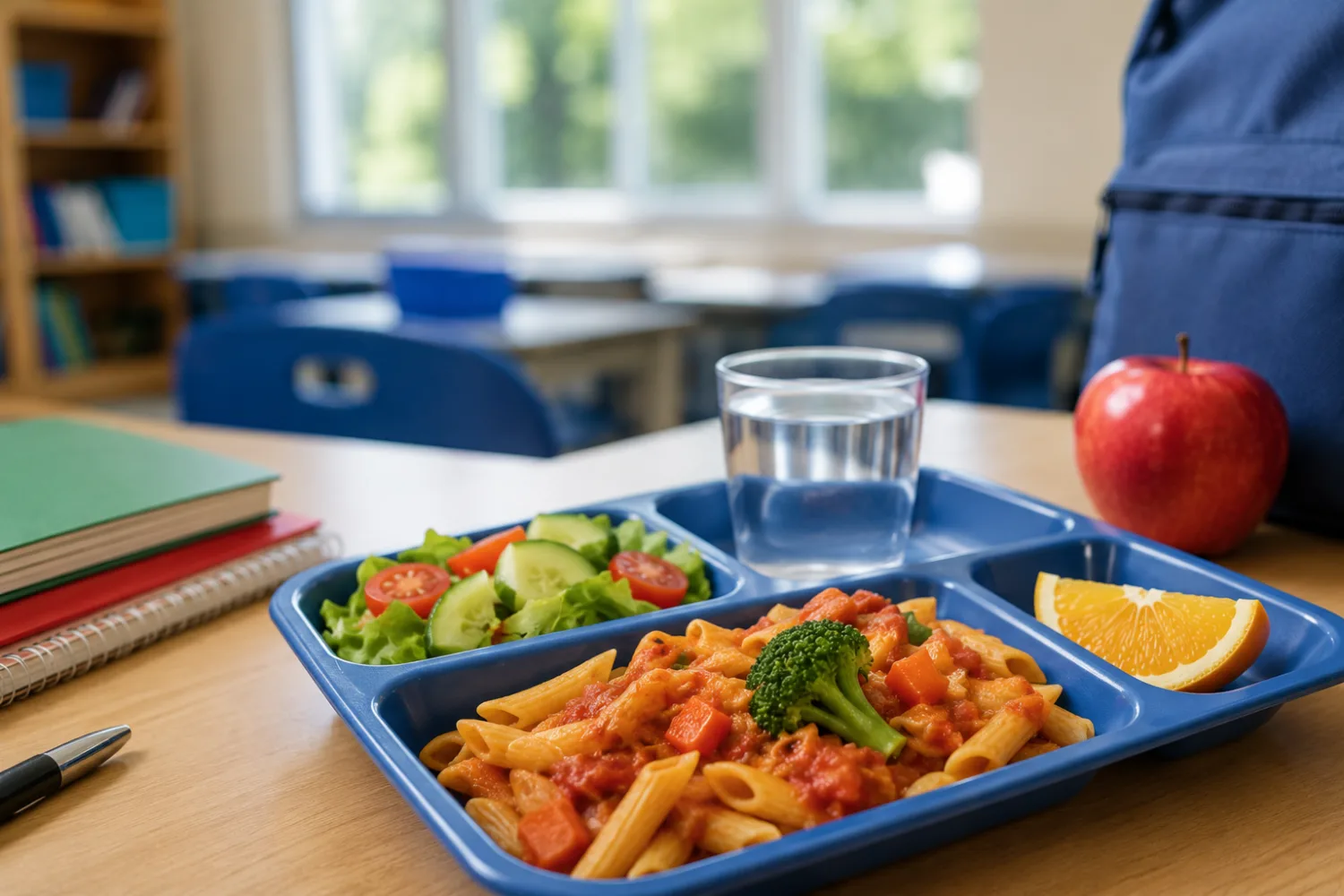
Free school meals can make a real difference to families. They reduce the cost of the school week, help children access a proper lunch, and can also unlock extra school funding through Pupil Premium in England.
But many parents are unsure whether they qualify. Some assume free school meals are only for families with no income. Others do not apply because they feel embarrassed, think their child already gets a free lunch in infant school, or do not realise that registering can bring additional funding into the school.
This guide explains who qualifies for free school meals, how to apply, what changes are coming in England, how rules differ across the UK, and why it is still worth applying even if your child already receives a universal infant free school meal.
What are free school meals?
Free school meals are school lunches provided without charge to eligible pupils. The purpose is simple: children should be able to eat during the school day, regardless of their family’s income.
In England, there are two main ideas that parents often confuse:
- Universal infant free school meals, which are available to all pupils in reception, Year 1 and Year 2 in state-funded schools.
- Benefits-related free school meals, which depend on household circumstances and can apply beyond Year 2.
This distinction matters. A child in Year 1 may already receive a free lunch automatically, but the family may still need to apply for benefits-related free school meals so the school can receive additional funding linked to disadvantage.
Who qualifies for free school meals in England?
In England, eligibility is based mainly on whether the pupil or their parent receives certain benefits. The exact rules can change, so families should always check the current GOV.UK or local council guidance before applying.
At the time of writing, benefits-related free school meals are available to pupils whose parents receive one or more qualifying benefits, including:
- Income Support;
- income-based Jobseeker’s Allowance;
- income-related Employment and Support Allowance;
- support under Part VI of the Immigration and Asylum Act 1999;
- the guarantee element of Pension Credit;
- Child Tax Credit, in some circumstances;
- Working Tax Credit run-on, in some circumstances;
- Universal Credit, subject to the current rules.
Under the current GOV.UK application guidance, families applying on the basis of Universal Credit are eligible if household earned income is below the stated threshold after tax and not including benefits. GOV.UK’s application page lists this as less than £7,400 a year for applications made on or after 1 April 2018. :contentReference[oaicite:2]{index=2}
However, this is changing. From the start of the 2026 to 2027 academic year, free school meals eligibility in England is being expanded to all children from households receiving Universal Credit, regardless of household earnings. :contentReference[oaicite:3]{index=3}
What is changing from September 2026?
The biggest upcoming change in England is the expansion of free school meals to all children in households receiving Universal Credit. This removes the previous earned-income threshold for those households from the start of the 2026 to 2027 academic year. :contentReference[oaicite:4]{index=4}
For parents, this means that some families who previously earned too much to qualify under the Universal Credit rules may become eligible from September 2026.
Families should still apply through the normal route and check their local council or school information. Do not assume the school will automatically know your eligibility unless your council or school specifically operates an automatic checking process.
Who gets universal infant free school meals?
In England, all children in reception, Year 1 and Year 2 at state-funded schools are entitled to universal infant free school meals. This is separate from benefits-related free school meals.
Parents sometimes think: “My child already gets free meals, so I do not need to apply.” But if your family qualifies for benefits-related free school meals, it is still worth registering. The school may receive extra funding through Pupil Premium, which can support teaching, interventions, attendance work, enrichment and wider support for disadvantaged pupils.
For more detail on how that funding works, read How Pupil Premium Funding Works — and Who Can Help Schools Spend It Well.
Do free school meal rules differ across the UK?
Yes. This guide focuses mainly on England because AllSchools covers UK schools but many of the linked funding and school policy articles are England-focused. Free school meal rules differ in Scotland, Wales and Northern Ireland.
For example, Wales has been rolling out universal free school meals for primary school pupils, while Scotland and Northern Ireland have their own eligibility rules, income thresholds and application processes. Parents should check their nation’s official guidance or local authority website.
If you live outside England, do not rely on English eligibility rules. Search your local council or devolved government website for the current process.
How do you apply for free school meals?
In England, the usual route is to apply through your local council. GOV.UK’s Apply for free school meals page asks for your postcode and directs you to the correct local authority application route. :contentReference[oaicite:5]{index=5}
The process is usually online and often only takes a few minutes. You may need to provide:
- your name and contact details;
- your National Insurance number or National Asylum Support Service number;
- your child’s name and date of birth;
- your child’s school;
- details needed to check your qualifying benefit.
Some councils check eligibility automatically through government systems. Others may ask for additional evidence. If you are unsure, contact your council or school office.
Can the school apply for you?
Usually, the parent or carer applies through the local council. However, schools often encourage applications and may help parents understand the process. Some schools can support families with forms, links or translation. Some local authorities also run eligibility checks with parental consent.
If you are not confident applying online, ask the school office. You do not need to explain every detail of your finances to a teacher. Schools are used to helping families with free school meal applications, and the office team will usually know the local process.
Will other pupils know my child gets free school meals?
In most schools, pupils should not be able to tell who receives free school meals. Many schools use cashless catering systems, meal cards, accounts or tills where free meal eligibility is handled discreetly.
If your child is worried about embarrassment, ask the school how the system works. You can say:
My child is worried other pupils will know they receive free school meals. Can you explain how the lunch system keeps this private?
Schools should handle this sensitively. No child should feel singled out for receiving support.
What if my child does not want school dinners?
Your child does not have to love every school meal for it to be worth applying. Even if they sometimes take a packed lunch, free school meal eligibility can still matter. It may give them the option of a hot meal when needed, and it may help the school receive additional funding.
If your child has dietary needs, allergies, sensory preferences or religious requirements, speak to the school or catering provider. Schools are used to discussing dietary requirements and should explain what is available.
If your child is anxious about eating at school, lunchtime routines, the canteen, queues or social worries may be part of the issue. In that case, it may help to speak to the class teacher, form tutor or pastoral team.
Does free school meals eligibility affect Pupil Premium?
Yes, in England, free school meals eligibility is closely linked to Pupil Premium funding. Pupils who are eligible for benefits-related free school meals, or have been eligible in recent years, can attract additional funding for the school.
This funding does not usually go directly to the family. It goes to the school to support disadvantaged pupils. Schools publish Pupil Premium strategy statements explaining how they use the funding.
This is why applying matters even if your child is in reception, Year 1 or Year 2 and already receives a universal infant free school meal. Registering for benefits-related free school meals may still help the school identify eligibility and receive funding.
What can Pupil Premium be used for?
Pupil Premium can support a wide range of work aimed at improving outcomes for disadvantaged pupils. Schools may use it for high-quality teaching, targeted academic support and wider strategies such as attendance, pastoral support, enrichment, tutoring, reading interventions, family engagement or behaviour support.
The important point is that schools should use it carefully and review impact. It is not simply a pot for random spending.
Parents can usually find the school’s Pupil Premium statement on its website. For more on what schools must publish online, see What Schools Are Legally Required to Publish on Their Website.
Can children in sixth form or college get free meals?
There is separate guidance for free meals in further education funded institutions. GOV.UK publishes guidance for the 2025 to 2026 academic year, and eligibility depends on student circumstances and qualifying benefits. :contentReference[oaicite:6]{index=6}
If your child is in sixth form, college or another post-16 setting, check the institution’s website or student support team. The process may be different from applying for free school meals at a primary or secondary school.
What if your circumstances change?
If your income, benefits, household circumstances or immigration status change, your eligibility may change too. You should check with your local council or school if:
- you start receiving Universal Credit;
- your income changes;
- you stop receiving a qualifying benefit;
- your child changes school;
- you move to a different local authority;
- your family circumstances change.
Do not assume that eligibility automatically transfers smoothly when you move school or council area. It is worth checking.
What if you are refused?
If your application is refused and you think this is wrong, check the reason carefully. It may be because the information did not match official records, income was above the current threshold, the wrong details were entered, or the council needs more evidence.
You can:
- check the details you entered;
- contact the local council;
- ask the school office for guidance;
- reapply if your circumstances change;
- check whether other local support is available.
If you are struggling with food costs but do not qualify for free school meals, speak to the school. Schools may know about local hardship funds, food banks, breakfast clubs, council support, uniform banks or community organisations.
Can families with no recourse to public funds get free school meals?
Eligibility for families with no recourse to public funds has changed at different points and may depend on current government arrangements and local processes. Parents in this situation should check the latest GOV.UK guidance and speak to their local council or school.
If this applies to you, do not assume you cannot get help. Ask the school office, local authority or a trusted advice organisation for current guidance.
What about packed lunches?
Some families prefer packed lunches. That is fine, but free school meals can still be useful. They offer flexibility, reduce costs and may give children access to a hot meal during cold months or busy weeks.
If your child is reluctant to switch from packed lunches, you could try one or two school meal days first. Ask for the menu in advance, talk through what they might choose, and check how the lunch system works.
For younger children, it can help to practise choosing food, carrying a tray, opening cutlery packets or asking an adult for help. Lunchtime is a social routine as much as a meal.
How much could free school meals save?
The exact saving depends on the school meal price and how often your child eats school lunch. But over a full school year, the saving can be significant, especially for families with more than one child.
Even if the daily cost looks small, it adds up. Free school meals can reduce pressure alongside other school costs such as uniform, trips, transport, equipment, revision guides, clubs and events.
If school costs are becoming difficult, read School Uniform Costs in the UK and speak to your child’s school. Schools would usually rather know early than see a child miss out.
Why some eligible families do not apply
Many eligible families do not apply. Reasons include stigma, confusion, language barriers, digital access problems, not knowing the rules, or assuming the school will apply automatically.
Some parents also think they should not apply because other families are “worse off”. But if you qualify, you qualify. The system exists to support children and families. Applying does not take a meal away from another child.
It can also help your school. Free school meal eligibility can affect funding, planning and support. If eligible families do not apply, schools may miss out on money that could support pupils.
How schools can encourage applications sensitively
Schools play an important role in helping families apply. Communication should be clear, respectful and stigma-free.
Good school communication might:
- explain the difference between universal infant meals and benefits-related free school meals;
- share the application link regularly;
- translate information where needed;
- avoid language that makes families feel judged;
- explain the link to Pupil Premium funding;
- offer help through the school office;
- reassure parents that the system is discreet;
- remind families to recheck eligibility when circumstances change.
For schools thinking about parent communication more widely, see Simple Ways Schools Can Improve Parent Communication.
How to ask the school for help
If you are unsure about applying, you can send a short message to the school office:
Hello, I’m trying to check whether my child may qualify for free school meals. Could you please send me the correct application link or let me know who can help with the form?
If you are worried about costs more generally, you might say:
Hello, I wanted to ask confidentially whether there is any support available for school meals, uniform or trips. Our circumstances have changed and I’m not sure what help we may qualify for.
You do not need to wait until things become unmanageable. Schools often have more ways to help than parents realise.
What suppliers and community organisations should understand
Free school meals are not just a catering issue. They connect to disadvantage, attendance, wellbeing, family support, Pupil Premium, school budgets and community partnerships.
Suppliers and charities working with schools should be careful with this topic. Do not use free school meal eligibility as a crude marketing label. Schools know that disadvantage is complex, and individual pupils’ circumstances should be handled sensitively.
If your organisation supports food, breakfast clubs, family support, attendance, uniform, enrichment, tutoring or wellbeing, be clear about how your work helps without overclaiming. The strongest school partners understand safeguarding, dignity, evidence and implementation.
For supplier context, read How Pupil Premium Funding Works — and Who Can Help Schools Spend It Well.
A quick checklist for parents
- Check whether your child already receives universal infant free school meals.
- Check whether your household qualifies for benefits-related free school meals.
- Apply through your local council using the GOV.UK postcode tool.
- Ask the school office for help if the form is confusing.
- Register even if your infant child already gets a free lunch, if you qualify.
- Tell the school if your child has dietary needs or lunch worries.
- Recheck eligibility if your circumstances change.
- Ask about wider support if school costs are difficult.
Final thoughts
Free school meals exist to support children and families. If your child qualifies, applying is not something to feel embarrassed about. It can save money, give your child access to a school lunch, and help the school receive funding to support pupils.
The rules can be confusing, especially because universal infant free school meals and benefits-related free school meals are not the same thing. The safest route is to check GOV.UK, use your local council’s application process, and ask the school office if you are unsure.
If you qualify, apply. If you are not sure, check. And if you are struggling but do not meet the criteria, still speak to the school. Free school meals are one form of support, but they are not the only one.
Frequently Asked Questions
Who qualifies for free school meals in England?
Eligibility is usually based on the pupil or parent receiving certain qualifying benefits. These include benefits such as Income Support, income-based Jobseeker’s Allowance, income-related Employment and Support Allowance, certain tax credit situations, Pension Credit guarantee credit, asylum support and Universal Credit under the current rules.
What is changing for Universal Credit families?
From the start of the 2026 to 2027 academic year, free school meals eligibility in England is being expanded to all children from households receiving Universal Credit, regardless of household earnings.
How do I apply for free school meals?
In England, you usually apply through your local council. Use the GOV.UK free school meals application page, enter your postcode, and it will direct you to the correct local authority route.
Do reception, Year 1 and Year 2 pupils automatically get free school meals?
In England, all pupils in reception, Year 1 and Year 2 at state-funded schools receive universal infant free school meals. However, eligible families should still register for benefits-related free school meals because it may help the school receive Pupil Premium funding.
Will my child be embarrassed or identified?
Schools should handle free school meals discreetly. Many use cashless systems or accounts so other pupils cannot tell who receives free meals. Ask the school how its lunch system works if your child is worried.
Can I apply if my child takes packed lunches?
Yes. Even if your child does not take a school meal every day, eligibility can still be useful. It gives your child the option of a meal and may help the school receive extra funding.
Does free school meal eligibility mean the family gets money directly?
Usually, no. The meal is provided through the school system. Pupil Premium funding linked to eligibility goes to the school, not directly to the family.
Do free school meal rules apply across the whole UK?
No. England, Scotland, Wales and Northern Ireland have different rules and application processes. Parents should check their local authority or national government guidance.
What if my application is rejected?
Check the reason, make sure your details were entered correctly, and contact the local council if you think a mistake has been made. You can reapply if your circumstances change.
Can schools help parents apply?
Yes. Schools often provide links, guidance or office support. If you are unsure, contact the school office and ask for the correct application route.
Can free school meals help with Pupil Premium?
Yes. In England, benefits-related free school meal eligibility is linked to Pupil Premium funding, which schools use to support disadvantaged pupils.
Should I apply if I feel embarrassed?
Yes. If you qualify, the support is there for your child. Schools are used to helping families with this, and the process should be handled confidentially.