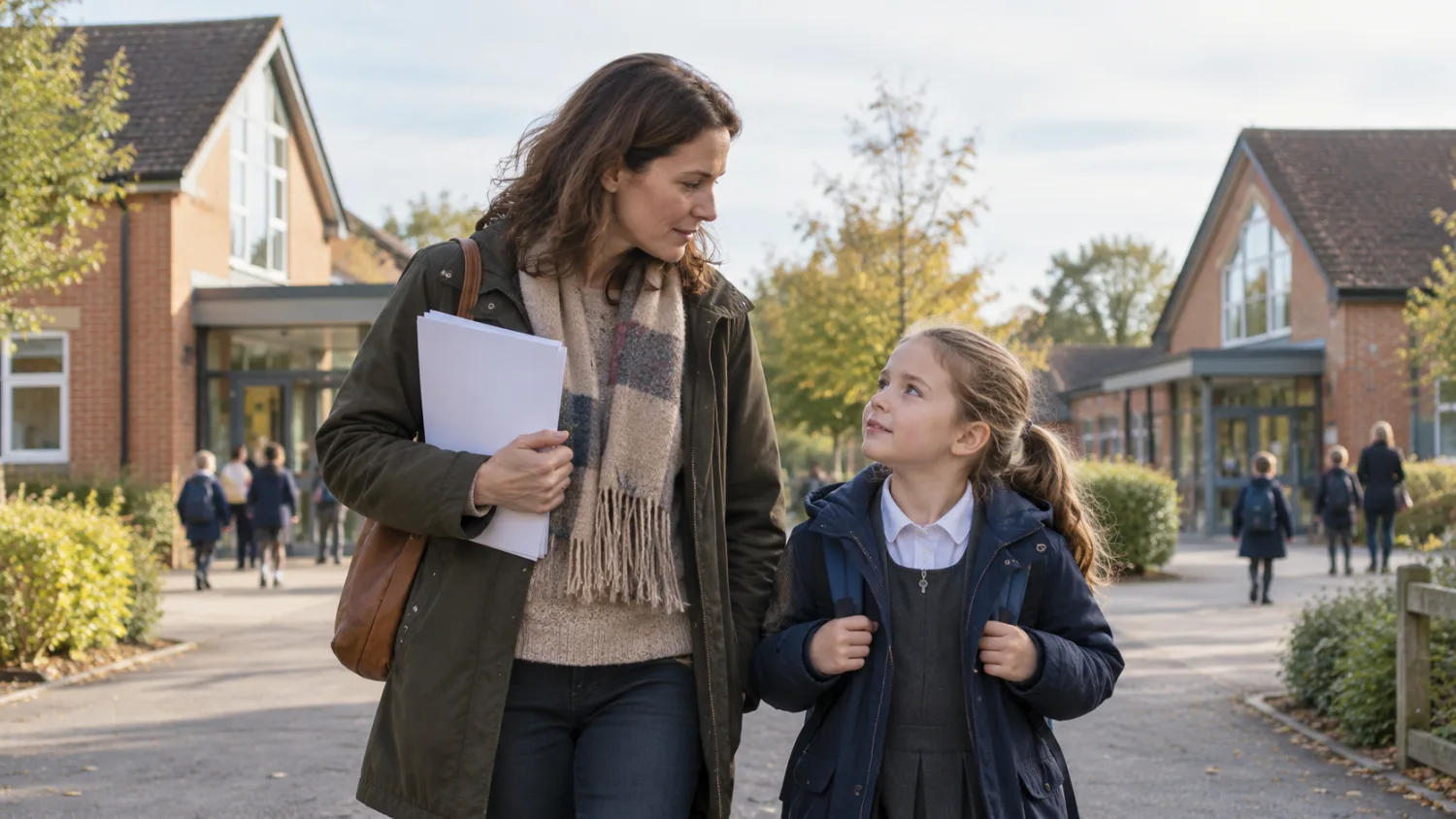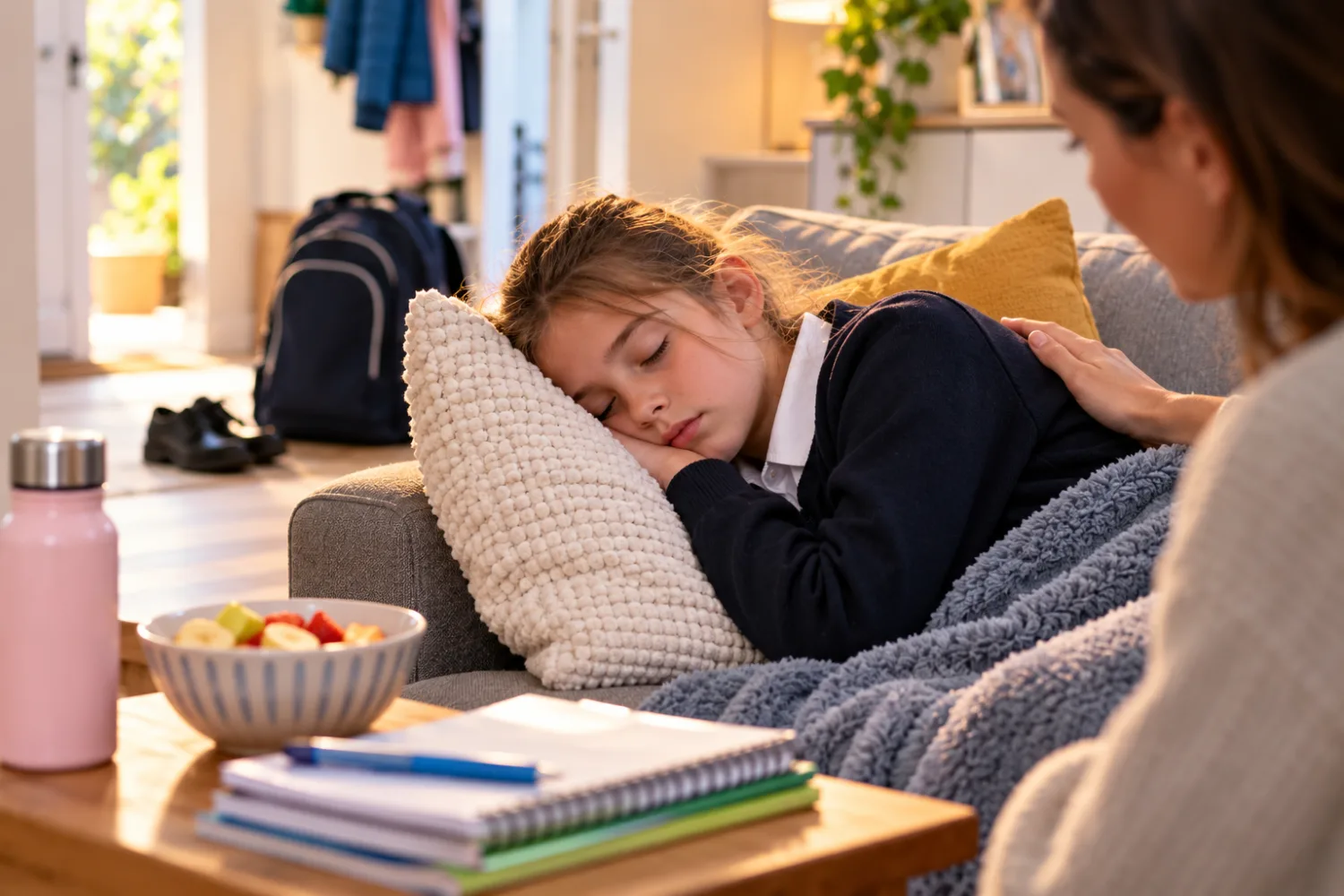

Feeling nervous about returning to school is common. Even children who usually enjoy school may worry about a new teacher, harder work, changing friendships or simply losing the freedom of the holidays.
For some children, the worry appears only the night before. For others, it begins weeks earlier and shows up as poor sleep, irritability, stomach aches, tears or repeated questions about what might go wrong.
The most helpful response is usually neither “There is nothing to worry about” nor “You can stay home until you feel better”. Children need their feelings taken seriously, but they also need support to move towards school in manageable steps.
Begin by understanding what the anxiety is about. A child worried about finding their new classroom needs different help from one who fears bullying, cannot tolerate a noisy dining hall or feels overwhelmed by schoolwork. Once the problem becomes more specific, the return can feel less impossible.
First, work out what “school” means in the worry
When a child says, “I don’t want to go back to school”, it is tempting to begin reassuring or persuading immediately. Pause and find out what they are imagining.
School is not one experience. It includes the journey, classroom, lessons, teachers, other pupils, breaktimes, toilets, changing rooms, lunch, homework and the uncertainty of what may happen next.
Ask gentle, specific questions:
- “Which part of going back feels hardest?”
- “Is there a time of day you are thinking about most?”
- “Are you worried about something happening again?”
- “What do you wish could be different?”
- “Would it be easier to tell me, write it down or draw it?”
Avoid asking ten questions in quick succession. Some children need time before they can identify the problem, and younger children may communicate through behaviour rather than a clear explanation.
Listen for practical fears as well as emotional ones. A child might be ashamed to admit that they do not know where to go, have lost part of their uniform or are worried about using the toilet at school.
Do not assume the concern is minor because it sounds small to an adult. Being seated away from a friend, changing for PE or entering a crowded playground can dominate a child’s thoughts.
Our guide to what to do when a child has not been placed with their friends explains how to support an important friendship while helping the child form new connections.
Validate the feeling without confirming the worst prediction
Validation means showing that you understand the child’s emotional experience. It does not mean agreeing that the feared event will happen.
You might say:
“It makes sense that you feel nervous when you do not know your new teacher yet. Not knowing can make our minds imagine difficult things.”
This is different from saying:
“Yes, the teacher may be strict and the year could be awful.”
Try to avoid dismissive reassurance such as “You’ll be fine”, “Everyone feels like that” or “There’s nothing to worry about”. Although intended to comfort, these phrases can make a child feel misunderstood.
Use realistic reassurance instead:
“I cannot promise that every moment will be easy, but we can make a plan for the parts you are worried about.”
The NHS guidance on anxiety in children advises parents to listen carefully, avoid dismissing worries and help children find solutions. It describes anxiety as a natural response to stress that affects thoughts, feelings and behaviour.
Be conscious of your own tone. Parents may feel anxious about a new school year too, particularly after a previous difficulty. Children can notice repeated checking, worried conversations and negative predictions. You do not need to pretend you have no concerns, but try to show that problems can be approached calmly.
Rebuild the school-day routine gradually
Holiday routines can shift considerably. Children may go to bed later, wake later, eat at different times and spend more time on screens. An abrupt return to early mornings can add physical tiredness to emotional anxiety.
Several days before school starts, begin moving towards the term-time schedule. Adjust bedtime and waking time gradually where possible. Return meals to familiar times and reintroduce a quieter evening routine.
Do not try to transform everything on the final night. A highly anxious child is unlikely to fall asleep simply because an adult announces an early bedtime. Focus instead on predictability: the same wind-down sequence, reduced stimulation and enough time to settle.
Prepare practical items before anxiety is at its highest. Check uniform, shoes, bags, transport, lunch arrangements and equipment. Let your child take part so that preparation creates a sense of control rather than something being done around them.
A simple evening routine might include:
- checking what is needed the next day;
- packing the bag;
- laying out clothes;
- choosing breakfast;
- and deciding the morning leaving time.
Keep this routine short. An elaborate checklist can become another source of pressure.
Sleep difficulties often increase worry and make emotional regulation harder. Our guide to healthy sleep habits for school-aged children offers practical advice about routines, screens, light and the sleep environment.
Make the unfamiliar more predictable
Anxiety often grows in the gaps where information is missing. A child may imagine a much more frightening situation than the one they will encounter.
Review reliable information together. Look at the school’s website, timetable, map or transition materials. Confirm the start time, entrance and where pupils should go. If your child uses school transport, practise the route or identify the stop.
For a younger child, walking past the school or looking at photographs may help. A child starting secondary school may want to practise the journey, learn how the timetable works or identify where to seek help if they become lost.
Childline’s guidance on starting a new school reminds children that getting lost is common and that they can ask for directions. Hearing this from a source written directly for young people may be more reassuring than another parent reminder.
Do not provide so much information that the preparation becomes a continuous rehearsal of danger. Focus on the questions your child actually has.
If the fear concerns a particular situation, create a simple response plan:
- If I cannot find my room, I will ask reception or a member of staff.
- If I feel overwhelmed at lunchtime, I will go to the agreed quiet space.
- If I forget something, I will tell the teacher rather than hide.
- If someone is unkind, I will speak to my tutor or another trusted adult.
- If the bus does not arrive, I will wait at the agreed place and call home.
A plan should increase confidence, not suggest that every problem is likely to occur.
Break the return into smaller steps
An anxious child may be mentally experiencing the entire term at once. They imagine weeks of difficult mornings, lessons, homework and social situations. Help them return attention to the next manageable step.
Instead of saying, “You need to go back for the whole year”, focus on:
- getting dressed;
- eating something;
- leaving the house;
- reaching the school gate;
- meeting the agreed adult;
- and getting through the first part of the day.
This does not mean promising that the child can always leave after each step. It means reducing the overwhelming sense that everything must be solved before they begin.
A “now, next, then” approach can help some children:
“Now we are getting dressed. Next we are having breakfast. Then we will walk to school and meet your tutor.”
Older children may prefer a short written plan or timetable rather than repeated verbal reminders.
Avoid asking the child to make a fresh decision about attendance every few minutes. Questions such as “Do you feel ready now?” can invite anxiety to decide the next step. Use a calm plan agreed in advance while remaining attentive to genuine distress and safety.
After school, notice what the child managed rather than asking whether the entire day was good. Reaching the classroom, speaking to a teacher or staying through lunch may be significant progress.
Teach simple ways to manage the anxious moment
Children benefit from understanding that anxiety can create real physical sensations. A racing heart, tense muscles, nausea, shaking or a sudden need for the toilet can feel frightening when the child does not know what is happening.
Explain in age-appropriate language that the body’s alarm system sometimes becomes active when there is uncertainty or perceived danger. The feeling is uncomfortable, but it can rise and fall.
Practise coping strategies when your child is relatively calm. Trying to teach a complicated breathing exercise at the school gate may add frustration.
Simple options include:
- breathing out slowly for slightly longer than breathing in;
- placing both feet on the ground and noticing the feeling of support;
- naming things they can see, hear and feel;
- holding a familiar, permitted object;
- repeating a short phrase such as “I only need to do the next step”;
- or identifying the adult they will speak to.
Not every method suits every child. Some become more aware of uncomfortable sensations when asked to concentrate on breathing. They may prefer movement, conversation or a sensory grounding activity.
A coping strategy should support engagement, not become another condition that must feel perfect before the child can attend. The aim is not to eliminate all anxiety at the door. It is to help the child move forward while the feeling becomes more manageable.
Contact the school before the problem becomes a crisis
If anxiety is more than mild first-day nerves, tell the school early. Staff cannot respond to a difficulty they do not know about.
Start with the class teacher, form tutor, pastoral lead, head of year or SENCO, depending on your child’s age and needs. Explain:
- what your child is worried about;
- when the anxiety occurs;
- what signs you see at home;
- whether there was a previous incident or pattern;
- what has helped before;
- and what support your child believes might make the return possible.
Ask for a clear, practical plan rather than general reassurance. Depending on the child, useful support might include:
- meeting a known adult at the entrance;
- arriving through a quieter entrance or slightly before the busiest period;
- a named member of staff for check-ins;
- a peer buddy;
- a safe or quieter place at break and lunchtime;
- advance warning of changes;
- written instructions or a visual timetable;
- help moving between lessons;
- or reasonable adjustments linked to a disability or additional need.
YoungMinds provides a detailed parent guide to school anxiety and refusal, including examples of school support such as mentors, structured breaktime activities, safe spaces and help with transitions.
Agree how progress will be reviewed and who will contact whom. A plan that exists only in one email may not reach the staff who see the child during difficult parts of the day.
Take physical symptoms seriously without overlooking anxiety
School anxiety can appear as physical illness. Children may experience headaches, stomach pain, nausea, tiredness, dizziness, poor sleep or frequent trips to the toilet.
These symptoms are not necessarily invented. Anxiety can produce genuine physical discomfort. At the same time, parents should not automatically attribute every symptom to worry.
Seek medical advice if symptoms are severe, persistent, unusual or accompanied by warning signs such as significant weight loss, fainting, breathing difficulty, fever, persistent vomiting, severe pain or another concern about the child’s health.
Notice the pattern. Symptoms that intensify on school mornings and improve at weekends or during holidays may suggest a link with school, but that pattern still needs exploration. It could involve anxiety, bullying, sensory overload, academic difficulty or another unmet need.
Avoid getting trapped in a morning argument about whether the child is “really ill”. A calmer approach is:
“I believe that your stomach hurts. We need to work out whether you are physically ill, whether anxiety is making your body hurt, or whether both things are happening.”
Keep the school informed about recurring symptoms. The school nurse, pastoral team or SENCO may help identify patterns and appropriate support.
Support attendance by addressing the barrier
When a child is anxious, staying home may bring immediate relief. That relief can make avoidance more likely the next time anxiety appears, and returning may become increasingly difficult.
However, this does not mean parents should simply force a severely distressed child through the door without understanding the problem. The most constructive approach is to support attendance while actively reducing the barrier.
If your child cannot attend or attendance is beginning to break down, contact the school immediately. Ask for a meeting and a written plan. This might cover how the child will arrive, who will meet them, which parts of the day are hardest and how support will be reviewed.
The government’s guidance on getting help when a child is struggling to attend school says schools should discuss attendance problems with families and agree a plan. Local councils may also provide help with barriers such as bullying or difficult family circumstances.
Reduced or adjusted timetables may sometimes form part of a professionally planned response, but they should not be improvised by families or allowed to continue without review. The school needs to follow the relevant attendance, safeguarding and educational guidance.
Keep clear notes of meetings, agreed actions, absences and what appears to help or worsen the anxiety. This can make patterns visible and support referrals if more help is needed.
Our fuller guide to school anxiety and school avoidance explains attendance support, communication and longer-term difficulties in greater depth.
Know when ordinary reassurance is not enough
Back-to-school anxiety often improves as routines become familiar. Additional help may be needed when anxiety is intense, persistent, worsening or interfering with everyday life.
Speak to the school and consider contacting your GP or school nurse if your child:
- remains highly distressed despite practical support;
- cannot attend or repeatedly leaves school;
- has frequent panic-like episodes;
- stops sleeping or eating normally;
- withdraws from friends and activities they usually enjoy;
- has physical symptoms that need assessment;
- is affected across home, school and social life;
- or appears persistently low, hopeless or unable to cope.
The NHS explains that professional help should be considered when anxiety is not improving, is becoming worse or is affecting school, family life or friendships. A GP can assess the situation and may refer a child to local children and young people’s mental health services where appropriate.
Ask directly about safety if you are worried that your child may be harming themselves or thinking about suicide. Asking does not put the idea into their mind. If there is immediate danger, call 999 or go to A&E. For urgent but non-emergency help, use the appropriate NHS urgent mental health service in your part of the UK.
Do not wait for the situation to become extreme before seeking advice. Early support may prevent a difficult return from developing into a longer absence.
Children returning after a particularly hard year may also need a wider recovery plan. Our guide to helping a child after a difficult school year covers confidence, trust, learning and preparing for a better start.
Frequently asked questions
Is it normal for a child to cry before going back to school?
Yes, some children become tearful before a new term, particularly when changing class or school. Listen to the reason, provide realistic reassurance and keep the morning predictable. Seek further support if the distress is severe, continues after the return or prevents normal attendance and daily life.
Should I let my child have a day off because of anxiety?
A single decision depends on the child’s condition and circumstances, but repeated avoidance can make returning harder. Contact the school promptly and work on a supported attendance plan rather than managing the difficulty through unplanned days at home. Seek medical advice if you are uncertain whether your child is physically unwell or needs mental health support.
What if my child cannot explain what they are worried about?
Do not pressure them to produce an immediate answer. Look for patterns, offer different ways to communicate and ask about specific parts of the day. Drawing, writing, rating different school situations or talking while walking may feel easier than a face-to-face conversation.
Can anxiety cause real stomach aches and headaches?
Yes. Anxiety can cause genuine physical symptoms, including stomach pain, headaches, nausea and disturbed sleep. However, new, severe or persistent symptoms should not automatically be attributed to anxiety. Consult a healthcare professional when you are concerned.
When should I tell the school?
Tell the school before term starts if anxiety is significant, linked to a known need or likely to affect attendance. For milder worries, monitor the first days but make contact if distress increases or does not begin to settle. Safeguarding concerns, bullying and serious mental health worries should be raised immediately.
What can the school do to help?
Support depends on the cause. It might include a trusted adult, a quieter arrival, help with transitions, a peer buddy, structured lunchtime activity, a safe space or reasonable adjustments. Ask for specific arrangements, named responsibilities and a review date.
How long does back-to-school anxiety usually last?
Some children settle within the first few days, while others need several weeks. Look for gradual improvement rather than a fixed deadline. If anxiety remains intense, worsens or affects attendance and daily functioning, seek help from the school and a healthcare professional.
What if my child is anxious about starting secondary school?
Focus on travel, timetable, finding rooms, equipment, friendships and who can help. Practise the journey and break the first month into manageable routines. Our first-month secondary school checklist provides a practical guide to the transition.
A child does not need to feel completely calm before returning to school. Courage often means taking the next step while some anxiety is still present.
Listen carefully, reduce avoidable uncertainty and work with the school on the specific difficulty. Most back-to-school worries become smaller once the new routine is familiar. When they do not, early, coordinated support can make the return safer and more manageable.