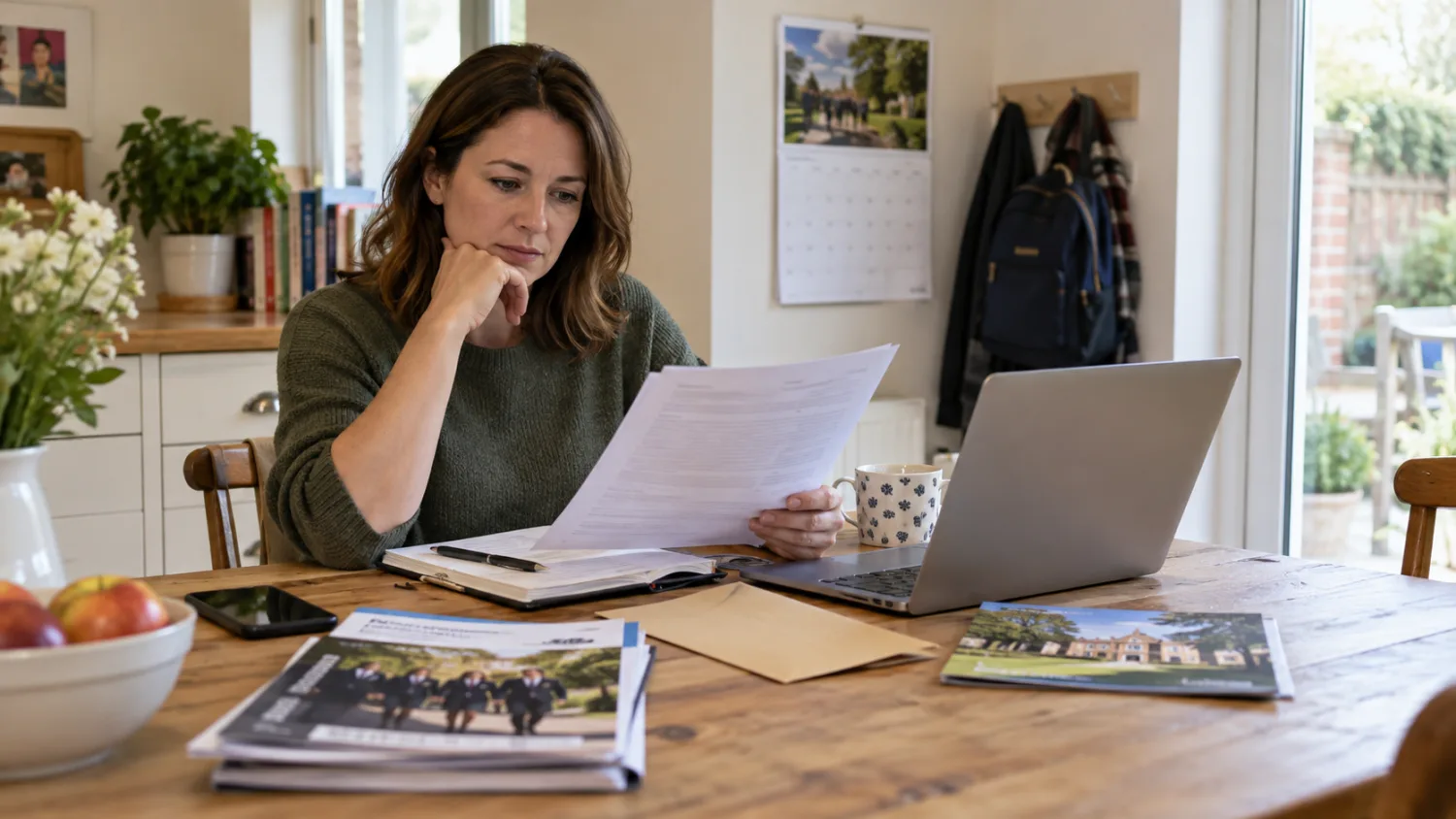

Homework can become one of the most confusing parts of school life for parents.
One child seems to finish everything in ten minutes.
Another spends more than an hour on what appears to be the same task.
One school sets homework every night.
Another relies mainly on reading, spellings and occasional projects.
By secondary school, pupils may receive work from several subjects at once, making it difficult for families to tell whether the total amount is normal or excessive.
There is no single national rule in England saying that a seven-year-old should do exactly 20 minutes of homework or a 14-year-old exactly 90 minutes.
Schools set their own homework policies, and the amount varies according to age, subject, school and the type of work being completed.
More importantly, the evidence does not suggest that simply increasing the amount of homework automatically improves learning.
The Education Endowment Foundation finds that homework has a positive impact on average, particularly at secondary level, but also stresses that the quality of the task appears to matter more than the quantity. Homework linked clearly to classroom learning and followed by useful feedback tends to be more effective.
So the useful question is not:
“How many minutes should my child do?”
It is:
“Is the amount of homework proportionate to their age, useful for learning and still leaving enough time for sleep, family life, exercise and rest?”
This guide gives families realistic age-by-age expectations, signs that homework may be too much and practical advice on what to do when every evening starts turning into a battle.
There is no official homework stopwatch
Parents sometimes come across old charts giving precise daily homework limits by year group.
Those figures can be useful as historical reference points, but they should not be mistaken for a current legal requirement.
Modern homework practice varies widely between schools.
What matters more than a precise number
A reasonable homework load should take account of:
- the pupil's age;
- the purpose of the task;
- how difficult it is;
- how independently the pupil can complete it;
- how much other homework has been set;
- the child's additional needs;
- what else is happening that week.
Ten useful minutes can be better than forty unproductive ones
A child spending ten minutes practising number facts they genuinely need may gain more than a child spending forty minutes decorating a project cover.
EEF evidence suggests homework is most effective when it is purposeful, connected to classroom learning and designed carefully rather than simply set in large quantities.
Reception and early primary: keep home learning light
For children in Reception and the earliest years of primary school, home learning should generally feel manageable and closely connected to skills that benefit from frequent short practice.
Typical activities may include
- sharing a reading book;
- phonics practice;
- recognising sounds or words;
- simple number activities;
- talking about something learned at school.
A reasonable sense-check
For many children aged roughly four to seven, around 10 to 20 minutes of focused home learning on an ordinary school day is often plenty, particularly when reading is included.
This is not an official limit.
Some evenings may involve almost nothing beyond reading together.
Others may include a short phonics or maths activity.
Watch the child's response
If a five-year-old spends forty minutes crying over a worksheet, the useful learning has probably ended long before the worksheet does.
At this age, home learning should not routinely compete with:
- play;
- family interaction;
- physical activity;
- sleep.
Reading together can often be more valuable than trying to reproduce another school lesson at the kitchen table.
Years 3 and 4: short, regular practice usually works best
By lower Key Stage 2, pupils can generally manage a little more independent work.
Homework may include:
- reading;
- times tables;
- spellings;
- short maths exercises;
- simple research;
- occasional topic work.
A useful rough range
For many pupils in Years 3 and 4, around 20 to 30 minutes on a typical homework evening is a reasonable sense-check.
Again, this is not a statutory recommendation.
The important question is whether the work remains purposeful and manageable.
Do not count reading as “extra” by default
If your child has already spent 20 minutes reading carefully and talking about the book, that is meaningful home learning.
It should not automatically be treated as something that does not count because there is no worksheet at the end.
Years 5 and 6: independence starts to matter more
Upper-primary pupils are usually expected to take greater responsibility for remembering and completing work.
Homework may gradually become more structured in preparation for secondary school.
Typical tasks might include
- regular reading;
- maths practice;
- spellings and vocabulary;
- revision;
- longer writing;
- research projects.
A reasonable sense-check
For many children in Years 5 and 6, roughly 30 to 45 minutes on an ordinary homework day may be manageable.
Some days will be shorter.
A project or pre-test revision session may occasionally be longer.
Do not let SATs turn every evening into revision
Year 6 can create pressure because of SATs.
Short, focused revision can help.
Long nightly sessions that leave pupils exhausted are unlikely to be the answer.
See How to Prepare Your Child for SATs Without Stress for a calmer approach.
Years 7 and 8: the biggest change is often organisation
Secondary school changes homework in an important way.
Your child is no longer receiving work mainly from one class teacher.
They may have homework from:
- English;
- maths;
- science;
- history;
- geography;
- languages;
- several other subjects.
Even sensible individual homework tasks can become excessive when several teachers set deadlines at the same time.
A useful rough range
For many pupils in Years 7 and 8, around 45 to 60 minutes on an average weekday is a reasonable overall sense-check.
That does not mean every evening should contain exactly an hour.
One day may involve twenty minutes.
Another may involve several pieces of work and take longer.
The real skill is managing deadlines
At this age, parents can help pupils learn to:
- check the homework platform;
- look ahead several days;
- start larger tasks early;
- avoid leaving everything until Sunday evening.
The AllSchools guide Study Skills Every Secondary Pupil Should Know covers these habits in more detail.
Year 9: homework often starts becoming more demanding
Year 9 varies significantly between schools.
Some pupils are still fully within Key Stage 3.
Others may begin GCSE-related courses or option subjects during the year.
A reasonable sense-check
For many Year 9 pupils, around 60 to 90 minutes on a busier weekday may be reasonable, provided it is genuinely productive.
But a pupil should not automatically spend 90 minutes every night simply because they are in Year 9.
Look at the whole week
A pupil might have:
- very little homework on Monday;
- several deadlines on Wednesday;
- a longer project at the weekend.
The average matters more than one unusually busy evening.
Option choices can change workload
Subjects such as art, design, drama or music may involve work that does not fit neatly into a 20-minute worksheet.
If your child is approaching GCSE options, see Choosing GCSE Options: When Should Families Start Thinking About Them?.
Years 10 and 11: homework blends into independent study
At GCSE level, the distinction between “homework” and “revision” becomes less clear.
Pupils may need to:
- complete set homework;
- revise earlier topics;
- prepare for assessments;
- finish coursework or non-exam assessment where applicable;
- practise exam questions.
A rough sense-check
For many GCSE pupils, around one to two hours of schoolwork outside lessons on a typical weekday can be reasonable during busier periods.
That should not be interpreted as a compulsory nightly quota.
During quieter weeks, less may be entirely appropriate.
Before mock exams or final GCSEs, some pupils will temporarily spend longer revising.
More is not always better
A tired pupil staring at notes for three hours is not necessarily learning more than one who completes 60 focused minutes and then sleeps properly.
The EEF notes that the impact of homework can diminish as the amount of time spent on it increases.
Revision should not consume every evening
Pupils still need:
- sleep;
- exercise;
- social contact;
- time away from schoolwork.
If exam preparation is becoming overwhelming, see Tackling Exam Anxiety and Building Confidence.
Sixth form is different again
Post-16 study usually requires much greater independent learning.
A-level or equivalent courses contain fewer subjects but much greater depth.
Students may need regular independent study
This can include:
- reading;
- practice questions;
- research;
- revision;
- coursework;
- preparation for seminars or lessons.
There is no useful universal nightly number.
A better approach is to look at whether the student is:
- keeping up with deadlines;
- reviewing material regularly;
- using free study periods effectively;
- avoiding crisis revision before every assessment.
Independent study should increase with age, but it should also become more strategic.
Quality matters more than filling time
A school can set a lot of homework without setting particularly useful homework.
EEF evidence identifies several features associated with stronger homework practice:
- tasks linked clearly to classroom learning;
- a clear purpose;
- appropriate challenge;
- feedback;
- support for pupils who face barriers at home.
EEF reports stronger average effects in secondary school than primary school and notes that the evidence base itself is limited, so homework should not be treated as a simple equation where more minutes equal more progress.
Useful homework often consolidates learning
For example:
- practising maths pupils have already been taught;
- retrieving key knowledge;
- reading ahead;
- revising vocabulary;
- completing a purposeful piece of writing.
Less useful homework may simply occupy time
For example, spending an hour making a title page increasingly decorative is unlikely to produce the same learning value as an hour of well-designed practice.
Different children take different amounts of time
This is one reason fixed homework times can be misleading.
The same worksheet may take:
- one pupil 15 minutes;
- another 35 minutes;
- another more than an hour.
Possible reasons include
- reading speed;
- working memory;
- attention;
- handwriting;
- processing speed;
- SEND;
- perfectionism;
- not understanding the task.
Do not assume a slow child is lazy
If your child regularly needs twice as long as classmates appear to need, that information may be useful to the teacher.
The problem may not be motivation.
See When Your Child Struggles to Focus if concentration is becoming a recurring issue.
Know the signs that homework may be excessive
One long evening does not mean a homework policy is unreasonable.
Look for repeated patterns.
Possible warning signs include
- homework regularly continuing late into the evening;
- sleep being reduced;
- frequent tears or arguments;
- no realistic time for exercise or other activities;
- weekends being dominated by unfinished schoolwork;
- parents effectively teaching whole topics from scratch;
- the child becoming increasingly anxious about deadlines.
Ask whether the workload or the process is the problem
A child may spend two hours on homework because:
- two hours were genuinely set;
- they were distracted by their phone;
- they did not understand the task;
- they keep restarting because they want it perfect;
- they left several days of work until the final evening.
The solution depends on which problem you actually have.
Homework should not routinely damage sleep
If there is one evening priority that should not disappear under homework pressure, it is sleep.
A pupil who stays up extremely late finishing work may complete the homework but arrive at school less able to concentrate the following day.
Set a sensible stopping point
If a younger child has worked reasonably for the amount of time you would expect and still has a large amount unfinished, it can be better to stop and communicate with the school.
For older pupils, look at planning first
If a teenager is consistently working until midnight, investigate:
- whether the workload is genuinely excessive;
- whether deadlines are being managed;
- whether revision is inefficient;
- whether distractions are extending the evening.
The AllSchools guide Healthy Sleep Habits for School-Aged Children explains why protecting sleep matters.
Parents should support homework without doing it
The younger the child, the more practical support they may need.
But there is a difference between supporting the process and completing the learning for them.
Helpful support includes
- providing a reasonable place to work;
- helping interpret the instructions;
- checking deadlines;
- encouraging a break;
- listening to reading.
Less helpful support includes
- rewriting the child's work;
- giving every answer;
- taking over projects;
- turning every mistake into a mini lesson.
The school needs to see what the child can actually do.
For a fuller approach, see Helping Your Child With Homework Without the Stress.
Screen time can make homework look longer than it is
Digital homework creates a particular difficulty.
A child can technically be “doing homework” for an hour while also:
- checking messages;
- watching videos;
- switching tabs;
- playing music videos;
- responding to notifications.
Measure focused time, not laptop-open time
If 45 minutes of homework takes two hours because attention is repeatedly interrupted, the workload may not be the only problem.
Try simple boundaries
For example:
- phone in another room;
- notifications off;
- 25 minutes focused work followed by a short break;
- one task completed before another tab is opened.
See Balancing Screen Time and Study Time for more ideas.
What to do if homework takes far too long
If the problem happens repeatedly, do not simply keep increasing the amount of parental help.
Keep a short record for one week
Note:
- what was set;
- how long your child worked;
- whether help was needed;
- what caused the difficulty.
This provides much better information than:
“Homework is always ridiculous.”
Contact the teacher calmly
You might say:
“The maths homework is regularly taking around 70 minutes even when she works continuously. Is that roughly the amount of time you intended?”
This gives the teacher useful information.
The answer may reveal a problem
Perhaps the teacher expected the task to take 20 minutes.
That can indicate:
- a knowledge gap;
- misunderstood instructions;
- an additional need;
- perfectionism;
- an inappropriate task.
Homework does not need to be equal every night
Parents often look for a perfectly regular routine.
Real school workloads are rarely that neat.
A sensible week might include:
- two relatively light evenings;
- two moderate evenings;
- one longer piece of work;
The important question is whether the overall workload remains manageable.
Projects distort daily averages
A project taking three hours over two weeks is very different from three hours due tomorrow.
Help older pupils divide it into smaller stages.
Exam periods are temporary
GCSE pupils may reasonably spend more time studying before mocks and final examinations.
That should not necessarily become the normal workload for the entire year.
A simple age-by-age sense-check
These are not official limits. They are broad family-friendly ranges for judging whether an ordinary evening looks broadly proportionate.
Reception to Year 2: around 10–20 minutes, often centred on reading and basic practice.
Years 3–4: around 20–30 minutes.
Years 5–6: around 30–45 minutes.
Years 7–8: around 45–60 minutes in total.
Year 9: around 60–90 minutes on a busier day.
Years 10–11: roughly one to two hours during busier periods, including independent revision where appropriate.
Do not turn these figures into timers.
A focused pupil who completes meaningful work more quickly does not need extra homework simply to fill the remaining minutes.
Likewise, a pupil who cannot complete an intended 30-minute task after an hour may need support rather than another hour at the desk.
Frequently asked questions
How much homework should a primary-school child have?
There is no universal national amount. For younger children, short reading and practice activities are usually more appropriate than long assignments. Homework can gradually increase through Key Stage 2.
How much homework should a Year 7 pupil do?
Around 45 to 60 minutes in total on an average weekday can be a useful sense-check, although school policies and daily workloads vary considerably.
Is two hours of homework too much for a 10-year-old?
As a regular nightly expectation, that would be unusually heavy for most 10-year-olds. If homework consistently takes that long, speak to the school and find out how long teachers expect the tasks to take.
Is two hours reasonable for a GCSE student?
It can be during busy periods, particularly when revision is included. It should not automatically be treated as a compulsory minimum every evening.
Does more homework improve grades?
Not automatically. EEF evidence finds a positive average effect from homework, particularly in secondary schools, but task quality matters more than simply increasing quantity, and the benefit can diminish as time spent rises.
Is homework more useful in secondary school?
EEF evidence reports larger average effects in secondary than primary education, although homework shows positive average effects in both and the overall evidence strength is limited.
Should parents help with homework?
Yes, where needed, but aim to support organisation, understanding and confidence rather than supplying the answers or doing the task.
What if my child refuses to do homework?
Find out why before assuming laziness. The issue may involve difficulty, tiredness, anxiety, poor organisation, distraction or not understanding the task.
Should children do homework every night?
Not necessarily. Homework frequency depends on age, school policy and subject. Regular reading or short practice may happen frequently, while longer tasks may be spread across the week.
Should homework continue during weekends?
Older pupils may sometimes need weekend study, particularly around exams or longer projects. Younger children should not routinely need their entire weekend dominated by schoolwork.
What if my child takes much longer than classmates?
Tell the teacher if the pattern is consistent. It can reveal a problem with understanding, reading, concentration, processing, organisation or another learning need.
Should I hire a tutor because homework takes a long time?
Not automatically. First establish why the homework is difficult. The AllSchools guide What to Do If Your Child Is Struggling Academically Before Hiring a Tutor explains what to check first.
What should I do if homework is affecting sleep?
Do not allow chronic late-night homework to become normal. Review organisation and distractions, then speak to the school if the workload itself is consistently impossible to complete at a reasonable time.
There is no perfect homework number.
A child does not become a better learner because a timer reaches sixty minutes.
Useful homework gives pupils a chance to practise, retrieve, read, prepare or consolidate something that matters.
It should gradually increase as children become older and more independent.
But it should remain proportionate.
If a primary-school child regularly spends the whole evening at the table, something deserves investigating.
If a GCSE pupil occasionally spends a longer evening revising before an exam, that may be entirely normal.
Look at the pattern rather than one night.
Look at what the child is actually learning rather than simply how long the book is open.
And when homework regularly damages sleep, family life or wellbeing, talk to the school rather than assuming that struggling through more hours must be the answer.
The best homework is not the homework that takes longest.
It is the homework that earns the time it takes.