Physical activity can play an important role in supporting pupils’ mental health. Regular movement may improve mood, reduce tension, support sleep and create opportunities for friendship, confidence and belonging.
Exercise does not need to mean competitive sport or intense training. Walking, dancing, cycling, active play, swimming, gardening and adapted movement can all contribute. The most helpful activity is usually one that feels safe, accessible and enjoyable enough to continue.
Physical activity is not a treatment for every mental health difficulty, and pupils should never be told to exercise instead of receiving appropriate support. It works best as one part of a wider school approach that includes trusted relationships, early identification, pastoral care and referral when needed.
How physical activity can support mental wellbeing
Movement affects both physical and psychological wellbeing. It can provide a break from worries, help pupils release physical tension and create a sense of progress or achievement.
Depending on the child and activity, exercise may support:
- improved mood;
- reduced feelings of stress and tension;
- greater confidence and self-esteem;
- better sleep;
- stronger social connections;
- improved concentration and readiness to learn;
- a more positive relationship with the body.
The updated UK Chief Medical Officers’ guidance notes that physical activity can build confidence and social skills, improve concentration and learning, support sleep and help children feel good. Schools and families can read the current physical activity guidance for children and young people.
The effects are not identical for every pupil. Exercise may produce an immediate improvement in mood for one child, while another benefits more gradually from routine, friendship or developing competence.
Exercise can provide relief from stress
School life can involve examinations, homework, friendship problems, transitions and pressure to perform. Physical activity gives pupils an opportunity to direct attention towards movement and away from repetitive worries.
A walk, active break or informal game may help a pupil return to lessons feeling calmer. Rhythmic activities such as running, swimming, cycling or dancing can also feel predictable and absorbing.
However, exercise should not become another source of pressure. A pupil who is already overwhelmed may not benefit from being told to complete an intense workout or compete in front of others.
Offer manageable choices. Ten minutes of walking, stretching or playground activity may be a more realistic starting point than joining a sports team.
Movement can support concentration and learning
Pupils are often expected to sit for long periods even though sustained concentration is difficult, particularly for younger children and those with attention, sensory or regulation needs.
Short movement opportunities can help break up inactivity and prepare pupils to refocus. Schools might use:
- brief movement breaks between lessons;
- active spelling or number activities;
- walking discussions;
- outdoor learning;
- stretching before a demanding task;
- active travel programmes;
- equipment that allows safe movement during breaks.
A movement break should have a clear purpose and reasonable length. If it becomes highly exciting immediately before quiet work, some pupils may find it harder rather than easier to settle.
Teachers can observe what happens afterwards. If attention, behaviour or participation improves, the activity may be worth repeating. If pupils return overstimulated, the timing or type of movement may need to change.
Sport and activity can strengthen confidence
Some pupils experience most of their success through academic tasks. Others may feel more competent when running, climbing, dancing, swimming or mastering a practical skill.
Learning a new movement, completing a route or contributing to a team can provide evidence that improvement is possible. This sense of capability may influence confidence in other areas of school life.
Adults should praise specific progress rather than comparing pupils. Helpful feedback includes:
- “Your balance has improved because you kept practising.”
- “You supported your teammate when they made a mistake.”
- “You tried a new activity even though you felt unsure.”
- “You found a pace that allowed you to finish.”
Winning, speed and athletic ability should not be the only recognised achievements. Cooperation, persistence, courage and enjoyment also deserve attention.
These experiences can contribute to wider resilience. Read Building Resilience in Children: Everyday Strategies That Work for practical ways to help pupils respond to challenges.
Shared activity can create belonging
Physical activity often creates natural opportunities for pupils to communicate and cooperate. They may work towards a shared goal without needing to begin with a formal social conversation.
This can be useful for children who find unstructured social situations difficult. A walking group, dance activity or non-competitive club provides a clear reason to spend time with others.
Team activities can develop communication and mutual support, but only when the culture is respectful. Constant criticism, public selection and excessive focus on winning can damage confidence and exclude less experienced pupils.
Schools should monitor who participates and who remains at the edge. Pupils may need personal invitations, a familiar friend or a quieter introduction before joining.
Our guide to how clubs and after-school activities boost learning explores how shared interests can support friendships and engagement with school.
Physical activity may support better sleep
Regular movement during the day can contribute to healthy sleep, while sleep itself affects mood, concentration and emotional regulation.
Timing and intensity matter. Many children settle well after an active day, but vigorous exercise immediately before bedtime may leave some feeling alert. Calmer stretching or walking may be more suitable later in the evening.
Exercise cannot correct every sleep problem. Bedtime routines, screens, anxiety, breathing difficulties and the sleep environment may also need attention.
Parents can read Healthy Sleep Habits for School-Aged Children for guidance on routines, devices and signs that professional advice may be needed.
How much activity should pupils get?
Current UK guidance advises children and young people aged 5 to 18 to aim for an average of at least 60 minutes of moderate or vigorous physical activity each day across the week. Activity should be spread throughout the day and include a variety of movements that develop skills, muscles and bones.
Moderate activity makes a child breathe faster and feel warmer while still generally being able to talk. Examples include brisk walking, playground games, cycling and some forms of dancing.
The total does not need to happen in one session. Movement before school, during lessons, at break time and after school can all contribute.
The NHS also advises reducing long periods of sitting and breaking them up with activity. Its physical activity guidelines for children and young people include examples and safety advice.
Disabled children and young people may follow adapted recommendations based on their health, abilities and individual circumstances. Schools should avoid assuming that disability prevents participation or that every child can safely complete the same activity.
Make movement inclusive rather than compulsory in one form
Not every pupil enjoys football, running or competitive PE. Some may have had embarrassing experiences, while others find changing rooms, noise, physical contact or being watched particularly difficult.
Offer varied forms of movement, including:
- walking and wheeling;
- dance and creative movement;
- swimming;
- cycling;
- gardening;
- yoga and stretching;
- martial arts;
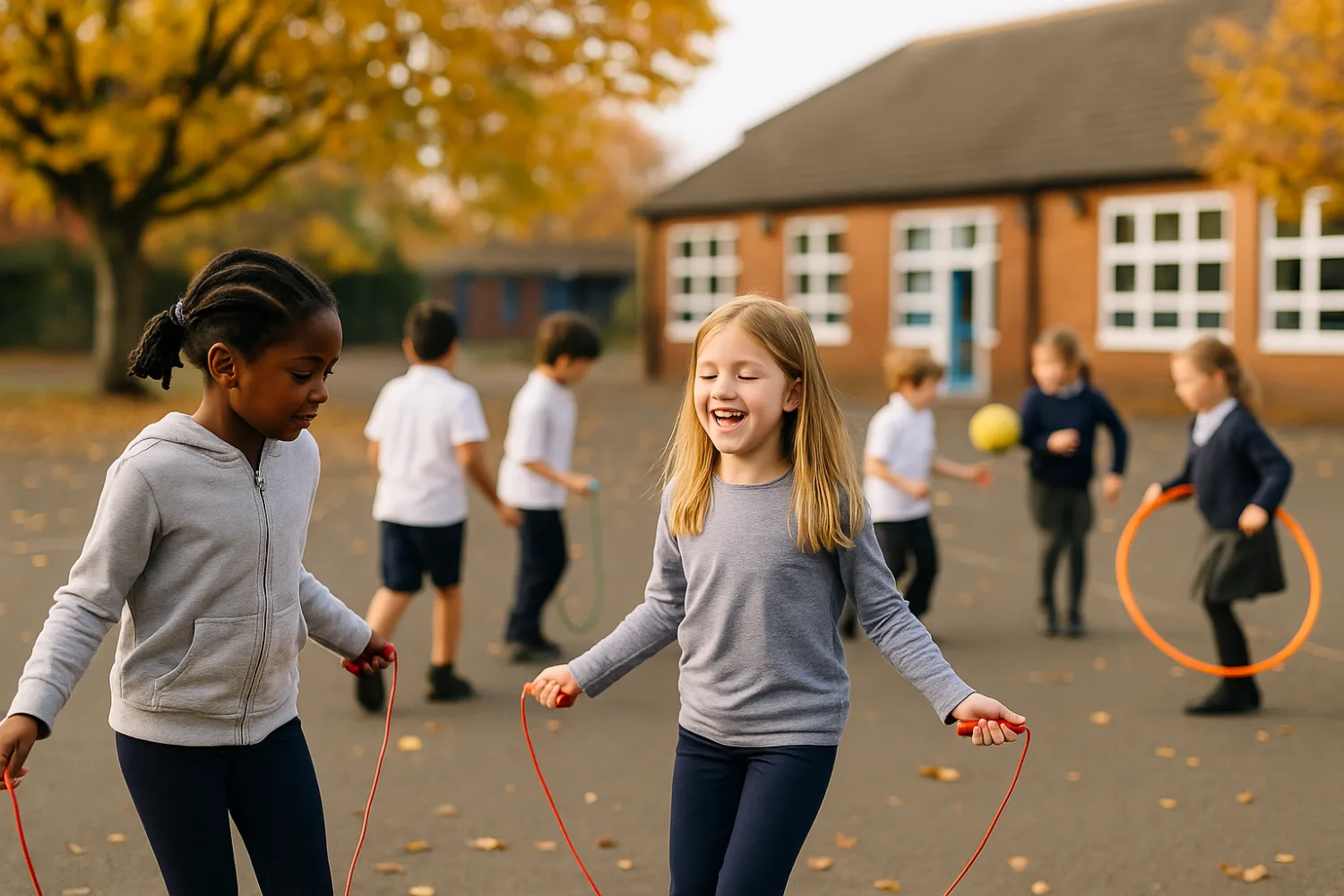
- playground games;
- climbing;
- individual fitness activities;
- adapted and disability-inclusive sports.
Choice increases the likelihood that pupils will find an activity they can enjoy. It also reduces the message that only naturally athletic children belong in school sport.
Schools should consider cost, equipment, transport, cultural needs, changing facilities and whether pupils require reasonable adjustments.
Avoid using exercise as punishment
Making pupils run laps, complete press-ups or miss breaks as a punishment can create a negative association with movement. It may also be unsafe or humiliating.
Physical activity should be presented as a normal part of wellbeing, play and learning rather than a consequence for poor behaviour.
Removing PE or break-time movement to complete missed work can also affect the pupils who most need an opportunity to regulate and reset. Schools should consider whether another consequence or support would be more appropriate.
Where behaviour becomes difficult after inactivity, the pupil may need more structured opportunities to move rather than fewer.
Build activity into the whole school day
PE lessons are important, but they are only one part of an active school culture. Pupils may benefit when movement is available before, during and after formal lessons.
Schools can consider:
- safe walking, cycling and wheeling routes;
- active breakfast or lunchtime clubs;
- well-equipped and supervised break times;
- short classroom movement breaks;
- outdoor curriculum activities;
- inclusive sports and dance clubs;
- pupil-led activity ideas;
- staff role-modelling and participation;
- links with community sports and activity providers.
Ask pupils what prevents them from being active. Barriers may include embarrassment, unsuitable clothing, lack of privacy, cost, fear of failure or not seeing activities that reflect their interests.
A whole-school approach should connect physical activity with broader mental health provision. Department for Education guidance emphasises that schools should combine culture, curriculum, pupil voice, staff development, targeted support and work with families when promoting mental health and wellbeing in schools and colleges.
How families can encourage movement at home
Families do not need specialist equipment or expensive classes. Ordinary routines can provide regular activity.
Options may include:
- walking part of the journey to school;
- visiting a park or playground;
- cycling or scooting where it is safe;
- dancing at home;
- walking the dog;
- gardening or active household tasks;
- playing with a ball;
- taking a family walk after dinner;
- trying free local activities.
Invite rather than shame. Comments about weight, appearance or laziness can damage a child’s relationship with exercise and their body.
Parents can focus on how movement feels: having more energy, spending time together, learning a skill or enjoying the outdoors.
Activity can also provide a constructive alternative to some recreational screen use, but it should not be presented as a punishment for using devices. See Balancing Screen Time and Study Time: A Parent’s Guide.
Exercise is not a substitute for mental health support
Physical activity can support wellbeing, but it should not be presented as a cure for depression, anxiety, trauma, eating disorders or other mental health conditions.
A pupil experiencing significant distress may lack the energy, motivation or confidence to join an activity. Telling them to exercise more can feel dismissive if adults have not listened to the underlying problem.
Schools should continue to provide or arrange appropriate support when a pupil:
- remains persistently withdrawn or distressed;
- experiences panic or severe anxiety;
- stops attending school or activities;
- has major changes in sleep or eating;
- talks about self-harm or hopelessness;
- cannot manage ordinary daily tasks;
- shows signs of an eating disorder or compulsive exercise.
Speak to the school’s pastoral or safeguarding team, GP or an appropriate mental health service. Exercise may form part of a support plan, but it should not delay assessment or treatment.
Adults should also be alert to excessive exercise. Training despite injury, intense distress after missing a session or exercising to compensate for food may indicate that movement is no longer supporting healthy wellbeing.
Frequently asked questions
Does exercise improve children’s mental health?
Regular physical activity can support mood, sleep, confidence, concentration and social connection. The effect varies between children, and exercise should form part of wider support rather than replace mental health care.
How much physical activity should school-aged children get?
UK guidance recommends that children and young people aged 5 to 18 aim for an average of at least 60 minutes of moderate or vigorous activity per day across the week. Activity can be accumulated in shorter periods.
Does PE count towards the recommended activity?
Yes. PE can contribute, as can active travel, break-time play, sport, dancing, swimming and movement outside school. The recommendation applies to total activity across the week.
What if a pupil dislikes team sports?
Offer alternatives such as walking, cycling, dance, swimming, gardening, yoga, climbing or individual fitness activities. Enjoyment and accessibility are more important than choosing a particular sport.
Can exercise reduce exam stress?
Movement may provide a break from revision, reduce physical tension and support sleep. It should be balanced with study rather than used to avoid preparation completely. Short walks or active breaks may be easier to maintain during examination periods.
Should schools use exercise to manage behaviour?
Planned movement can support regulation and concentration, but physical activity should not be used as punishment. Schools should consider the reason for the behaviour and provide appropriate support.
Can children exercise too much?
Yes. Warning signs include exercising despite injury, distress when unable to train, exhaustion, declining school performance or using exercise to compensate for eating. Seek medical or mental health advice where there is concern.
How can schools include pupils with disabilities?
Discuss the pupil’s abilities, preferences and support needs. Adapt equipment, rules, space, communication and intensity rather than assuming participation is impossible. Medical advice may be needed for some conditions.
Is walking enough to support mental wellbeing?
Walking can be valuable, particularly when it is regular and comfortable for the pupil. Brisk walking can contribute towards moderate activity, while gentler walking still breaks up inactivity and may provide social or outdoor benefits.
When should a pupil receive additional mental health support?
Seek additional help when distress is persistent, interferes with attendance or daily life, or involves self-harm, hopelessness, severe anxiety or major changes in behaviour. Physical activity should not delay appropriate assessment and support.