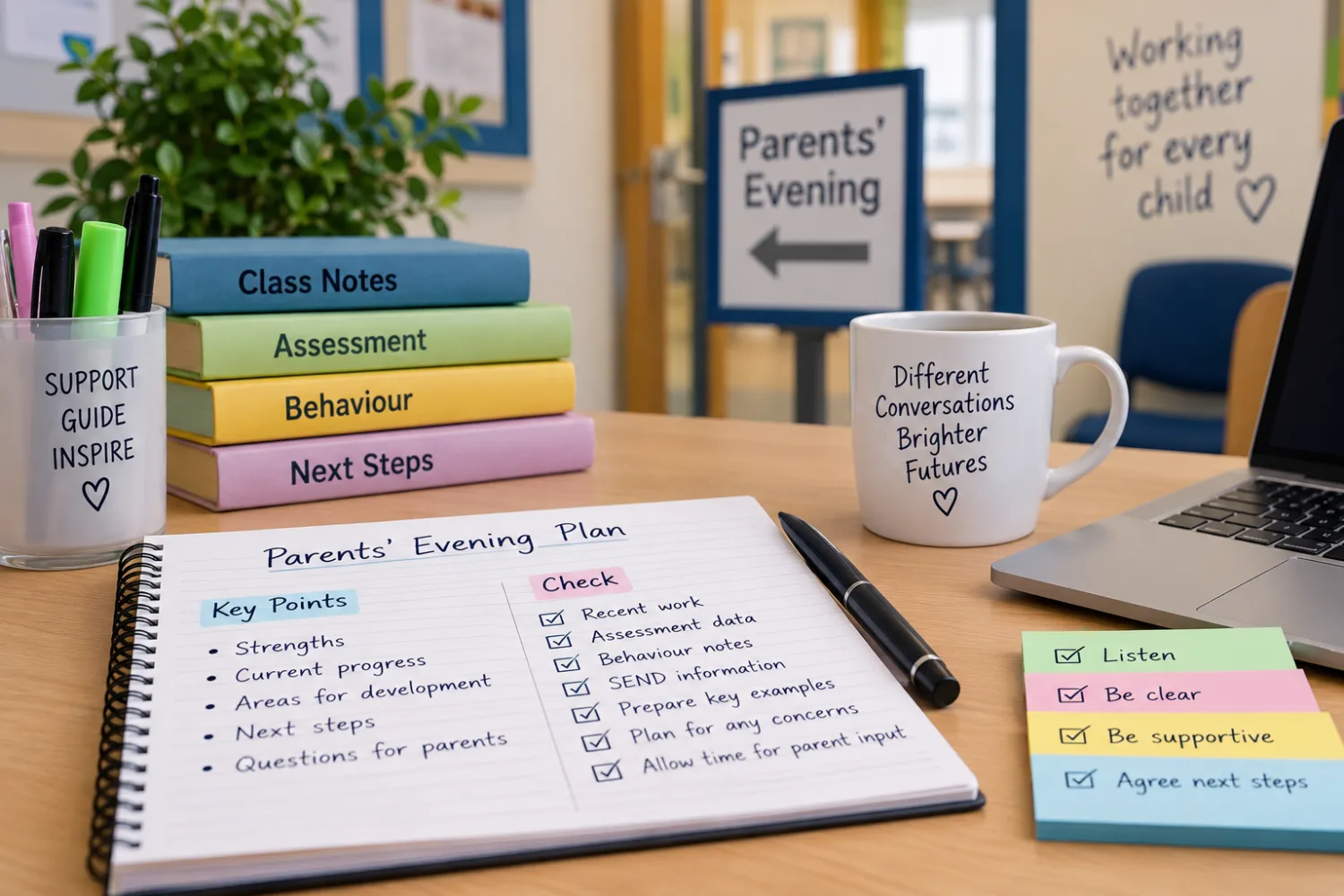
The first two weeks of a new school year carry an unreasonable amount of expectation.
Teachers are supposed to welcome pupils warmly, establish routines, understand a new class, identify learning needs, communicate with families, notice safeguarding concerns, manage behaviour confidently and begin teaching meaningful curriculum content. At the same time, registers are changing, passwords are not working, exercise books are still arriving and somebody has moved the glue sticks.
It is tempting to approach September as a performance: the immaculate classroom, the perfectly planned introductory lesson and the instant establishment of authority. In reality, a successful start is quieter and more deliberate. It is built through repeated routines, careful observation, calm communication and a willingness to prioritise what pupils genuinely need.
The first two weeks do not have to prove what the entire year will look like. They need to create the conditions in which a good year can develop.
This practical September checklist is designed for classroom teachers in primary, secondary and special schools. Not every point will apply in every setting, but the central principle remains the same: begin with safety, relationships, clarity and learning. Displays, elaborate systems and perfect folders can come later.
Before pupils arrive: know what matters most
Preparation matters, but not all preparation is equally valuable. Two hours spent understanding the pupils you will teach is usually more useful than two hours making a decorative display that may have little effect on learning.
Before the first day, identify the information that could materially affect a pupil’s safety, access to learning or experience of school.
Read the essential pupil information
Depending on your role and the systems used by your school, this may include:
- medical needs and healthcare plans;
- allergies and medication arrangements;
- SEND information and relevant provision;
- EHCP outcomes and classroom adjustments;
- communication or sensory needs;
- key safeguarding information shared on a need-to-know basis;
- attendance concerns;
- changes in family circumstances;
- pupils joining or leaving the school;
- strategies that have previously helped a pupil participate successfully.
The aim is not to form a fixed judgement about every pupil before meeting them. Records provide context, not destiny. A behaviour incident from the previous year should not become a permanent label, and a pupil described as quiet may behave very differently in a new class.
Look particularly for information that changes what you need to do on the first day. Does a pupil need a specific seat? Is there a medical procedure you must understand? Does someone find unexpected touch distressing? Is a pupil likely to need help navigating an unfamiliar building? Does a child use an alternative communication method?
Teachers in England should also make sure they have completed the safeguarding reading and training required by their school. The current version of Keeping Children Safe in Education changes on 1 September 2026, so staff should use the version in force for the relevant date and follow their school’s updated procedures.
Check the practical basics
Walk through the day from a pupil’s point of view.
Where will pupils wait? How will they enter? Where should bags, coats and equipment go? What happens if someone arrives late? How do pupils ask to leave the room? Where should completed work be placed? What happens at the end of the lesson?
Many low-level problems begin where expectations are unclear. A teacher may think pupils are being deliberately awkward when they simply do not know which tray to use, whether they may sharpen a pencil or what “get ready” actually means in that classroom.
Check that the resources required for the first few days are available, but avoid planning a start that depends on every system working perfectly. Have a sensible alternative if pupils cannot log in, a room changes or a photocopier fails.
Choose a small number of priorities
Write down the three things that matter most during the first fortnight. For example:
- pupils feel safe and know where to get help;
- core classroom routines become familiar;
- teaching begins and useful information about pupils’ learning is gathered.
These priorities can prevent minor imperfections from feeling like failures. A classroom may not be fully organised by Friday, but if pupils feel secure, understand the basic routines and have begun learning, the week has achieved something important.
Plan the first day around clarity, not spectacle
The first day matters, but it does not need to be theatrical. Pupils are often processing a great deal: a new teacher, room, timetable, peer group, journey or phase of education. Clear and predictable teaching is usually more reassuring than a stream of ambitious activities.
Welcome pupils without putting them under pressure
A calm greeting at the door can help establish the tone of the classroom. It allows you to notice how pupils arrive, learn names and respond quickly if someone appears lost or distressed.
Not every pupil will want to make extended conversation. A simple welcome, clear direction and visible place to begin may be enough.
Be cautious with icebreakers that require pupils to disclose personal information, speak alone in front of an unfamiliar class or participate in physical activities they may find uncomfortable. “Tell everyone an interesting fact about yourself” sounds harmless, but it can feel exposing to an anxious pupil or to a child whose circumstances are difficult.
Activities can still help pupils learn names and begin working together, but participation should feel safe and purposeful.
Explain what pupils need to know now
Avoid delivering every rule, consequence and classroom procedure in one long speech. Pupils are unlikely to remember it all.
Teach information at the point when it becomes useful. Explain the entry routine as pupils enter. Demonstrate how materials are collected before they need them. Practise the transition from discussion to silent work when that transition first occurs.
You can tell pupils that additional routines will be taught as the week develops. This is more realistic than expecting them to absorb an entire classroom system in the opening 20 minutes.
Begin real learning
The first lesson should help pupils understand how learning will feel in your classroom. That usually means including meaningful subject content rather than spending the whole session discussing rules or decorating book covers.
The work should be accessible enough for pupils to enter successfully, but not so undemanding that it communicates low expectations. A useful first lesson might include:
- a short explanation or model;
- a carefully structured task;
- some independent thinking;
- an opportunity for the teacher to check understanding;
- a calm and clearly taught ending.
The objective is not to complete an impressive quantity of content. It is to begin establishing what attention, participation, effort and support look like in the classroom.
Teach routines as carefully as you teach content
Effective routines are not merely rules written on a slide. They are actions pupils understand, practise and eventually perform with less conscious effort.
The Department for Education’s guidance on behaviour in schools emphasises the importance of clear expectations, predictable responses and a positive, safe school culture. The Education Endowment Foundation similarly recommends teaching learning behaviours rather than focusing only on responding after misbehaviour occurs.
That distinction is especially important in September. Teachers sometimes correct pupils for failing to follow a routine that has never been explicitly taught.
Prioritise the routines that protect learning
You do not need to perfect every procedure immediately. Start with routines that reduce uncertainty and help lessons function:
- entering the classroom;
- starting work;
- listening while someone else speaks;
- asking for help;
- moving between activities;
- collecting and returning equipment;
- responding to a signal for attention;
- finishing and leaving the lesson.
Explain the routine in concrete terms. “Enter sensibly” is open to interpretation. “Enter quietly, place your bag under the table and begin the task on the board” is observable and teachable.
Model, practise and revisit
Do not assume that explaining a routine once means it has been learned. Pupils may forget it, misunderstand it or perform it successfully in one context but not another.
When a routine breaks down, consider reteaching before escalating. This does not mean ignoring deliberate misbehaviour or abandoning the school behaviour policy. It means distinguishing between defiance and a procedure that has not yet become secure.
A calm reset can be brief:
“Let’s pause. When I ask for attention, the expectation is that voices stop, equipment is placed down and everyone looks this way. We’ll try that transition again.”
This communicates confidence without turning every correction into a confrontation.
Use routines consistently, but not mechanically
Consistency matters because unpredictability creates anxiety and encourages pupils to test whether expectations are real. However, consistency does not always mean treating every pupil identically.
A pupil with a communication difficulty, physical disability, sensory need or other SEND may require a reasonable adjustment. The expectation can remain ambitious while the route to meeting it differs.
Teachers who want to explore this further can read the AllSchools guide to neurodiversity in the classroom and the practical advice on creating a sensory-friendly classroom on a budget.
Build relationships through reliability, not forced familiarity
Positive relationships matter, but they are not created instantly by being entertaining, disclosing personal stories or trying to become pupils’ friend.
Trust grows when pupils experience a teacher as calm, interested, fair and dependable. They notice whether promises are kept, whether help is available, whether corrections are respectful and whether the teacher remembers what matters to them.
Learn names quickly and use them carefully
Using pupils’ names helps them feel recognised and makes classroom communication more precise. Seating plans, photographs where permitted and short retrieval exercises for yourself can help.
Make a deliberate effort to pronounce names correctly. Ask rather than repeatedly guessing, and correct yourself without turning the moment into a performance.
Be equally careful not to use names only when reprimanding pupils. A pupil should hear their name attached to encouragement, questions and ordinary classroom interaction as well as correction.
Create small moments of connection
Relationships often develop through brief, repeated interactions:
- welcoming a pupil back after an absence;
- noticing improvement;
- asking how an important event went;
- remembering a pupil’s interest;
- checking privately after a difficult lesson;
- thanking someone for contributing positively.
These moments do not require elaborate reward systems. Their value comes from being genuine and specific.
Do not confuse warmth with low expectations
Pupils benefit from teachers who combine support with clarity. It is possible to acknowledge that a task is difficult while still expecting an attempt. It is possible to understand why a pupil is dysregulated while still addressing the effect of their behaviour.
A useful message is:
“I will help you succeed here, and these are the expectations that help everyone learn.”
This balance is particularly important for pupils who may previously have experienced relationships with adults as inconsistent, punitive or conditional.
Observe before making permanent decisions
The first two weeks generate a great deal of information, but not all of it is reliable.
A pupil may appear unusually quiet because they are anxious. Another may dominate discussion because they are desperate to make a positive first impression. A child who struggles with a written task may have misunderstood the instructions rather than lacking the underlying knowledge.
Treat the opening fortnight as a period of informed observation rather than a race to categorise pupils.
Use previous information without being controlled by it
Transition records can prevent pupils from repeatedly having to prove needs that are already well established. They can also show which strategies have been effective.
However, inherited descriptions can become self-fulfilling. Terms such as “low ability”, “difficult”, “lazy”, “attention-seeking” or “lovely but quiet” can narrow what teachers notice.
Replace broad labels with useful questions:
- What can this pupil already do independently?
- Where do they encounter difficulty?
- Is the barrier related to knowledge, language, memory, attention, confidence or task design?
- What support helps without creating unnecessary dependence?
- Does performance change between spoken and written work?
- Are there patterns connected to time, environment or peer group?
Gather baseline information through ordinary teaching
Baseline assessment does not have to mean an exhausting sequence of formal tests.
Useful information can come from:
- low-stakes retrieval questions;
- short reading or writing samples;
- discussion;
- worked examples;
- observation during independent practice;
- carefully chosen hinge questions;
- reviewing previous work and teacher information.
Before collecting data, ask what decision it will help you make. If an assessment will not influence teaching, intervention or support, it may not be the best use of the limited opening weeks.
Teachers should also avoid interpreting unfamiliarity as inability. Pupils may need time to adjust to a teacher’s vocabulary, task formats and expectations before showing what they know.
Notice strengths as deliberately as difficulties
September assessment often concentrates on gaps. Also notice curiosity, perseverance, practical ability, oral language, creativity, leadership, kindness, humour and the conditions under which a pupil becomes engaged.
These strengths can provide routes into learning later, particularly when a pupil lacks confidence in the subject.
Respond to behaviour early, calmly and proportionately
Some pupils test boundaries at the beginning of the year. Others are not consciously testing anything; they are adjusting to new expectations, struggling with anxiety or repeating habits that were tolerated elsewhere.
The teacher’s task is not to win a confrontation. It is to make the expectations credible while protecting dignity and returning attention to learning.
Address small issues before they become the classroom norm
Ignoring persistent low-level disruption can communicate that the stated expectations are optional. At the same time, treating every whisper or forgotten pen as a major challenge can make the classroom tense and adversarial.
Use the least intrusive response likely to work:
- pause and wait;
- move closer;
- use the pupil’s name;
- remind the class of the routine;
- give a clear choice;
- speak privately;
- apply the school’s agreed consequence where necessary.
Corrections should be brief enough that they do not become more disruptive than the behaviour itself.
Avoid public arguments
When a pupil challenges an instruction, repeating the demand with increasing volume can create an audience and make backing down feel socially costly.
Where it is safe and appropriate, reduce the public element:
“The instruction still stands. Start the task now, and I will speak with you privately in a moment.”
This does not guarantee immediate compliance, but it avoids converting the interaction into a debate for the class to watch.
Follow the school behaviour policy and seek support early where behaviour is serious, persistent or unsafe. Teachers should not feel expected to manage every incident alone.
Look for patterns without excusing harm
Understanding behaviour is not the same as accepting it. A pupil may need both a consequence and additional support.
Consider whether difficulties are linked to:
- unclear instructions;
- work that is inaccessible or insufficiently challenging;
- sensory overload;
- peer conflict;
- literacy or language needs;
- anxiety about making mistakes;
- hunger, sleep or health;
- changes at home;
- difficulty moving between activities.
Your existing school systems should determine how concerns are recorded, shared and escalated. For broader classroom strategies, see the AllSchools guide to improving focus in the classroom.
Make the classroom accessible from the beginning
Inclusion is easier when it is designed into everyday teaching rather than added only after a pupil has struggled.
This does not require creating an entirely separate lesson for every need. Many helpful adaptations benefit a wide range of pupils.
Reduce avoidable cognitive overload
During the first two weeks, pupils are already remembering names, rooms, routines and expectations. Instructions that contain too many steps can quickly be lost.
Help pupils by:
- breaking longer instructions into stages;
- using concise spoken language;
- leaving key steps visible;
- modelling the finished process or product;
- checking understanding rather than asking only, “Does everyone understand?”;
- allowing time to begin before adding more information.
This is particularly important for pupils with working-memory difficulties, but it improves clarity for everyone. The AllSchools article on teaching working-memory strategies offers further classroom examples.
Check access, not just compliance
A pupil staring at a blank page may be refusing, confused, overwhelmed or unable to access one part of the task. Before assuming the cause, ask a specific question:
“Tell me what the first step is.”
“Show me where you became unsure.”
“Would it help to look at the example together?”
This gives the teacher more useful information than repeatedly saying, “You need to get started.”
Protect adjustments from becoming public labels
Where possible, provide support discreetly. Pupils should not have to explain their diagnosis, family circumstances or learning needs to classmates.
Speak with the SENCO, pastoral team or previous teacher where you are unsure how an adjustment should work. The Education Endowment Foundation’s guidance on supporting pupils with SEND in mainstream schools places high-quality teaching at the centre of provision while recognising the need for targeted and specialist support.
Pay attention to attendance, transitions and signs of distress
September can reveal difficulties that were not visible during the summer. Some pupils return eager for structure. Others experience anxiety, disrupted sleep, friendship worries, family stress or fear connected to previous experiences of school.
Attendance and emotional wellbeing should not be treated as completely separate issues.
Notice changes from the first day
Be alert to pupils who:
- arrive repeatedly late;
- miss particular days or lessons;
- appear unusually withdrawn;
- become distressed at transitions;
- frequently report physical symptoms;
- ask to leave the room repeatedly;
- show a sudden change in behaviour, appearance or engagement;
- appear frightened of going home or reluctant to discuss the holidays.
None of these automatically indicates a safeguarding concern, but changes and patterns may require professional curiosity. Record and report concerns through the school’s agreed system rather than investigating independently.
Welcome pupils back after absence
A pupil returning after several days away may already feel conspicuous. A public interrogation at the classroom door can increase the difficulty of returning.
A calm welcome does not mean the absence is ignored. Attendance processes can continue through the appropriate staff while the classroom teacher helps the pupil re-enter learning.
In England, the statutory Working Together to Improve School Attendance guidance emphasises early action, partnership with families and removing barriers rather than waiting for absence to become entrenched.
The AllSchools guide to attendance strategies that improve persistent absence explores this in more detail.
Make transitions predictable
Transitions are not limited to moving from primary to secondary school. Pupils may struggle with entering the building, changing classrooms, returning after break, moving from group work to independent work or preparing to go home.
Use advance notice, visual reminders and consistent language. A pupil who appears oppositional at every transition may be finding uncertainty or rapid change difficult.
For pupils moving between year groups or settings, the quality of information shared before September can make a substantial difference. See how to prepare transition information for September for a fuller guide.
Communicate with families before problems become crises
The start of the year shapes families’ expectations as well as pupils’. Parents and carers want to know who is teaching their child, how communication works and what to do if they have a concern.
A clear, calm opening message can prevent confusion later.
Set realistic communication expectations
Explain:
- which communication channel families should use;
- how quickly they can usually expect a response;
- who to contact about attendance, SEND, safeguarding or administrative issues;
- when teachers are unlikely to see messages;
- how urgent concerns should be raised.
Avoid creating an expectation that classroom teachers are continuously available. Prompt communication is important, but healthy boundaries make reliable communication more sustainable.
Make early contact for positive reasons
Where workload permits, an early positive message can be valuable, particularly for a pupil whose family may be accustomed to receiving contact only when something has gone wrong.
It does not need to be lengthy:
“I wanted to let you know that Sam made a thoughtful contribution during science today and helped the group organise their equipment responsibly.”
Specific messages feel more genuine than generic praise and can make later difficult conversations less adversarial.
Deal with concerns calmly and accurately
When a parent raises a concern, listen before trying to solve or defend. Clarify what has happened, distinguish known facts from assumptions and agree what will happen next.
Do not promise an outcome you do not control. It is better to say, “I will check the records and speak with the relevant colleague by Thursday” than to offer immediate reassurance that may later prove inaccurate.
For more detailed wording and de-escalation strategies, use the AllSchools guide on handling a difficult parent conversation without it escalating.
Protect your workload during the September rush
The first two weeks can expand to fill every evening. There is always another label to print, email to send, resource to improve or piece of information to organise.
Working indefinitely is not the same as being prepared.
Separate essential work from reassuring work
Some tasks are essential because they affect safety, access or the next day’s teaching. Others make teachers feel temporarily more in control but have little effect on pupils.
Before staying late, ask:
- Does this need to be completed before tomorrow?
- Will it materially improve learning, safety or inclusion?
- Is there a simpler version that would work?
- Am I doing this because pupils need it or because I feel September should look perfect?
A functional seating plan is more urgent than a beautifully formatted one. Clear lesson resources matter more than matching fonts. A safe classroom does not require every wall to be full.
Plan sequences, not isolated masterpieces
Planning every lesson as a standalone performance creates unnecessary workload and makes it harder to respond to what pupils actually understand.
Begin with:
- the knowledge or skill pupils are developing;
- what successful understanding will look like;
- likely misconceptions;
- how you will explain or model the content;
- how pupils will practise;
- how you will check what needs to happen next.
Reuse established structures where they support learning. Pupils often benefit from familiar task formats because less attention is spent decoding what they are expected to do.
Accept that some systems will develop later
You do not need a perfect answer to every classroom issue by the end of week one. Notice what is creating friction and improve it gradually.
Perhaps the equipment routine is taking too long. Perhaps a seating arrangement is making discussion difficult. Perhaps pupils need a clearer process for requesting help.
Small improvements based on real classroom experience are often more effective than elaborate systems designed before the pupils arrive.
For further practical ideas, see 10 time-saving hacks for teachers.
Review the first fortnight without judging it too harshly
By the end of the second week, teachers often focus on everything that has not yet settled. A difficult class, an awkward parent interaction or a failed lesson can overshadow the progress that has already been made.
Review the fortnight as useful evidence, not as a verdict on the year.
Ask what pupils can now do more independently
Look for signs that routines are beginning to reduce effort:
- Do pupils know how to enter and begin?
- Can they find the resources they need?
- Do transitions require fewer reminders?
- Do pupils know how to ask for help?
- Are more pupils willing to contribute?
- Are there fewer points of confusion?
Progress may be uneven. One routine may be secure while another needs explicit reteaching.
Identify pupils who need something different
Consider which pupils are not yet accessing learning successfully and what the barrier may be.
Speak with colleagues rather than repeatedly trying variations in isolation. The SENCO, pastoral lead, teaching assistant, form tutor, head of year, previous teacher or subject leader may hold important information.
Where a concern involves safeguarding, follow the school’s reporting procedure immediately. Do not wait until the end of the fortnight to see whether the issue resolves itself.
Choose the next adjustment
A useful review produces a small number of actions, not an overwhelming reinvention.
For example:
- reteach the transition into independent work;
- change three places on the seating plan;
- speak with the SENCO about one pupil’s access needs;
- contact a family with a positive update;
- simplify how homework is recorded;
- adjust the next lesson after identifying a shared misconception.
The first two weeks are successful when they help the teacher understand what should happen next.
Frequently asked questions
Should teachers spend the whole first lesson explaining rules?
Usually not. Pupils need to understand the most important expectations, but a long explanation of every rule and consequence is unlikely to be remembered. Introduce essential routines clearly, practise them in context and include meaningful learning during the first lesson.
How strict should a teacher be in the first two weeks?
Teachers should be clear, calm and consistent rather than attempting to appear unusually severe. Address behaviour that interferes with safety or learning, follow the school policy and avoid making threats that cannot be sustained. Warmth and high expectations can exist together.
What are the most important routines to establish first?
Prioritise routines that help pupils enter, begin work, listen, ask for help, move between activities, manage equipment and finish the lesson. Other procedures can be added as they become relevant.
Should seating plans be fixed from the first day?
An initial seating plan can help with names, access needs and classroom organisation, but it should not be treated as permanent. Observe how pupils work, check relevant SEND or safeguarding information and make changes when there is a clear reason.
How much assessment should happen in the first fortnight?
Collect enough information to plan suitable teaching, but avoid testing pupils simply to generate data. Previous work, low-stakes questions, discussion, observation and short tasks may provide more useful information than a large formal testing programme.
What should a teacher do if a class tests boundaries immediately?
Respond early and proportionately. Restate or reteach the expectation, use the school behaviour system and avoid public arguments. If behaviour is persistent, serious or unsafe, record it and seek support rather than trying to manage everything alone.
How can teachers support pupils who are anxious about returning?
Use predictable routines, clear instructions, calm welcomes and private check-ins. Avoid forcing personal disclosure in front of peers. Notice repeated absence, distress or significant changes in behaviour and involve pastoral or safeguarding staff through the school’s established procedures.
When should teachers contact parents during the first two weeks?
Contact may be needed when there is a concern about safety, attendance, access, behaviour or wellbeing. Positive early communication can also strengthen relationships. Follow the school’s communication policy and avoid establishing expectations of continuous evening availability.
What should teachers prioritise when time is limited?
Prioritise safeguarding, medical information, SEND access needs, essential routines and the next day’s teaching. Decorative work and elaborate administrative systems can wait when they do not directly improve safety, inclusion or learning.
What if the first two weeks go badly?
A difficult start does not determine the whole year. Identify the main source of difficulty, seek support and choose a small number of changes. Routines can be retaught, seating plans altered, relationships repaired and teaching adjusted. The purpose of the opening fortnight is not perfection; it is to establish a workable foundation and learn what the class needs.
The beginning of a school year is important, but it is still only a beginning. Pupils do not need a flawless teacher with a flawless classroom. They need an adult who notices them, teaches clearly, responds consistently and continues adjusting when something does not work.
That is how a good September becomes a sustainable school year.