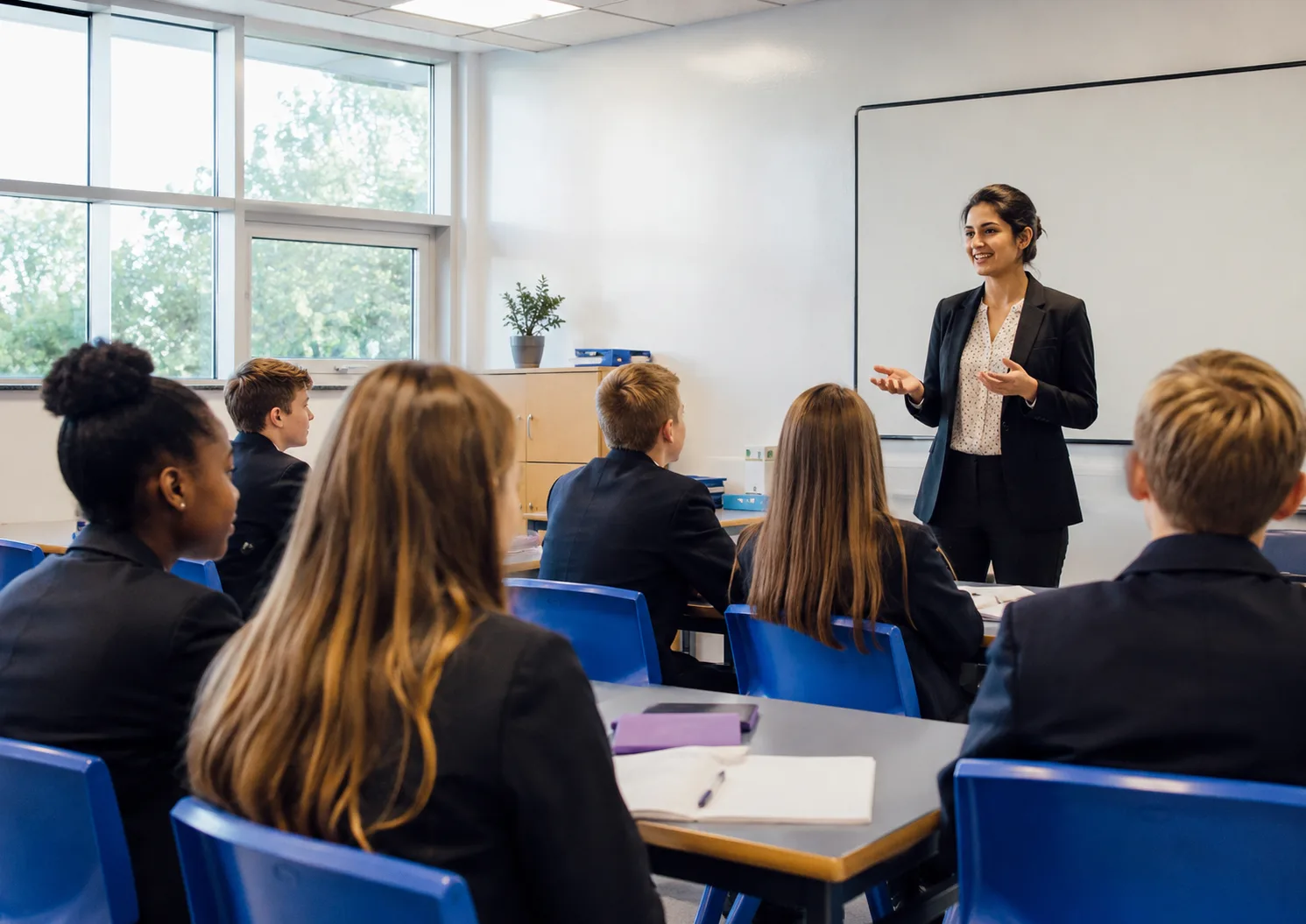
The first lesson with a new class can feel more important than an ordinary lesson.
Teachers may feel they need to establish authority immediately, learn every name, explain every rule, assess what pupils know, build relationships and deliver an impressive piece of teaching—all within one period.
That pressure can lead to two common extremes. Some first lessons become long presentations about rules and consequences, with little actual learning. Others are filled with elaborate icebreakers and activities that are enjoyable but tell pupils very little about how the classroom will normally work.
A successful first lesson does not need to prove everything about you as a teacher. It should give pupils a clear and reassuring introduction to the classroom while beginning meaningful learning.
By the end of the lesson, pupils should have a reasonable sense of who you are, what they are learning, how they are expected to participate and what they should do when they need help. You should leave with a little more information about the class than you had when they entered.
This guide explains how to plan the first lesson with a new class in a way that balances routines, relationships, behaviour, inclusion and curriculum teaching. It is suitable for new teachers, experienced teachers beginning with unfamiliar pupils and staff taking over a class during the school year.
Decide what the first lesson really needs to achieve
Before choosing an activity, decide what success would look like.
A first lesson cannot achieve everything. If you try to introduce every classroom procedure, assess every pupil and complete a full unit of work, the lesson is likely to become rushed and unclear.
For most classes, the first lesson has four realistic purposes:
- to make pupils feel that the classroom is safe and organised;
- to introduce a small number of essential routines;
- to begin meaningful curriculum learning;
- to gather useful initial information about the class.
These aims support one another. A well-structured learning task allows you to see how pupils listen, respond, work independently and ask for help. Teaching the routine for entering or gaining attention makes the learning task easier to manage.
Choose one clear learning objective
The academic aim should be meaningful but manageable.
Do not choose content simply because it is entertaining or easy to turn into a colourful activity. Select something that belongs within the curriculum and helps pupils understand what learning in your classroom will feel like.
A useful first objective might:
- activate important prior knowledge;
- introduce a foundational idea;
- revisit knowledge required for the new unit;
- allow pupils to explain their thinking;
- produce a short piece of work you can review;
- reveal common misconceptions without creating high pressure.
The first lesson should be accessible enough for pupils to begin successfully, but it should not communicate that the subject will lack challenge.
Separate essential outcomes from desirable outcomes
Your essential outcomes may be:
- every pupil knows how to enter and start;
- the class practises your signal for attention;
- pupils complete a short piece of meaningful work;
- you identify who may need immediate support.
Desirable outcomes might include learning every name, completing an extended task or introducing additional routines.
This distinction helps when the timetable changes, pupils arrive late or an activity takes longer than expected. You can protect what matters without feeling that the lesson has failed.
Know the pupils before deciding how to teach them
The first lesson should be informed by what is already known about the class.
You do not need to read every historical note before pupils arrive, but you should identify information that affects safety, access and immediate classroom practice.
Check essential pupil information
Before the lesson, review:
- medical needs and serious allergies;
- SEND information and essential reasonable adjustments;
- communication, sensory or physical-access needs;
- pupils requiring a specific seating position;
- safeguarding information shared on a need-to-know basis;
- pupils who may find the transition particularly difficult;
- new pupils who may not know the school or class;
- approved attendance or reintegration arrangements.
Make sure that required resources or adjustments are actually available. A document may say that a pupil uses assistive technology, visual instructions or specialist equipment, but that does not guarantee it has reached the classroom.
The AllSchools guide to what every teacher should know about a new class explains how to interpret medical, SEND, attendance, behaviour and attainment information without allowing old labels to determine expectations.
Use previous information without inheriting every judgement
Previous teachers may provide valuable advice, particularly about adjustments, routines and strategies that have helped pupils succeed.
Be more cautious with vague descriptions such as:
- “very low”;
- “lazy”;
- “attention-seeking”;
- “a difficult class”;
- “lovely but weak”;
- “you need to be strict with them”.
Ask what happened in observable terms and which approaches were effective.
A pupil’s previous behaviour may be relevant, but it should not cause you to watch them more suspiciously or correct them more quickly before they have done anything wrong.
Prepare an initial seating plan
An initial seating plan can help you:
- learn names;
- meet visual, hearing or mobility needs;
- avoid known safeguarding or peer issues;
- position support effectively;
- reduce uncertainty as pupils arrive;
- observe the class more systematically.
Treat it as a starting point rather than a permanent judgement. You will learn more once you see how pupils interact and work.
Plan exactly what pupils will do when they enter
The opening minutes communicate a great deal about the classroom.
If pupils enter without knowing where to sit, what equipment they need or what to do first, the teacher begins the lesson by solving avoidable confusion.
A clear entry routine creates calm without requiring a long speech.
Meet pupils at the door where possible
A brief greeting allows you to welcome pupils, help them find their place and notice whether anybody appears distressed or uncertain.
Use names where you know them, but do not create pressure by trying to perform perfect recall. It is better to check a name respectfully than repeatedly use the wrong one.
Your greeting does not need to become a prolonged conversation. It may be as simple as:
“Good morning. Your seat is shown on the plan. Place your bag underneath the table and begin the task on the board.”
Provide an immediate starting task
The task should be visible, understandable and possible to begin with minimal teacher explanation.
Suitable tasks might include:
- a small number of retrieval questions;
- a short image, quotation or object to interpret;
- a simple problem related to the subject;
- a brief reading passage with a focused question;
- a ranking or classification task;
- a question asking pupils to explain what they already know.
Avoid requiring a login unless you are confident every account and device works. A paper-based alternative can prevent the first ten minutes being lost to passwords.
The starting task should also avoid unnecessary personal disclosure. Pupils should not have to write publicly about their family, holidays, friendships or feelings simply because it is the first lesson.
Teach the entry routine in concrete language
“Come in sensibly” is open to interpretation.
Explain what the routine looks like:
- where pupils wait;
- when they enter;
- where bags and coats go;
- what equipment should be placed on the desk;
- where the first task appears;
- what pupils should do if they need help.
The Education Endowment Foundation recommends explicitly teaching and revisiting classroom routines rather than assuming pupils will infer them. Its guidance on reteaching routines emphasises that routines can protect learning time when they are clearly explained and practised.
Introduce yourself without making the lesson about you
Pupils are naturally curious about a new teacher. A brief introduction can help create connection and reduce uncertainty.
However, the lesson does not need a long autobiography or presentation containing childhood photographs, favourite foods and personal stories.
Tell pupils what helps them understand the classroom
A useful introduction may include:
- your name and how pupils should address you;
- the subject or class you will teach;
- what you enjoy about the subject;
- one or two things pupils can expect from you;
- what you expect from them;
- how they should ask for help.
You might say:
“My job is to help everyone in this room make progress. I will explain carefully, give you opportunities to practise and help when you are stuck. In return, I will expect you to listen when someone is speaking, attempt the work and allow other people to learn.”
This establishes a professional relationship without relying on artificial toughness or exaggerated friendliness.
Share personality carefully
A little humour or personal interest can make a teacher feel more human, but it should arise naturally.
Avoid sharing information that blurs professional boundaries or invites pupils to search for your personal social-media presence.
You do not need to reveal everything about yourself to build a positive relationship. Trust develops more through fairness, reliability and repeated ordinary interactions than through first-day disclosures.
Do not make pupils perform an introduction they would dislike
Traditional icebreakers can be uncomfortable for anxious, shy, neurodivergent or newly arrived pupils.
Activities such as speaking alone to the whole class, revealing an “interesting fact” or explaining what they did during the holidays can create unnecessary pressure.
Where introductions are useful, make them:
- brief;
- low-risk;
- related to the learning;
- possible in pairs or small groups;
- optional where personal disclosure is involved.
For example, pupils might discuss which of several subject-related questions they find most interesting, then share an idea rather than a personal fact.
Teach only the routines pupils need in that lesson
It is tempting to explain every classroom expectation at once.
Teachers may describe entry, equipment, homework, marking, discussion, toilet requests, practical work, sanctions, rewards, books, group work and dismissal before pupils have used any of those systems.
Most of that information will be forgotten.
Introduce routines at the point of use
During the first lesson, pupils may need to learn:
- how to enter and begin;
- how you gain the class’s attention;
- how pupils contribute to discussion;
- how they request help;
- how resources are collected or returned;
- how the lesson ends.
Other routines can wait until a later lesson.
Before pupils collect equipment, explain and model the collection routine. Before the first paired discussion, explain how you expect partners to work and how you will bring the class back together.
Describe what successful behaviour looks like
Terms such as “respect”, “effort” and “readiness” are important, but pupils may interpret them differently.
Translate them into observable actions.
For example:
“When somebody is answering, everyone else listens without interrupting.”
“When you are unsure, first reread the instruction, then check the example, then ask for help.”
“When I give the attention signal, finish the word you are saying, stop and look this way.”
Practise routines without creating embarrassment
If a routine does not work, pause and repeat it calmly.
You might say:
“We lost quite a lot of time during that transition. Let me make the steps clearer, and we will try it once more.”
This treats the routine as something being learned rather than immediately accusing the class of deliberate defiance.
The Department for Education’s Behaviour in Schools guidance emphasises clear expectations, predictable responses and teaching pupils the behaviour required for a positive school culture.
Begin meaningful teaching early
Pupils should leave the first lesson having learned something about the subject, not only about the teacher’s rules.
Beginning meaningful content communicates that the classroom has a serious educational purpose. It also gives you more useful information about the class than a lesson composed entirely of games.
Connect the task to what comes next
The first lesson might:
- introduce the first important concept in a unit;
- revisit knowledge required for upcoming work;
- explore a central question;
- model a process pupils will use regularly;
- create a short baseline sample;
- identify misconceptions that will shape the next lesson.
A primary teacher beginning a science topic might ask pupils to classify familiar materials and explain their decisions. A secondary history teacher might use a source to introduce how historical claims are evaluated. An English teacher might model how readers make an inference from a short passage.
The task should feel like a real version of the subject rather than a filler activity with the subject’s name attached.
Use a clear explanation and model
Do not assume that a simple first task needs no teaching.
Give pupils a clear explanation of what they are learning, demonstrate the process where appropriate and show what a successful response might include.
Keep initial instructions concise. Pupils are already processing an unfamiliar teacher, environment and set of routines.
The AllSchools article on the science of explanation explores why pupils may require modelling, rehearsal and opportunities to connect new information rather than a single verbal explanation.
Build in guided and independent practice
A useful sequence may be:
- activate relevant prior knowledge;
- explain or model a small amount of new content;
- complete an example together;
- allow pupils to practise independently;
- check what they understood;
- review the key idea before the lesson ends.
This structure is familiar enough to support classroom routines while giving you several opportunities to observe pupils.
Check understanding without turning the lesson into a test
The first lesson is an opportunity to gather information, but pupils should not feel they are being judged permanently on their first answers.
Some may be anxious, unfamiliar with your language or returning after a long break. A pupil who hesitates during the first lesson may understand far more once routines become familiar.
Ask questions that reveal thinking
Avoid relying on:
“Does everyone understand?”
Pupils may say yes because they believe everyone else understands, because they do not want attention or because they do not yet recognise what they have misunderstood.
Instead, ask pupils to:
- choose between plausible answers and justify the choice;
- identify an error in an example;
- complete one stage of a process;
- explain an idea to a partner;
- write a short response;
- show an answer simultaneously;
- compare two examples;
- state what information they would need next.
The EEF’s guidance on checking for understanding and adapting teaching stresses that checks should give teachers evidence they can use to decide what to do next.
Gather responses from the whole class
If you ask only for volunteers, you may learn a great deal about the most confident pupils and very little about everybody else.
Whole-class response methods might include:
- mini-whiteboards;
- short written answers;
- multiple-choice cards;
- finger voting where the question is suitable;
- carefully selected questioning after thinking time;
- brief partner discussion followed by individual responses.
Use these methods to understand the class, not to catch pupils out.
Respond to what the evidence shows
If many pupils misunderstand the same point, do not continue simply because the lesson plan says it is time to move on.
You may need to:
- explain the idea differently;
- show another example;
- reduce the task to a smaller step;
- address a missing piece of prior knowledge;
- change the next lesson;
- provide focused support to a small number of pupils.
The first lesson should begin the process of adapting teaching, not produce a fixed judgement about ability.
Plan inclusion into the lesson from the start
It is easier to make a lesson accessible during planning than to improvise separate work after pupils begin struggling.
Many inclusive strategies benefit the whole class without reducing expectations.
Reduce unnecessary barriers
Consider:
- keeping key instructions visible;
- breaking a longer task into stages;
- modelling the expected process;
- pre-teaching important vocabulary;
- reducing unnecessary copying;
- providing enough processing time;
- using clear visual structure;
- checking access to required equipment;
- allowing pupils to rehearse an answer before sharing;
- offering an appropriate extension rather than unrelated extra work.
These approaches support pupils with working-memory, literacy, language and attention difficulties while also improving clarity for others.
The AllSchools guide to teaching working-memory strategies includes practical ways to make instructions and classroom tasks easier to manage.
Plan how adults will support pupils
Where a teaching assistant is present, agree their role before the lesson.
Discuss:
- which pupils may need support;
- what the learning objective is;
- which prompts or models are available;
- how independence will be encouraged;
- what observations should be shared afterwards;
- when the adult should allow productive struggle rather than intervening.
Avoid automatically placing a teaching assistant beside the same pupil for the entire lesson. Support should provide access without separating the pupil from the teacher or the class.
Provide challenge through depth, not merely quantity
Some pupils may complete the opening task quickly.
A useful extension should deepen the same learning. Pupils might justify an answer more precisely, compare methods, create an example, identify a limitation or apply the idea to a new context.
Simply giving more of the same work can make efficient pupils feel punished for finishing.
Prepare for behaviour without planning a confrontation
Some teachers approach the first lesson believing they must demonstrate that they are strict. This can produce an unnecessarily tense atmosphere and make small issues feel like tests of authority.
The aim is not to appear intimidating. It is to make expectations credible.
Know the school behaviour system
Before the lesson, understand:
- the school’s core expectations;
- the normal sequence of classroom responses;
- how incidents are recorded;
- how to request support;
- what happens when a pupil is removed;
- which behaviours require immediate escalation;
- how reasonable adjustments are considered;
- who completes follow-up conversations.
Do not invent consequences in the moment or threaten an outcome that does not exist within school policy.
Correct early and proportionately
Use the least intrusive response likely to work:
- a pause;
- proximity;
- a reminder of the routine;
- the pupil’s name;
- a private correction;
- a clear choice;
- the agreed school consequence where necessary.
Corrections should be clear enough to protect learning but brief enough not to become the main event.
Avoid public arguments
If a pupil challenges an instruction, repeating it with increasing volume can create an audience.
A calmer response may be:
“The expectation is that you begin the task. I will give you a moment to do that, and we can speak privately afterwards.”
Follow the school’s procedure if the pupil continues to refuse or behaviour becomes unsafe.
Do not interpret every mistake as defiance
Pupils may:
- misunderstand an unfamiliar routine;
- forget where equipment goes;
- need more time to process an instruction;
- copy the behaviour of peers;
- be anxious about getting something wrong;
- lack knowledge required to begin.
Reteaching a routine is not weakness. It is often the most efficient response when expectations have not yet become secure.
Plan the ending as carefully as the beginning
First lessons often become rushed at the end because teachers spend longer than expected introducing the class or managing resources.
A chaotic ending can undo much of the calm established earlier.
Protect time for a final review
Use the final minutes to revisit the central learning.
You might ask pupils to:
- write the most important idea from the lesson;
- answer one diagnostic question;
- correct a common misconception;
- explain one step of the process;
- identify something they can now do;
- state a question that remains.
This gives pupils a sense of completion and provides evidence for planning the next lesson.
Teach the dismissal routine
Explain:
- when pupils pack away;
- where work and resources go;
- whether chairs or tables need attention;
- how the room should be left;
- who dismisses the class;
- how pupils leave safely.
A bell or timetable change may signal the end of the period, but it should not automatically produce a rush for the door.
End with clarity about what comes next
Tell pupils what they will continue or begin during the next lesson.
This helps the first lesson feel like the opening of a coherent sequence rather than a standalone event.
Where homework is set, make sure pupils know:
- what the task is;
- where it is recorded;
- when it is due;
- how to access required resources;
- what to do if they cannot access the system.
Do not introduce a complicated homework platform during the final two minutes and assume everyone understands it.
Review the lesson before planning the second one
The first lesson is not a performance to grade as good or bad. It is a source of information.
Review what the lesson revealed about pupils, routines and your own planning.
Ask practical questions
After the lesson, consider:
- Did pupils know how to enter and begin?
- Were the instructions clear?
- Which routine needs reteaching?
- What did pupils already know?
- Which misconception appeared most often?
- Who struggled to access the task?
- Who needed more challenge?
- Did the seating plan work?
- Were there pupils I did not hear from?
- What should change next time?
Record important concerns through the right system
If you notice a safeguarding, medical, attendance or SEND concern, follow school procedures promptly.
Do not keep important information on a private note with the intention of dealing with it later. Equally, do not turn an ordinary first-day mistake into a permanent negative record.
Useful professional records are specific:
“Ahmed completed the first two questions independently when the instructions were shown one step at a time. He stopped when all five steps were presented together.”
This is more actionable than:
“Ahmed struggled and needed lots of support.”
Change only what needs changing
A first lesson that feels imperfect does not require a complete reinvention.
You may need to:
- simplify the entry task;
- reteach the attention signal;
- move two pupils;
- provide a clearer model;
- adjust the next lesson’s starting point;
- speak with the SENCO or previous teacher;
- learn several names more deliberately.
Small, evidence-informed changes are often more useful than responding emotionally to one difficult moment.
The AllSchools practical checklist for the first two weeks back at school can help teachers develop these early observations into sustainable routines and classroom systems.
Frequently asked questions
Should the first lesson be mainly about rules?
No. Pupils need to understand the essential expectations and routines required for that lesson, but they should also begin meaningful curriculum learning. Other procedures can be introduced when they become relevant.
Should teachers use icebreakers with a new class?
Icebreakers can be useful when they are brief, low-pressure and purposeful. Avoid activities that force pupils to disclose personal information, perform alone or compete socially before they feel comfortable.
How much should a teacher say about themselves?
Share enough to help pupils understand who you are, what you teach and what they can expect from you. A short personal detail or expression of enthusiasm can support connection, but the lesson should not become a long autobiography.
Should the first lesson contain difficult work?
The work should be appropriately challenging but accessible enough for pupils to begin. The aim is to establish ambitious learning while allowing the teacher to identify prior knowledge and barriers without creating immediate failure.
Is it necessary to use a seating plan?
A seating plan is often useful for names, access needs, safeguarding, support and classroom organisation. It should be treated as an initial arrangement that can change after the teacher observes how the class works.
How can a teacher learn names quickly?
Use a seating plan, greet pupils by name, refer to names during ordinary positive interactions and review the plan after lessons. Check pronunciation respectfully rather than avoiding unfamiliar names.
What should be on the board when pupils arrive?
Show a clear starting task, the equipment required and any simple entry instruction. Pupils should be able to begin without waiting for a long explanation.
How should a teacher respond if pupils test boundaries immediately?
Respond calmly, early and proportionately. Restate or reteach the expectation, use the school behaviour system and avoid turning the interaction into a public argument. Seek support when behaviour is serious, persistent or unsafe.
Should the first lesson include an assessment?
It can include low-stakes diagnostic questions or a short sample of work, but it does not need to feel like a formal test. Collect information that will influence teaching rather than data for its own sake.
What if the planned activity finishes too quickly?
Prepare an extension that deepens the same learning. Pupils might justify an answer, compare examples, identify an error or apply the idea in a new context. Avoid filling time with unrelated work.
What if the first lesson goes badly?
A difficult first lesson does not determine the year. Identify the main issue, seek advice where needed and make a small number of changes. Routines can be retaught, seating adjusted, relationships repaired and explanations improved.
What should pupils remember after the first lesson?
Pupils should remember the main idea they learned, how to begin and participate in the classroom, how to ask for help and that the teacher will be clear, fair and interested in their progress.
The best first lesson is not necessarily the most entertaining or the most tightly controlled.
It is one in which pupils understand what is happening, experience meaningful learning and begin to trust that the classroom will be organised, fair and worth participating in.
You do not need to establish the entire year in a single period. You need to create a strong enough beginning for the second lesson to be better informed than the first.