
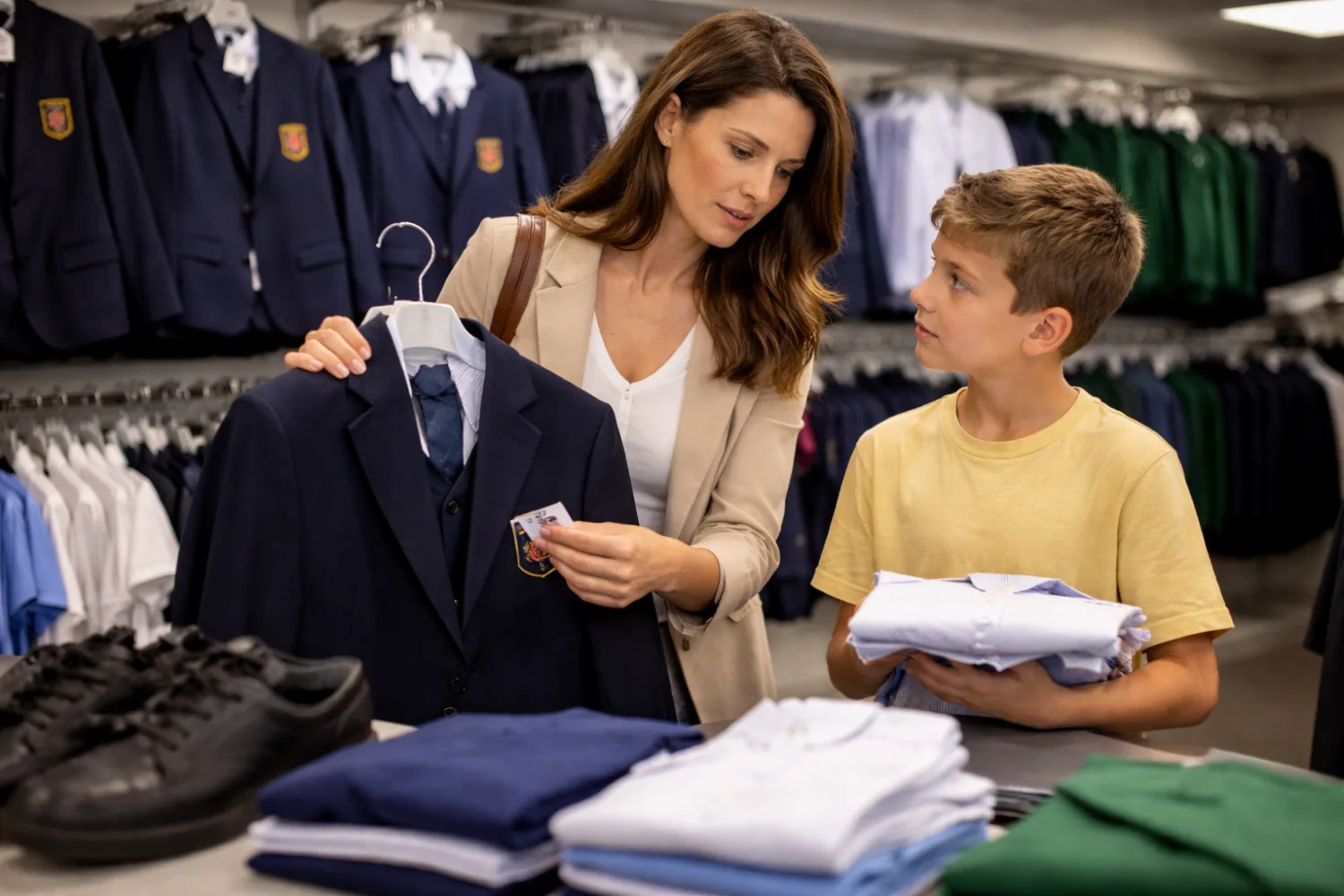
School uniforms are one of those costs that can quietly grow from “manageable” into something that feels surprisingly expensive. A jumper here, a blazer there, PE kit, shoes, replacements, growth spurts — and suddenly what looked like a simple requirement turns into a significant part of the family budget.
For many parents, especially those with more than one child, uniform costs are not just a back-to-school expense. They are a recurring, year-round reality.
This guide breaks down what school uniforms actually cost in the UK right now, why some schools are more expensive than others, what support is available, and how to keep costs under control without constantly feeling like you are cutting corners.
How much do school uniforms cost in the UK?
The honest answer is: it depends on the school — sometimes dramatically.
Recent estimates suggest that parents typically spend:
• Primary school: around £250 to £350 per year
• Secondary school: around £350 to £500+ per year
But those averages can hide big differences. A primary school with a simple logo jumper and supermarket basics can cost far less. A secondary school requiring a branded blazer, tie, multiple PE kits and specific sportswear can push costs well beyond £500, especially in the first year.
The first year at secondary school is usually the most expensive. After that, costs often drop slightly but never disappear, because items wear out, get lost, or are outgrown.
What you are actually paying for
Uniform costs are not just about one outfit. They are a combination of required items and expectations around quantity.
Most families are buying:
• School jumper or cardigan (often branded)
• Blazer (secondary school)
• Shirts or blouses (multiple)
• Trousers or skirts
• PE kit (often multiple items)
• School shoes
• Optional extras like bags, coats or sports kit
The biggest cost driver is usually branded items. A supermarket jumper might cost £8–£12, while a branded school jumper can be £25–£35 or more. Blazers can range from £40 to £80+, depending on the school.
PE kits are another area where costs creep up. Some schools require specific branded sportswear, including tops, shorts, socks and sometimes tracksuits. That can easily add £60–£120 to the total.
Why some schools are much more expensive than others
If you have children in different schools, you may already have noticed how uneven uniform costs can be.
Some schools keep things deliberately simple. They allow generic items from supermarkets or high street retailers, with only one or two branded pieces. Others require multiple branded items that can only be purchased from a specific supplier.
That difference is not accidental. Schools set their own uniform policies, and while there is now guidance encouraging affordability, the level of flexibility varies.
If you are still choosing between schools, uniform cost is one of those practical factors that often gets overlooked during open days. Our guide to how to choose the right school for your child touches on why these everyday details can matter more than parents initially expect.
The real cost is not just the first purchase
One of the most frustrating parts of school uniform spending is that it is not a one-off cost.
Children grow. Shoes wear out. Jumpers get lost. PE kits disappear. Blazers mysteriously go missing at least once in most families.
Over a full school year, many parents find themselves buying replacement items multiple times. Shoes alone can add £40–£90 every few months depending on quality and growth.
That is why the annual cost often feels higher than expected — it is not just September. It is October, January, March and June too.
What help is available with school uniform costs?
There is some support available, but many parents are not aware of it or assume they will not qualify.
Some local councils offer school uniform grants, though this varies by area and eligibility is often linked to benefits such as free school meals. The amounts are usually modest, but they can still make a meaningful difference.
Many schools also run second-hand uniform sales, often organised by parent groups or PTAs. These can be one of the best ways to reduce costs, especially for expensive branded items that are still in good condition.
Some schools quietly provide support to families who ask, even if there is no formal scheme advertised. It is not always widely promoted, but it is worth asking if you are struggling.
If your family is already navigating broader financial pressures, our guide to free school meals and school support (if you add this article later) can help you understand what else might be available.
How to reduce uniform costs without constant stress
There is no single trick that solves uniform costs completely, but there are a few approaches that consistently make a difference.
The first is simple: buy fewer items upfront than you think you need. It is tempting to overbuy in September, especially if you are worried about being unprepared. But children grow quickly, and uniforms change. Starting with a smaller set and topping up later is often more cost-effective.
The second is to separate branded from non-branded. Where schools allow it, buying generic trousers, shirts and skirts from supermarkets or high street retailers can reduce costs significantly without affecting compliance.
The third is to use second-hand options without hesitation. Many parents feel unsure about this at first, but good-quality second-hand uniform is often indistinguishable from new — especially for items like blazers that are quickly outgrown.
The fourth is to think ahead slightly. If you know your child is likely to outgrow something mid-year, it may be better to buy a slightly larger size now rather than replacing it within a few months.
What schools are expected to do about costs
There is increasing recognition that uniform costs can be a real burden for families.
Government guidance now encourages schools to keep uniforms affordable, minimise branded items, and allow generic alternatives where possible. Schools are also expected to avoid requiring unnecessary items and to ensure parents can obtain uniform from more than one supplier where possible.
In practice, this has improved things in some schools, but not all. That is why costs can still vary widely depending on where you are.
When uniform becomes a real financial pressure
For some families, uniform costs are not just inconvenient — they are genuinely difficult to manage.
If that is the case, it is important to know you are not alone, and that schools are usually more understanding than parents expect when approached calmly. The key is to raise it early rather than waiting until it becomes a bigger problem.
If you are unsure how to approach the school, our guide on raising concerns and school complaints explains how to communicate issues clearly without escalating unnecessarily.
What matters more than the price tag
It is easy to get frustrated with uniform costs — and in some cases, that frustration is completely justified. But it is also worth remembering that uniform is only one part of the bigger picture.
A school that feels supportive, communicates well and meets your child’s needs will usually matter far more in the long run than whether a jumper costs £12 or £28.
That does not mean cost should be ignored. It means it should be seen in context: one of many factors that shape your experience of school, not the only one.
Quick answers to common questions
Why are some school uniforms so expensive?
Usually because of multiple branded items and limited suppliers, which reduce competition and increase prices.
Can schools force you to buy from one shop?
Schools can require specific items, but guidance encourages them to keep options flexible and affordable where possible.
Is second-hand uniform acceptable?
Yes. Many schools actively support second-hand uniform schemes.
What if I cannot afford the uniform?
Speak to the school as early as possible. There may be support available through grants, second-hand options or direct help.
Do uniform costs get cheaper over time?
Usually after the first year, but ongoing replacement costs mean they never disappear completely.
Uniform is one of those parts of school life that rarely gets much attention until it becomes a problem. But with the right approach, it can usually be managed without it becoming a constant source of stress.