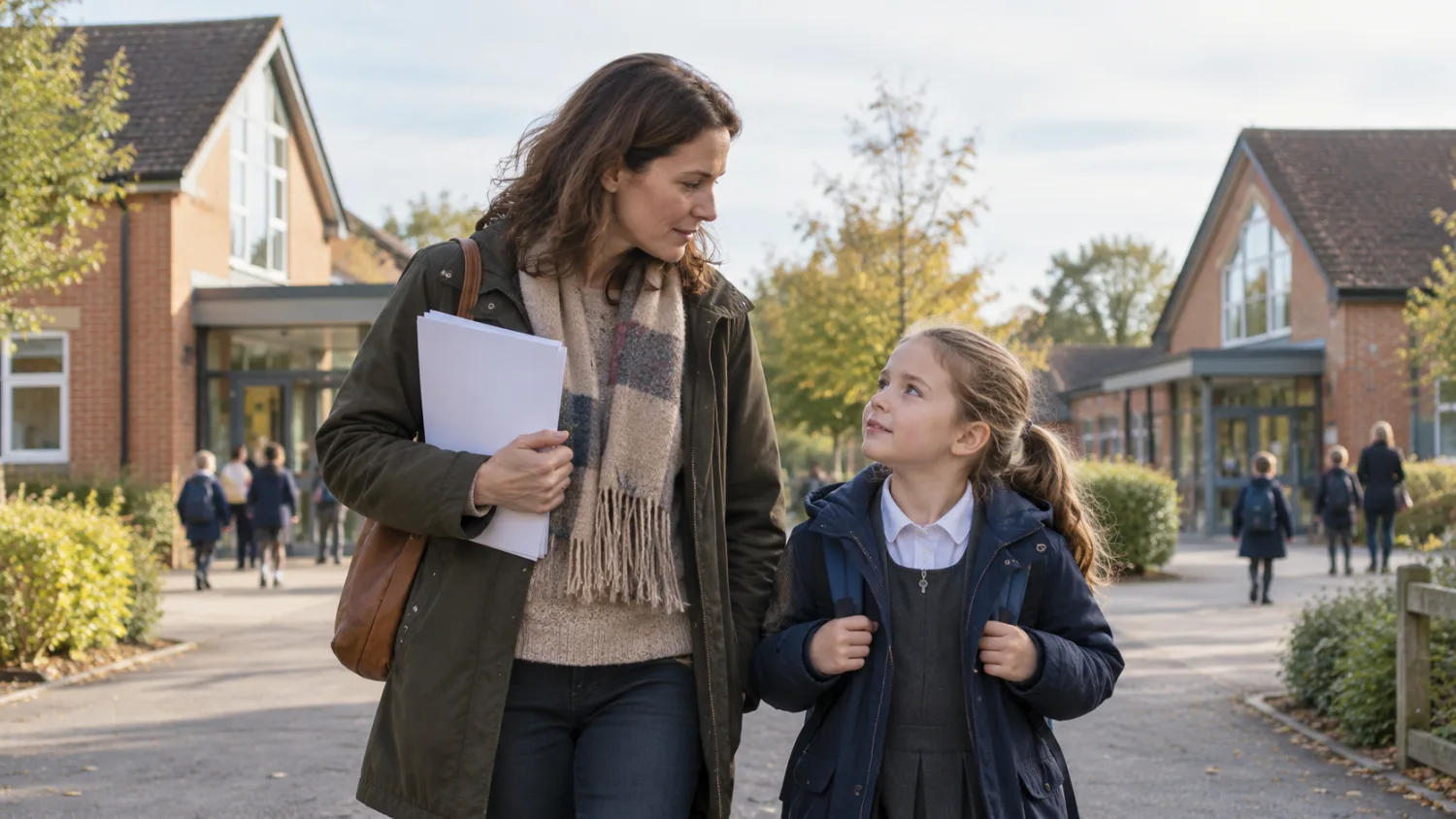
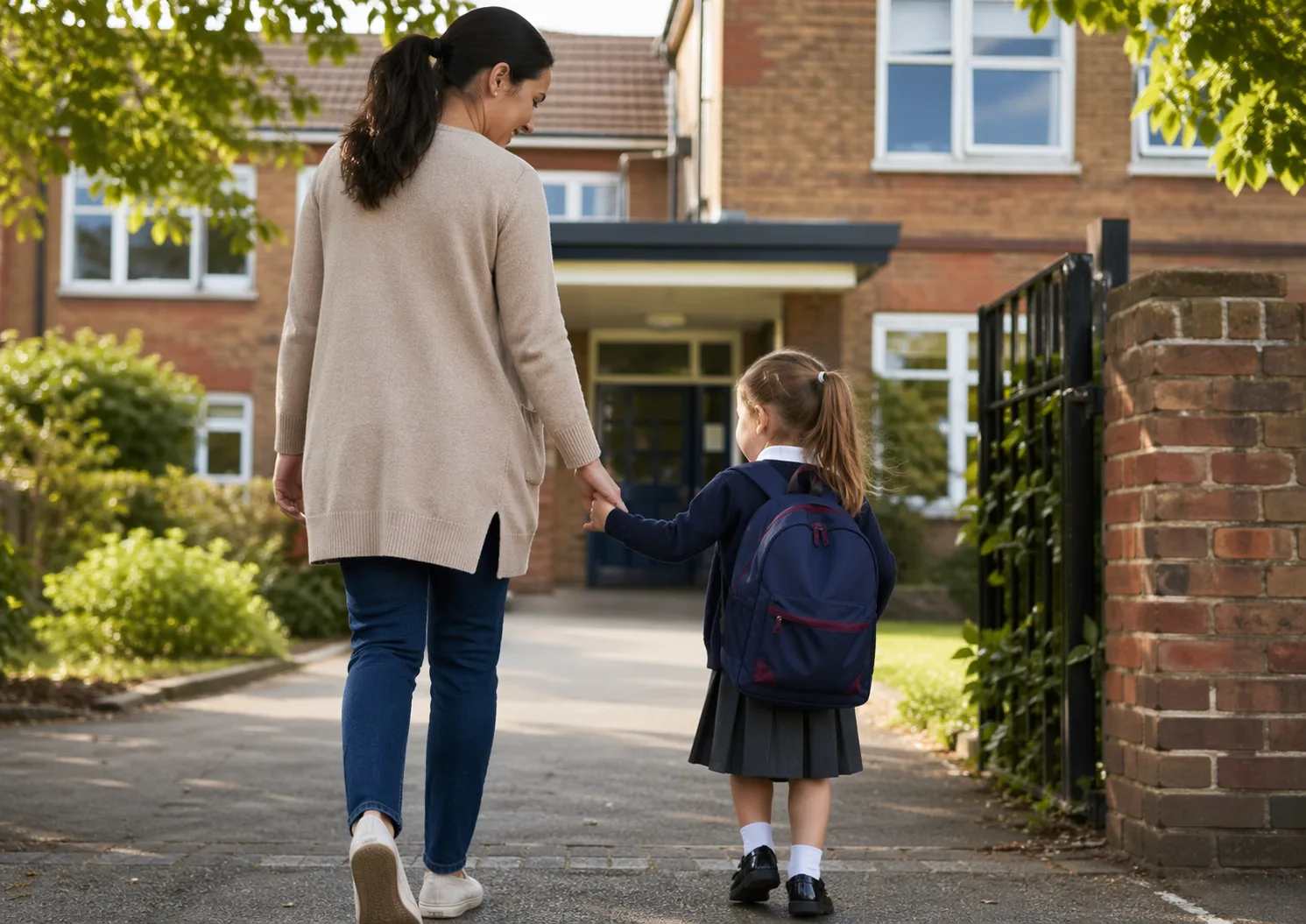
Starting Reception is one of the biggest milestones in early childhood, and for many parents it can feel exciting, emotional, confusing and surprisingly high-pressure all at once. One moment your child still feels very little. The next, you are reading school emails, thinking about uniform, hearing new phrases like “school readiness”, and wondering whether your child is really prepared for what comes next.
The reassuring truth is that most children do not start Reception as polished, fully independent little pupils who can already do everything on their own. They arrive with a mix of strengths, nerves, habits, quirks and gaps. Schools expect that. Reception is designed to help children settle, grow in confidence, build routines and develop socially as well as academically.
So if your child cannot yet do up every button, sit still for long periods, write their full name beautifully or separate happily every single morning, that does not mean they are “not ready”. It means they are four or five.
This guide is for parents who want to use the months before September well, without turning the summer into boot camp. The aim is not to race ahead academically. It is to help your child feel secure, capable and familiar with the basic rhythms of school life, while helping you feel calmer and clearer too.
If you are also weighing up wider school questions, our guides on how to choose the right school for your child, navigating the school admissions process in the UK and understanding catchment areas and school admissions appeals in the UK may also help. But if your September place is already confirmed, this is the point where the focus shifts from choosing a school to preparing for a strong start.
Why the months before Reception matter
There is a lot of noise around “school readiness”, and not all of it is helpful. Parents can easily come away feeling that they need to spend the entire spring and summer drilling phonics, handwriting and number work. In reality, the foundations that help children settle most successfully into Reception are usually much simpler and much more human than that.
Children tend to cope better when they are used to everyday routines, when they have had chances to practise being around other adults and children, when they can communicate basic needs, and when they are beginning to manage a few small tasks for themselves. Confidence matters. Emotional security matters. Being able to cope with transitions matters. Knowing that a parent will come back at the end of the day matters enormously.
Reception classes build early literacy and numeracy, of course, but they also teach children how to join in, listen, take turns, tidy up, ask for help, cope with mistakes and become part of a group. Those skills often matter just as much in the first term as recognising letters or counting to twenty.
That is one reason the early years framework places such a strong emphasis on communication, personal development and relationships, not only on academic knowledge. If you want a fuller sense of how early education is structured in England, the government’s early years information and the Early Years Foundation Stage overview are useful starting points. For a broader parent-friendly explanation of how school stages fit together later on, you can also read our guide to understanding the UK curriculum key stages.
What starting Reception really looks like
Many parents picture “school” through the lens of older children: desks, exercise books, assemblies, formal lessons and long periods of sitting still. Reception is usually much more varied than that. Good Reception classrooms are active places. Children learn through play, stories, songs, conversation, outdoor exploration, teacher-led activities and structured routines woven through the day.
That does not mean the transition is tiny. It is still a very big change. A child who has been mostly at home, at nursery or with childminders now has to navigate a new building, new adults, a new rhythm, more children, shared expectations and longer stretches away from home. Even children who seem very confident beforehand can wobble when the reality arrives. Others surprise everyone by settling beautifully.
It helps to think less in terms of “Will my child be perfect by September?” and more in terms of “How can I make the first few weeks feel as manageable as possible?” That shift is often where the pressure starts to ease.
Start with the basics: security, routine and confidence
If you do only a few things between now and September, make them the things that help your child feel secure in daily life. Children cope better with new demands when home feels predictable. Simple routines around waking up, getting dressed, meals, bedtime and leaving the house can make school mornings much easier later on.
That does not mean recreating a school timetable months in advance. It means gradually building habits that reduce friction. A child who is used to getting dressed in the morning, putting shoes on, washing hands, sitting at the table for meals and following a small sequence of instructions is already building useful foundations. A child who has some experience of tidying up after play, waiting for a turn or moving on when an activity ends is doing valuable “school readiness” work too, even if it does not look academic.
Confidence also grows through ordinary life. Let your child carry a small bag. Let them choose between two weather-appropriate outfits. Let them help put fruit in a lunchbox for a picnic. Let them speak to the librarian, hand over an item in a shop or answer a simple question from another trusted adult. Small moments of independence add up.
The skills that matter most before September
Parents often ask what children should be able to do before starting Reception. The answer varies a little between schools and children develop at different rates, but the most useful preparation usually sits in a few broad areas.
One is communication. Can your child tell an adult when they need the toilet, when they are hurt, when they are worried, or when something has happened? They do not need sophisticated vocabulary. They do need some way of getting important needs across. Talking at home, reading together, singing, storytelling and ordinary conversation all help here far more naturally than worksheets do.
Another is self-care. Children do not need to be able to manage every zip, button and shoelace without fail, but it helps if they are beginning to practise coats, shoes, handwashing, tissues and using the toilet with growing confidence. If there are areas your child finds difficult, start small and keep it calm. Repetition helps more than pressure.
Social readiness matters too. Being able to play near or with other children, share adult attention, take turns some of the time and recover from minor disappointments can make the first term easier. No four-year-old does these things perfectly. The goal is not polish. The goal is familiarity.
Listening is another piece of the puzzle. Schools do not expect children to sit silently for long periods from day one, but it is helpful if they are starting to get used to short bursts of attention: listening to a story, following a simple instruction, joining in with a song, or stopping briefly when an adult speaks.
And then there is emotional resilience, which sounds grand but often comes down to everyday experiences. Can your child cope when something is not exactly how they wanted it? Can they move on from a small frustration with support? Can they spend a little time away from you and come back together happily? These are the kinds of things that genuinely matter.
What you do not need to panic about
There are some areas parents worry about that are worth putting back into perspective. Your child does not need to start Reception already reading books fluently. They do not need to write long sentences. They do not need to sit still for formal lessons all day. They do not need to know everything that will be taught in the first term before they even arrive.
Of course, if your child enjoys letters, numbers, stories, drawing or mark-making, encourage that. If they ask about sounds, count stairs, notice signs, talk about shapes or pretend to write shopping lists, that is wonderful. But there is a big difference between following a child’s curiosity and feeling you must manufacture a mini-classroom at home.
In fact, one of the most useful things parents can do before Reception is protect their child’s love of learning. Curiosity, language, confidence and play are not a distraction from school readiness. They are part of it.
Reading, talking and playing: the most powerful preparation
If one daily habit stands above almost everything else, it is reading together. Shared reading helps with language, attention, imagination, listening, vocabulary and emotional connection. It also makes books feel enjoyable rather than pressured. Children who are read to regularly often arrive at school with a stronger sense that stories, words and conversation are part of ordinary life.
Do not worry too much about doing it in a very formal way. Read picture books, familiar favourites, silly rhyming books, bedtime stories, information books about topics your child loves. Pause and talk about the pictures. Wonder out loud. Ask what they think might happen next. Let them interrupt with questions. Let them choose the same book again and again if that is what they want.
Talking matters just as much. Some of the best language-building happens in the most ordinary settings: walking to the shop, eating dinner, getting dressed, looking out of the window, waiting for a bus. Explain what you are doing. Ask your child what they noticed that day. Let them tell long, meandering stories. Name feelings. Describe the world. Conversation builds the foundations that later support reading and writing.
Play is powerful too. Building with blocks, role play, dressing up, drawing, making things, singing songs, messy play, outdoor games and imaginative play all support development in ways that are easy to underestimate. Through play, children practise communication, negotiation, planning, self-control and problem-solving. Those skills travel directly into school life.
Helping your child become a little more independent
Independence is one of the easiest areas to work on gently over the months before Reception. Rather than making it into a stressful checklist, fold it into daily life. Let your child try first. Give them time. Praise effort rather than perfection.
You might encourage them to:
- put on their coat and attempt the zip
- take shoes and socks on and off
- use the toilet confidently and wash hands well
- recognise their own name
- carry a bag or water bottle
- tidy toys away after play
- follow a simple two-step instruction such as “put your cup in the sink and bring me your book”
These are not magical milestones that determine success. They are simply practical habits that make school feel less overwhelming. If your child resists, do not turn every moment into a battle. Choose one or two things to work on consistently and let the rest come over time.
Toilet training, accidents and other worries parents rarely say out loud
Many parents quietly worry about toilets. It can feel awkward to talk about, but it is an incredibly common concern. Children do not all develop at the same pace, and starting school can sometimes make previously manageable toileting issues wobble again because change itself is a big event.
Where possible, use the months before September to build confidence with using the toilet, wiping, flushing and washing hands. Keep the tone relaxed. Avoid shame. If your child is dry most of the time but still has the occasional accident, you are very much not alone.
If there are ongoing issues or additional needs, it is usually far better to communicate with the school early than to hope everything will somehow resolve itself without support. Schools are used to working with families on practical concerns, and early conversations are nearly always easier than panicked ones later.
How to prepare your child emotionally for school
Children do not all show nerves in the same way. Some ask lots of questions. Some become clingier. Some act wildly excited and then suddenly burst into tears when school is mentioned. Some seem completely unconcerned until the first drop-off. There is no single “right” emotional response.
What helps most is giving the idea of school a calm, positive, realistic presence in family life. Talk about school as something ordinary and safe. Mention some of the things that will happen there: stories, painting, outdoor play, new friends, snack time, songs, learning new things. Avoid overselling it as a constant wonderland, because that can backfire if the reality feels tiring or strange. But avoid framing it as something scary or huge either.
Children often find security in concrete details. Show them photos from the school website if available. Walk past the gates if you can. Point out where they will hang their coat, where the playground is, where they might line up. Read books about starting school, but do not overdo it if they seem saturated. A few well-timed conversations are often more helpful than endless revisiting.
And perhaps most importantly, let them know what will stay the same. They will still come home. You will still be there. They will still have familiar routines, favourite stories and their own bed. For young children, change is easier when it sits alongside continuity.
What parents can do now if their child is shy, sensitive or anxious
Some children stride into new environments. Others need more time. If your child is shy, sensitive, slow to warm up or prone to worry, that does not mean they are not ready for Reception. It does mean they may benefit from gentler exposure to new situations in the months before school starts.
That might mean arranging short playtimes with one or two children rather than large chaotic groups. It might mean practising being left with a trusted family member. It might mean visiting busy places and then talking afterwards about what felt easy and what felt hard. It might mean helping them learn phrases they can use if they need help, such as “Can you help me?”, “I need the toilet,” or “I can’t find my coat.”
If this sounds familiar, you may also find some overlap with our guide on helping shy children build confidence at school. Reception teachers are usually very experienced in supporting a wide range of personalities. The goal is not to transform your child into the loudest, boldest version of themselves. It is to help them feel safe enough to participate in their own way.
If your child has SEND or you have concerns already
If your child has diagnosed needs, is on waiting lists, receives support already, or you simply have concerns about speech, communication, behaviour, development or sensory needs, it is wise to start the conversation with school early. Reception can be a wonderful start for many children with additional needs, but smoother transitions tend to happen when information is shared clearly and in good time.
That does not mean you need to arrive with everything fully worked out. It simply means it is worth being open about what helps your child, what can be difficult, what support they currently have, and what you are worried about. Schools would usually rather know sooner than later.
You may also want to read our related guides on SEN support and EHCPs for parents, understanding autism in schools and recognising early signs of ADHD and where to get help. For independent information and support, many families also find the charity IPSEA helpful when they are trying to understand rights and SEND processes.
What to ask the school before September
Parents do not need to bombard schools with endless questions, but there are a few things it is useful to understand before term starts. You will usually want to know how the first days are organised, whether the school uses staggered starts, what your child needs to bring, how lunches work, what the uniform expectations are, how communication is usually handled, and whether there are any transition events before September.
It can also help to ask practical questions that reduce uncertainty at home. Where do children enter? How are they collected? Are there named pegs and trays? What happens if a child has an accident? How does the school support children who are upset at drop-off? What kind of reading materials or home communication should parents expect in the first term?
Some schools answer most of this in welcome packs or induction sessions. Read those carefully before contacting staff, because a lot of parental stress comes from not yet having taken in the information already provided.
Uniform, shoes and all the practical things
Uniform can become an oddly emotional part of the transition. Buying tiny jumpers and first school shoes makes everything suddenly feel real. Practicality matters more than perfection here. Choose items your child can move in comfortably and, where possible, manage with increasing independence. Shoes that look smart but are impossible for a four-year-old to handle do not make mornings easier.
Label everything. Then label it again. Then assume at least one cardigan will still disappear at some point.
Try uniform on well before the first week rather than discovering at the last minute that something itches, pinches or falls down. Let your child practise wearing it around the house for short periods if they are sensitive to new clothes. Show them where their name label is. Help them recognise their coat, bag and water bottle easily.
You might also begin to talk through the basic rhythm of a school morning using the real items they will use: waking up, getting dressed, having breakfast, putting on shoes, taking a bag, going to school. When children can picture the sequence, the first few mornings often feel less abrupt.
If school costs are on your mind, our guide to school uniform costs in the UK may help with the bigger picture.
Should you practise lunches, packed food and sitting at the table?
Yes, but lightly. Lunchtime can be surprisingly tiring in the early weeks because it combines food, noise, routines, waiting, opening containers and being in a busy shared space. A little practice at home can help. Let your child use lunchboxes, drink bottles and snack pots they may need to open themselves. Encourage sitting at the table for meals, not because school requires rigid perfection but because it builds familiarity with eating in a more structured way.
If your child is especially selective with food, do not panic, but do think ahead. New environments can temporarily shrink appetite. Schools are used to children eating less or differently at first. The important thing is to avoid making mealtimes a battleground in the run-up to September.
Bedtimes, mornings and the summer holiday trap
One of the trickiest parts of starting Reception is that the actual start date comes right after the least structured time of year. Long light evenings, holidays, days out and later bedtimes are all understandable, but children who are suddenly expected to switch from a loose summer routine to an early school morning can find the transition hard.
You do not need to spend the whole summer acting as though it is already term time. But it is wise to begin nudging sleep and morning routines in a more school-friendly direction before September arrives. Earlier wake-ups are usually more powerful than just pushing bedtime earlier, because body clocks often adjust better when mornings shift first.
If sleep is a recurring challenge, our guide on healthy sleep habits for school-aged children may also be useful, even though Reception children are at the younger end of that picture.
How much academic preparation should you do?
This is one of the questions parents ask most, and it often comes from a good place. You want your child to feel capable. You do not want them to fall behind. You may hear that other children can already read, write their names perfectly, add numbers or complete workbooks. It is easy to feel you should be doing more.
The best answer is usually: do some, but do it naturally.
Name recognition is useful. Hearing and enjoying stories is very useful. Singing nursery rhymes and songs is useful. Spotting letters in the environment can be fun. Counting steps, snacks or toy cars is valuable. Drawing, painting, mark-making and talking about shapes and patterns all help. But forcing long formal sessions on a young child who is not ready can make learning feel tense before school has even begun.
If your child enjoys simple activities, keep them brief and playful. Trace their name in sand or shaving foam. Count strawberries. Notice the first sound in their name. Compare which stick is longer in the park. The aim is not to “finish Reception before Reception starts”. It is to make language, number and print feel familiar and enjoyable.
Books about starting school: helpful, but choose the tone carefully
Books about starting school can be a lovely way to open conversations, especially if your child likes stories and repetition. They help children picture routines, imagine common worries and see that lots of other children feel mixed emotions too. But the tone matters. Some books are wonderfully reassuring and matter-of-fact. Others can accidentally trigger anxieties a child had not previously considered.
Read one or two and watch your child’s response. If they seem comforted, great. If they become more unsettled, step back. Real-life familiarity, calm talk and a trusted adult’s confidence are often more grounding than too much “preparing” through stories alone.
Transition events, school visits and settling sessions
If your child’s school offers a stay-and-play, induction afternoon, parent meeting or transition session, it is usually worth attending if you can. These moments are not just a formality. They help make the school more real, less abstract and less intimidating.
For some children, one visit is enough to create a useful sense of familiarity. For others, the visit seems to make little visible difference until the first week, when suddenly the memory of the classroom or teacher becomes reassuring. Either way, it helps.
If your child is especially anxious, do not judge the success of the visit by whether they skip in happily. Even standing close to you, looking around quietly and taking it in is still valuable. Children often process new environments more slowly than adults expect.
What the first few weeks are often really like
Parents are sometimes shocked by how tiring the first half term can be, even when the transition is broadly going well. Children may come home cheerful and then melt down over something tiny. They may be quiet, clingy, hungry, emotional or suddenly more tired than they have been in months. Some regress temporarily with sleep, toileting or behaviour. This is all very normal.
Starting school requires enormous adaptation. Children are learning routines, social expectations, language, physical spaces, adult relationships and new levels of stimulation every day. Even positive transitions are exhausting.
That is why one of the kindest things you can do now is lower your expectations for September evenings. Keep home calm. Protect rest where you can. Expect some wobble. A rough week or two does not mean something is wrong. It usually means your child is doing something hard.
What if your child cries at drop-off?
This is one of parents’ biggest fears, and understandably so. It can feel awful to leave a crying child, especially if you have spent months trying to help them feel positive about school. But tears at separation do not automatically mean the placement is wrong or that your child cannot cope.
Many children settle quickly once the parent has gone, especially when staff are calm and experienced. Long, drawn-out goodbyes can sometimes make things harder because they keep the moment emotionally open. A warm, confident, loving goodbye is usually more helpful than repeated returns.
Schools deal with this every year. If it happens, stay in communication, but try not to read the whole year into a few hard mornings. Settling can take time.
How parents can manage their own feelings too
Children are not the only ones going through a transition. Starting Reception can stir up a lot for parents: pride, sadness, anxiety, guilt, excitement, disbelief. You may be thinking about your child growing up too fast. You may be worrying whether you have done enough. You may be trying to balance work, childcare changes and practical arrangements at the same time.
Try to be gentle with yourself. You do not have to create a perfect launch. Your child does not need a flawless parent who never worries. They need an adult who is steady enough to help them cross the bridge from one stage to the next.
Sometimes the most reassuring message you can give yourself is this: children do not start school as finished products. They start school in order to grow.
A simple way to use the months before September well
If you are wondering what to actually do between now and the start of term, think in terms of rhythm rather than pressure. Read together often. Talk a lot. Practise a few small independence skills. Visit the school if you can. Keep building ordinary routines. Let your child play. Let them be little. Introduce the idea of school in calm, positive, realistic ways. Ask the school practical questions when needed. Begin nudging sleep and morning habits in the right direction later in the summer. And if you have concerns, start the conversation early rather than carrying the worry alone.
That is enough. More than enough, in many cases.
Final thoughts
Starting Reception in September is not a test your child either passes or fails before day one. It is the beginning of a new phase, and like most beginnings, it comes with uncertainty. Some children race ahead in confidence. Some take longer to warm up. Some seem ready in July and wobble in September. Others seem unsure all summer and then thrive almost immediately. All of that sits within the normal range of starting school.
The best preparation is rarely about pushing harder. It is about giving your child the foundations that help them feel safe, capable and connected. That means routines, language, reassurance, play, increasing independence and a calm adult beside them.
And when September does arrive, remember that settling is not something that must happen perfectly in a week. It is a process. Reception teachers know that. Schools know that. Most parents, eventually, learn that too.
If you are preparing for school beyond Reception, you might also find our guides on UK school types and how to choose what’s right for your child, how school waiting lists really work and what to do if you do not get your first-choice school useful as well.