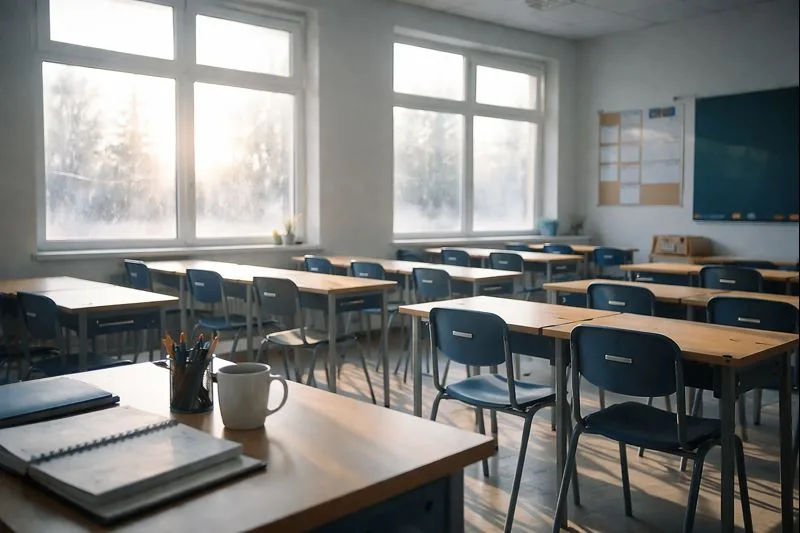
Every teacher knows that January in schools has its own weather system. It’s not just cold air and dark mornings — it’s foggy concentration, sagging motivation, and routines that somehow evaporated over the holidays. You can almost feel the energy dip as pupils shuffle in with half-zipped coats, eyes barely open, and the first whispered, “Do we have to do work today?” before you’ve even taken a register.
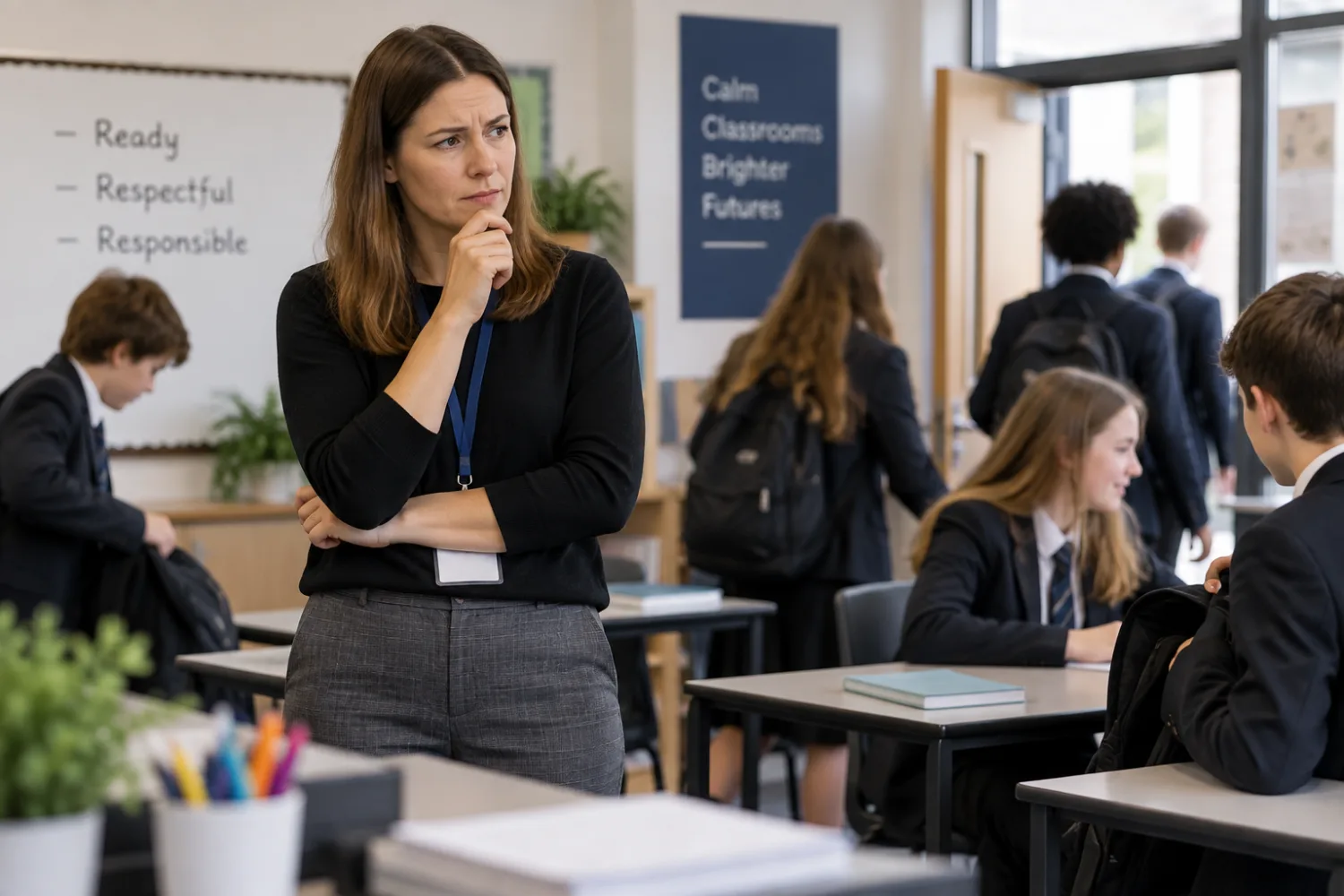
Behaviour doesn’t fall apart dramatically in January. It frays at the edges. A few more interruptions. A few more off-task conversations. A few more refusals that are quieter rather than explosive. Less “fireworks” and more humidity — hard to fight, hard to hold, and slowly suffocating if nobody names what’s happening.
This makes January the perfect moment for a reset — not out of punishment, but out of understanding.
Why January Behaviour Feels Different
There are a few routine culprits.
The first is rusty habits. Over the holidays, school rhythms dissolve. Even pupils who thrive on structure trade it for late nights, unstructured days, and minimal negotiation. Teachers sometimes assume that “they already know what to do”, but behaviour works like handwriting — stop practising and it gets messier. Your recent article on the January Motivation Dip in Schools explores this wider slump really well, especially the part about energy and expectation mismatches.
The second culprit is winter itself. Lack of daylight affects mood and resilience for many people (the NHS has helpful guidance related to Seasonal Affective Disorder and winter low mood). Even without clinical labels, January produces yawns, irritability, and shorter attention spans. Staff feel it too; classrooms in January have a uniquely heavy air where everyone is simply trying.
The third culprit is pressure. For secondary pupils, mocks are either looming or just finished; for primary, SATs season starts to appear on the horizon. Your piece on Tackling Exam Anxiety and Building Confidence touches on this beautifully from the pupil perspective. Anxiety doesn’t always look like silence — often it looks like avoidance, argument or distraction.
Put together, it’s not surprising that behaviour feels less stable in the first weeks of term.
The January Reset — A Rebuild, Not a Crackdown
When teachers talk about “resetting behaviour”, people imagine stern speeches and sanctions. But the more effective version is quieter: re-teaching the script of how this classroom works.
Some teachers begin the first lesson back with a five-minute conversation about what makes learning easier. And pupils often name the exact things teachers are trying to protect:
-
“When the lesson starts straight away.”
-
“When it’s not too noisy.”
-
“When we know what to do.”
When pupils articulate the norms, it feels collaborative rather than disciplinary.
Your article on Improving Focus in the Classroom fits tightly with this — attention, routines and behaviour form a triangle, and if one slips, the others wobble.
Lesson Design Becomes Behaviour Management in Winter
In the darker months, lesson structure quietly becomes one of the most powerful behaviour tools. A 60-minute block of silent writing and heavy lifting can feel like wading through wet sand, even for usually engaged pupils.
Teachers who teach well through January don’t simplify content — they lower activation energy:
-
short recaps at the start to switch pupils back into “school mode”
-
worked examples before independent tasks
-
explicit steps written where everyone can see them
-
brief opportunities for movement (even just collecting mini whiteboards or standing to show answers)
-
early, low-stakes wins so the lesson feels possible
This helps all pupils, but especially those with working memory or processing difficulties. For more structured strategies, your long-form guide on How to Teach Working Memory Strategies to Primary & Secondary Pupils is ideal to pair with behaviour resets.
Responding Calmly When Behaviour Dips
January invites small confrontations. Pupils mumble, stall, or negotiate. The temptation is to match their tone with irritation — “Can you just get on with it, please?” — but low-motivation months reward calm consistency over sharpness.
Most misbehaviour right now isn’t spectacular; it’s a slow leak of attention. A soft reminder like “I need you back with us” or “That’s not helping you learn” usually gets further than a lecture.
Choices also create dignity:
-
“You can work with your partner or on your own — whichever helps you finish.”
They remove the power struggle without excusing the behaviour.
Consequences still matter — boundaries protect safety and fairness — but the real work happens after the lesson, not during it. A quiet two-minute chat without an audience often resets things better than a mid-lesson showdown.
The Pupils Who Struggle Most in Winter
Not all pupils experience January the same way. Neurodivergent pupils often feel routine disruption more intensely; sensory sensitivity, anxiety, or executive functioning challenges all play into winter behaviour patterns.
Your two pieces — Neurodiversity in the Classroom and How to Create a Sensory-Friendly Classroom on a Budget — offer particularly helpful angles for these pupils.
Meanwhile, pupils with low mood, fatigue, or stress often avoid work rather than explode. Refusal can be a mask for “I don’t know where to start”. Anxiety can disguise itself as “I forgot my pen again.”
Understanding doesn’t mean accepting poor behaviour — but it changes the intervention from punishment to problem-solving.
Teachers Need Support in January Too
Schools speak openly about pupil motivation but rarely acknowledge the dip in staff motivation at the same time.
Short days, high workload, cold duty slots, report cycles and mock marking can make January feel personally draining. Teachers don’t need heroic speeches; they need realistic permission:
-
not every lesson has to sparkle
-
reuse resources without guilt
-
whole-class feedback counts as marking
-
behaviour is a team sport, not a solo fight
Your article on The Role of Exercise in Supporting Pupils’ Mental Health focuses on pupils, but teachers know the same physiology applies to them. Movement helps. Light helps. Boundaries help.
Final Thought: Behaviour as Information
One of the most useful winter mindset shifts is this:
Behaviour is data, not defiance.
A restless class may be tired, not rebellious.
A refusal may signal anxiety, not attitude.
A collapse in motivation may simply mean the task felt too big.
When behaviour becomes information instead of insult, January becomes less personal and more solvable.