
For many businesses, schools are ideal clients. They need reliable suppliers, trusted services, specialist support, and long-term partnerships. But reaching them can feel frustratingly difficult — especially if your only idea of “sales” involves endless emails or cold calls that go unanswered.
The good news is that most successful school suppliers and educators don’t rely on cold calling at all. Instead, they focus on visibility, trust, and relevance — making it easy for schools to find them when a genuine need arises.
This guide explains practical, proven ways to get your business in front of UK schools without pushy tactics, whether you offer tutoring, CPD, equipment, childcare, wellbeing services, technology, or anything in between.
Understand How Schools Actually Choose Providers
Before trying to reach schools, it helps to understand how decisions are really made.
Schools are busy environments. Senior leaders and administrators juggle safeguarding, budgets, inspections, staffing, and pupil outcomes. They rarely have time to respond to unsolicited sales messages — especially from unfamiliar providers.
Instead, schools tend to look for suppliers when a specific need arises. A headteacher may search online for playground equipment after securing funding. A SENCO might look for a speech therapist when a pupil requires support. A business manager may compare catering providers before a contract renewal.
In most cases, they begin with Google, recommendations from other schools, or trusted directories.
Useful external resource:
Understanding this behaviour changes your strategy completely. The goal is not to interrupt schools — it’s to be visible when they start searching.
Build Trust Before You Try to Sell
Schools are cautious buyers. They must justify spending public funds and ensure safeguarding, quality, and reliability. Unknown providers face a higher barrier to entry.
Trust can be built long before direct contact happens. Clear information, professional presentation, case studies, and evidence of impact all help schools feel confident.
For example, a tutoring company might share anonymised results showing improved GCSE outcomes. A cleaning provider could highlight experience working with educational settings. A theatre group offering workshops might showcase photos, testimonials, and curriculum links.
Even small details matter. A clear website, proper contact information, and transparent pricing signals professionalism.
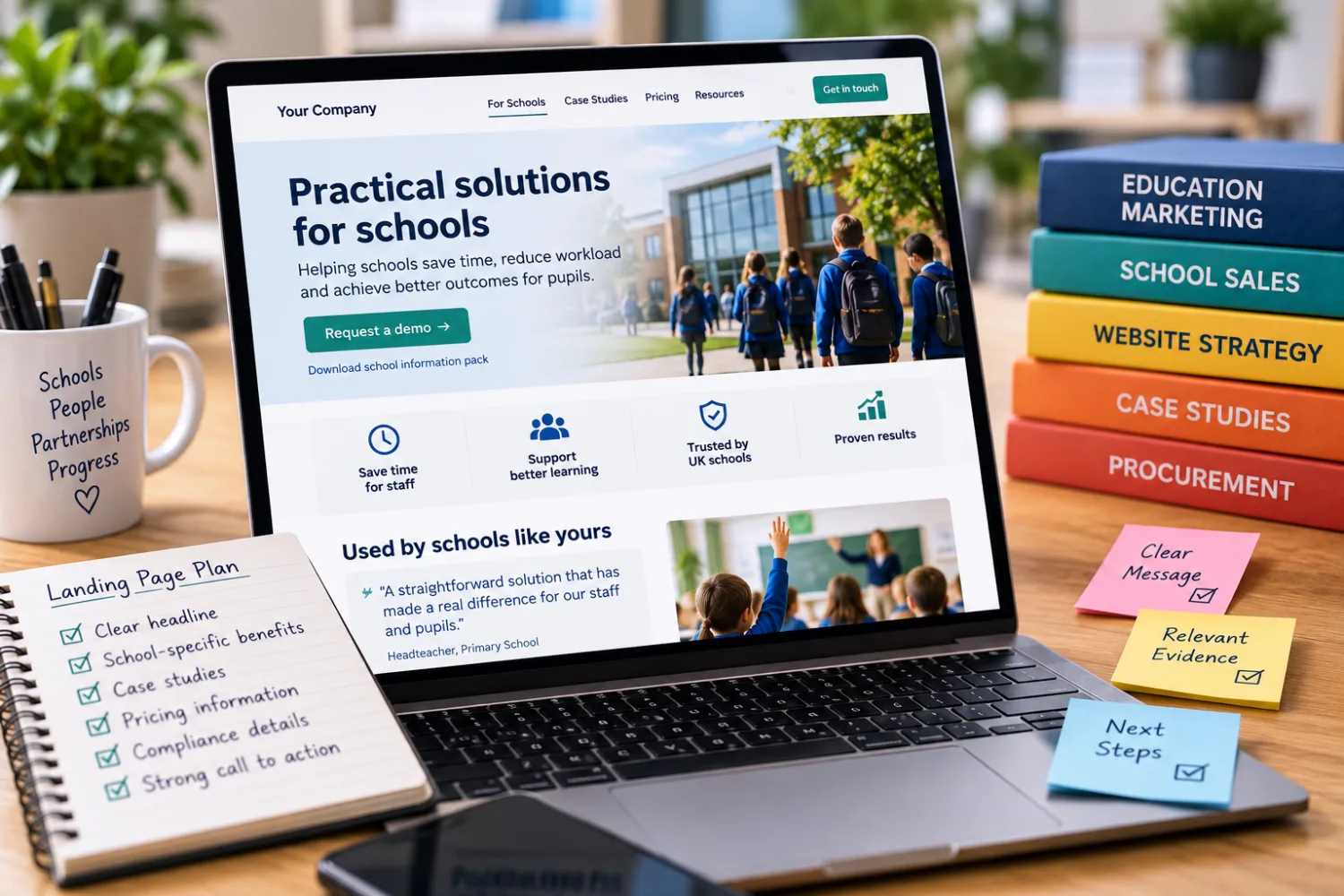
Make Your Website Speak the School’s Language
Many businesses unintentionally market to the wrong audience. A website written for parents, general consumers, or corporate clients may not resonate with school decision-makers.
Schools look for practical answers:
-
What problem does this solve for our pupils or staff?
-
Is it safe and compliant?
-
Does it align with curriculum or inspection priorities?
-
How easy is it to implement?
For instance, an EdTech provider should explain how their platform supports learning outcomes, data security, and teacher workload — not just features.
Similarly, a sports coaching company might emphasise safeguarding training, risk management, and experience delivering sessions in schools.
Be Findable Where Schools Are Already Looking
Visibility matters more than outreach. If a school needs a provider, they will search — and they will choose from what they find first.
Appearing in trusted directories is one of the simplest ways to achieve this. A well-structured listing allows schools to compare options quickly and contact providers directly.
AllSchools hosts a dedicated directory of suppliers and educators, making it easier for schools to discover services across the UK:
Rather than interrupting schools with unsolicited messages, this approach positions your business as a helpful option at the moment of need.
If you want deeper insight into the school landscape, these resources provide useful data:
For educators and service providers:
Understanding the types, sizes, and distribution of schools helps you target your efforts effectively.
Use Content to Demonstrate Expertise
Schools prefer working with providers who clearly understand education.
Sharing helpful information — not advertising — can position your business as a knowledgeable partner. This might include blog articles, guides, short videos, or downloadable resources.
A catering company could publish advice on healthy school menus. A SEND specialist might explain early signs of learning difficulties. A facilities provider could discuss maintenance planning for school buildings.
This kind of content builds credibility while also improving search visibility.
You can see how educational resources support decision-making in guides such as:
When schools encounter useful content repeatedly, they begin to recognise the provider behind it.
Leverage Local Reputation and Word of Mouth
Schools often rely on recommendations from neighbouring institutions. Headteachers talk to each other. Business managers share supplier experiences. Local authority networks circulate feedback.
Working successfully with one school can therefore lead to others.
For example, a drama workshop provider delivering sessions at one primary school may be invited to nearby schools after staff share positive experiences. A transport company that reliably handles trips may become a preferred partner across a trust.
Building strong relationships locally can be more powerful than large-scale marketing.
Partner Rather Than Pitch
Approaching schools as partners rather than sales targets changes the tone completely.
Instead of offering generic services, consider how your expertise supports school goals. Could your organisation contribute to enrichment programmes, careers education, wellbeing initiatives, or community projects?
A local business might offer workplace visits for pupils. A charity could run awareness sessions. A technology company might sponsor coding clubs.
These collaborations create genuine value while introducing your organisation organically.
Understand Budget Cycles and Timing
Even when schools are interested, timing matters. Budgets are planned in advance, funding may be restricted, and approvals often involve multiple stakeholders.
A service that is unaffordable in September might become viable in April after funding is secured. Similarly, some purchases align with inspection preparation or curriculum changes.
Patience and persistence — without pressure — are essential.
Make It Easy to Take the Next Step
Once a school is interested, the process should feel straightforward. Complicated booking systems, unclear pricing, or slow responses can derail potential partnerships.
Simple enquiry forms, clear contact details, and prompt communication make a strong impression. Schools appreciate reliability as much as quality.
A Practical Example: From Invisible to In Demand
Consider a small wellbeing consultancy offering workshops on student resilience.
Cold calling schools produced little response. Instead, the organisation created a clear website explaining how their sessions supported mental health outcomes and safeguarding priorities. They published articles on exam stress and pupil wellbeing, shared case studies, and listed their service in education directories.
Within months, schools began contacting them directly — not because they were persuaded, but because they were visible and credible when needed.
Why Visibility Beats Interruption
Schools want solutions, not sales pitches. When providers position themselves as helpful, trustworthy, and easy to find, the dynamic shifts. Instead of chasing schools, businesses receive enquiries from schools actively seeking support.
This approach is less stressful, more sustainable, and far more effective in the long term.
Final Thoughts
Getting your business in front of UK schools does not require aggressive marketing or cold calling. It requires understanding how schools make decisions and ensuring you are visible, credible, and relevant when the need arises.
By focusing on trust, clarity, useful information, and strategic visibility — including presence in education directories and networks — you create pathways for schools to discover you naturally.
In education, relationships matter. When schools feel confident in a provider’s reliability and purpose, partnerships tend to endure for years.