
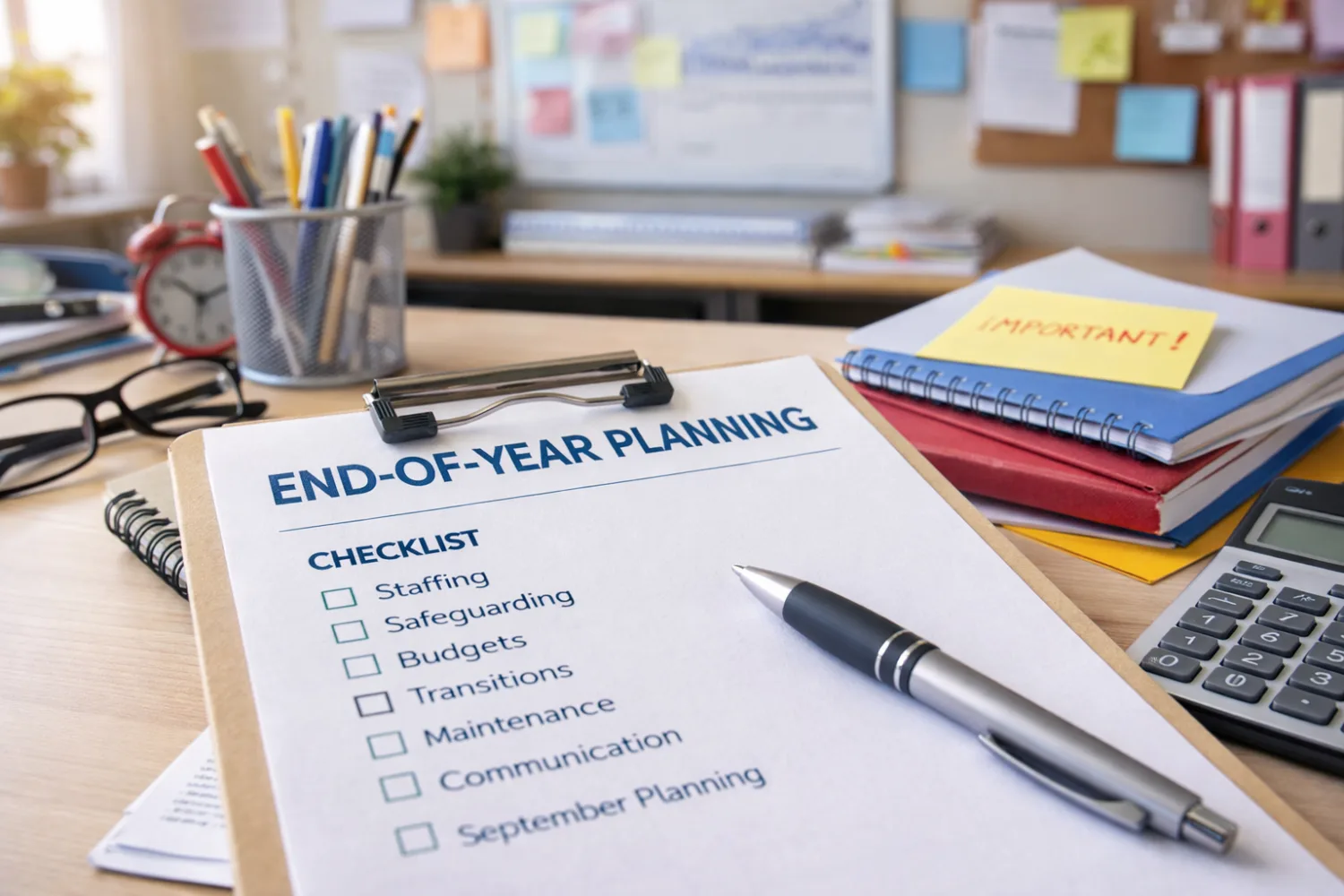
The final term of the school year often feels like a race toward the finish line. Exams, reports, trips, performances, staffing changes and transition planning all happen at once, while leaders are already thinking ahead to September.
Without a clear structure, the end of the year can quickly become reactive rather than strategic. Small oversights — unfinished paperwork, delayed orders, missed communication — often create unnecessary pressure for staff and confusion for families.
Strong end-of-year planning does more than close the current year smoothly. It lays the groundwork for the next one, reduces stress over the summer, and ensures pupils and staff return to a well-prepared environment.
This guide provides a practical, structured checklist to help schools manage the final term effectively while preparing confidently for the year ahead.
Why end-of-year planning matters more than it seems
The final weeks of the academic year are not simply about finishing — they are about transition.
Every year group moves forward. Staff roles may change. Resources need reviewing. Facilities require maintenance. New pupils join while others leave.
When planning is rushed or fragmented, September often begins with avoidable problems: missing equipment, unclear responsibilities, incomplete records or delayed communication.
Careful planning reduces disruption and supports continuity for both pupils and staff.
Review pupil progress and records
One of the most important tasks at the end of the year is ensuring pupil records are accurate, complete and ready for transition.
This includes academic progress, attendance records, safeguarding information and SEND documentation where relevant.
Transition between year groups — particularly from primary to secondary — relies heavily on clear information sharing. Teachers in the next phase depend on accurate records to plan support effectively.
Schools supporting pupils with additional needs may also benefit from revisiting documentation alongside guidance in our article on SEN Support and EHCPs, which explains how structured information improves continuity.
Plan effective pupil transitions
Transitions are among the most sensitive parts of the school year.
New starters may feel anxious. Pupils moving between phases may face uncertainty. Even internal class changes can affect confidence.
Well-planned transition activities help pupils feel prepared rather than overwhelmed.
These might include classroom visits, meet-the-teacher sessions or structured information packs for families.
For pupils moving schools, structured transition planning aligns with best practices outlined in Moving Schools: How to Make the Transition Smooth.
Complete staff planning and allocations
Staffing decisions made at the end of the year shape the success of the next one.
This includes:
• Confirming teaching assignments
• Planning leadership responsibilities
• Reviewing support staff roles
• Identifying professional development needs
Clear staff allocations reduce uncertainty and allow teachers to prepare classrooms, materials and curriculum plans with confidence.
Professional development planning is particularly valuable at this stage. Identifying training priorities before summer allows staff to return prepared rather than reactive.
Review safeguarding and compliance requirements
Safeguarding responsibilities continue year-round, but the end of the year is an ideal moment to review systems and documentation.
This includes:
• Updating safeguarding records
• Reviewing incident logs
• Checking policy updates
• Confirming training requirements
Safeguarding systems should always remain current, especially when staff roles or responsibilities change.
Schools seeking to strengthen their processes may find useful reference points in How Schools Handle Safeguarding, which outlines core responsibilities and structures.
Prepare classrooms and learning resources
The end of the year provides an opportunity to reset physical learning spaces.
Resources accumulate over time, and without regular review, classrooms can become cluttered or disorganised.
This is the moment to:
• Sort and store materials
• Dispose of damaged equipment
• Update displays
• Review resource inventories
Well-organised classrooms reduce preparation time for staff when the new year begins.
Resource reviews also help identify missing equipment early, allowing time for ordering before suppliers become busy in late summer.
Plan maintenance and site improvements
School buildings require ongoing attention, and the summer holiday often provides the best opportunity for repairs and upgrades.
Maintenance planning should begin before the end of term to avoid delays.
This might include:
• Repairs to flooring or furniture
• Electrical safety checks
• Painting and decoration
• Playground maintenance
• Security system updates
Facilities planning supports safety as well as presentation, ensuring pupils return to a secure and welcoming environment.
Review attendance and behaviour patterns
The final term is an ideal time to evaluate attendance and behaviour trends across the year.
Identifying patterns early allows schools to prepare targeted strategies for the following year.
This review might include:
• Persistent absence patterns
• Behaviour incidents
• Support interventions used
• Effectiveness of communication strategies
Attendance planning should connect with long-term strategies such as those explored in Understanding School Attendance Rules.
Communicate clearly with families
Clear communication at the end of the year helps families prepare confidently for September.
Parents often need information about:
• Class placements
• Uniform expectations
• Equipment requirements
• Key term dates
• Start-of-term arrangements
Sending information early reduces last-minute queries and helps families feel supported.
Schools seeking to improve communication practices may benefit from reviewing Simple Ways Schools Can Improve Parent Communication.
Prepare financial planning and budgeting
The end of the year is also a financial checkpoint.
Budget reviews help ensure resources are allocated effectively and future spending is realistic.
This stage often includes:
• Reviewing current expenditure
• Forecasting future costs
• Planning major purchases
• Assessing supplier contracts
Careful budgeting supports sustainable planning and prevents unexpected shortfalls.
Evaluate partnerships and external providers
Many schools rely on external providers, including enrichment clubs, therapists, educational services and maintenance contractors.
The end of the year is an ideal time to evaluate these relationships.
Consider:
• Quality of service delivery
• Reliability and communication
• Safeguarding compliance
• Value for money
Clear evaluation supports informed decisions about renewing contracts or exploring alternatives.
Celebrate achievements and milestones
While planning is essential, celebration should not be overlooked.
End-of-year events provide closure for pupils and staff while recognising progress made throughout the year.
Celebrations might include:
• Awards ceremonies
• Leavers’ events
• School performances
• Recognition assemblies
These moments strengthen school culture and build positive memories.
Support staff wellbeing before the break
The final term can be physically and emotionally demanding for staff.
Recognising this reality helps prevent burnout and supports recovery before the next academic year.
Simple measures such as manageable schedules, clear expectations and recognition of effort can make a significant difference.
Schools focusing on wellbeing may find useful insights in How to Handle Parent Complaints Without Burning Out Staff, which highlights sustainable workload strategies.
Prepare induction plans for new pupils and staff
New starters often arrive with uncertainty, and structured induction helps them feel confident.
Preparation might include:
• Welcome materials
• Orientation schedules
• Staff mentoring arrangements
• Introductory sessions
Strong induction processes reduce anxiety and support smoother integration.
Create a clear September action plan
Before the final day of term, schools benefit from creating a short September readiness plan.
This acts as a roadmap for the first weeks back.
The plan might outline:
• Key priorities
• Staff responsibilities
• First-week activities
• Communication deadlines
Having a clear starting point prevents confusion when the new term begins.
Quick end-of-year planning checklist
Pupil Records
Ensure academic, attendance and safeguarding records are updated.
Transitions
Plan handovers and visits for pupils moving year groups.
Staff Planning
Confirm roles, responsibilities and training priorities.
Safeguarding
Review policies, records and compliance requirements.
Resources
Sort materials and prepare classrooms.
Facilities
Schedule maintenance and site improvements.
Communication
Provide families with clear information for September.
Finance
Review budgets and supplier arrangements.
Wellbeing
Recognise staff workload and support recovery.
September Planning
Create a structured plan for the new term.
Looking ahead with confidence
The end of the academic year is both a conclusion and a beginning.
Careful planning ensures that achievements are recognised, challenges are addressed, and the next year starts with clarity rather than confusion.
Schools that approach this period with structure and foresight often experience smoother transitions, stronger staff confidence and better outcomes for pupils.
Ultimately, effective end-of-year planning is not about completing tasks — it is about creating stability for the future.